
Exploring the woodland garden: Creeping phlox explodes with colour
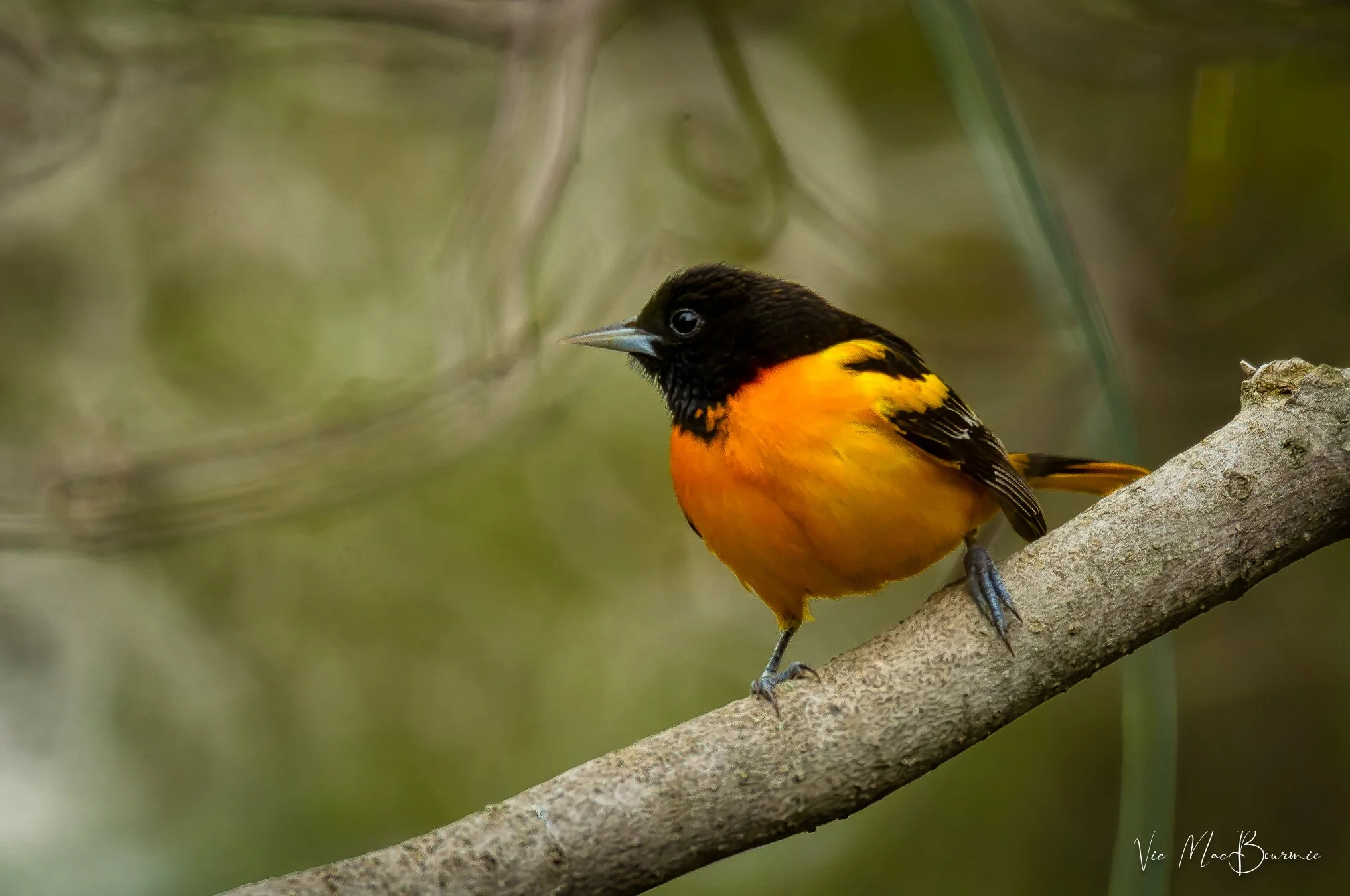
Early May in the woodland garden brings with it a rush of new birds from warblers to orioles and hummingbirds. In addition creeping phlox is beginning to put on its spring show in our front garden.
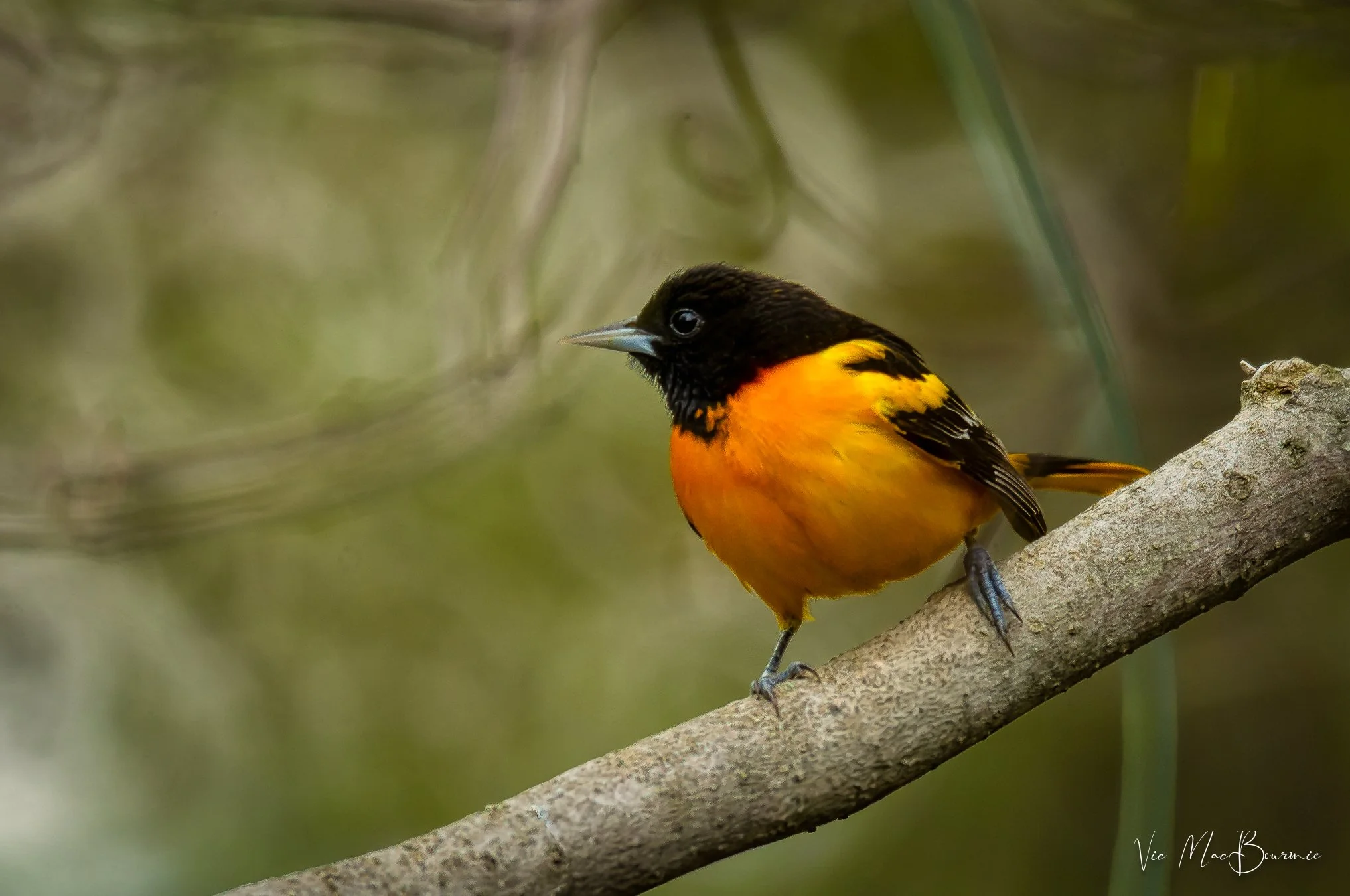
The Baltimore Orioles arrived this week in great numbers. at one point we had five males and one female working our feeders. As soon as I saw them appear, I brought out the orange slices and grape jelly. I’m hoping some of the them stick around and raise a family or two. This one came quite close and allowed me to capture it just before it flew down to a feeder.
It’s May 5th and the Orioles and hummingbirds are back in town
Every spring I look forward to the explosion of colour our creeping phlox provides in our front garden.
In fact, it is the introduction to our garden – the first plant you come across as you approach from the street. I like to let it go wild and weave in an out of the river rocks and boulders across the front. It even cascades over the side of the boulders along our driveway and creates a colourful vignette for a week or two.
This is a native plant that deserves a place in every garden. It’s an early source of food for pollinators and welcomes spring like no other groundcover can. It’s best to treat it like a ground cover and let it run through the garden, around plants, rocks and tree stumps.
It’s well behaved, yet can fill out a space in a relatively short period of time – a couple of seasons and your small patch has doubled or tripled in size.

The early stages of creeping phlox in the front garden. Within a few days it will me a mass of purple flowers and remain like that for a few weeks before becoming a green mat of low-growing highly textured foliage.
In my opinion, trying to grow it in a small clump like many traditional perennials just doesn’t do it the justice it deserves. This beautiful plant commands attention in the spring while in flower, but lays back in summer to form a lovely moss-like low growing, highly textured ground cover that makes the perfect backdrop for your summer-flowering plants.
• For a more detailed post on creeping phlox and other great substitutes for moss in the woodland garden, be sure to check out my earlier post here.

Many years ago I removed all the grass in the front of our home and replaced it with a number of ground covers from ornamental grasses (see Japanese forest grass top left) natives like Bloodroot, trilliums, Solomon’s seal and a variety of ferns as well as non-natives including pachysandra and epimediums that can be seen in the foreground. Large hosta plants also grow close to the house but are often eaten by the local deer population.
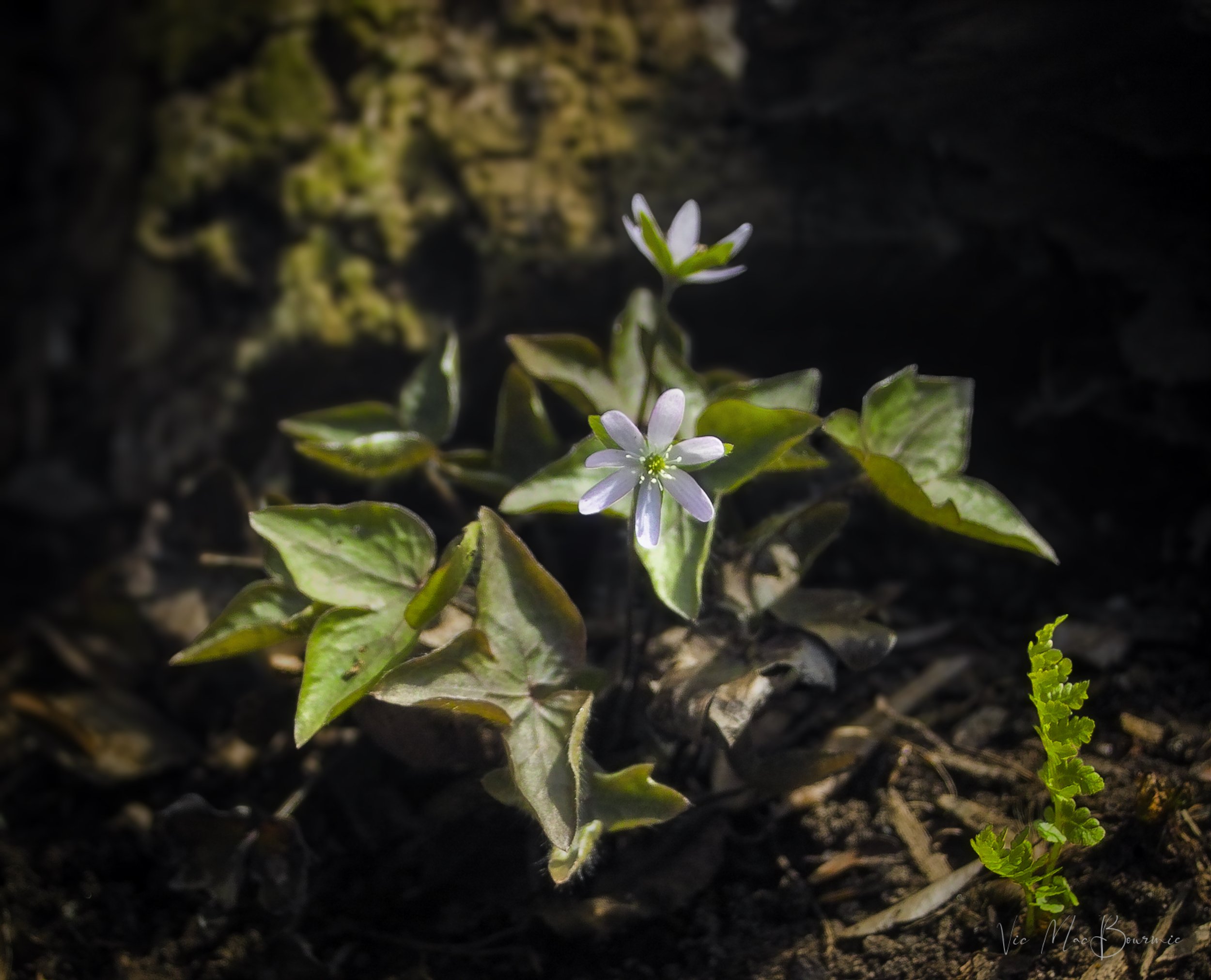
Of course, the creeping phlox isn’t the only plant making an appearance as April gives way to May.
Our woodland understory trees – serviceberries, Eastern Redbuds and pin cherries – are just starting to bud out, and with them have come the birds. I’m looking out the window and seeing five Baltimore Orioles working the feeders stocked with oranges and jelly. The hummingbirds have returned and my Merlin app tells me a variety of warblers are working their way through the upper tree story. They are joining our regulars – juncos, cardinals, chickadees, blue jays, woodpeckers, nuthatches, various sparrows, goldfinches and wrens.
• For my full post on serviceberries click here.
• For my earlier post on three of the best Carolinian forest trees including the Eastern Redbud click here.

Visitors to our back gardenThe entrance into our back are greeted by this friendly little Jinsu who sits among a combination of ground covers including hosta, ferns Solomon’s seal, trilliums and wild geranium just to name a few. An alternate dogwood (Pagoda Dogwood) is just beginning to wake up from it’s winter sleep.
if you look closely in different parts of the yard, you’ll see the native columbines just getting ready to offer their lovely little blooms to the hummingbirds and other insects.
The bleeding hearts too – a photographers’ dream plant – are just starting to bloom alongside trilliums, Solomon’s seal and the May Apple.
Of course, the various hosta and ferns are a few weeks away from putting on a show. Each day they reveal just a little more of what’s to come.
Tick problems and remedies
Unfortunately, all this excitement brings with it a dose of reality in the form of an epidemic of ticks.
These things appear to be everywhere this year.
They are in their nymph stage and are extremely difficult to see. Our dog, Colby, has to be kept on the patio to keep the ticks off him and we are having to take extra precaution every time we wander into the garden.
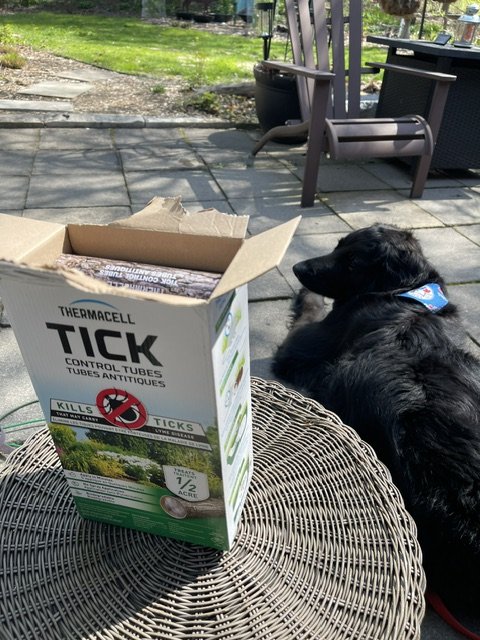
We have never experienced a tick infestation like we have this year. Earlier this week, I spread 12 Thermacell Tick Control Tubes (Amazon link) throughout the property, but apparently they take continued use over a full season or two to really knock back the tick population.
I’m sure they will have an immediate affect, but it may not be enough to knock back the numbers sufficiently this year to make a huge difference.
Ticks, as most people know, can be dangerous and are capable of transmitting diseases like Lyme disease. Here is a link from the Lyme disease organization on repellents to keep ticks off your body when hiking or working in areas where ticks are found.
The concept of the Tick Control Tubes is actually fascinating as they target ticks through a host carrier like mice and chipmunks.
Controlling ticks
I don’t expect the Thermacell Tick Control Tubes to work miracles, I’m just hoping they can reduce the number of ticks to more manageable numbers. Reading comments from users suggest that they can have immediate results but are best used over a number of years. This is the first year I will be using them but will report back in the future on the results.
The general concept is that the mice and chipmunks take the cotton out of the tubes to use as bedding. When the ticks are carried down to their lairs, they are killed by the active ingredient Permethrin actually extracted from chrysanthemums.
So far this spring, we have had to remove three ticks that have latched on to us. We used a special tick removal tool to take them off, and several more were discovered before they had a chance to dig in. For more information on Tick Removal Tools check out this Amazon link. I highly recommend having one of these tools available even if you do not have a tick problem. These inexpensive devices are vital if and when you discover a tick has burrowed into your skin. Without these tools, the ticks can be tricky to remove.
Please take a moment to check out my earlier post on dealing with ticks in the woodland garden. I have updated the original post to include more information.






Taking on Ticks in the woodland garden
Ticks can be both a real nuisance as well as dangerous. Here are some steps you can use to control and deter them in your garden.
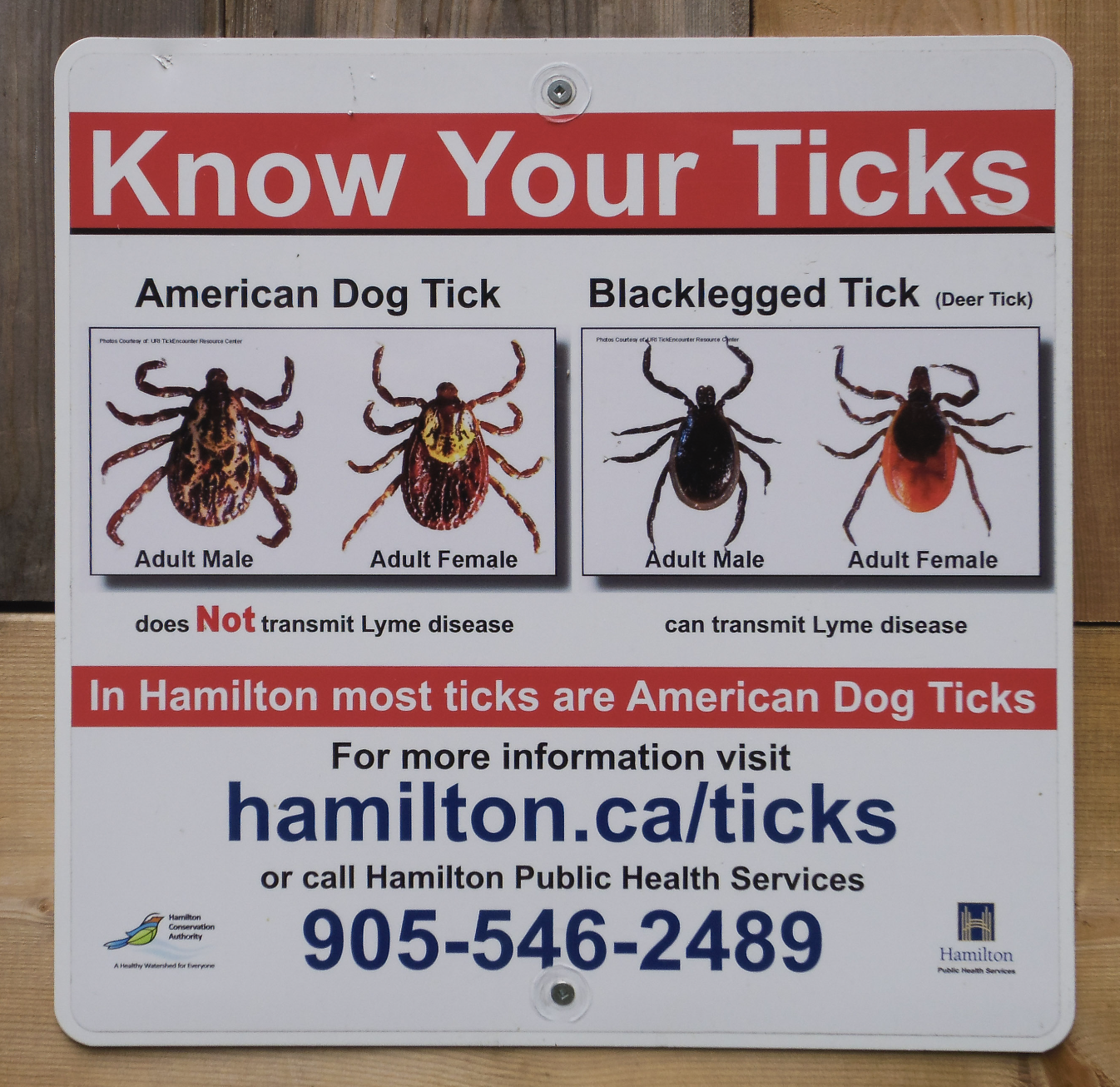
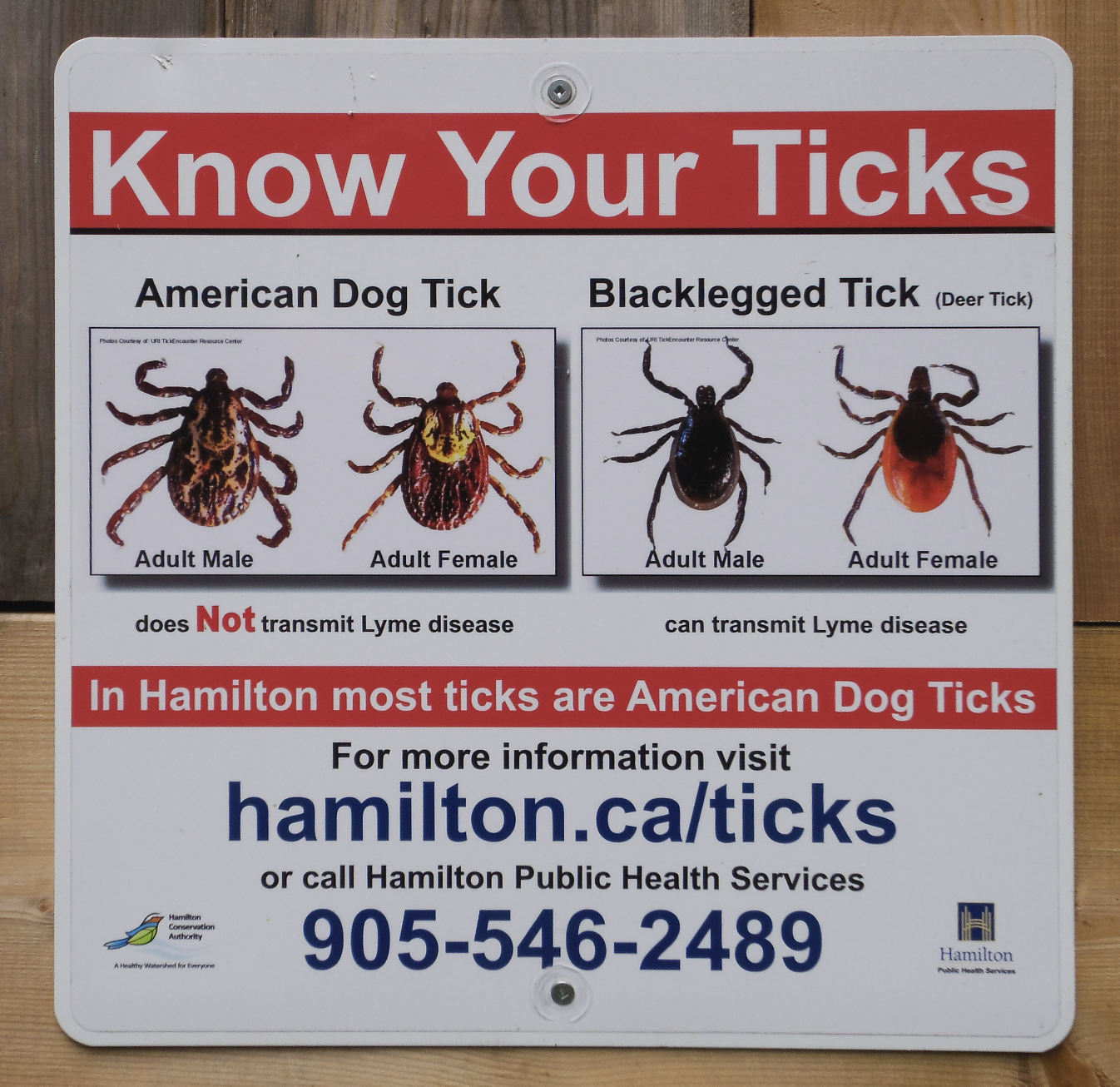
One of the signs that greets visitors to the nearby woodlands around our home. Note that not all ticks transmit Lyme disease. In this area, the Blacklegged Tick is the one that can transmit Lyme disease. Thank goodness it is the American dog Tick that is most prevalent in our area. It doesn’t mean, however, that you want these little critters biting you and remaining attached for any period of time. Removing them can be a problem. We use a special little tool that makes removing them a little easier.
Steps to discourage ticks in the garden
There was a time as a young boy and teenager growing up in Southern Ontario when ticks were not a thing. In fact, I remember only a single location where ticks were present in Southern Ontario – Longpoint Provincial Park.
It just so happened that Longpoint on the Lake Erie coast was my favourite summer hangout. The beaches were the best around and on good days we could ride the waves.
And, although I spent a lot of time at Longpoint Provincial Park, still, I never encountered a single tick. In fact, during my entire childhood, through my crazy teen years and right through my 20s, 30s, 40s, 50s …, I never even really thought about ticks.
Those care-free days are gone.
It wasn’t until more recently that ticks have become an issue in our neck of the woods.
And have they ever.
Today, as I write this post, ticks have become a serious problem not only in this area but in our own backyard.
Last year, I needed precautionary Lyme disease medication after discovering an engorged tick on my leg (see image below). It had to have been attached for at least 24 hours. This year, after a little garden cleanup, my wife has already had two ticks attached and we have pulled a number both dead and alive off our dog. More recently, I have had to remove a tick off my back and have found several of the tiny sesame-sized ticks crawling on my hand and foot after going into the garden.
Not all the ticks may have been picked up in our yard, but I’m guessing most originated in the dry ornamental grasses and fallen leaves in the yard.
Of course, having a massive black dog is certainly a tick magnet, but even without Colby to bring ticks into the yard and eventually into the home, transitory animals and birds spread these little critters from property to property.
Ticks are one of the reasons I welcome Opposums on to the property whenever I see them. They are known to devour ticks by the hundreds even thousands.
Last year, after taking our dog into the nearby woodland, we discovered he was covered with ticks and, as a result, seemed to have an allergic reaction to being bitten in and around his face.
Now that was not a whole lot of fun.
Thankfully, he was on his regular tick medicine from the vet and the situation cleared itself up over a short time.
Bringing a boat load of ticks into your living space via your dog, however, is not something most of us want to do.
For more information check out this post about using Permethrin on your clothing https://www.nytimes.com/wirecutter/reviews/sawyer-permethrin-premium-insect-repellent-review/

This tick decided it was a good idea to crawl up my leg during a photo shoot in the fern garden. A knee brace stopped its forward progress and marked the spot to dig in and start drawing my blood. You can see how engorged he is compared to the image above of the various ticks. I’m not proud to say that I can report back that it was indeed its last meal.
Reasons for the rise in ticks
I’m no expert, but I can’t help but think the rise in our local tick population is the direct result of climate change. In past years, our bitterly cold winters killed any chance of ticks migrating north from our southern neighbours. But, as our winters warmed, new animals appeared along with plants and, of course, ticks – lots and lots of ticks.
Once established in the area, they are impossible to exterminate and, because they can potentially spread Lyme disease, they are not something to be taken lightly.
I had hoped this year’s severe winter would diminish the local tick population in the area. Instead, the deep snow cover, like a nice warm blanket, actually helped the ticks survive winter and left us with even more of the critters this spring.

Ornamental grasses such as these low-growing fountain grasses are perfect places for ticks to lie in wait for an animal – either wild or domestic to pass by and provide a free meal. Humans too provide a free meal for these annoying little insects that are incredibly small and easily go unnoticed until they have had their fill of blood.
The very nature of a woodland/wildlife garden almost guarantees you are going to have ticks if you live in an area where ticks are a problem.
In the entrances to the woodlands surrounding our home, large signs (See top image) warn that there are ticks in the area and to take precautions both for your own well being and for your pets - primarily dogs but also cats.
In fact, in hindsight, I’m thinking we may have lost one of our cats from a tick bite. Cats can get a number of diseases from tick bites.
According to Petmeds: Cats can contract several dangerous illnesses from tick bites, most notably Cytauxzoononosis (bobcat fever), Hemobartoneliosis (feline infectious anemia), Lyme disease, Ehrlichiosis and Anaplasmosis. Severe anemia, high fever, lethargy, and loss of appetite are symptoms. Regular, year-round tick prevention is the best protection.

Even in the fall and early spring, ornamental grasses provide the perfect spot for ticks. If possible, I like to burn the grasses in spring to reduce the possibility of ticks that survived winter.
Tips to deal with ticks in the garden
So how do we deal with them?
First off, it’s important not to use general insecticides to control ticks. Doing so will only eliminate other important insects that call your garden home.
Take the following steps before resorting to the use of any harsh insecticides.
Take a multi-faceted approach to controlling ticks
I think keeping ticks at bay is probably best accomplished through a series of actions meant to deter them from areas of the garden where you and your pets like to hang out.
A first layer of defence can be the plants we choose to place near the areas we most frequently visit – near the patio or deck or other sitting areas and pathways around the garden.
Ticks are known to hang out in ornamental grasses or any long grass so it’s probably wise to keep long grasses in areas of the garden where you won’t brush up against them on a regular basis. But, it’s not just ornamental grasses where these tiny insects can hide. Any foliage could be home to these little critters.
Use plants as a first defence
With this in mind, there are plants we can grow that are said to actually help repel ticks. Don’t expect miracles from these plants, but if they help even a little they are definitely worth adding to your garden, especially in heavy traffic areas.
The following is a list of six suggested plants that help deter ticks in your yard.
Lavender,
Mint
Marigolds
Catmint
Rosemary
Chives
Tick removal tool is critical addition to your kit
If you or your dog get bit by a tick and it is still attached, it helps to have a tool to remove it as quickly and painlessly as possible.. This premium tick remover (Amazon Link) will get the job done. It’s always a good idea to have one of these tools available even if you have never had to remove a tick.
Sprays to keep ticks at bay
The next line of defence I like to use is a spray – Mosquito Barrier – that is said to keep mosquitoes, ticks and fleas from attacking you and your pets. It’s important to note that this is not an insecticide and only acts as a deterrence.
Its primary use is to form a barrier against mosquitoes, but it’s listed to be effective against fleas and ticks as well.
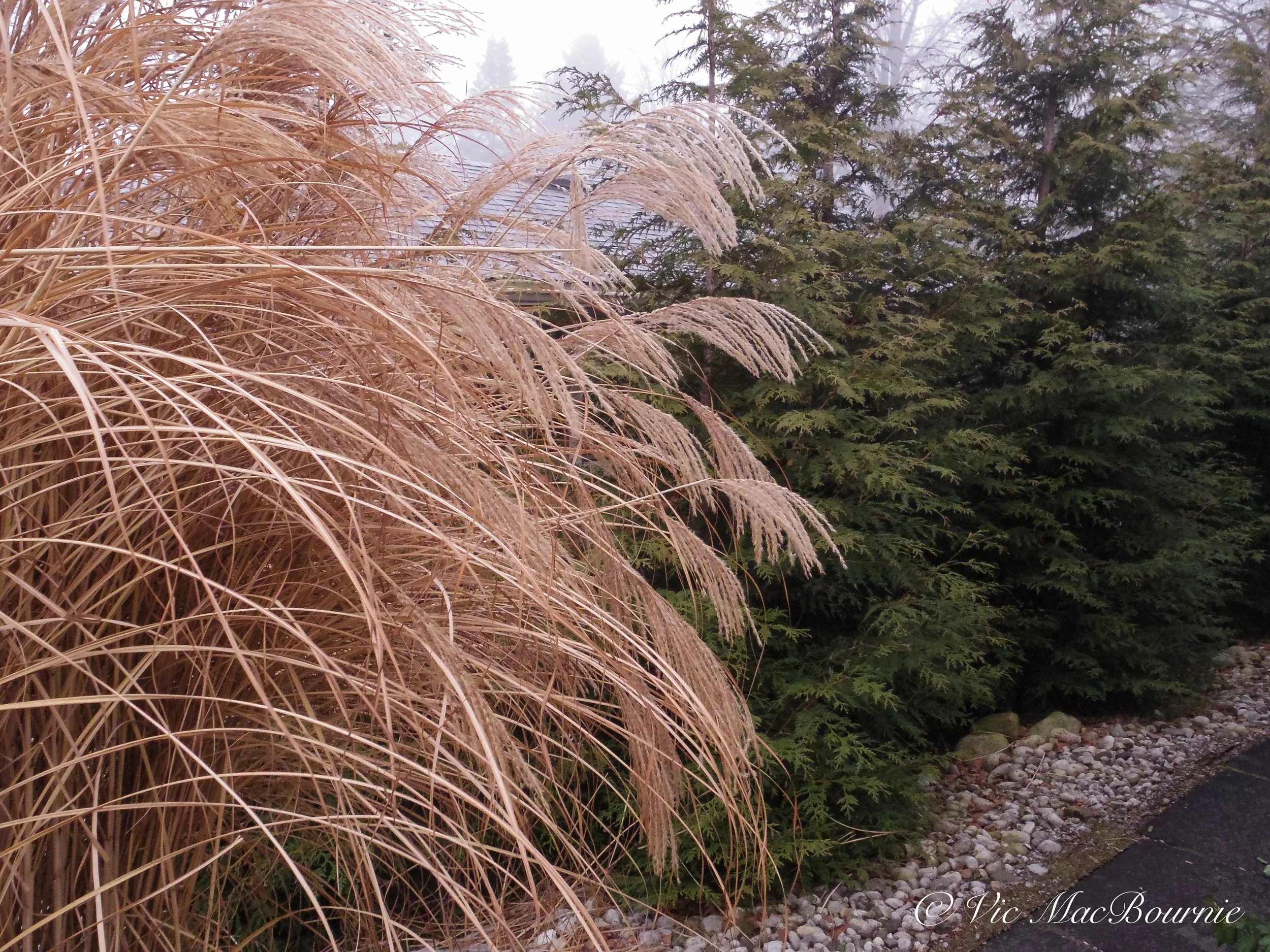
These larger grasses are ideal spots for ticks to hang out and latching on to an animal –whether its your dog, a deer, racoon or even a person.
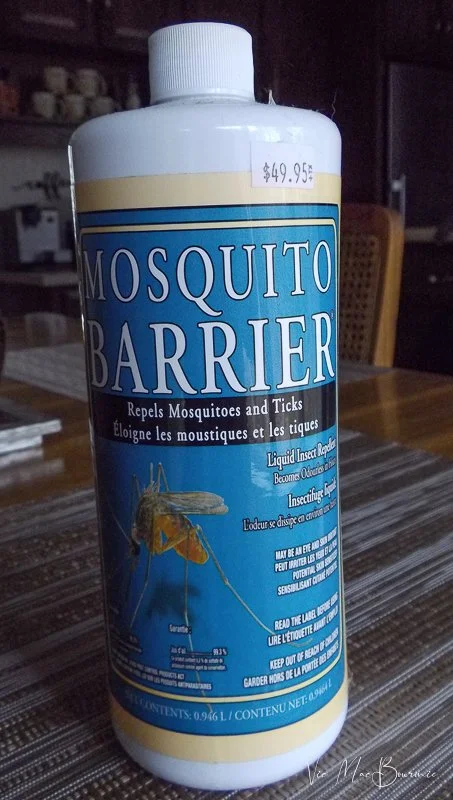
Mosquito Barrier is a premium quality product that, although a little pricey, uses industrial-grade garlic to deter mosquitos, and ticks. It is concentrated so it needs to be mixed with water before using. As a result, for most people, a single bottle should last several years.
Mosquito Barrier (company web site) comes in concentrated form so although it may appear expensive, a single bottle can last several years. Its main ingredient is industrial-grade garlic which gives off a powerful odour on application but eventually mellows out to a pleasant garlic smell – and who doesn’t like a little garlic.
In a small yard, you can spray generously around the perimeter of the property on plants, fences, trees and walls. In larger yards, it is probably better to just create a boundary around the areas you and your pets tend to hang out.
We like to give the area a spray about once a week and top it off after a rainfall.
So far, we have found it helps keep the mosquitoes aways so I’m sure it’s having some effect with ticks and fleas. I plan to use the spray much more this year directly on plants around the patio. The spray is available through Amazon, (link to Mosquito Barrier) but we purchased our bottle at our local RAW dog food store.
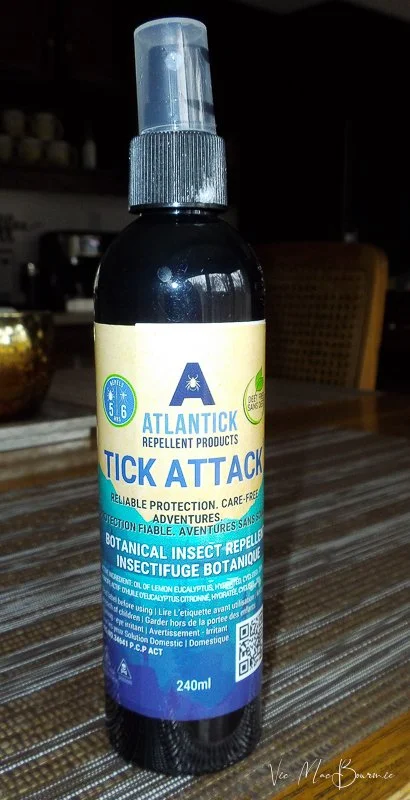
Tick Attack and other similar herbal-based products can be sprayed directly on our pets or our own clothing to keep ticks at bay. There are even recipes on line to create your own essential oil sprays.
Safe botanical/herbal sprays specifically for use on dogs and clothing
The next line of defence is a botanical-based spray used directly on both our pets and our own clothing to repel ticks. Again, it’s important to note that these are not insecticides they are a repellent. The main ingredients are essential oils that repel ticks and fleas safely.
If you don’t want to spray your dog directly, consider spraying a cloth and rubbing the cloth over the dog’s legs, chest and head being careful to keep it away from their eyes.
I have just added these Tick Control Tubes from Thermacell throughout the garden in the hope of knocking back the number of ticks. Most reviews suggest that it takes at lest a year of use to see a significant reduction in backyard ticks, but some report an immediate result.
Using mice to control ticks
Tick control tubes made by Thermacell are another defence that you may be interested in. Although these DO use an insecticide and are more aggressive than botanicals and other deterents, some users swear by them. They work in an interesting very targeted way by using garden mice to kill the ticks.
The concept is that mice take the cotton stuffed in the tubes laced with a natural insecticide and use it for bedding in their lairs. When ticks attach themselves to the mice and are taken back to the lair the insecticide kill the ticks without injuring the mice and their offspring.
I’m a little Leary about this approach but plan to try it this year to see how well it works.
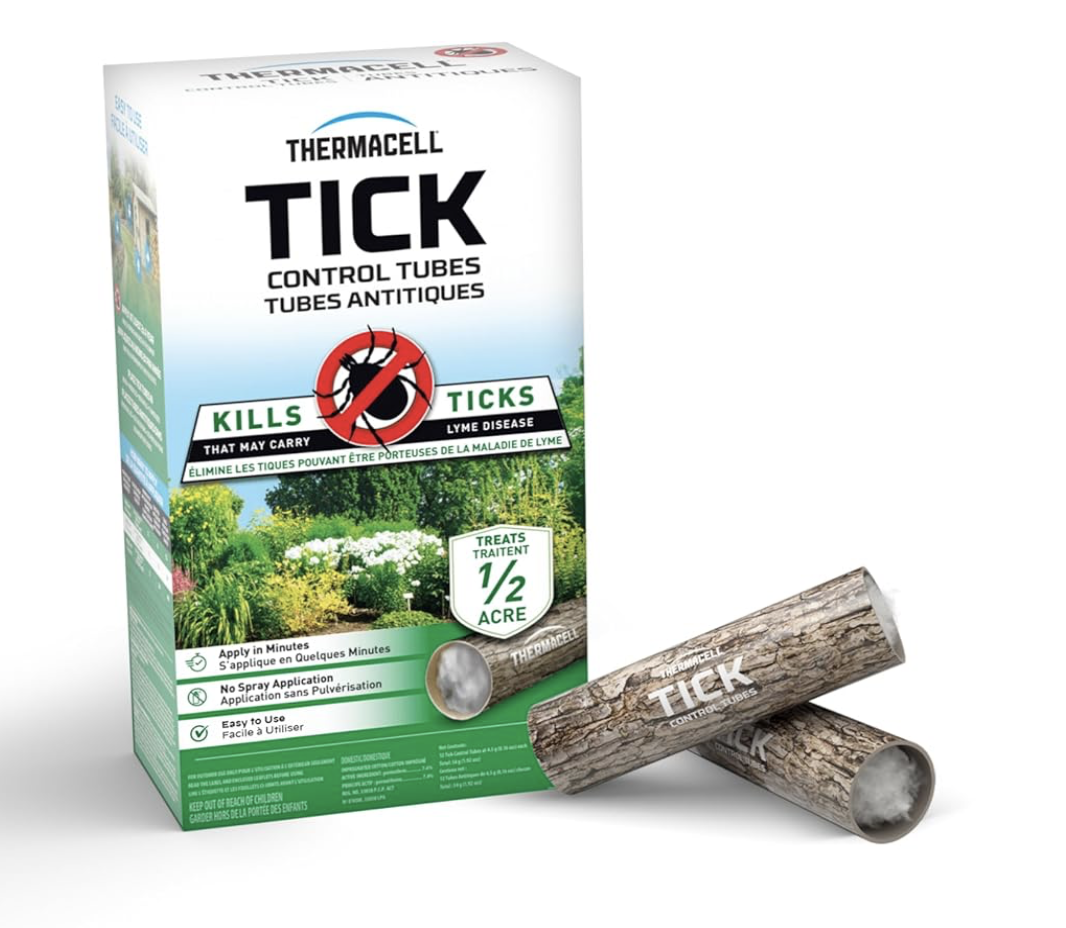
These Tick Control Tubes are an interesting way to control ticks in your yard. They depend on mice and other critters to take the cotton balls back to their dens. When ticks go on the mice they are eventually killed by the plant-based insecticide.

Medication is a good solution for tick control, especially when you are in an area where there is a lot of tick activity. We are using Spimparica Trio, but there are alternatives. Getting your dog to eat the large pill monthly is not always easy.
Using harsh medicines to control ticks
Finally, using a focused medicine to protect your dog and cat from ticks is often a necessity, if you live in an area where ticks are abundant. If you live in an area where ticks are not a problem, you could probably skip this final defence method.
Not all dogs and cats react positively to taking these drugs or putting the medicine on them. The decision to go ahead and use these medicines should be made after discussing the possible cons with your veteranarian.
It’s important to note that the medicines do not kill the ticks until they actually bite the dog or cat. At that point the ticks die. Even while on the medication, it’s not uncommon to see a tick crawling on the dog. If you see one, just pick it off and dispose of it.
For more ideas on how to control ticks, you might want to check out this Amazon page of potential solutions.
The Japanese culture has its own way to describe and experience the joy of spring greens. We too can learn from their enlightened perception of the woodland.