Exploring the woodland garden: Creeping phlox explodes with colour
Early May in the woodland garden brings with it a rush of new birds from warblers to orioles and hummingbirds. In addition creeping phlox is beginning to put on its spring show in our front garden.
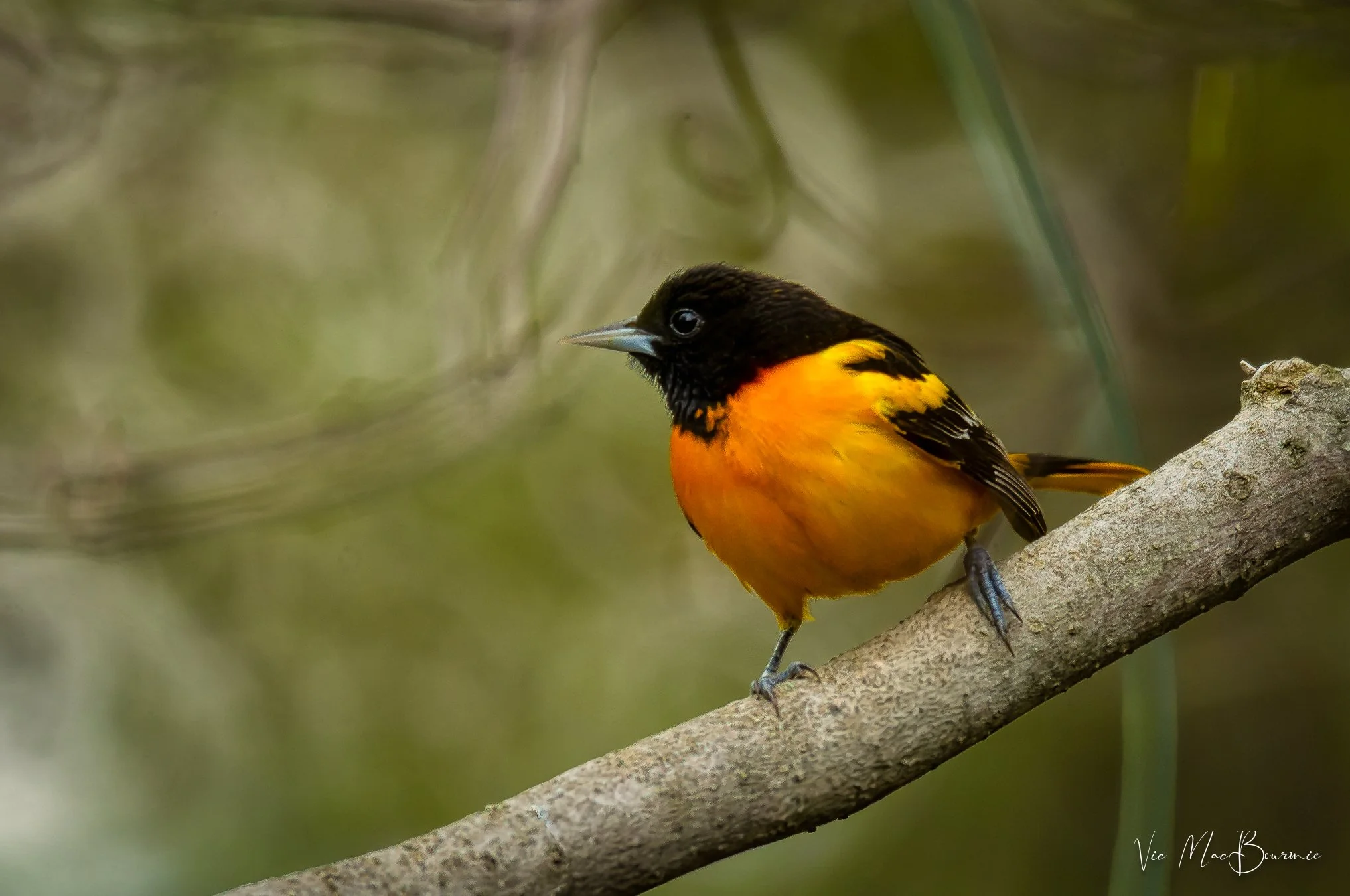
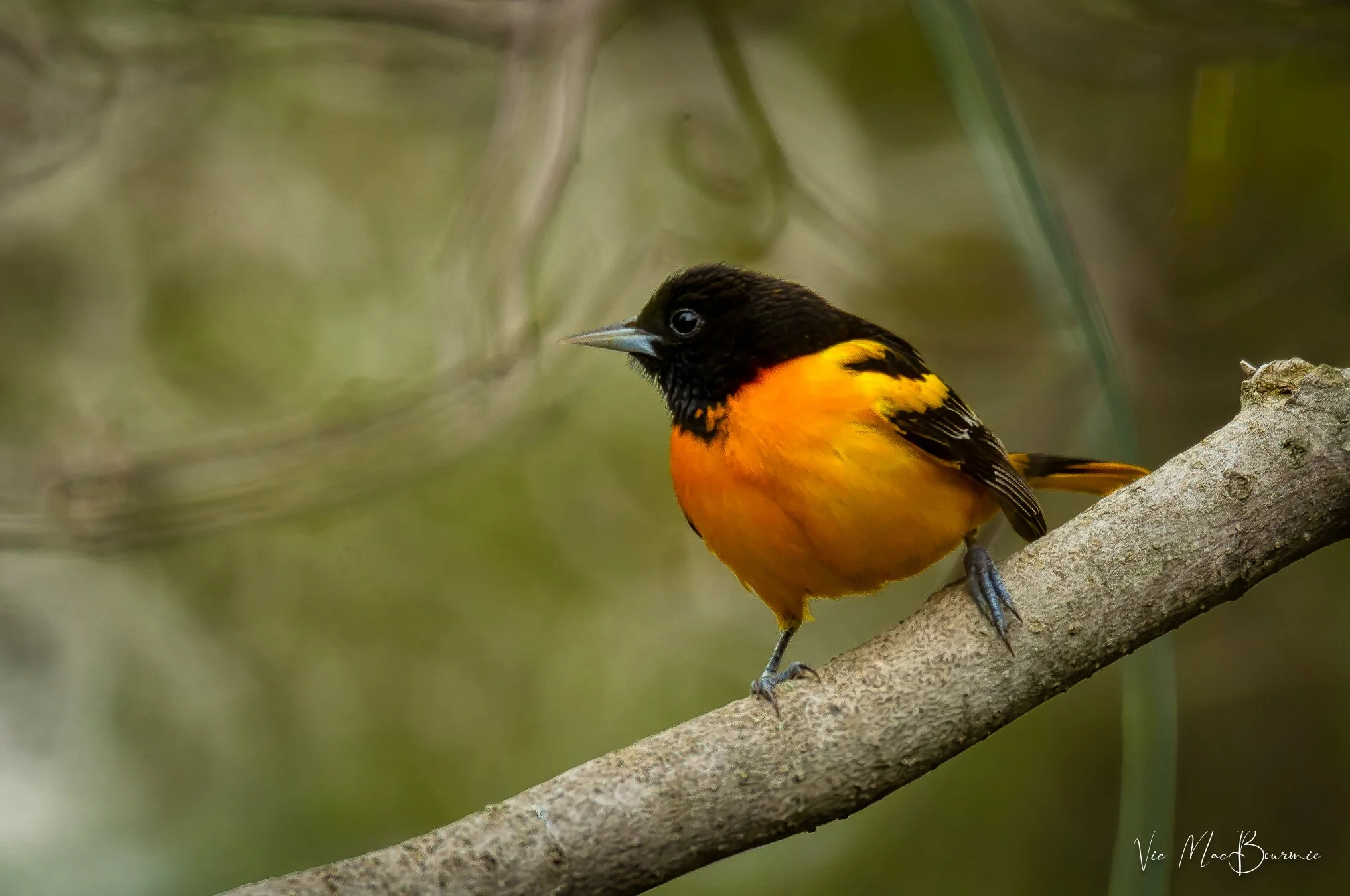
The Baltimore Orioles arrived this week in great numbers. at one point we had five males and one female working our feeders. As soon as I saw them appear, I brought out the orange slices and grape jelly. I’m hoping some of the them stick around and raise a family or two. This one came quite close and allowed me to capture it just before it flew down to a feeder.
It’s May 5th and the Orioles and hummingbirds are back in town
Every spring I look forward to the explosion of colour our creeping phlox provides in our front garden.
In fact, it is the introduction to our garden – the first plant you come across as you approach from the street. I like to let it go wild and weave in an out of the river rocks and boulders across the front. It even cascades over the side of the boulders along our driveway and creates a colourful vignette for a week or two.
This is a native plant that deserves a place in every garden. It’s an early source of food for pollinators and welcomes spring like no other groundcover can. It’s best to treat it like a ground cover and let it run through the garden, around plants, rocks and tree stumps.
It’s well behaved, yet can fill out a space in a relatively short period of time – a couple of seasons and your small patch has doubled or tripled in size.
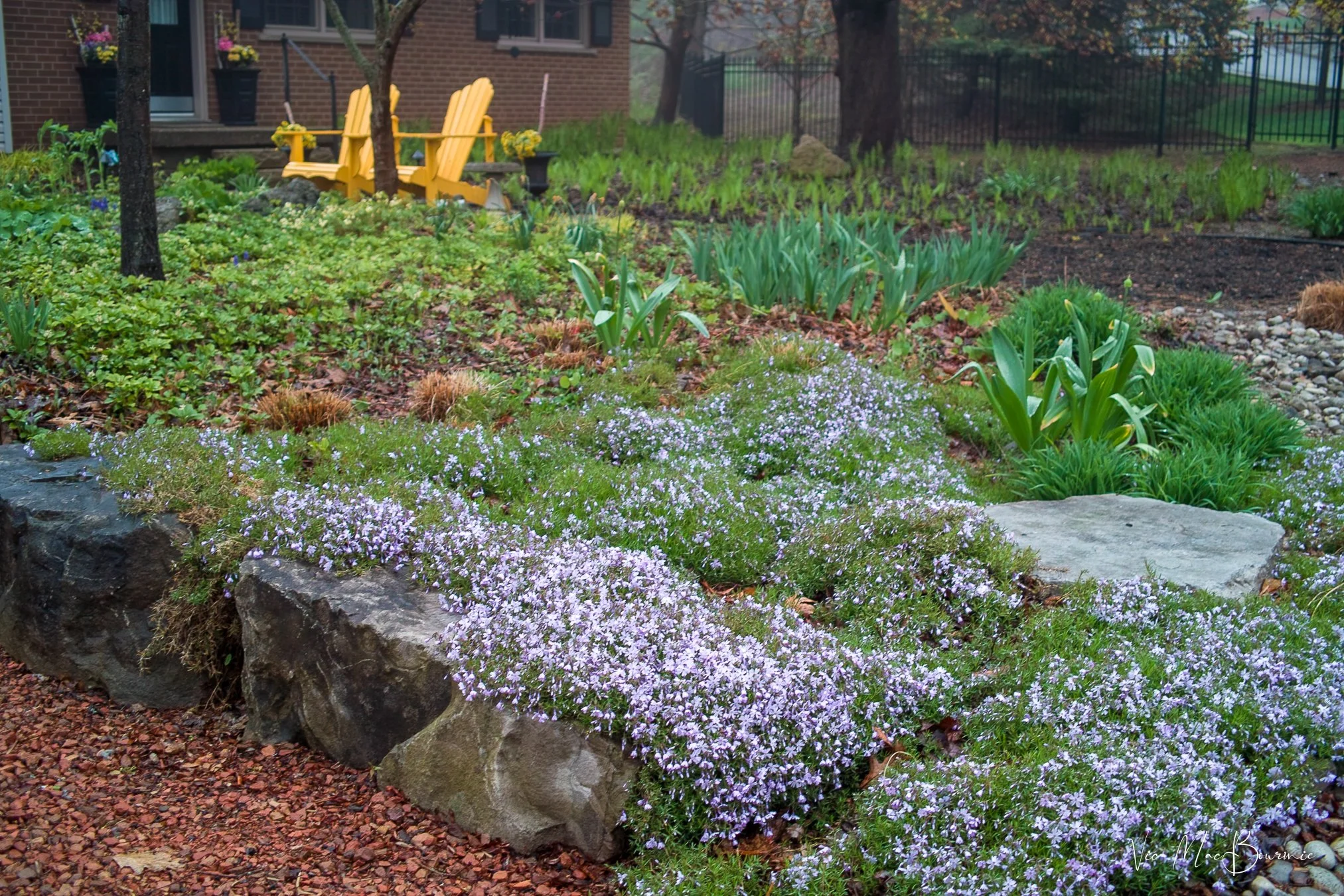
The early stages of creeping phlox in the front garden. Within a few days it will me a mass of purple flowers and remain like that for a few weeks before becoming a green mat of low-growing highly textured foliage.
In my opinion, trying to grow it in a small clump like many traditional perennials just doesn’t do it the justice it deserves. This beautiful plant commands attention in the spring while in flower, but lays back in summer to form a lovely moss-like low growing, highly textured ground cover that makes the perfect backdrop for your summer-flowering plants.
• For a more detailed post on creeping phlox and other great substitutes for moss in the woodland garden, be sure to check out my earlier post here.
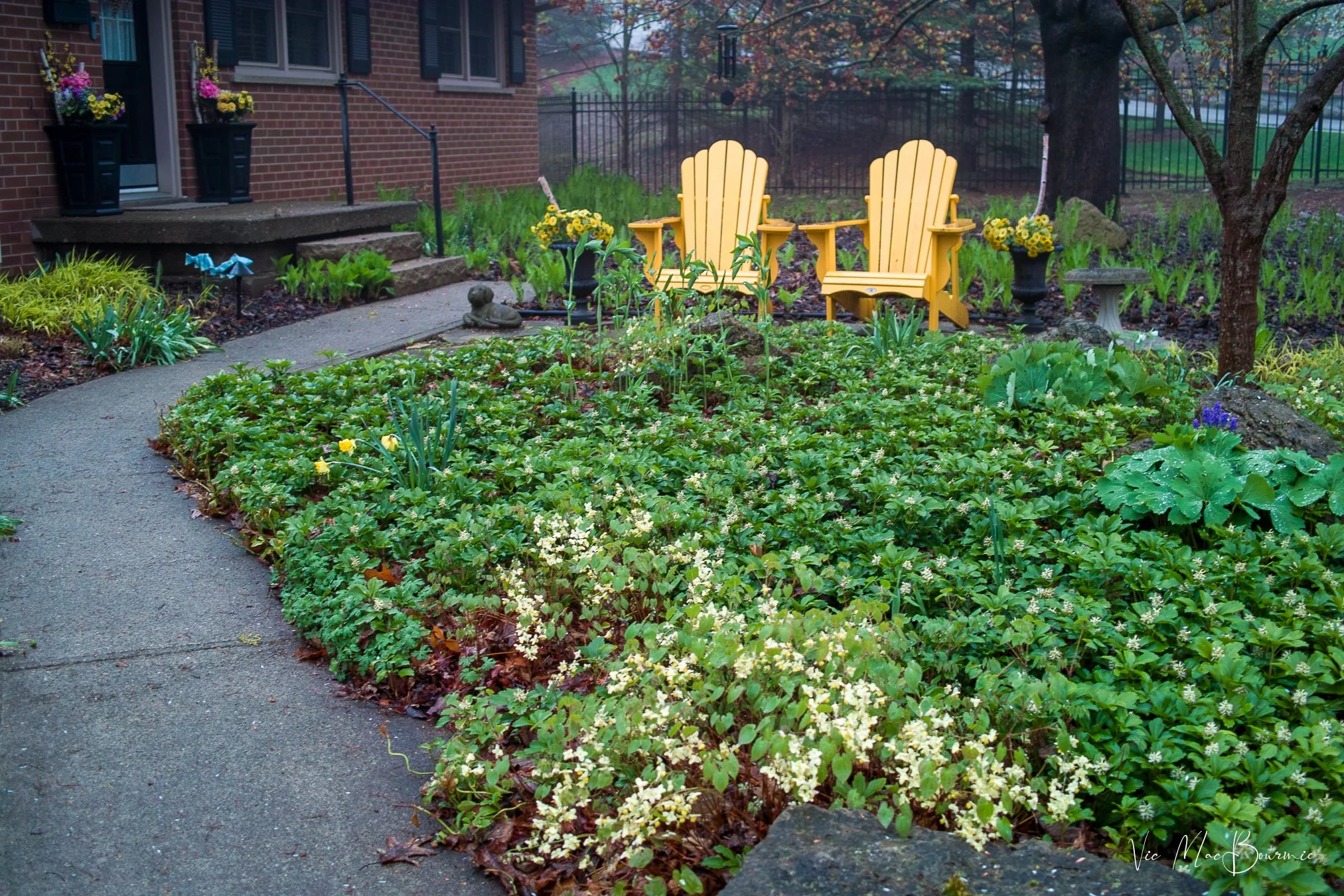
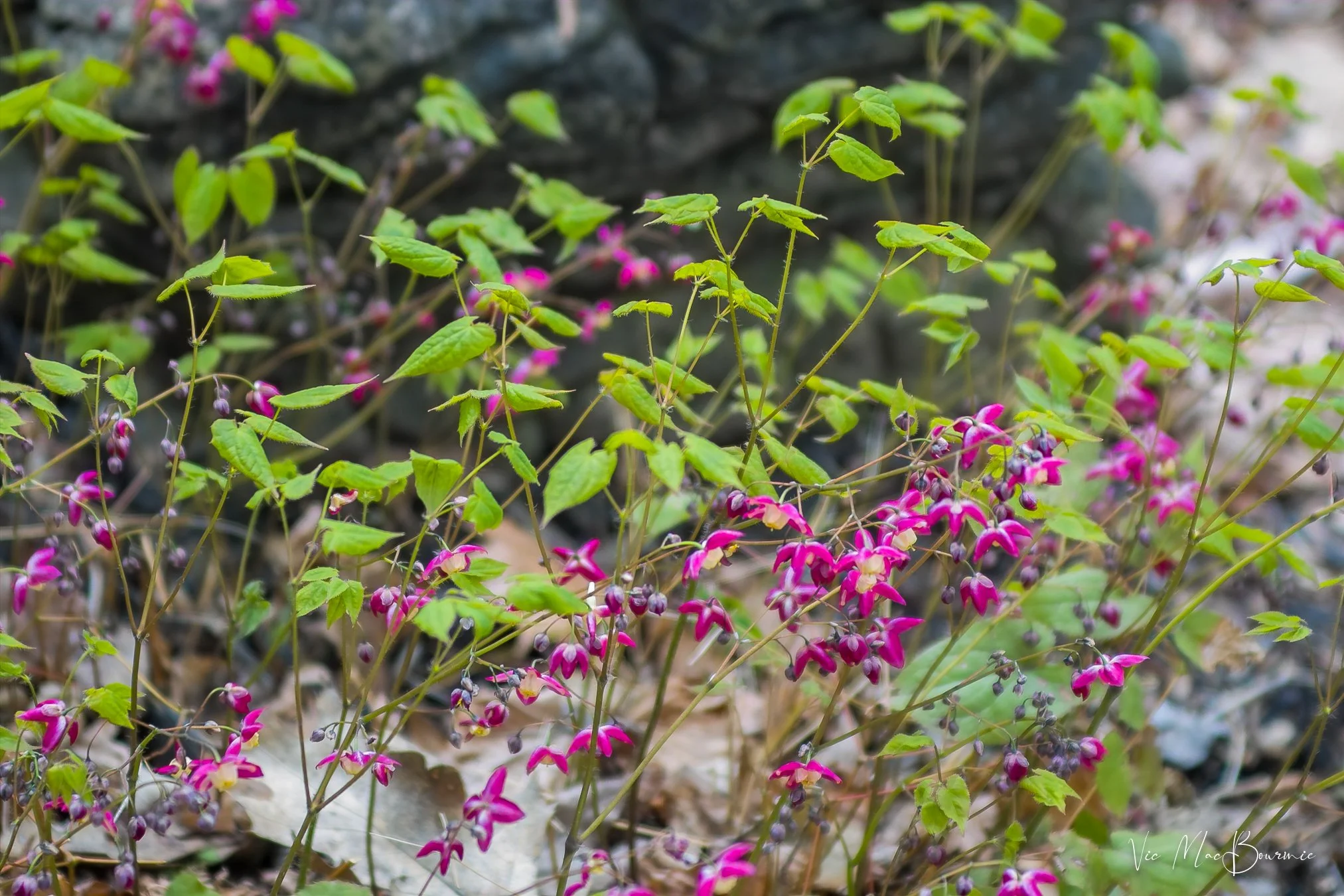
Many years ago I removed all the grass in the front of our home and replaced it with a number of ground covers from ornamental grasses (see Japanese forest grass top left) natives like Bloodroot, trilliums, Solomon’s seal and a variety of ferns as well as non-natives including pachysandra and epimediums that can be seen in the foreground. Large hosta plants also grow close to the house but are often eaten by the local deer population.
Of course, the creeping phlox isn’t the only plant making an appearance as April gives way to May.
Our woodland understory trees – serviceberries, Eastern Redbuds and pin cherries – are just starting to bud out, and with them have come the birds. I’m looking out the window and seeing five Baltimore Orioles working the feeders stocked with oranges and jelly. The hummingbirds have returned and my Merlin app tells me a variety of warblers are working their way through the upper tree story. They are joining our regulars – juncos, cardinals, chickadees, blue jays, woodpeckers, nuthatches, various sparrows, goldfinches and wrens.
• For my full post on serviceberries click here.
• For my earlier post on three of the best Carolinian forest trees including the Eastern Redbud click here.
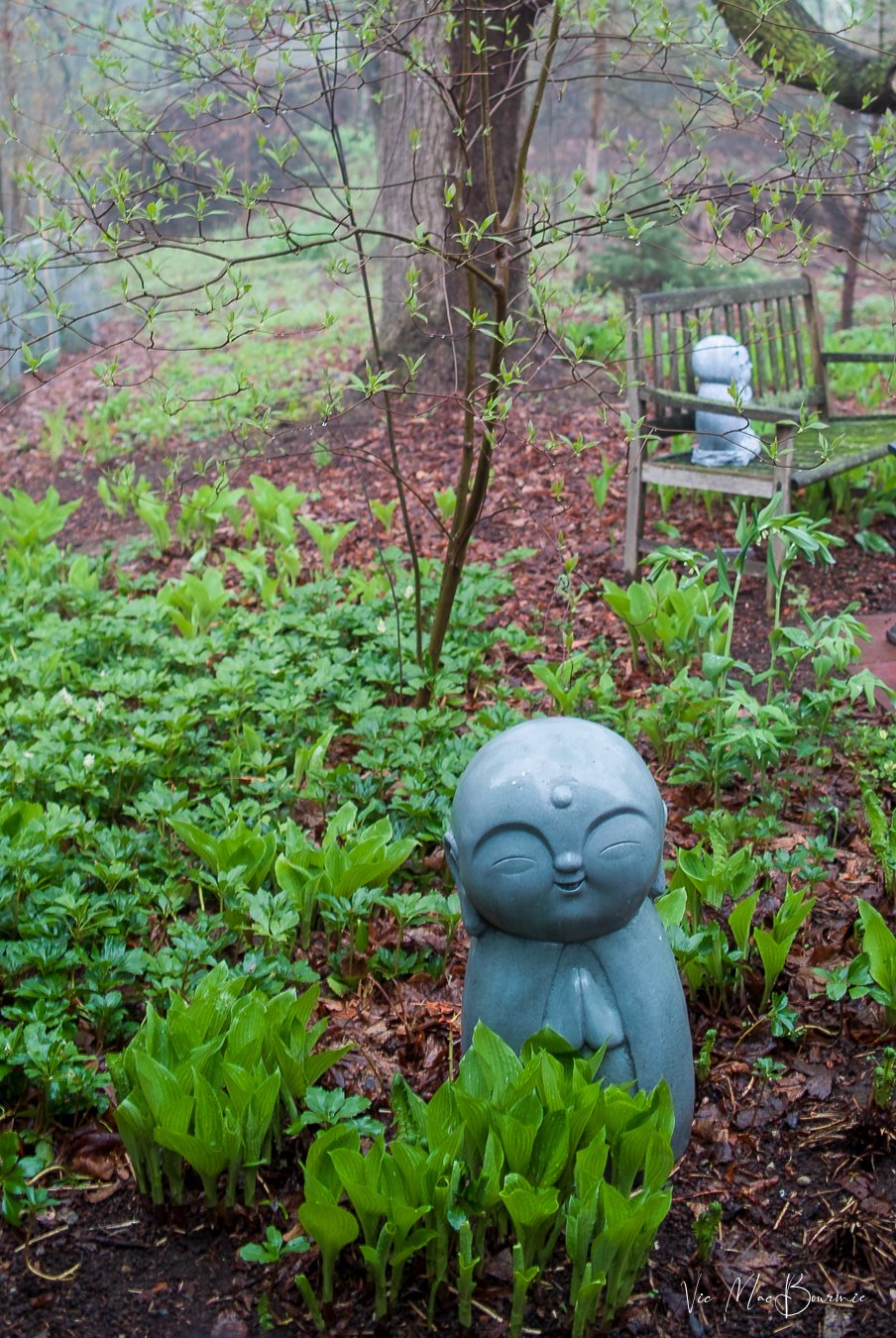
Visitors to our back gardenThe entrance into our back are greeted by this friendly little Jinsu who sits among a combination of ground covers including hosta, ferns Solomon’s seal, trilliums and wild geranium just to name a few. An alternate dogwood (Pagoda Dogwood) is just beginning to wake up from it’s winter sleep.
if you look closely in different parts of the yard, you’ll see the native columbines just getting ready to offer their lovely little blooms to the hummingbirds and other insects.
The bleeding hearts too – a photographers’ dream plant – are just starting to bloom alongside trilliums, Solomon’s seal and the May Apple.
Of course, the various hosta and ferns are a few weeks away from putting on a show. Each day they reveal just a little more of what’s to come.
Tick problems and remedies
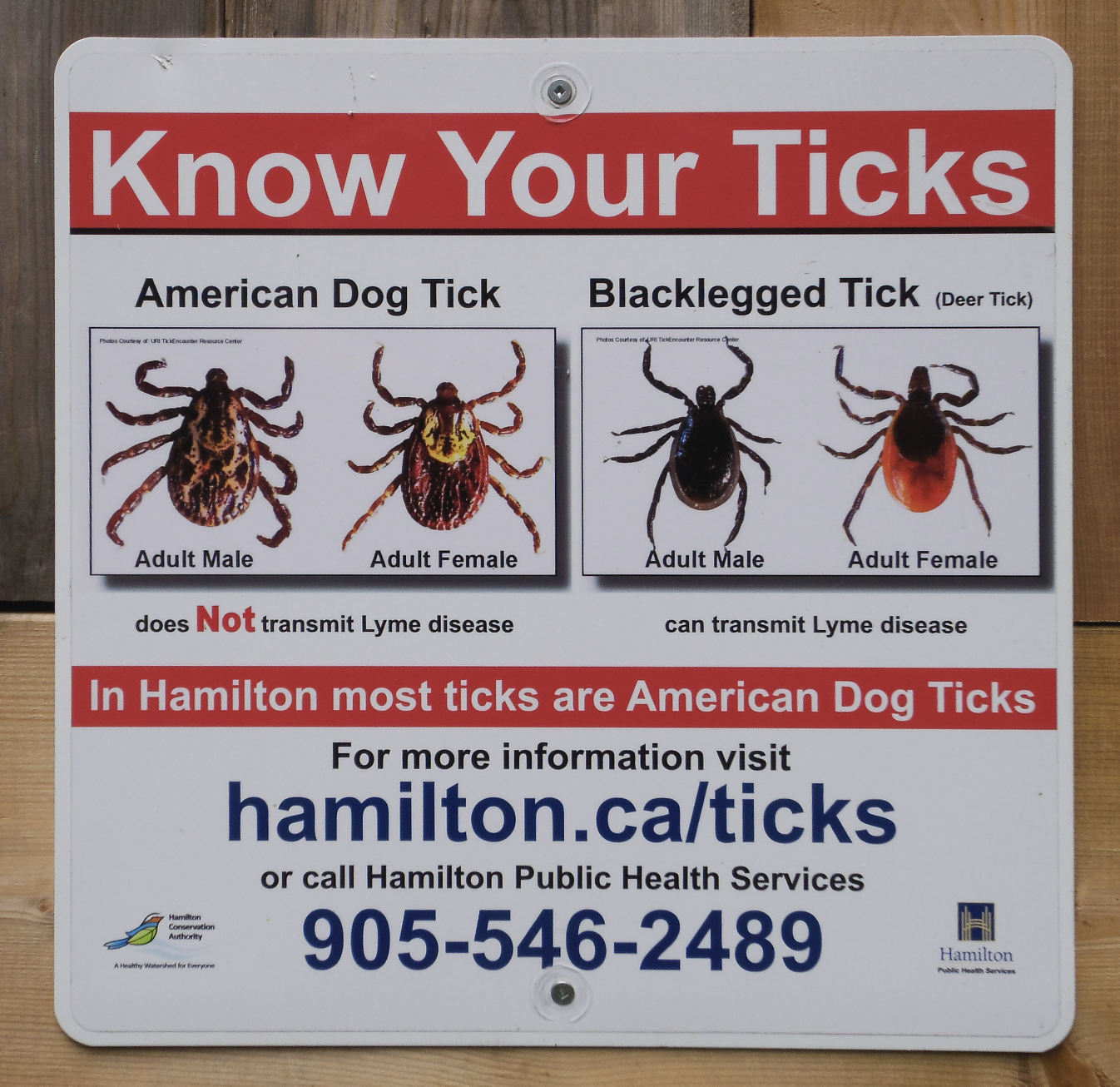
Unfortunately, all this excitement brings with it a dose of reality in the form of an epidemic of ticks.
These things appear to be everywhere this year.
They are in their nymph stage and are extremely difficult to see. Our dog, Colby, has to be kept on the patio to keep the ticks off him and we are having to take extra precaution every time we wander into the garden.
We have never experienced a tick infestation like we have this year. Earlier this week, I spread 12 Thermacell Tick Control Tubes (Amazon link) throughout the property, but apparently they take continued use over a full season or two to really knock back the tick population.
I’m sure they will have an immediate affect, but it may not be enough to knock back the numbers sufficiently this year to make a huge difference.
Ticks, as most people know, can be dangerous and are capable of transmitting diseases like Lyme disease. Here is a link from the Lyme disease organization on repellents to keep ticks off your body when hiking or working in areas where ticks are found.
The concept of the Tick Control Tubes is actually fascinating as they target ticks through a host carrier like mice and chipmunks.
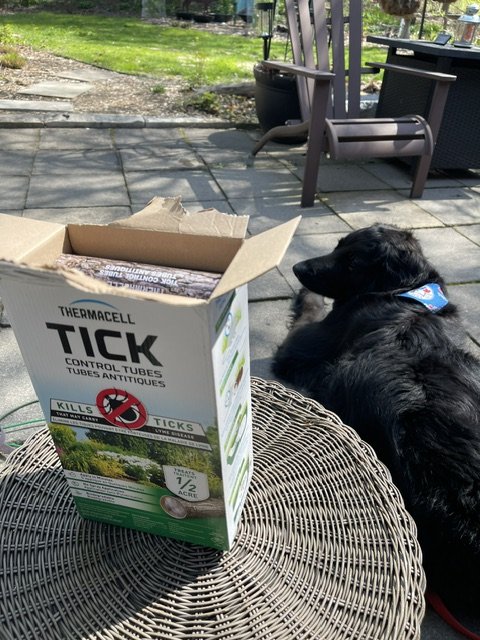
Controlling ticks
I don’t expect the Thermacell Tick Control Tubes to work miracles, I’m just hoping they can reduce the number of ticks to more manageable numbers. Reading comments from users suggest that they can have immediate results but are best used over a number of years. This is the first year I will be using them but will report back in the future on the results.
The general concept is that the mice and chipmunks take the cotton out of the tubes to use as bedding. When the ticks are carried down to their lairs, they are killed by the active ingredient Permethrin actually extracted from chrysanthemums.
So far this spring, we have had to remove three ticks that have latched on to us. We used a special tick removal tool to take them off, and several more were discovered before they had a chance to dig in. For more information on Tick Removal Tools check out this Amazon link. I highly recommend having one of these tools available even if you do not have a tick problem. These inexpensive devices are vital if and when you discover a tick has burrowed into your skin. Without these tools, the ticks can be tricky to remove.
Please take a moment to check out my earlier post on dealing with ticks in the woodland garden. I have updated the original post to include more information.
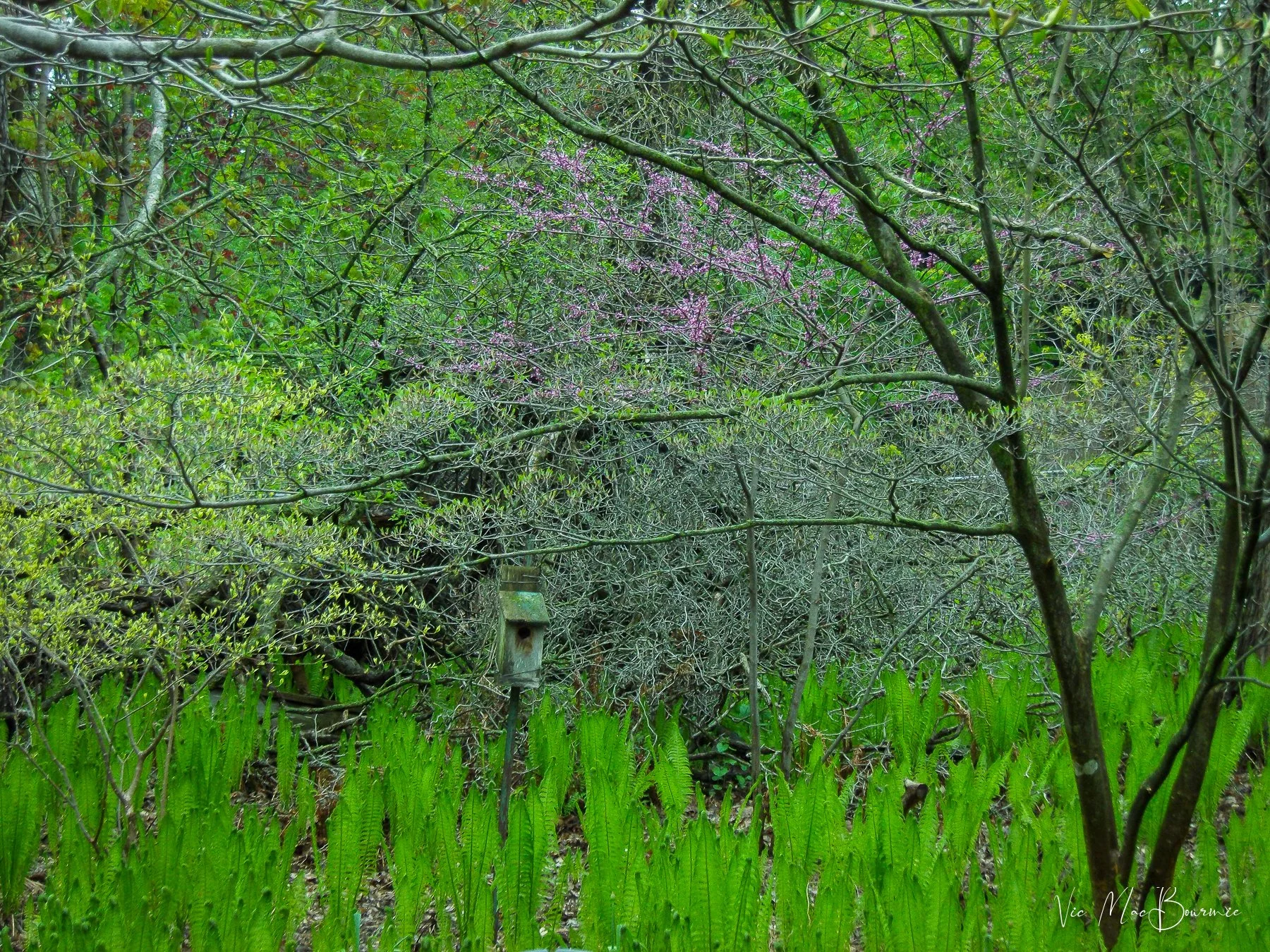




The Japanese culture has its own way to describe and experience the joy of spring greens. We too can learn from their enlightened perception of the woodland.