Shinryoku: Capturing the subtle, fleeting beauty of spring
The Japanese culture has its own way to describe and experience the joy of spring greens. We too can learn from their enlightened perception of the woodland.

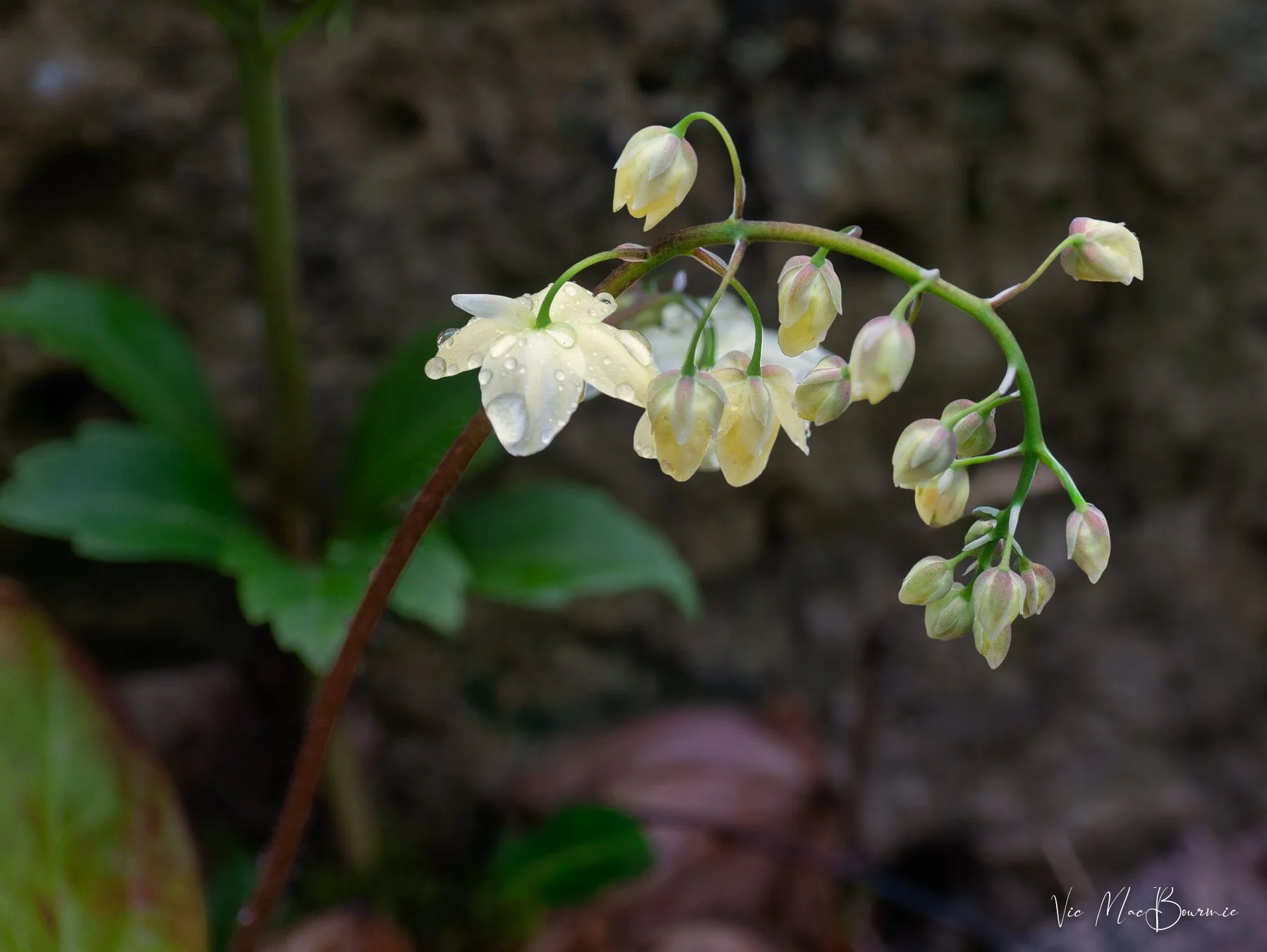
Early spring greens emerge in the delicate flowers of Solomon’s Seal dripping off of an arching stem.
Celebrating spring greens Japanese style
Learning has always been a passion of mine. Unfortunately, this thirst for knowledge rarely involves text books. These days, it takes the form of the hundreds of YouTubers that I follow, from gardeners to photographers and everything in between.
One that combines both gardening and photography is a channel based out of Japan called “Shizan style” that focuses on learning to see and experience nature through the eyes and soul of the Japanese culture.
Fine art photographer Joshua 'Gensetsu' Smith, PhD, describes his channel in the following way: “it focuses on Japanese aesthetics, photography, creativity, Japanese gardens and culture. A Shizen Style is about designing a Japan-inspired creative lifestyle infused with nature.
You can check out the channel here if this approach to gardening, living and photography interests you.
I have found many of his videos inspirational in so many ways. They inspire viewers to slow down and experience the finer elements of the garden that are often easily overlooked in the hustle and bustle of everyday life. Whether you choose to capture your experience photographically is really a less significant focus of the channel, but I fully appreciate his approach to documenting the journey.
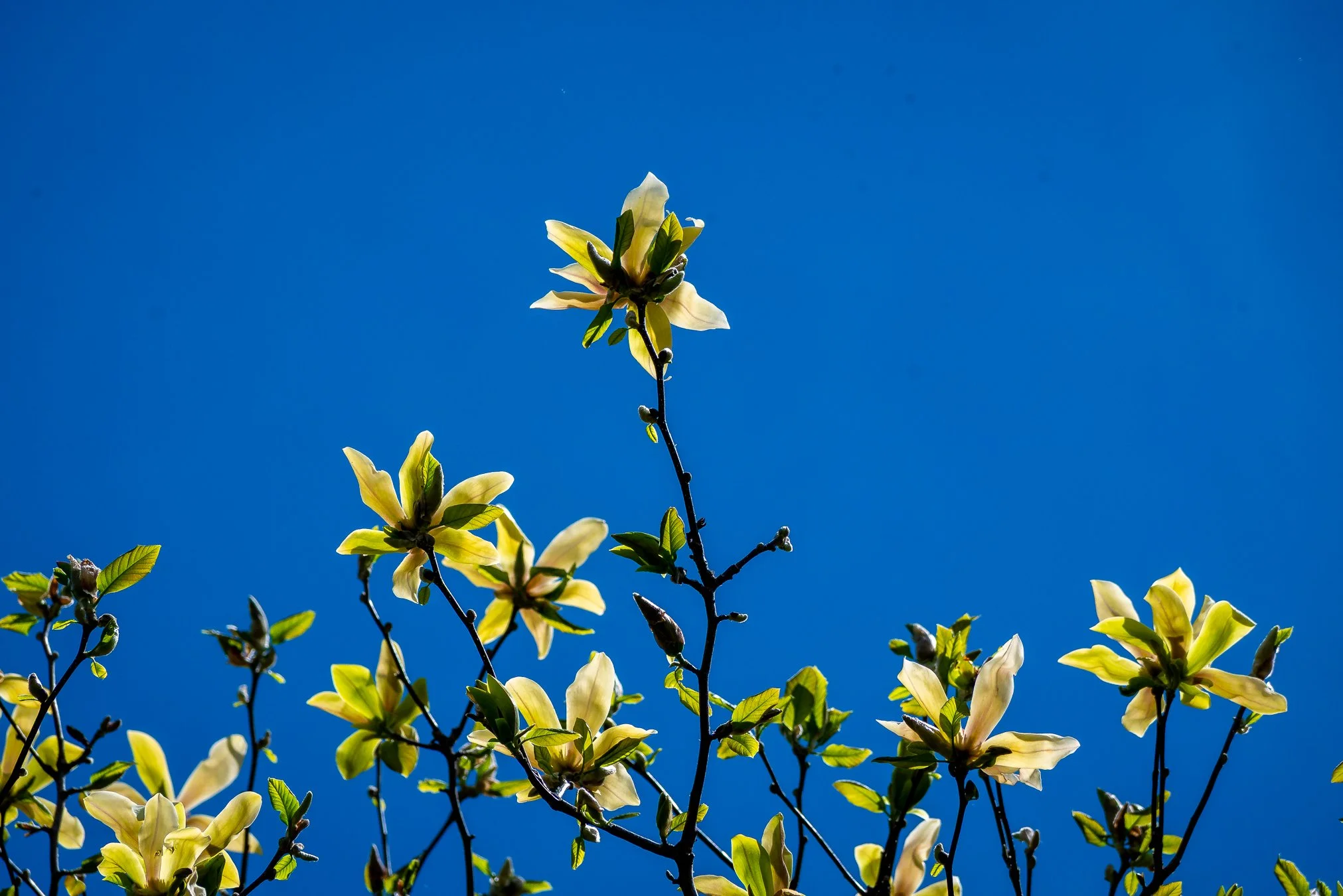
Looking up to experience the translucent flowers of the yellow magnolia against the brilliant blue sky. The experience is as much about seeing the translucent flowers as it is about the space between the flowers.
Spring greens in the woodland garden
His recent video exploring how the Japanese experience “spring greens” fascinated and inspired me enough to share some of the concepts with readers so we can all, hopefully, experience spring in a deeper, more meaningful way.
At the root of the video is how the Japanese describe the term “spring greens.”
While the rest of the world either uses those simple two words, or don’t even acknowledge the incredible new greens of spring, the Japanese have many ways and words to describe the emerging greens.
Discovering the intricacies of Shinryoku: A moment in time
Josh explains in the video that the greens of mid may are described as Shinryoku. The word describes that brilliant new green emerging in the woodland and gardens. It describes the leaves that have just opened and represent not just a colour but, even more importantly, a “moment in time.”
Shinryoku describes the particular green of leaves that have just opened –”tender, bright, almost shy.”
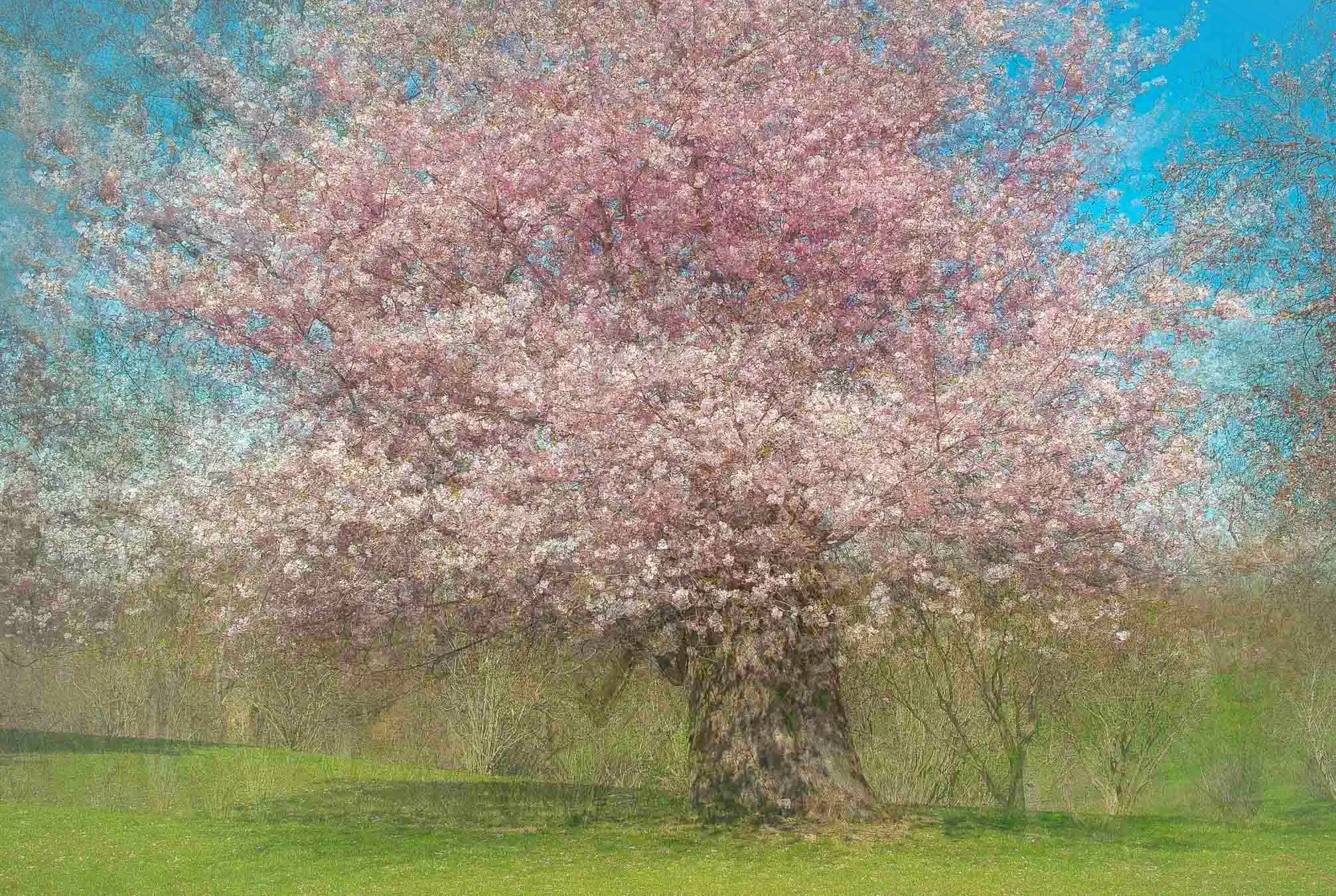
In Japan, it represents that time at the end of the cherry blossom season, but before summer heat sets in and turns the focus on the beginnings of new life emerging.
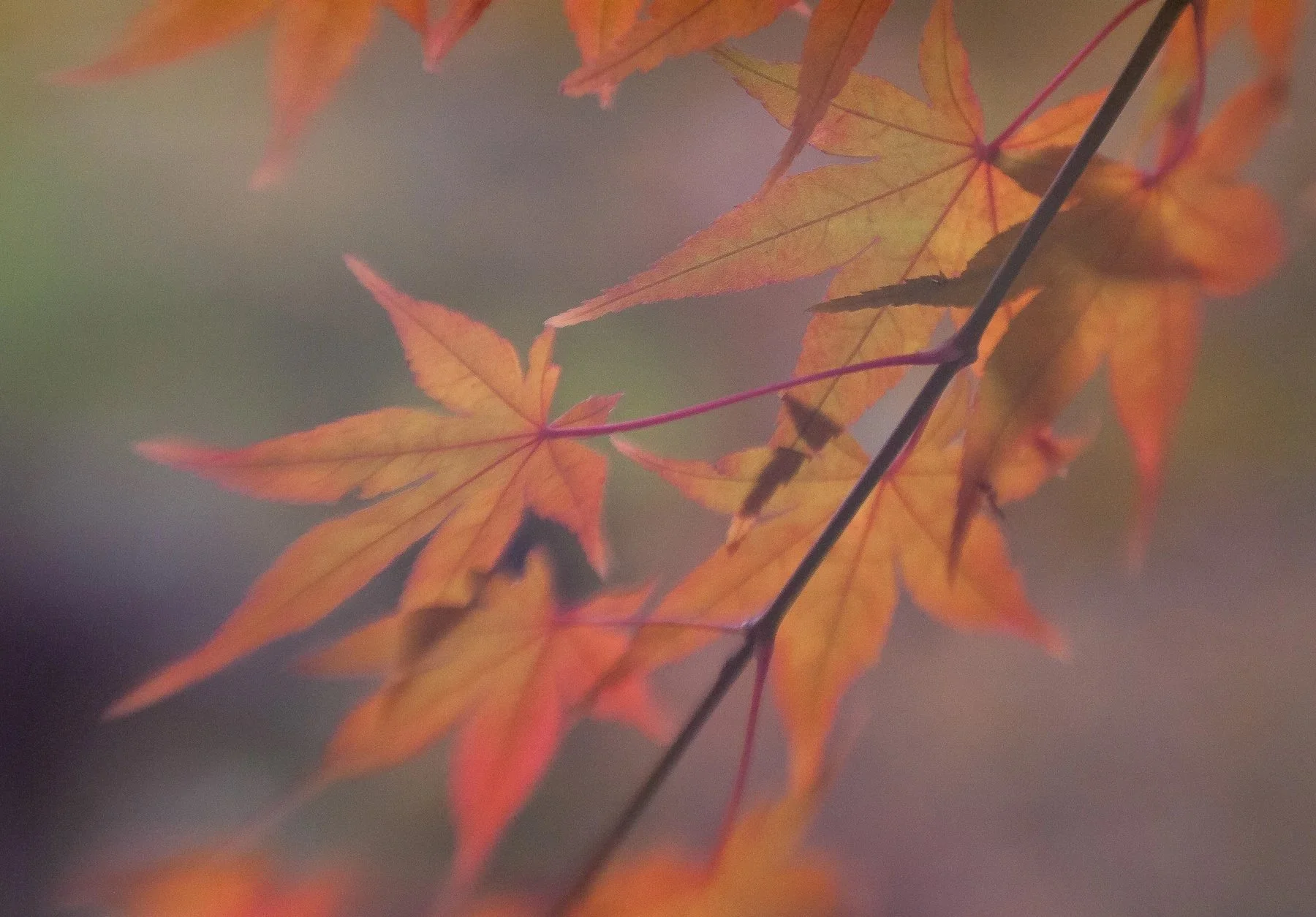
Try moving in close on back lit leaves to show the veining structure of the emerging leaves.
It’s a time many of us are experiencing at this very moment in our spring gardens.
However, so many of us are so overwhelmed with trying to get our gardens into shape, that we fail to appreciate the emergence that is ocurring before our eyes.
Shinryoku, or the feeling it brings, is important to experience and capture, whether it is just a memory and feeling we store in our minds or an image we capture with our cameras.
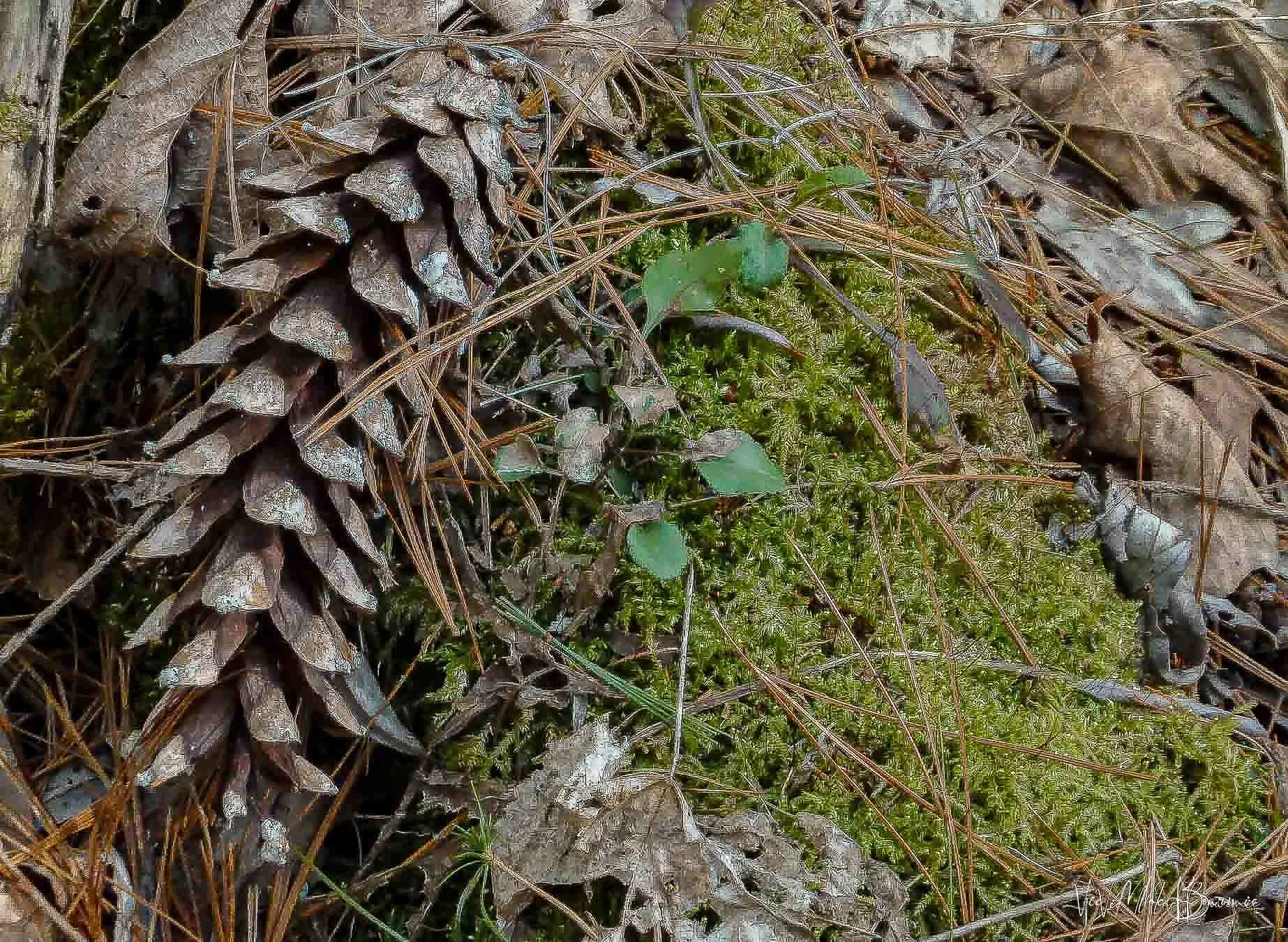
Finding beauty in the simplest things requires you to really look at your surroundings. Here, spring unveils a new beginning – the dead leaves and pine cones give way to fresh spring moss and small seedlings that are just beginning their new life on the forest floor.
Capturing early spring in the woodland garden
Josh’s video explores the many approaches to documenting Shinryoku. Here I’ll just touch on a few and if you are interested in exploring further you can watch his video.
The first involves moving in close to exerience the translucency of the emerging leaves. Capturing the small details in the leaves as sunlight that filters through the leaves and flowers brings out the delicate veining.
To quote Josh: It is an important time when we get to capture the “beginning of something that will spend the rest of the year becoming.”
This is the time to either use a macro (close focussing lens) or a telephoto lens to move in close and use backlighting to capture the translucency of the leaves and flowers, like I tried to do in some of the images above.
This is the time, as Josh explains, that we: Capture the “beginning of something that will spend the rest of the year becoming.”
It’s an opportunity to photograph a “thing that is not yet what it will be. “
Shinrin-yoku: Looking up and Forest bathing
The Japanese concept of Shinrin-yoku or forest bathing finds its success because it encourages the eyes to look outward and upward.
The second approach is to simply look up through the leaves and the sunlight filtering through them. It works so well because, in spring, leaves are still transparent.
Josh suggests to: Find a tree. Lie down point your camera straight up. Capture the leaves’ transparency. Contrast and geometry. Dark branches against that luminous green. … the negative space betweeen them when the sky comes through.
“You can’t look up to a canopy like that and hang on to a to do list,” he says in the video.
In our backyard in spring, I often look up through the branches and flowers of our yellow magnolia. The mellow yellow flowers light up against the backlit sky. (See second image in post.)
Later, when the massive bright yellow locust tree leaves begin to emerge, the results can be spectacular.
It’s best to underexpose the scene to capture the bright yellows and greens against a dark blue sky. A polarizing filter will further deepen the sky and help remove the bright highlights off of the waxy leaves.
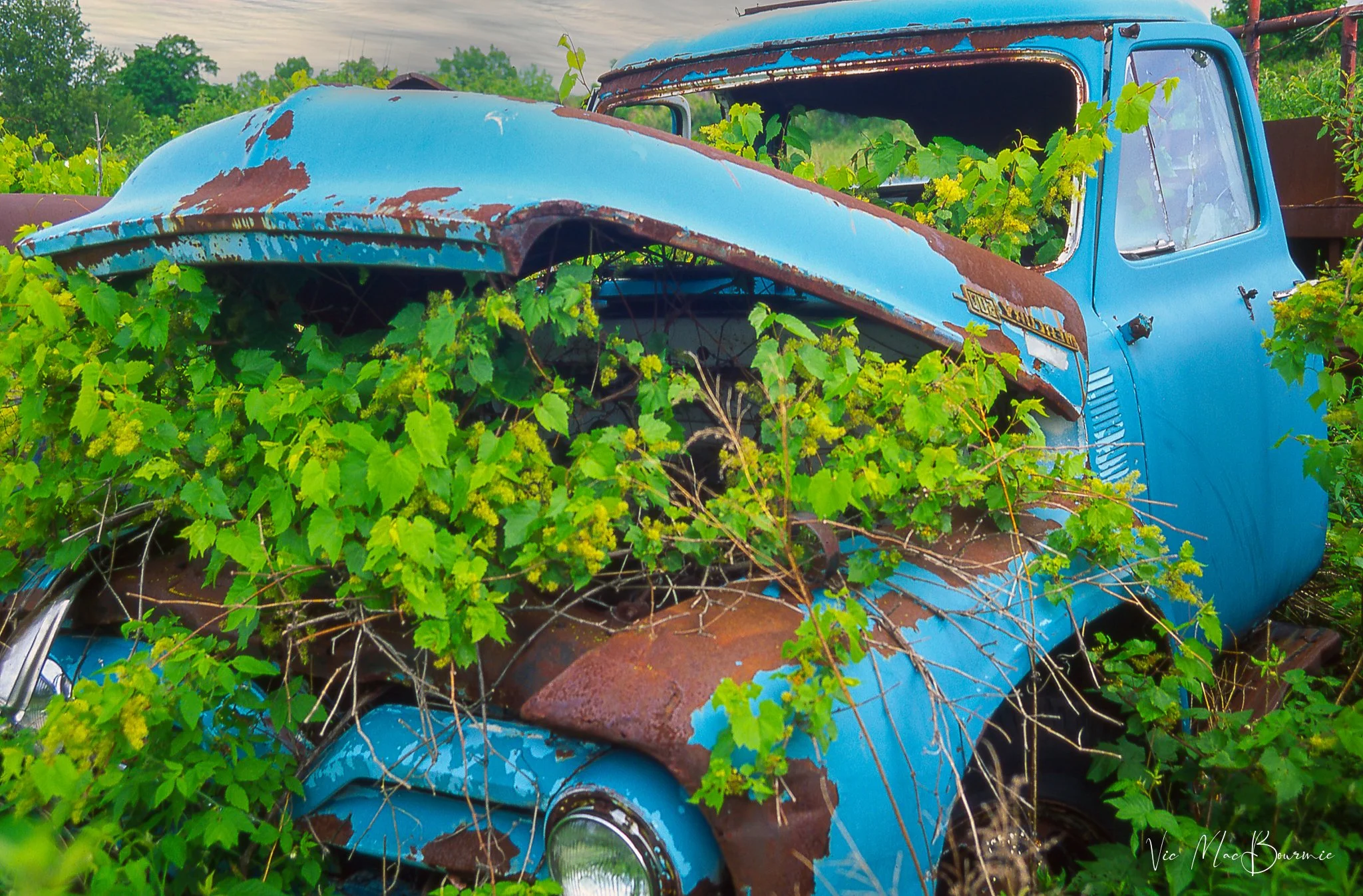
Although this is not in my garden (thank goodness) I think It represents the perfect combination of old and new and shows how, over time, new growth slowly covers last years newness. I like to compare this to fallen leaves and how so many people are obsessed about clearing out every last leaf on their properties in fall and early spring. If new growth can eventually cover this old car, imagine how quickly it can hide last year’s decaying leaves. Lesson learned: Relax and let nature do its work.
Wabi Sabi: Finding beauty in combining the old and the new
In my mind, the most successful gardens are a blend of old and new. It's one of the reasons I am drawn to the aesthetic of European gardens where plants find a home inside an ancient stone urn or vines climb the walls of historic castles. Documenting this in our own gardens is not always easy, but if we look hard enough we may be able to find a moss-covered urn or rock. An ancient boulder or tree covered in mosses and lichens.
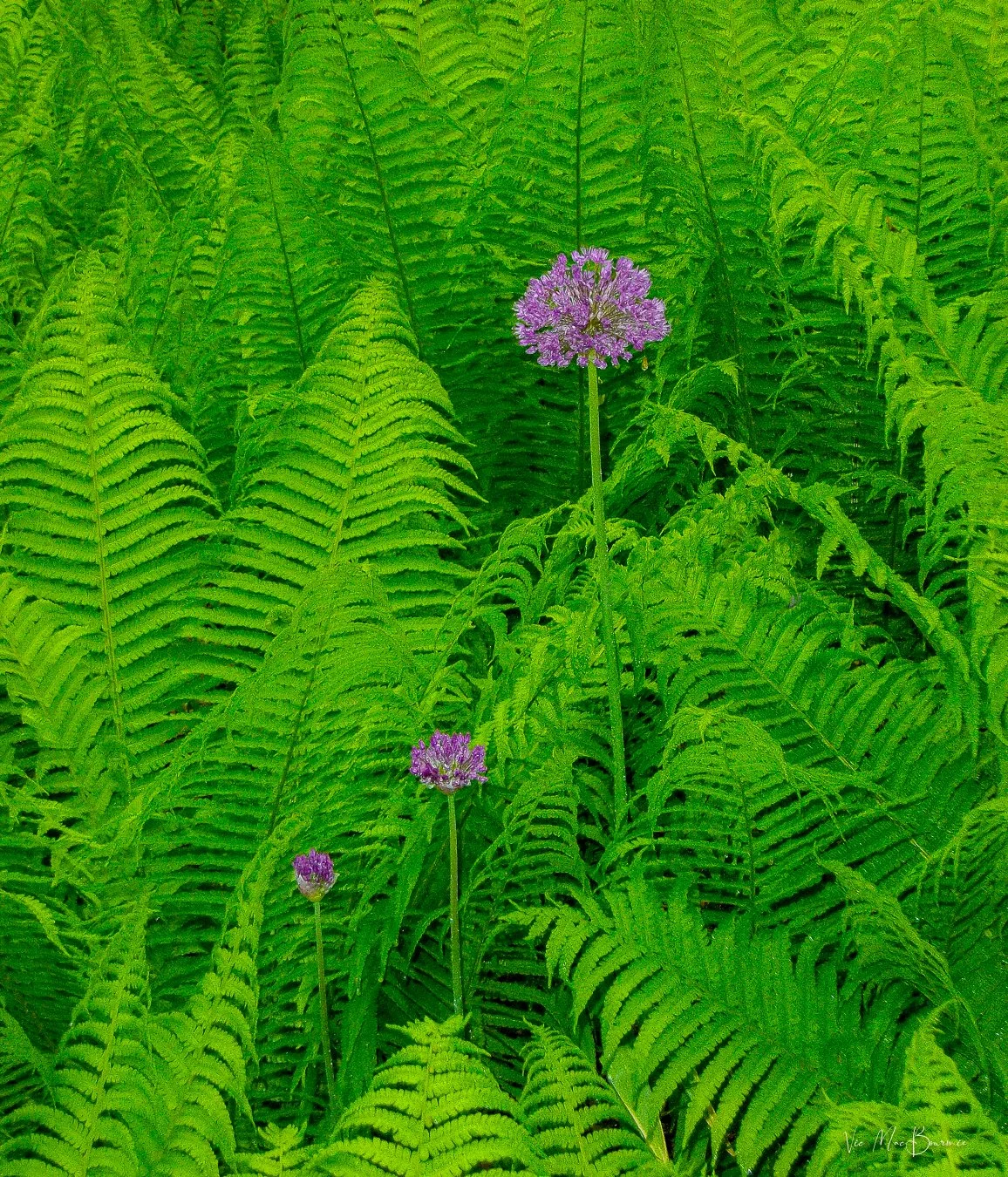
The beautiful early greens of spring are punctuated by the emerging purple alliums.
Now look to capture new growth up against the old tree, branch or moss-covered container. Maybe an old garden gate with a new vine growing on it. …
Josh so eloquently describes the core of Wabi Sabi in his video: “Beauty lives in the relationship between aging and renewal. Not in one or the other. The green is more alive when it is next to something that has been here much longer. The rough stone is more beautiful when something young grows through it
This is actually how Japanese gardens work. Every element is in conversation with every other element. You don’t place a stone alone, you place it in relationship.
Apply that thinking to your photography. You are not dicumenting just the leaf, you are documenting a relationship.
Time and now permanence and impermanence. More interesting than a simple photograph it’s a conversation. It’s an about it’s not a picture of something it’s about something.”
This is the perfect time for us to get out in the garden and experience, maybe even capture photographically, what the Japanese refer to as Shinryoku.
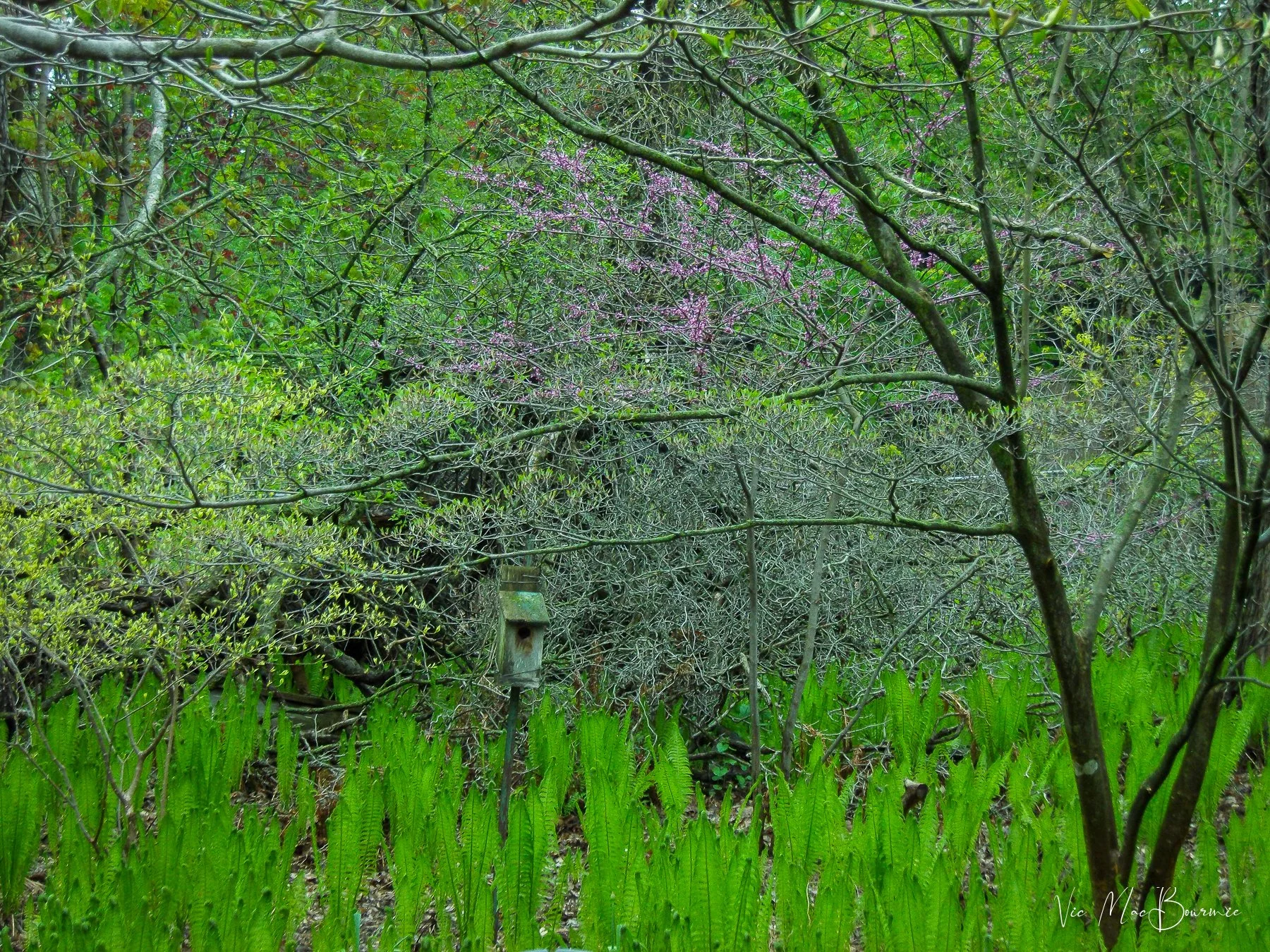
Woodland Garden: Mid May brings lots of little surprises
Mid May is an exciting time in the woodland garden when spots of colour break the beauty of the spring greens.
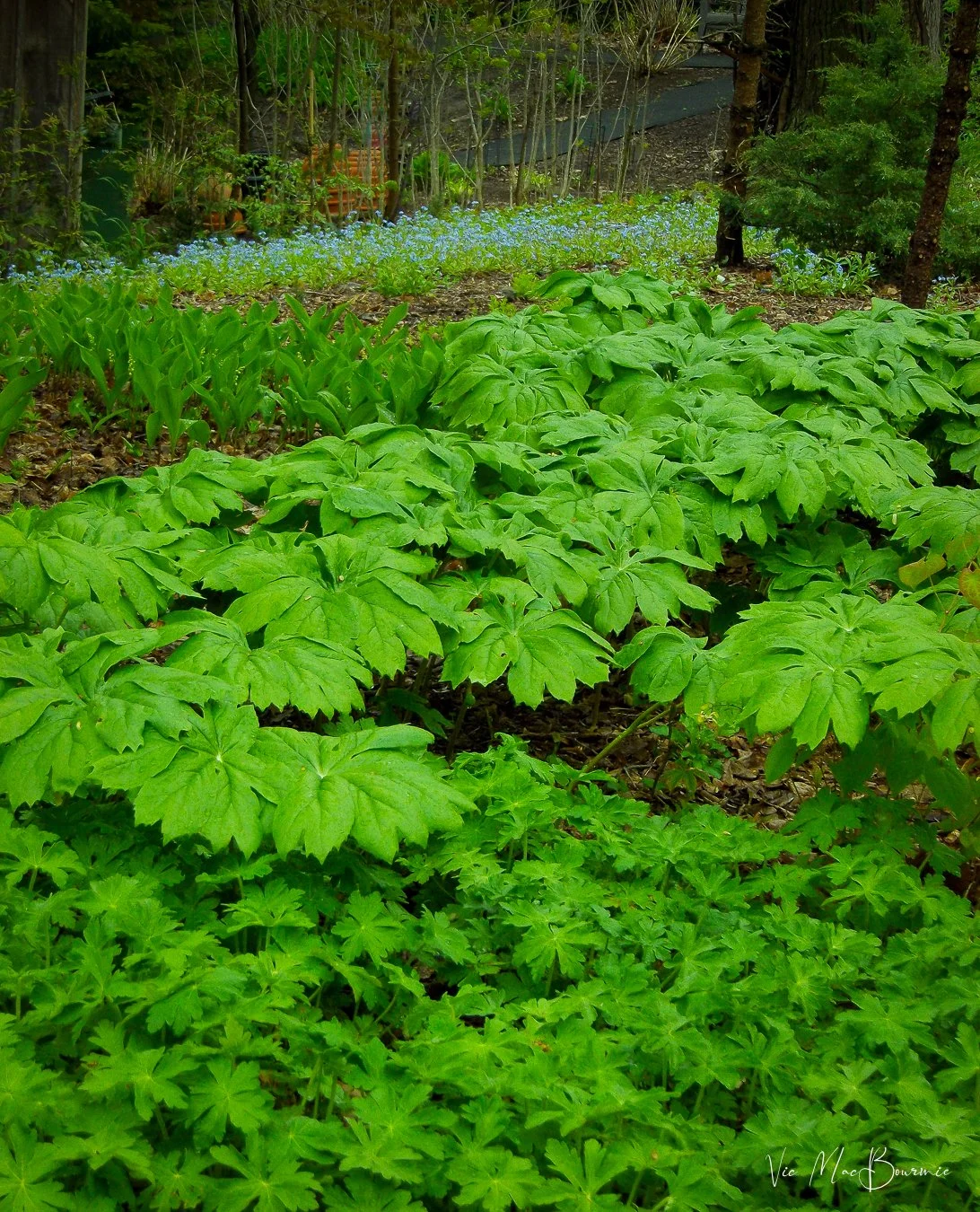
Native wild geranium (cranesbill) front, join Mayapple and Forget-Me-Nots for an early spring show in the woodland garden.
Native plants sparkle in spring
It’s the middle of May but it’s cold, really cold. In fact, earlier this week, if you can believe it, there were overnight frost warnings here.
Frost warnings and cold days, however, are not slowing down our hardy native plantings from moving forward and actually performing very well, thank you.
Leading the way are the Mayapples that are fully stretched out and creating a lovely green carpet in the main area of our garden that they are slowly taking over. They are also blooming in a distant corner of the woodland where I can see them, but rarely wander over to that “wilder” part of the yard.
But don’t count out the lovely arching stems of Solomon’s Seal that are reaching out for the sun with their delicate little green flowers hanging down below the leaves.
Solomon’s Seal, whether it’s the straight native or the variegated variety, is a good addition to any woodland garden adding a needed sense of verticality in the spring garden and lasting throughout the summer well into fall. Not unlike Mayapple, its tattered, beigey fall look is almost as nice as it is dressed in its spring greens.
The Forget-Me-Nots are also putting on their subtle spring show with their soft, mist-like haze of blue forming a perfect backdrop to the Mayapple and geranium ground covers. These lovely, dainty little flowers are an important early source of nectar for early emerging insects and butterflies.
In the woodlands surrounding our home, massive waves of Forget-Me-Nots fill sunny spots on the woodland floor spilling over the deer paths that zig zag through the forest.
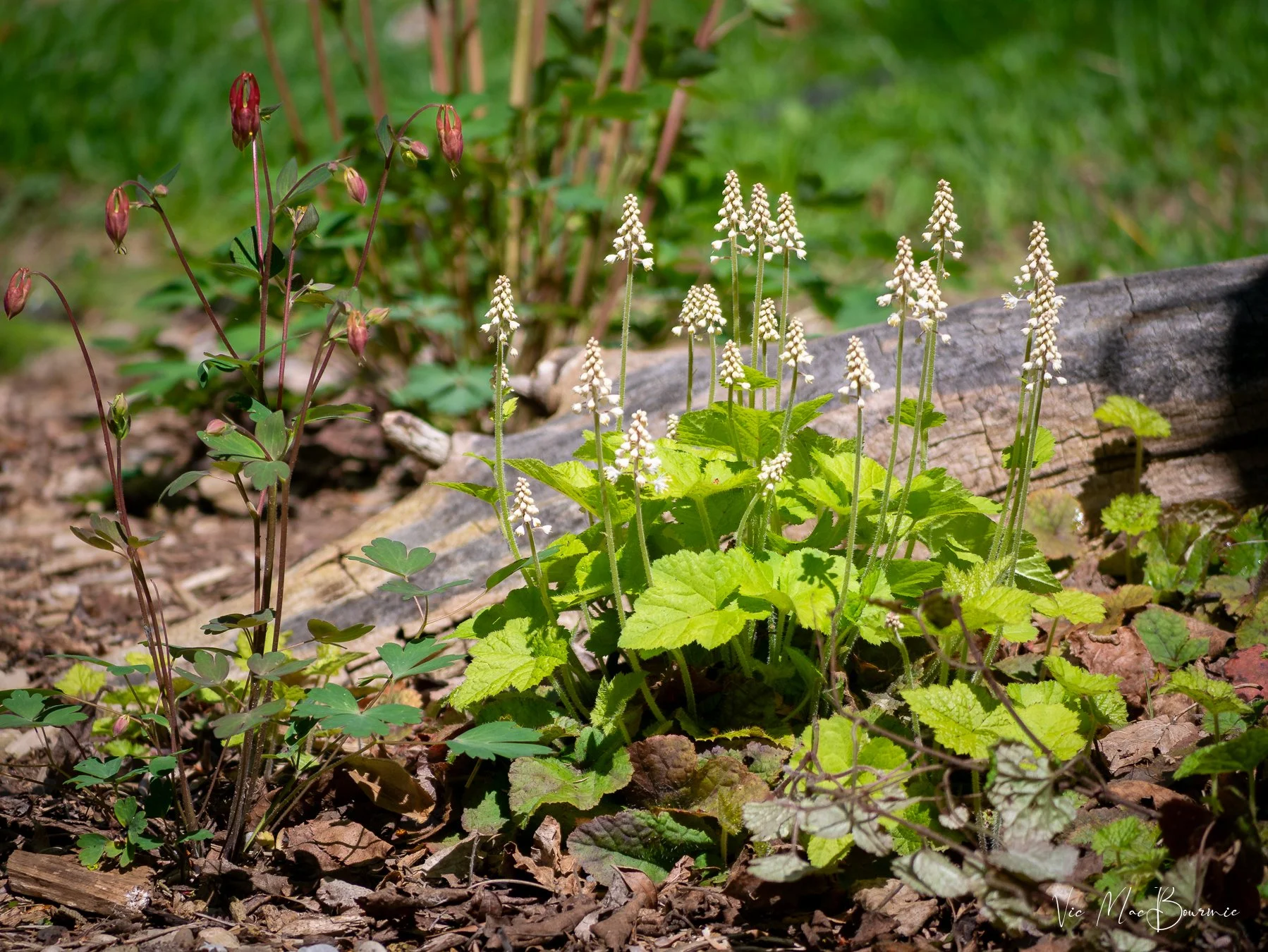
Delicate native columbines and foamflower prepare to put on their spring display. The vibrant spring greens of the foamflower are hard to miss.
And, while spring greens are always a joy in the woodland garden, let’s not overlook the hints of colour that are already poking through the greens.
Just in time for our hummingbirds’ arrival, our native columbine are about to explode in red-and-yellow flower. A favourite early source of nectar for migrating hummingbirds, Columbine are another early spring favourite that needs to be in everyone’s woodland garden.
In the image above, Foamflower (Tiarella cordifolia) grows happily alongside a Columbine as part of one of our many newly created little woodland vignettes from last year. These were created from cut branches pruned from our larger trees and, rather than disposing of them, we “planted” them in the ground and planted woodland plants around them. Over time they will break down and add nutrients – various fungi – to the soil. For more on our woodland vignettes (log planter), check out my post previous here.
Joining our Columbine, of course, are the always popular bleeding hearts. Our clumps are already blooming in the back garden where they get maybe six hours of sun while the leaf cover is still sparse.
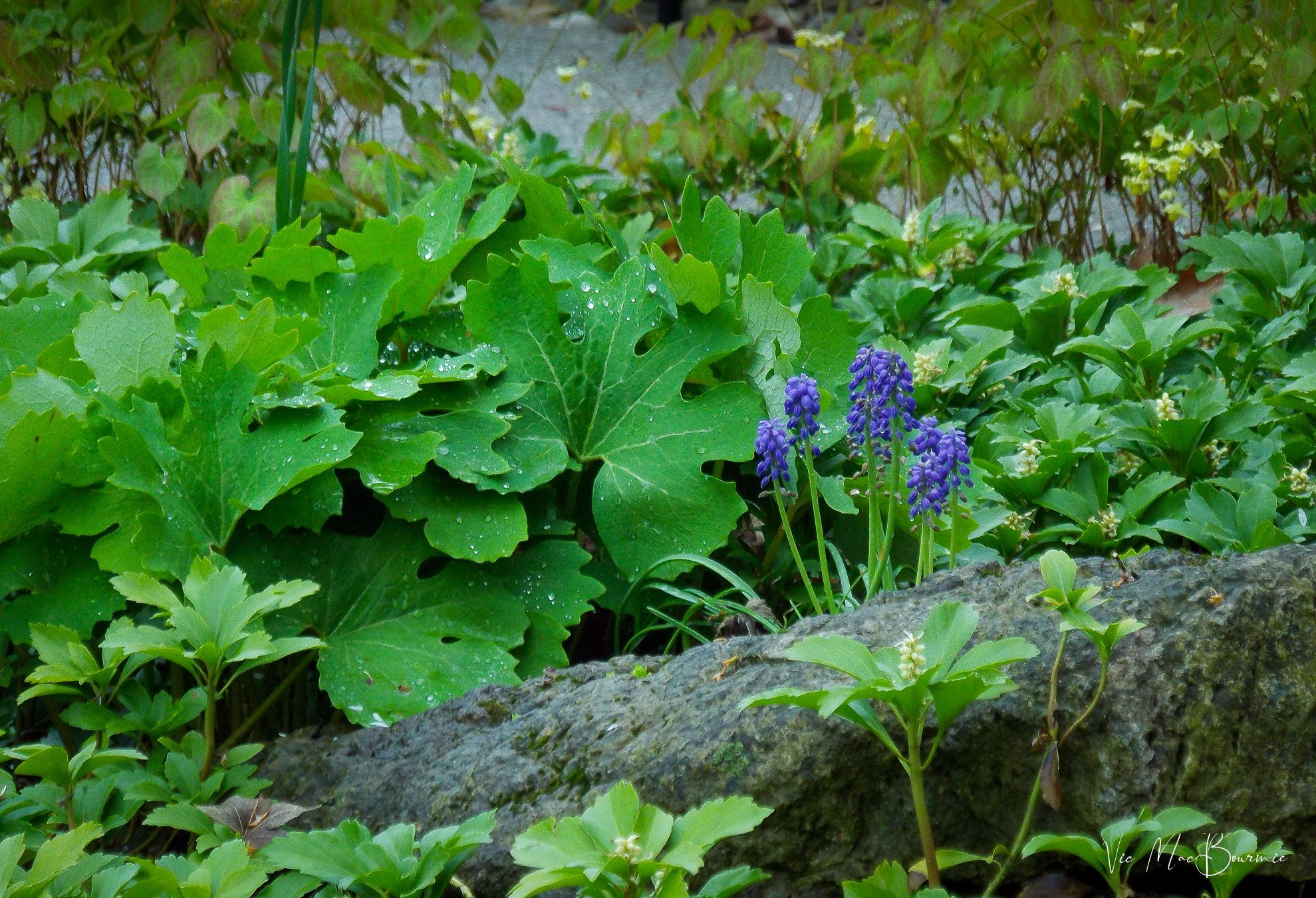
The leaves of native bloodroot form a nice clump alongside a grape hyacinth. It’s all part of our front garden’s ground cover along with non-native pachysandra and epimediums along with black-eyed Susans and other summer-blooming plants.
Both the Columbine and bleeding hearts are a photographer’s delight so make sure to get out and document them before they past their prime.
Right beside the Columbine, our foamflower (Tiarella cordifolia) is preparing to put on a show. It’s the first year with foamflower, so I’m looking forward to experiencing it in the garden and photographing it at its prime.
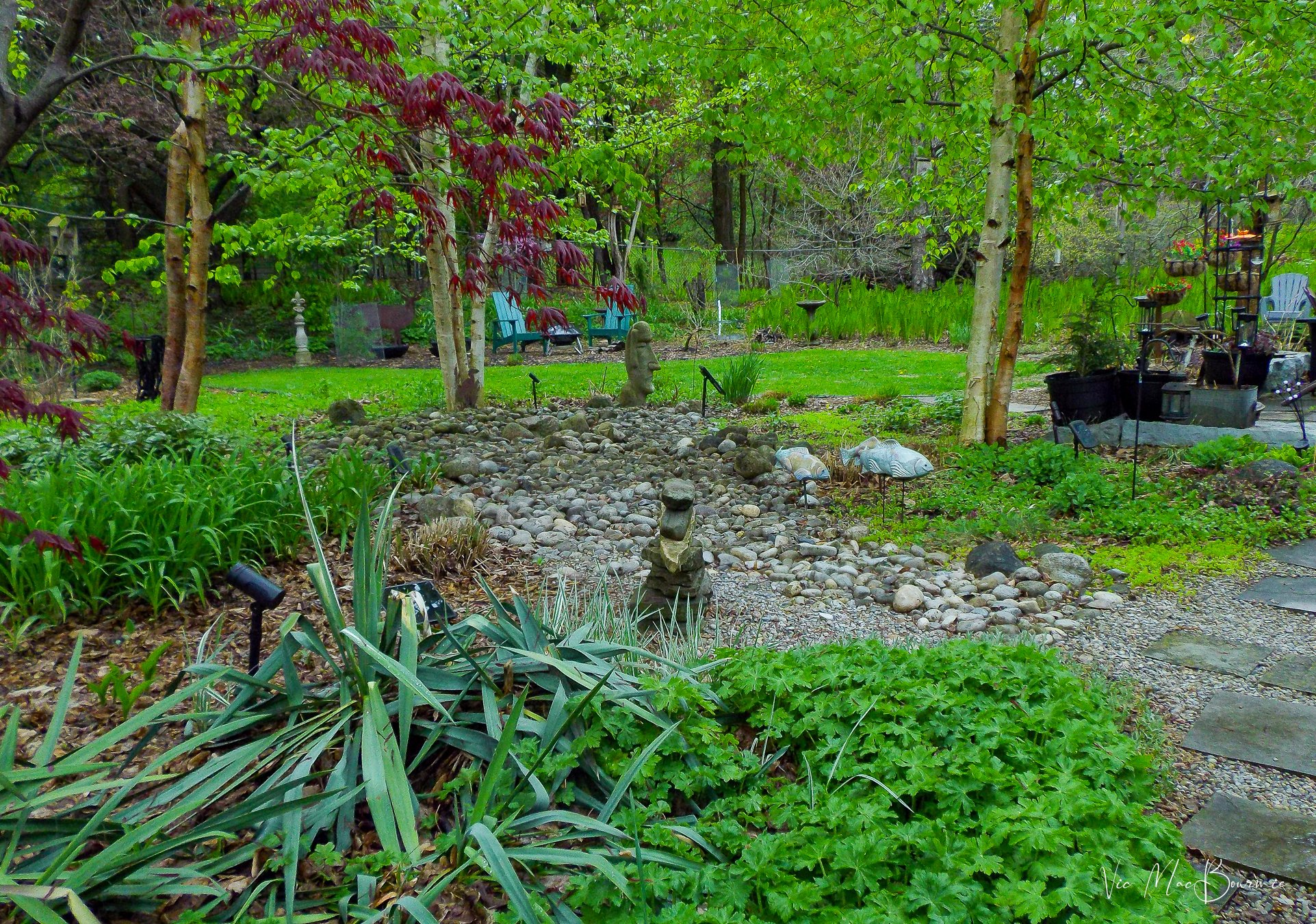
A bigger look of the spring garden shows the mini birch grove forming a canopy over the bubbling rock and dry-river bed that leads to the stepping stones of the pathway. Japanese maples and low-growing ground covers with larger ornamental grasses fill out the area as spring turns to summer.
Throughout the garden, ferns are unfurling, the eastern redbuds are beginning to put on their magnificent show and the Flowering dogwoods are hinting at what’s still to come.
I’ll let the following pictures tell the rest of the story.
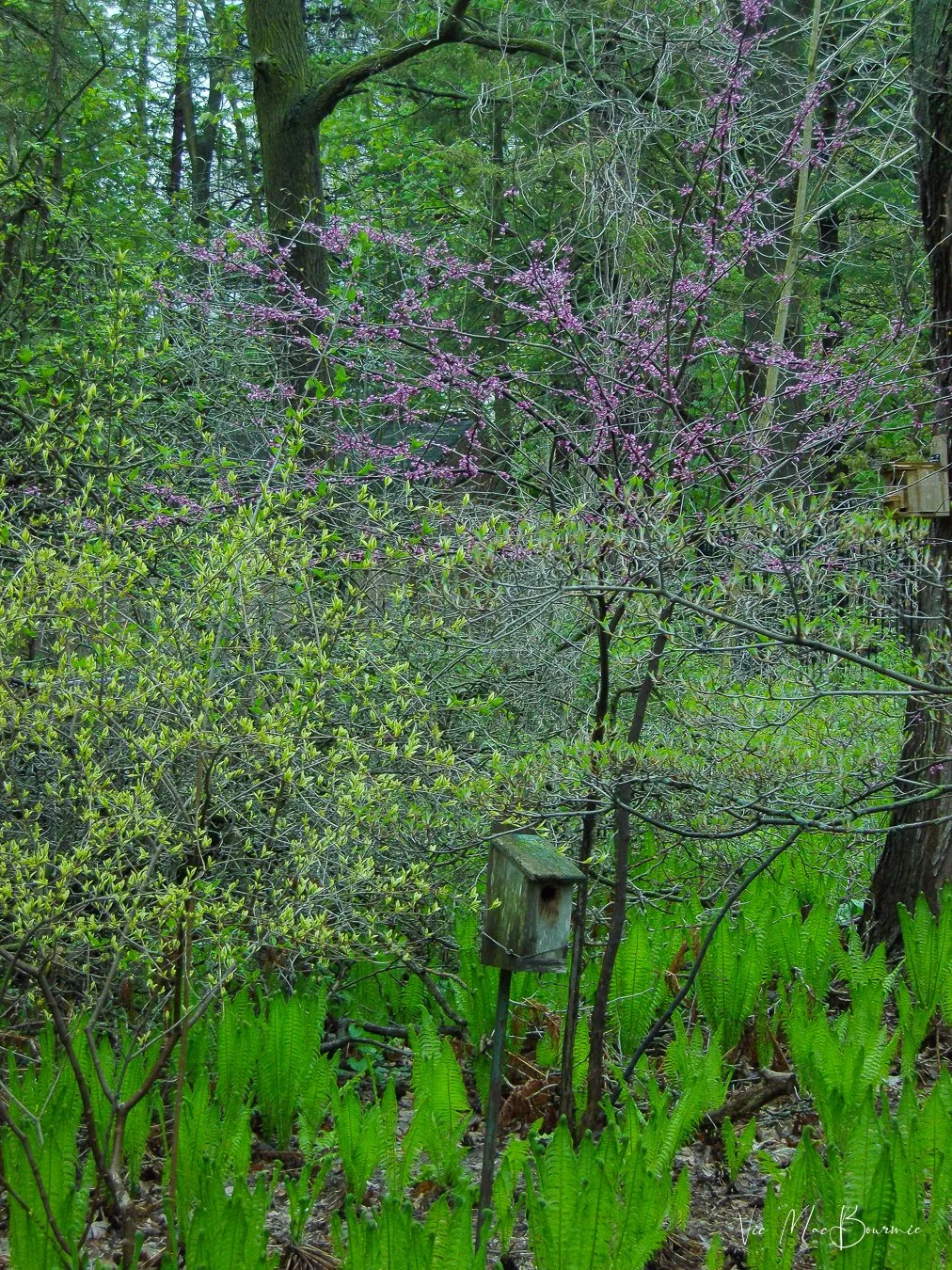
A multi-stem Eastern Redbud blooms alongside a Cornus Mas Dogwood in the fern garden.
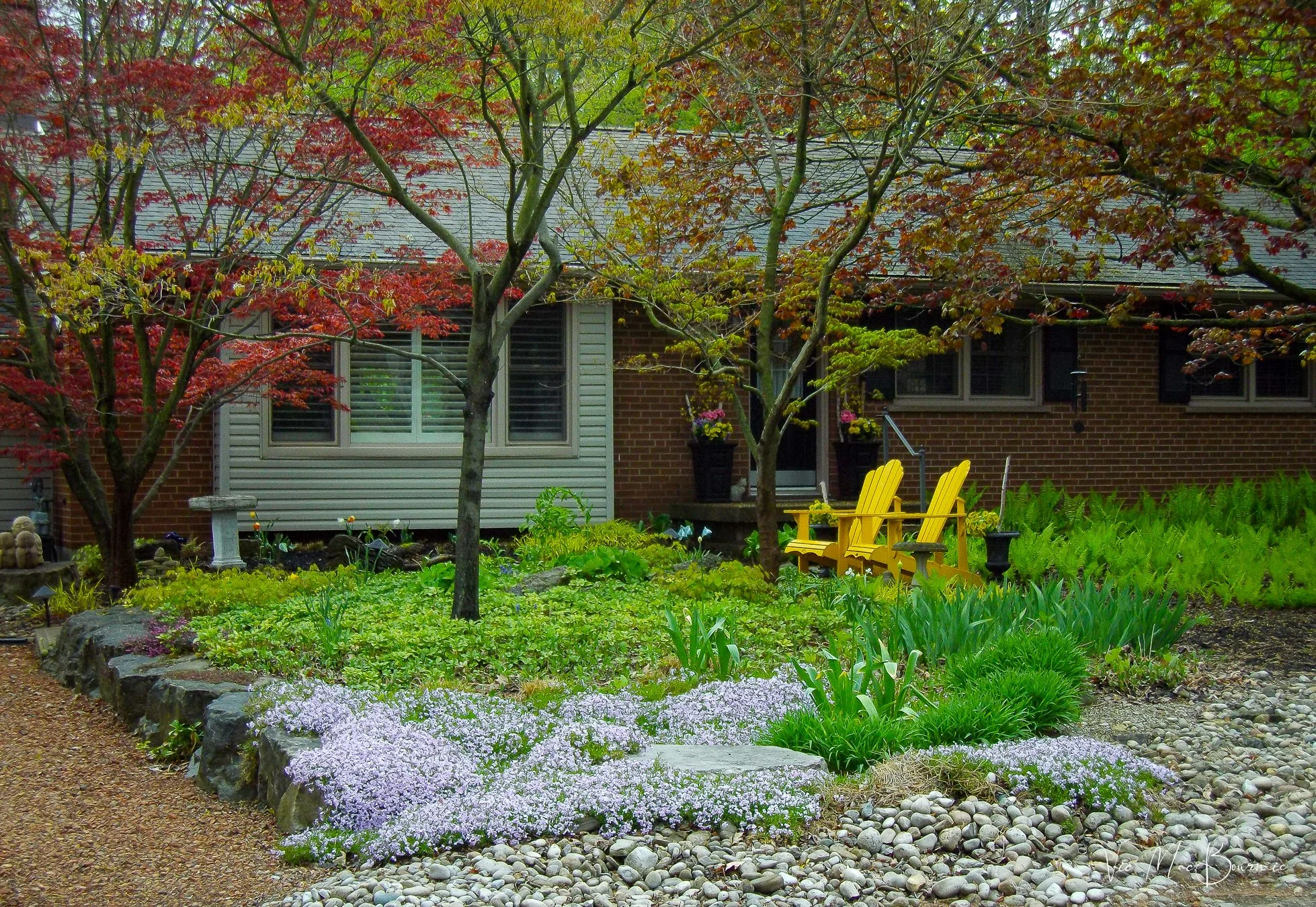
The front woodland garden showing the creeping phlox, Japanese Maples and serviceberry tree.
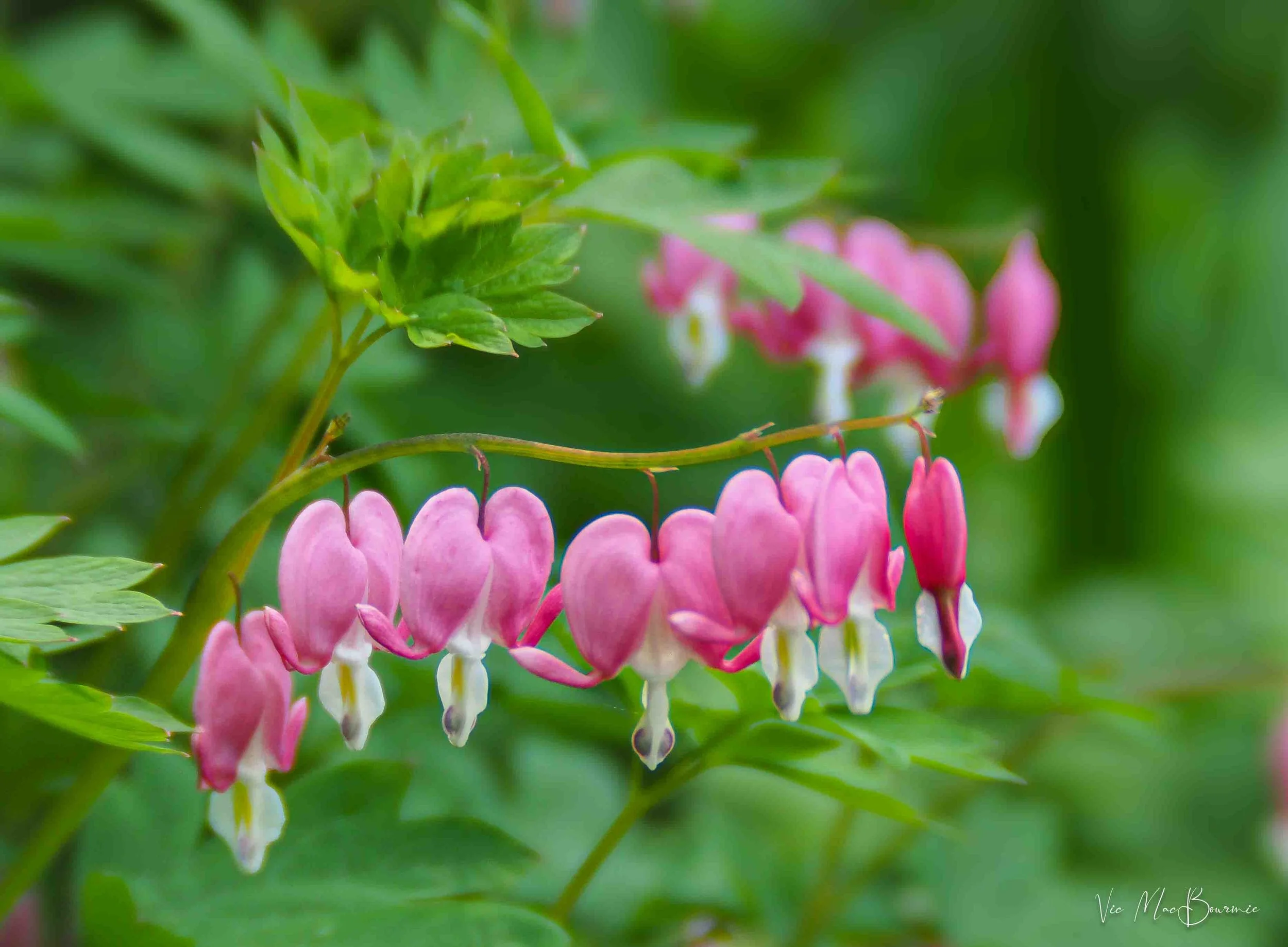
Bleeding heart is always a fan favourite in any garden.







Exploring the woodland garden: Creeping phlox explodes with colour
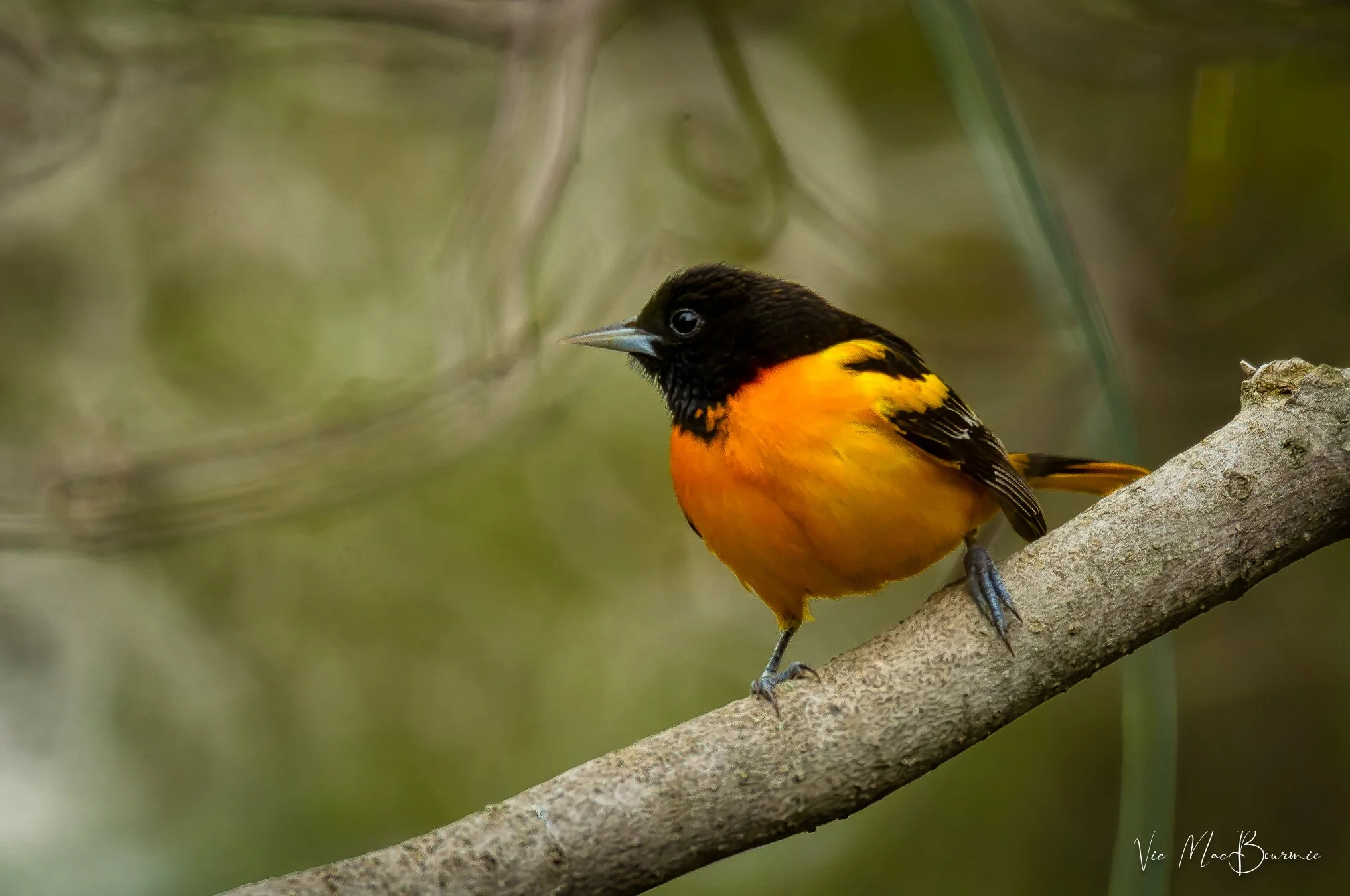
Early May in the woodland garden brings with it a rush of new birds from warblers to orioles and hummingbirds. In addition creeping phlox is beginning to put on its spring show in our front garden.
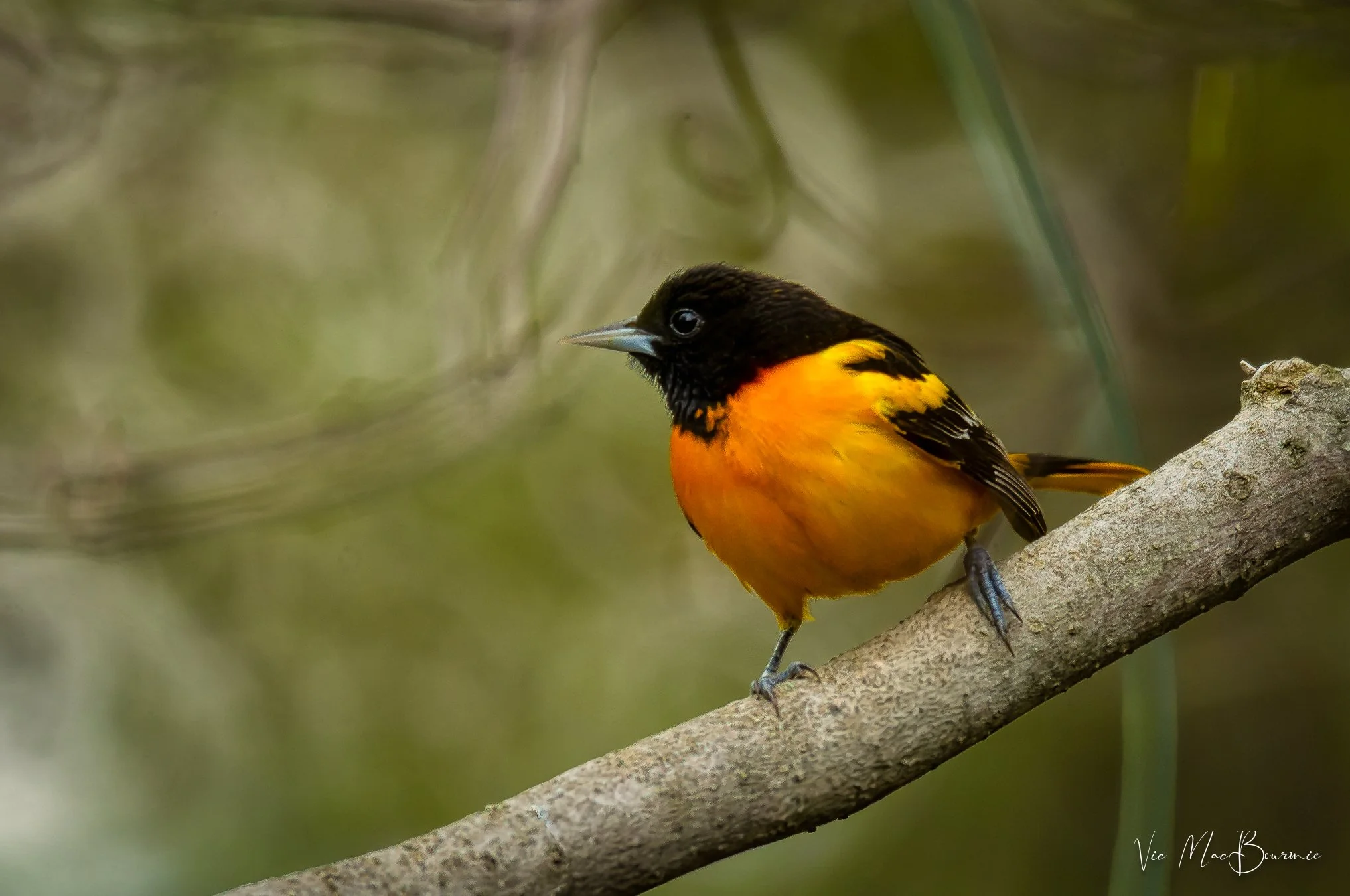
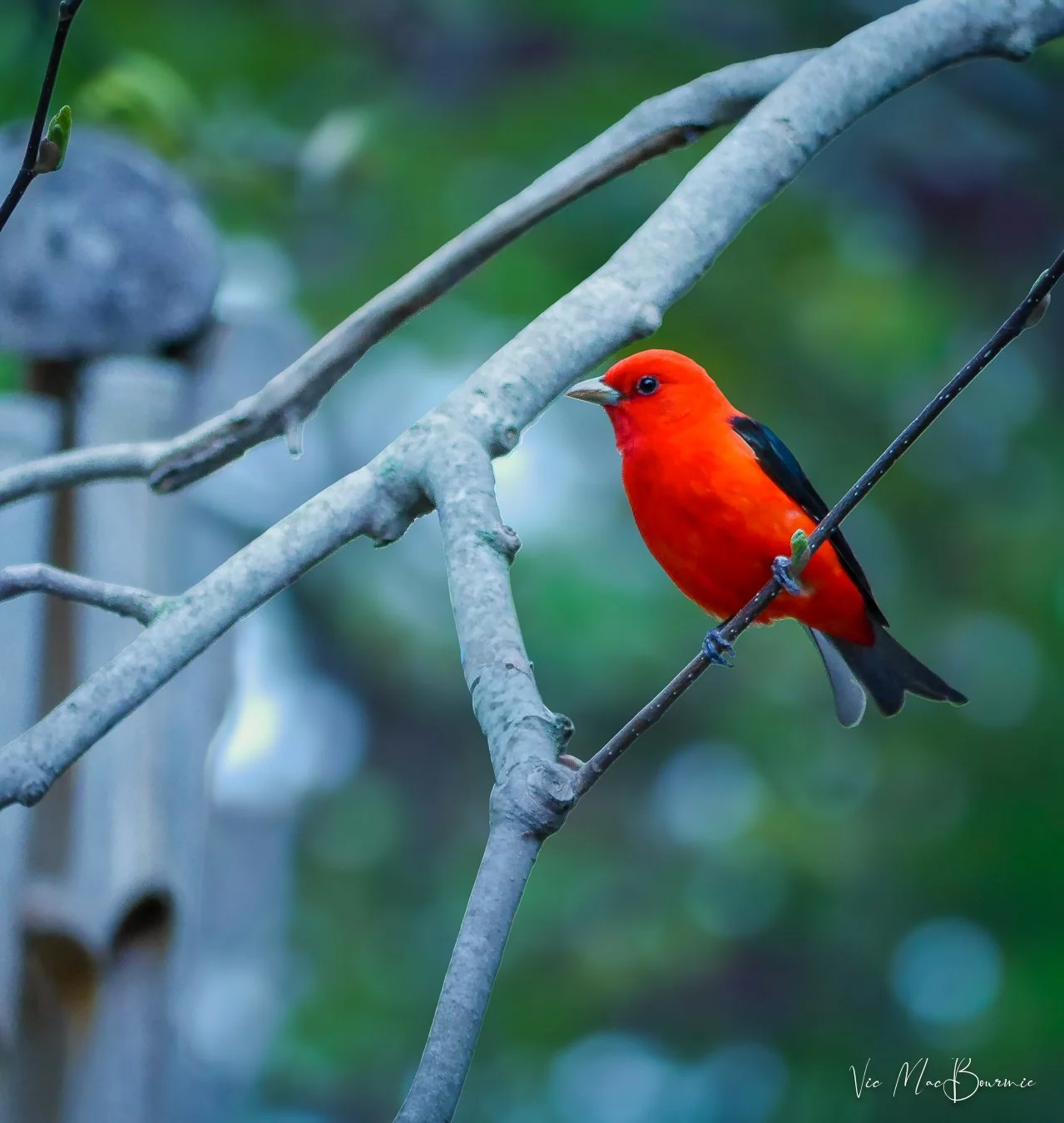
The Baltimore Orioles arrived this week in great numbers. at one point we had five males and one female working our feeders. As soon as I saw them appear, I brought out the orange slices and grape jelly. I’m hoping some of the them stick around and raise a family or two. This one came quite close and allowed me to capture it just before it flew down to a feeder.
It’s May 5th and the Orioles and hummingbirds are back in town
Every spring I look forward to the explosion of colour our creeping phlox provides in our front garden.
In fact, it is the introduction to our garden – the first plant you come across as you approach from the street. I like to let it go wild and weave in an out of the river rocks and boulders across the front. It even cascades over the side of the boulders along our driveway and creates a colourful vignette for a week or two.
This is a native plant that deserves a place in every garden. It’s an early source of food for pollinators and welcomes spring like no other groundcover can. It’s best to treat it like a ground cover and let it run through the garden, around plants, rocks and tree stumps.
It’s well behaved, yet can fill out a space in a relatively short period of time – a couple of seasons and your small patch has doubled or tripled in size.
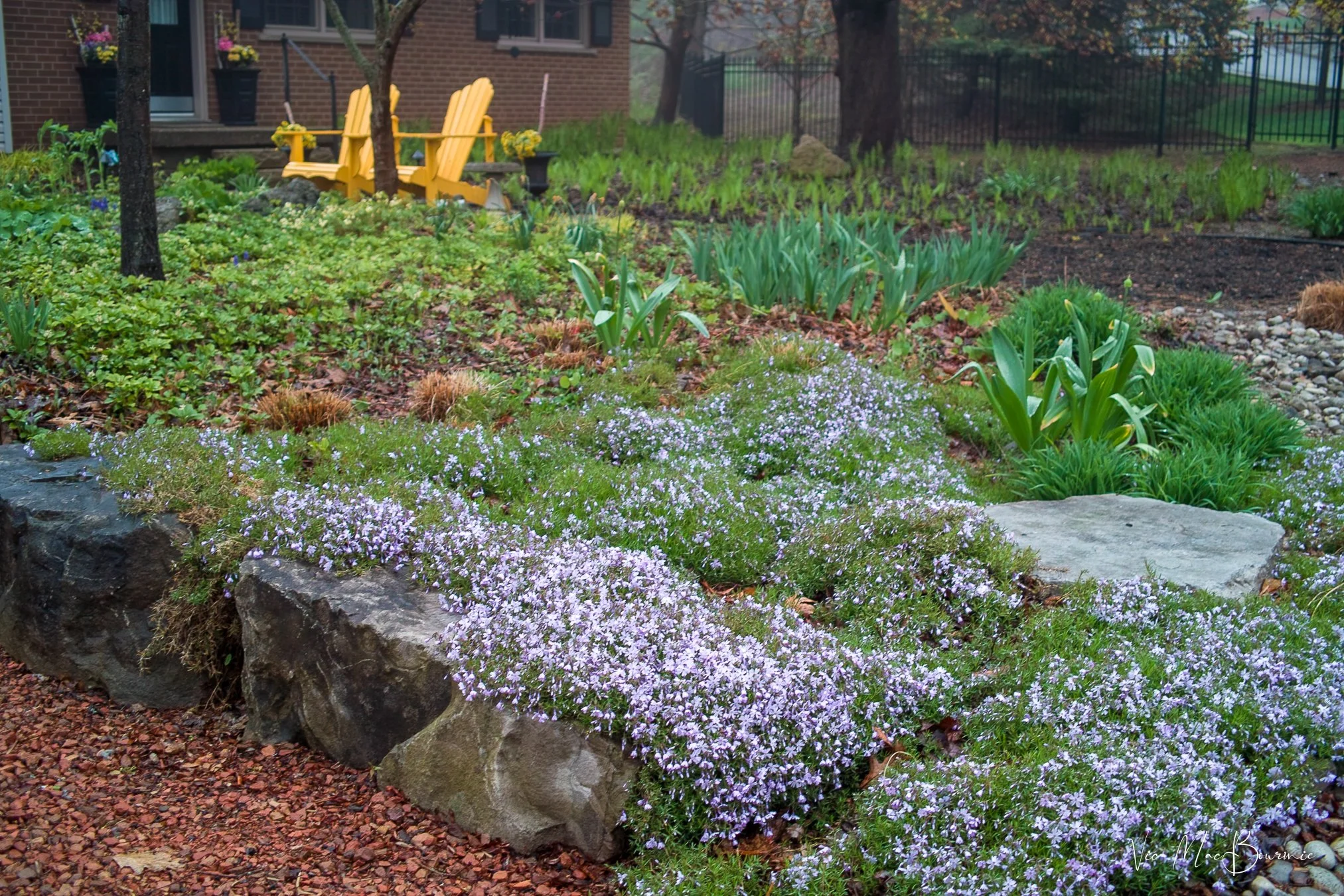
The early stages of creeping phlox in the front garden. Within a few days it will me a mass of purple flowers and remain like that for a few weeks before becoming a green mat of low-growing highly textured foliage.
In my opinion, trying to grow it in a small clump like many traditional perennials just doesn’t do it the justice it deserves. This beautiful plant commands attention in the spring while in flower, but lays back in summer to form a lovely moss-like low growing, highly textured ground cover that makes the perfect backdrop for your summer-flowering plants.
• For a more detailed post on creeping phlox and other great substitutes for moss in the woodland garden, be sure to check out my earlier post here.
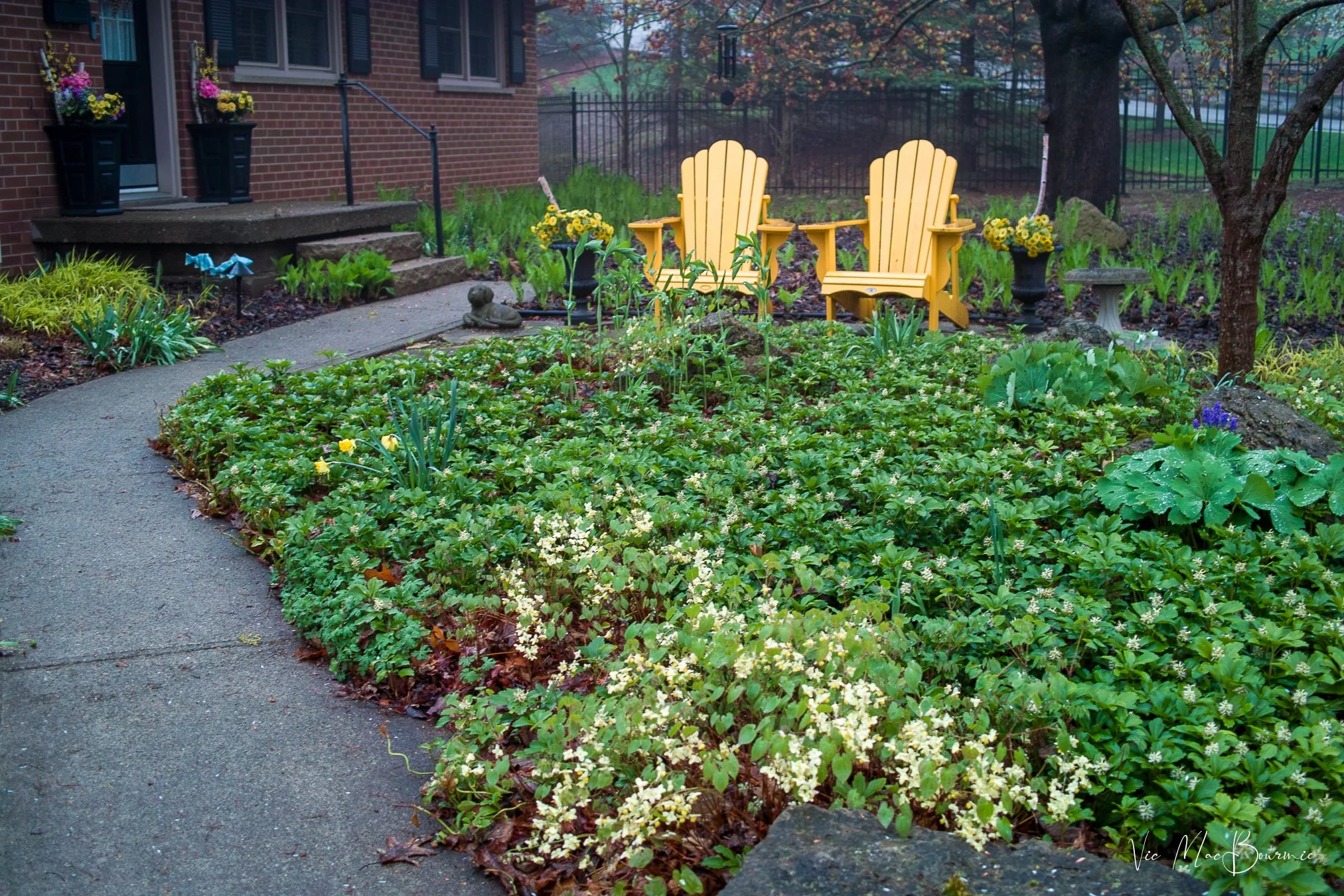
Many years ago I removed all the grass in the front of our home and replaced it with a number of ground covers from ornamental grasses (see Japanese forest grass top left) natives like Bloodroot, trilliums, Solomon’s seal and a variety of ferns as well as non-natives including pachysandra and epimediums that can be seen in the foreground. Large hosta plants also grow close to the house but are often eaten by the local deer population.
Of course, the creeping phlox isn’t the only plant making an appearance as April gives way to May.
Our woodland understory trees – serviceberries, Eastern Redbuds and pin cherries – are just starting to bud out, and with them have come the birds. I’m looking out the window and seeing five Baltimore Orioles working the feeders stocked with oranges and jelly. The hummingbirds have returned and my Merlin app tells me a variety of warblers are working their way through the upper tree story. They are joining our regulars – juncos, cardinals, chickadees, blue jays, woodpeckers, nuthatches, various sparrows, goldfinches and wrens.
• For my full post on serviceberries click here.
• For my earlier post on three of the best Carolinian forest trees including the Eastern Redbud click here.
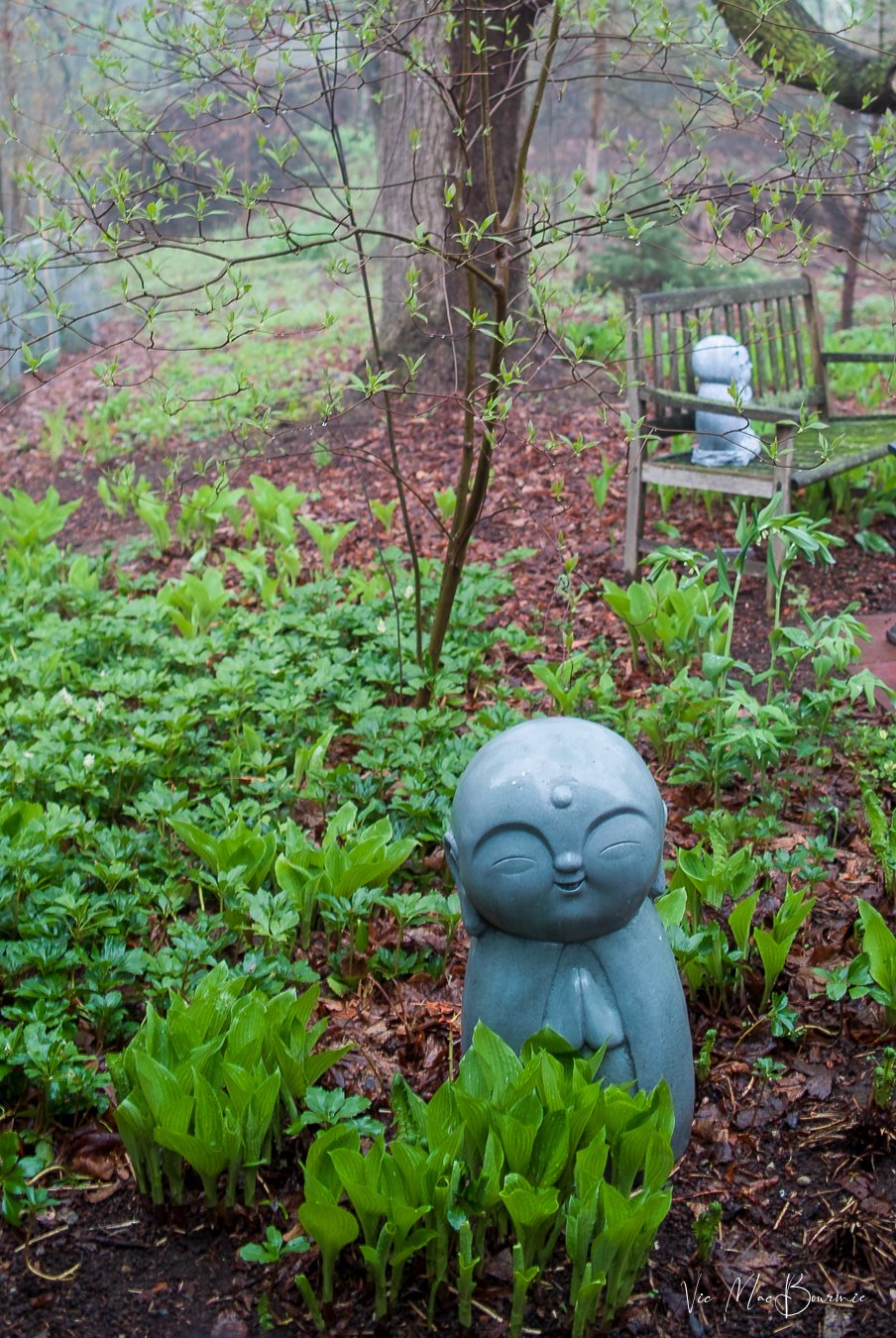
Visitors to our back gardenThe entrance into our back are greeted by this friendly little Jinsu who sits among a combination of ground covers including hosta, ferns Solomon’s seal, trilliums and wild geranium just to name a few. An alternate dogwood (Pagoda Dogwood) is just beginning to wake up from it’s winter sleep.
if you look closely in different parts of the yard, you’ll see the native columbines just getting ready to offer their lovely little blooms to the hummingbirds and other insects.
The bleeding hearts too – a photographers’ dream plant – are just starting to bloom alongside trilliums, Solomon’s seal and the May Apple.
Of course, the various hosta and ferns are a few weeks away from putting on a show. Each day they reveal just a little more of what’s to come.
Tick problems and remedies
Unfortunately, all this excitement brings with it a dose of reality in the form of an epidemic of ticks.
These things appear to be everywhere this year.
They are in their nymph stage and are extremely difficult to see. Our dog, Colby, has to be kept on the patio to keep the ticks off him and we are having to take extra precaution every time we wander into the garden.
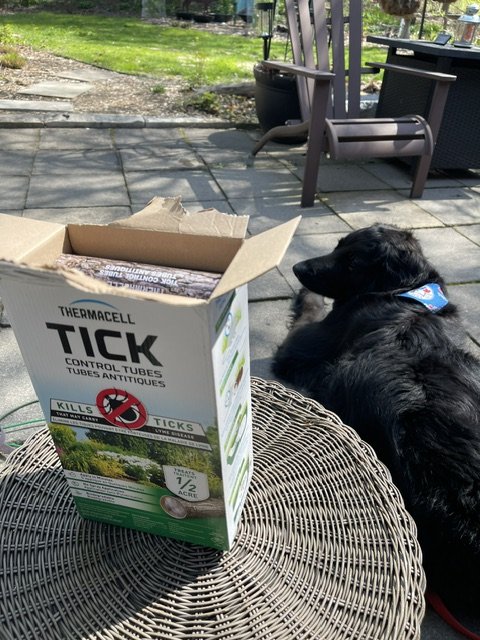
We have never experienced a tick infestation like we have this year. Earlier this week, I spread 12 Thermacell Tick Control Tubes (Amazon link) throughout the property, but apparently they take continued use over a full season or two to really knock back the tick population.
I’m sure they will have an immediate affect, but it may not be enough to knock back the numbers sufficiently this year to make a huge difference.
Ticks, as most people know, can be dangerous and are capable of transmitting diseases like Lyme disease. Here is a link from the Lyme disease organization on repellents to keep ticks off your body when hiking or working in areas where ticks are found.
The concept of the Tick Control Tubes is actually fascinating as they target ticks through a host carrier like mice and chipmunks.
Controlling ticks
I don’t expect the Thermacell Tick Control Tubes to work miracles, I’m just hoping they can reduce the number of ticks to more manageable numbers. Reading comments from users suggest that they can have immediate results but are best used over a number of years. This is the first year I will be using them but will report back in the future on the results.
The general concept is that the mice and chipmunks take the cotton out of the tubes to use as bedding. When the ticks are carried down to their lairs, they are killed by the active ingredient Permethrin actually extracted from chrysanthemums.
So far this spring, we have had to remove three ticks that have latched on to us. We used a special tick removal tool to take them off, and several more were discovered before they had a chance to dig in. For more information on Tick Removal Tools check out this Amazon link. I highly recommend having one of these tools available even if you do not have a tick problem. These inexpensive devices are vital if and when you discover a tick has burrowed into your skin. Without these tools, the ticks can be tricky to remove.
Please take a moment to check out my earlier post on dealing with ticks in the woodland garden. I have updated the original post to include more information.



Exploring the woodland garden: The week of epimediums
Week two at the end of April in the spring woodland garden introduces the world of epimediums, trilliums, ferns and more.
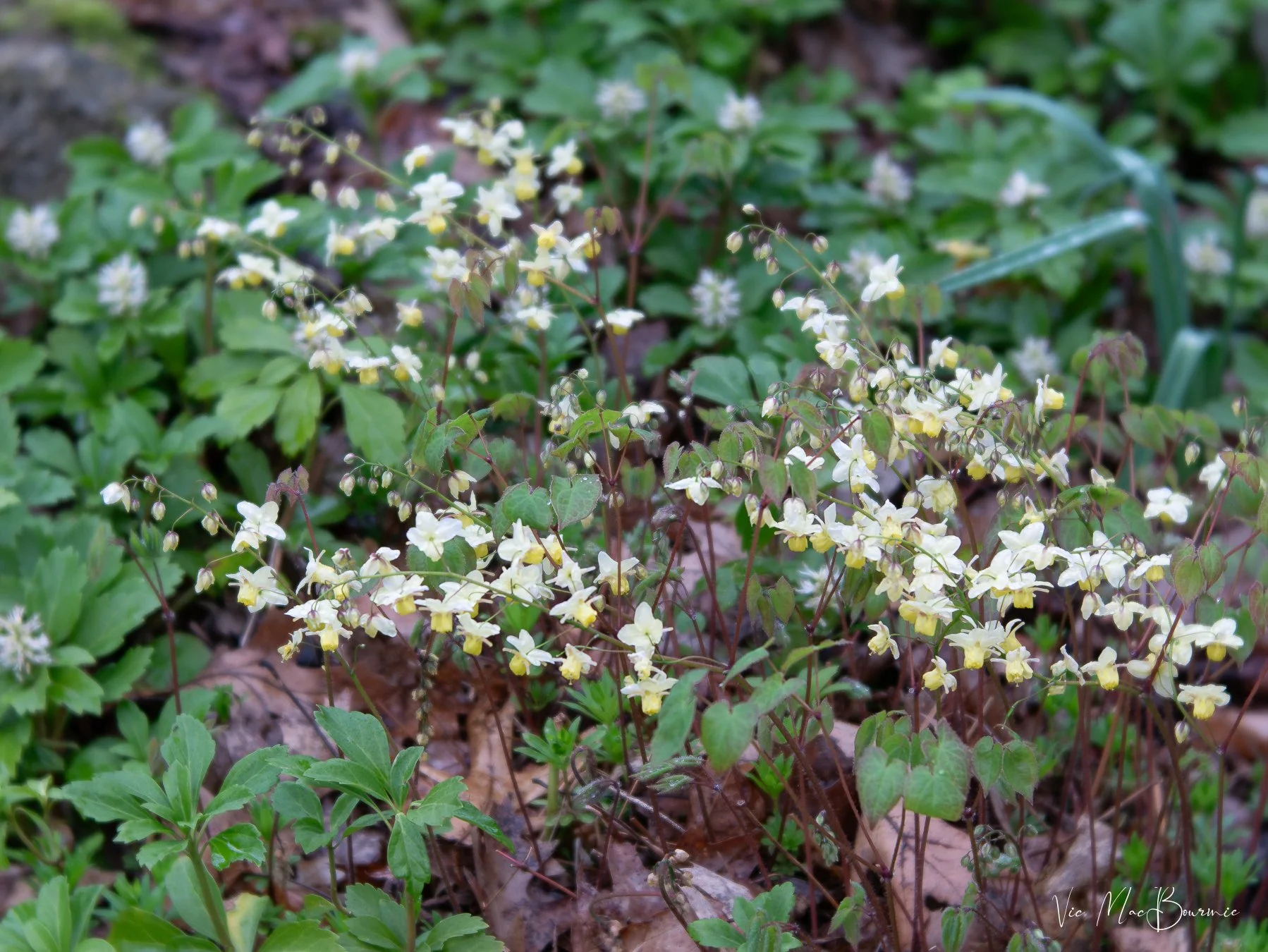
A delicate grouping of yellow epimedium growing in our front garden against a large boulder.
Week Two
Barrenwort/Epimedium takes centre stage
It’s the end of April and Epimediums are stealing the spotlight in the woodland garden.
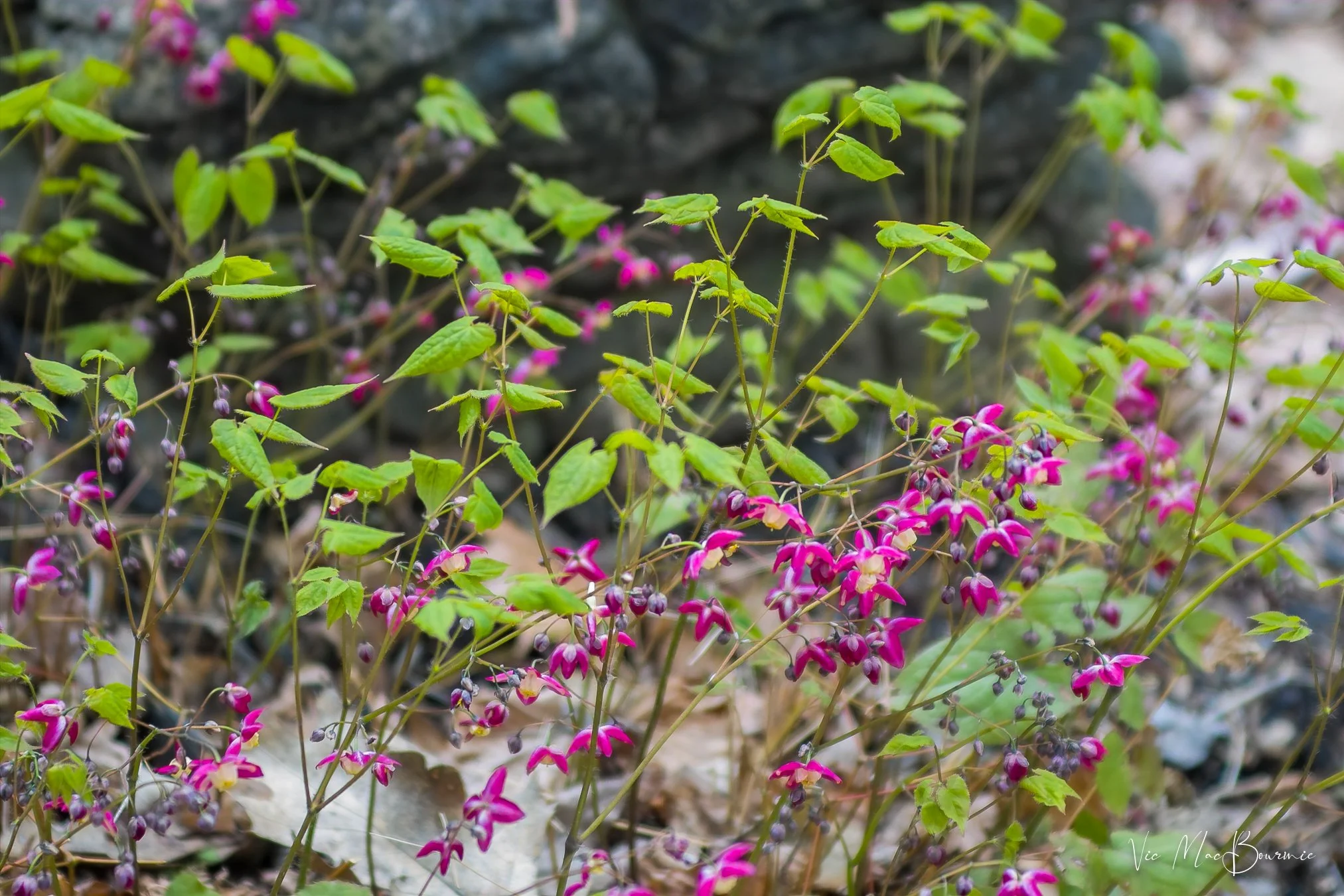
I know – not native – but they are a great source of nectar for wildlife, and boy are they a lovely addition to the early spring woodland garden. I have two varieties (there are hundreds). Their lovely yellow and rose blooms standing on thin stems and dancing in the wind give the early spring woodland garden an ethereal feel.
We have clumps planted both in the back and front gardens where they are spreading nicely.
For my complete post on Epimediums click here.
These early spring bloomers are great for dry-shade and splitting the clumps is the perfect way to spread their joy around the garden. Although the flowers are a welcome addition in spring, it’s their foliage that makes these plants so desirable. Not unlike hostas, the lovely foliage provides the real interest throughout the gardening season. Spring, however, is the time to enjoy the flowers.
The delicate blossoms of epimedium rubrum (barrenwort) along with the spring green foliage is a welcoming sight after a long winter.
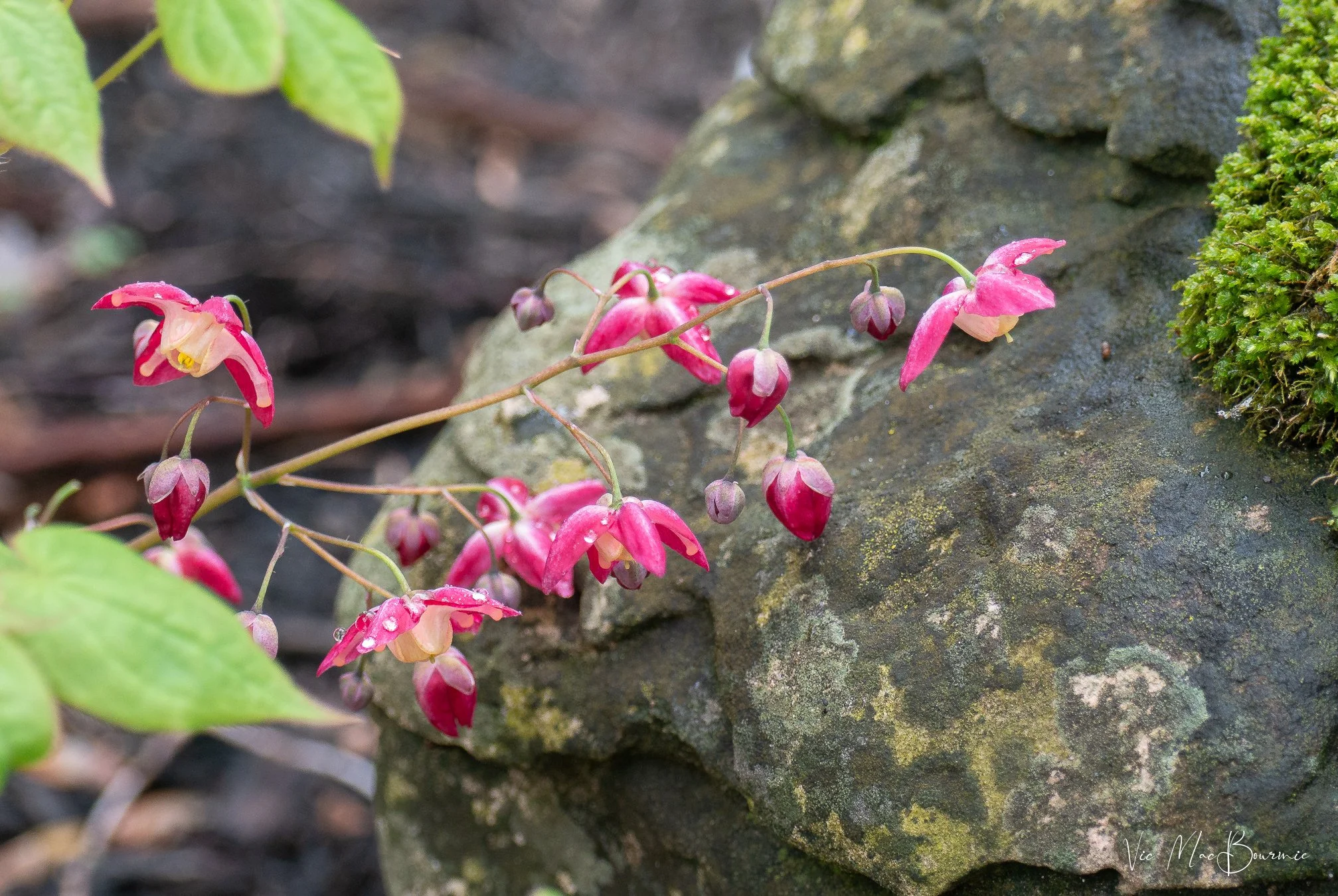
This clump of rubrum epimedium stand out against this mossy rock in the front Japanese-style garden. Notice the lovely moss and lichen growing on the rock. Moss is an important part of our woodland garden and grows happily on rocks, paving stones, on the soil and anywhere else it can get a grip.
Joining the Epimediums at this time in the woodland garden are native trilliums that bloomed this week, and the sudden emergence of Solomon’s Seal stems just waiting to unfurl.
Moss and moss-like ground covers should be an important part of any woodland garden. For more on growing moss and moss-like ground covers, check out my earlier post here.
In other parts of the garden, ostrich ferns have begun to unfurl their soon-to-be massive fronds, while the more delicate maidenhairs reveal themselves in much more subtle ways. violets are everywhere and forget-me-nots are beginning to make their presence known not by their flowers but certainly by their foliage.
Everywhere, the spring greens are lighting up the woodland and nothing is a more welcome sight than our trio of clump birch trees that I like to refer to as my mini-birch grove. They bring a lovely view outside our main window in the kitchen and allow me to look out into a sea of green interrupted only by the birds that flitter about in search of insects. Click here for my earlier post on the mini birch grove.
The full impact of spring is yet to be felt here, but just a few more warm and sunny days and it will burst in all its glory.
Even the birds are brimming with excitement. The Merlin app is telling me there are a huge variety of birds in the yard, including warblers which I have yet to spot while out with the camera. Hopefully, they’s get lower in the trees and allow me to capture their elusive beauty.
Interested in exploring epimediums further, be sure to check out my post here.
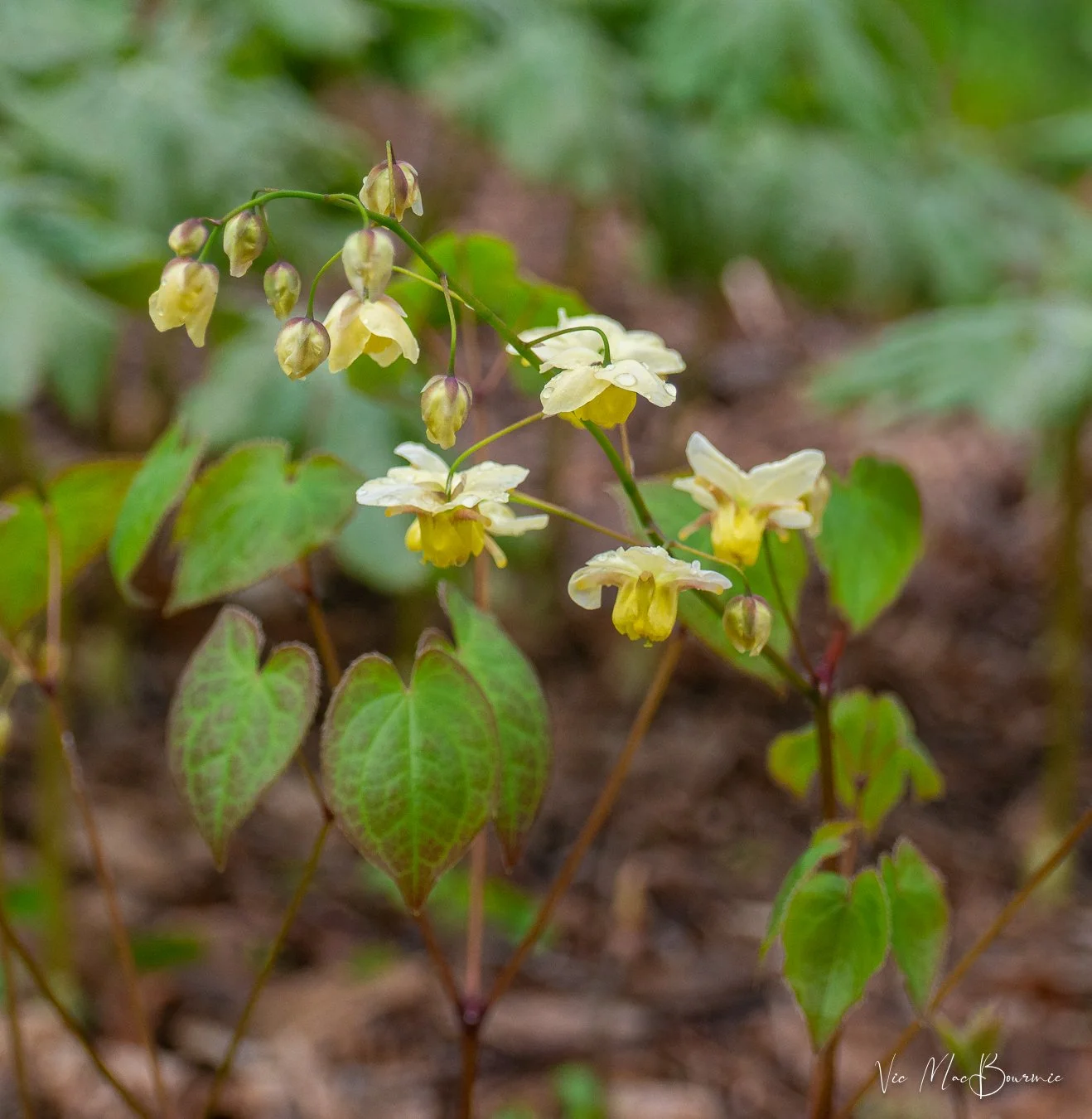
The foliage of epimedium, as seen in this image, is what makes the plant desirable throughout the growing season. The veined green leaves rimmed in a delicate red adds year-round interest to the plant replacing the ubiquitous host in many cases.
Still waiting for the hummingbirds and orioles but I am seeing reports of them all around us and our feeders are out a ready to welcome them.
Speaking of birds, I have decided to finally give up our main central bird feeding station in the yard. Actually, our friendly and overweight racoon made the decision easy for me by literally breaking our main pole that holds a variety of feeders.

Colby after running into a concrete planter in pursuit of a chipmunk. We are working hard to teach him not to chase any of the wildlife but there are times where he just can’t help himself. No chipmunks were injured, just Colby.
The pole was probably pushing 25 years old, so the decision to let it go wasn’t difficult. Instead of the single pole, I’ll be moving to individual feeders around the yard. I’m hoping if I use tough feeders, I’ll be able to keep the critters off them for the most part.
Time will tell.
In other excitement in the garden this week, Colby, our very large flat-footed retriever, almost lost his eye after deciding to ignore my strict warnings not to chase the chipmunks. I guess he figured that it was worth the risk to go on the chase of the little chipmunk hanging out at the downed feeding pole. Colby not only missed the chipmunk, but ran into a concrete planter, knocked it over and taking out a chunk of skin and fur under his eye.
Turns out, he is perfectly fine, but it’ll take a couple of weeks to get the fur back. In the meantime he looks like he lost a round with one tough boxer.
Colby is a real handful in the garden and I think the whole wildlife thing is very new to the big guy. For the most part, he Is being very good around the squirrels and chipmunks, just watching them from afar. However, If they get too close to him, I’m thinking he might be a real handful.
It’s important for him to get used to having lots of wildlife around, from rabbits, to deer and everything in between. His prey drive is high, so I’m fearing he will have to stay on a leash with us anytime we are in the back yard.
Here are a few more images of the garden at the end of April.
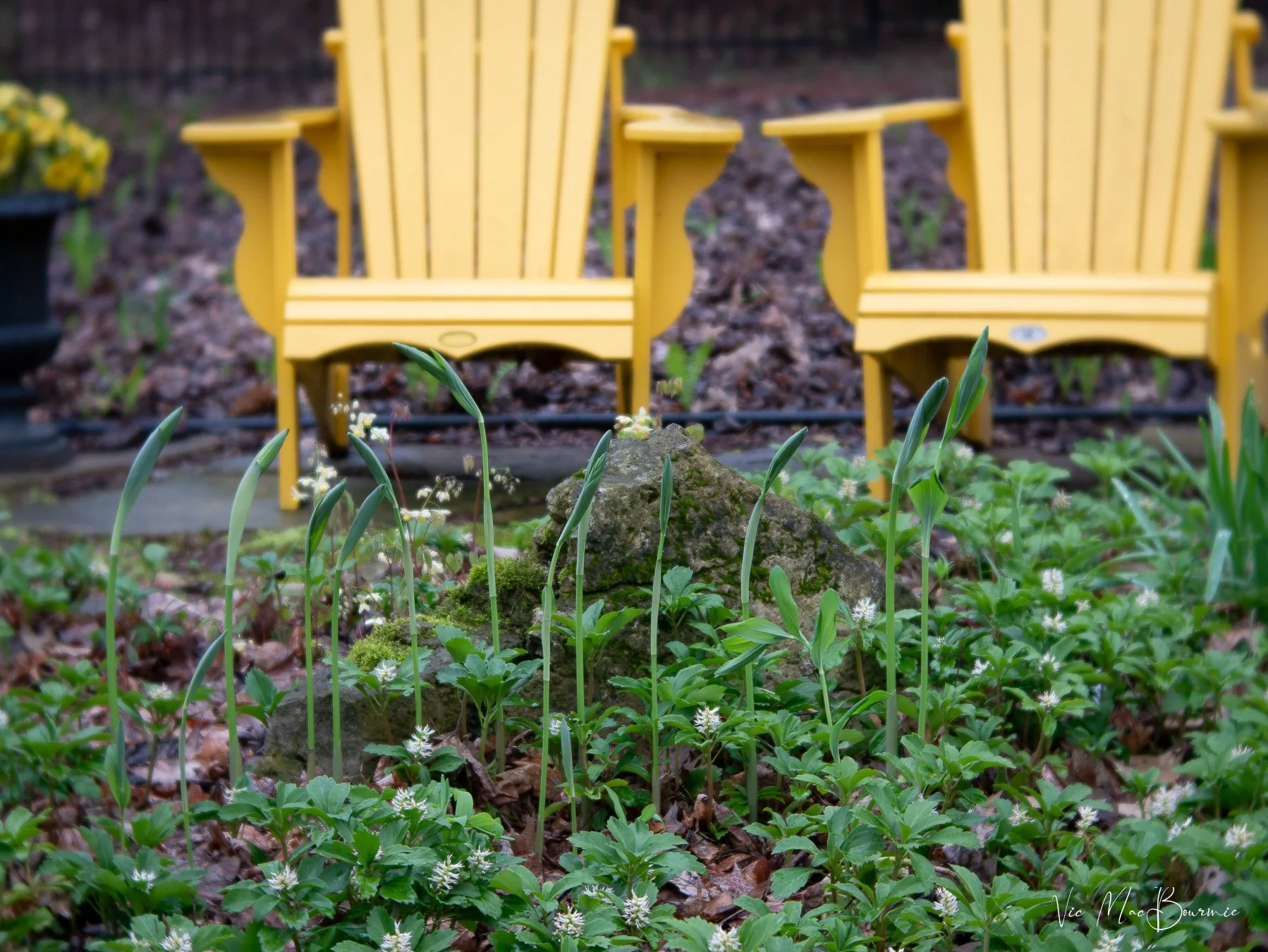
Native solomon’s seal sprouts prepare to unfurl in the front garden alongside the epimedium and pachysandra groundcovers.
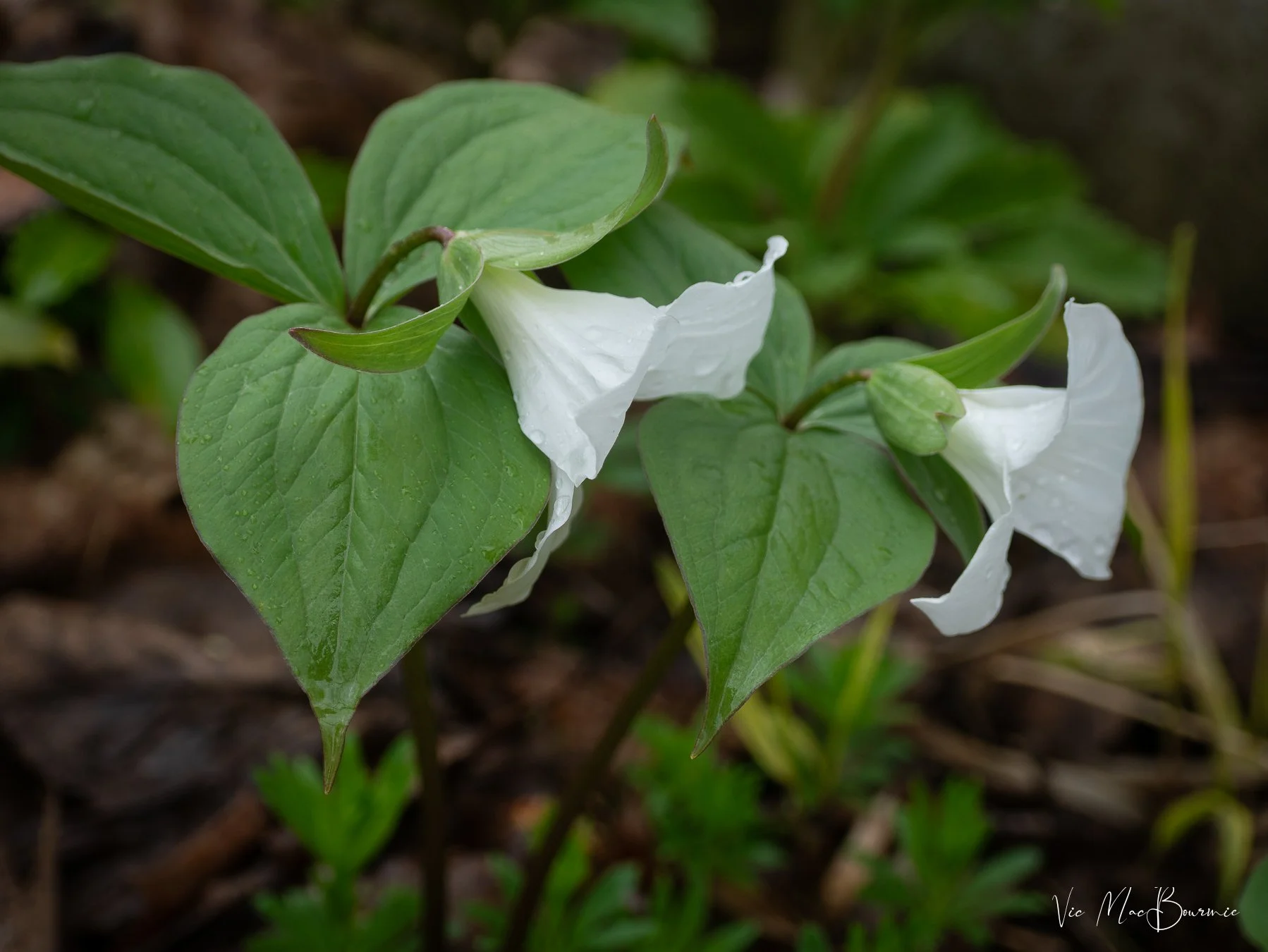
A pair of native white trilliums in bloom in the front garden. Hoping the wildlife give these a chance to bloom before nipping off the flowers.
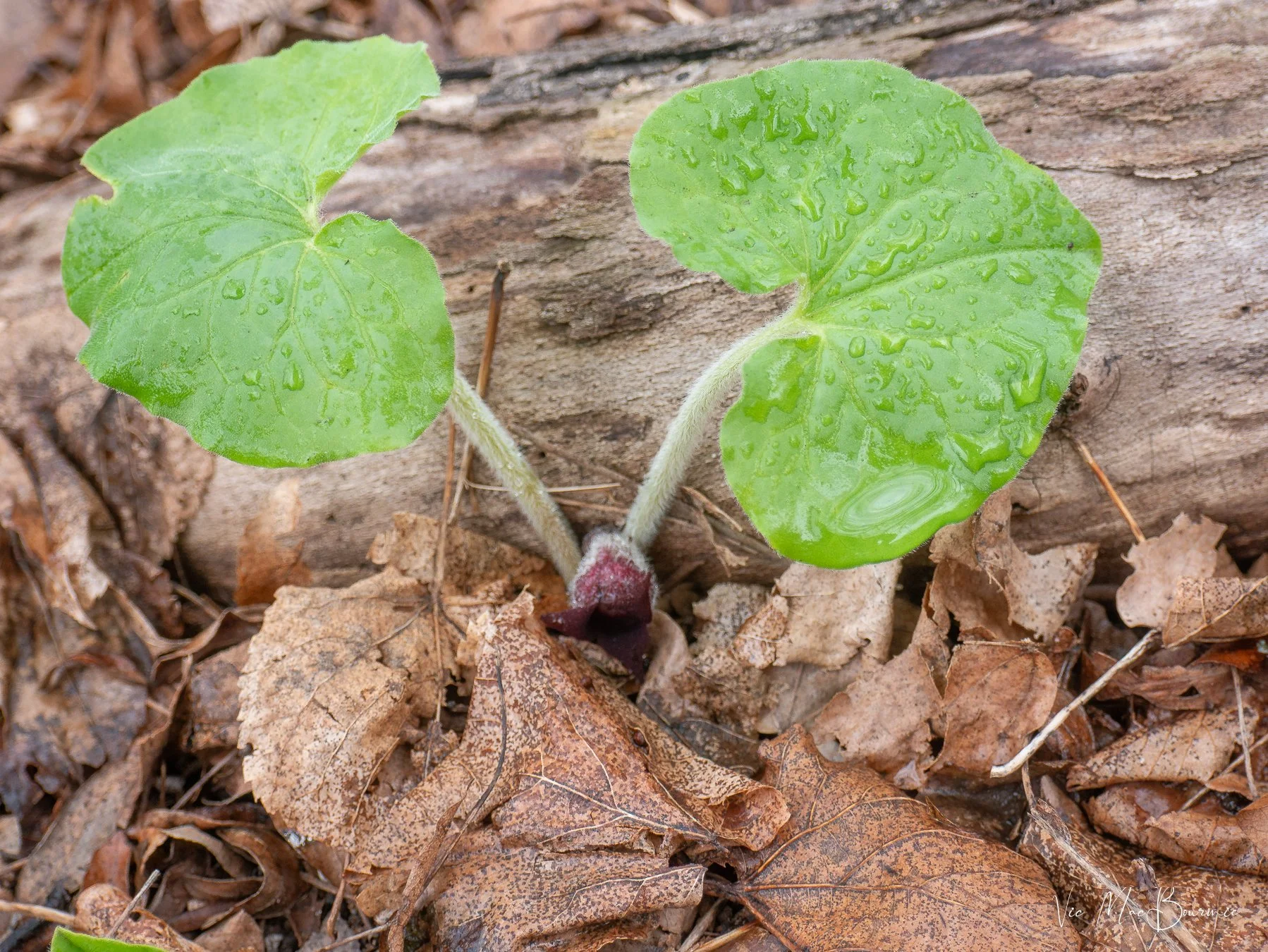
A native wild ginger plant prepares to bloom in the back woodland garden. I planted this last year as part of a woodland vignette, inspired by last year’s “A walk in the woods” series of articles. with any luck, this plant will spring into a lovely clump.
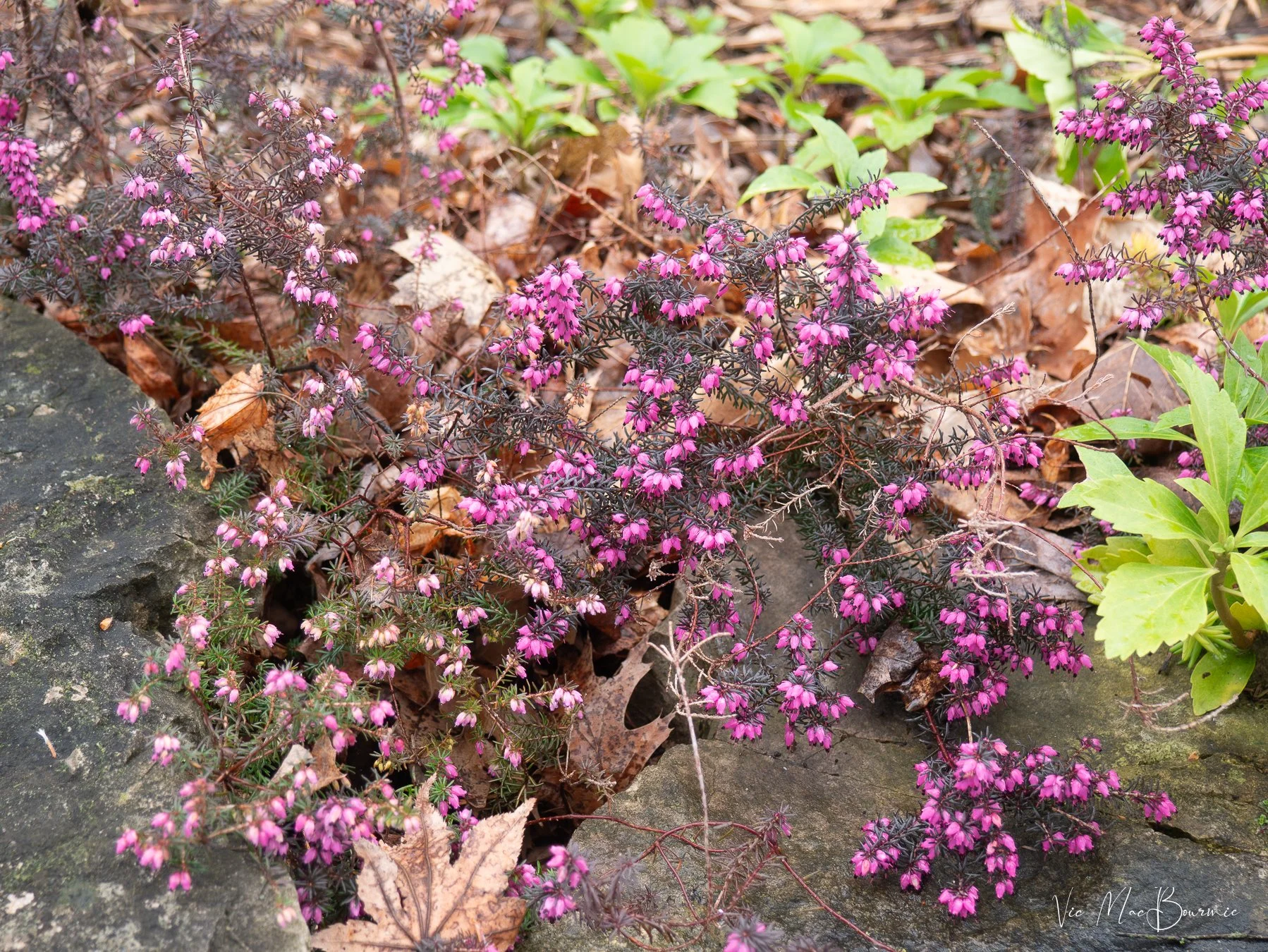
Heather grows along a rock wall of boulders providing an early-spring nectar source to a host of insects. Notice the leaves th at have been left on the garden. It’s important not to clean up you leaves to make the garden look pristine. In a short time, all the leaves with be buried by plants and literally disappear over the summer. Any leaves that we do clean up are moved to the backyard.


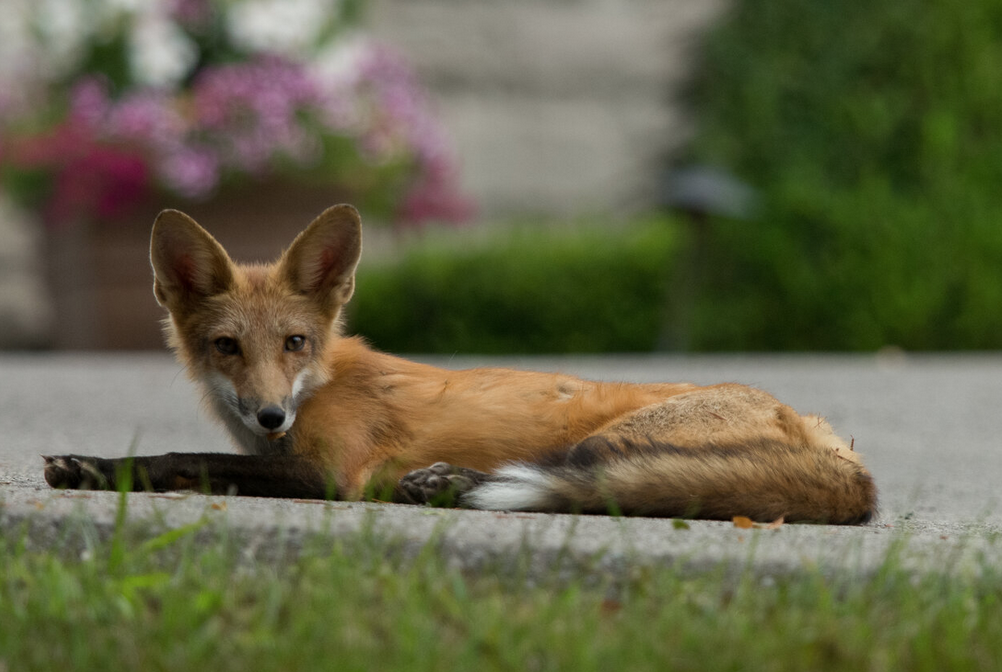
Exploring the backyard spring woodland/wildlife garden
Exploring the early spring woodland wildlife garden with the aim of really seeing the surprises that await us.
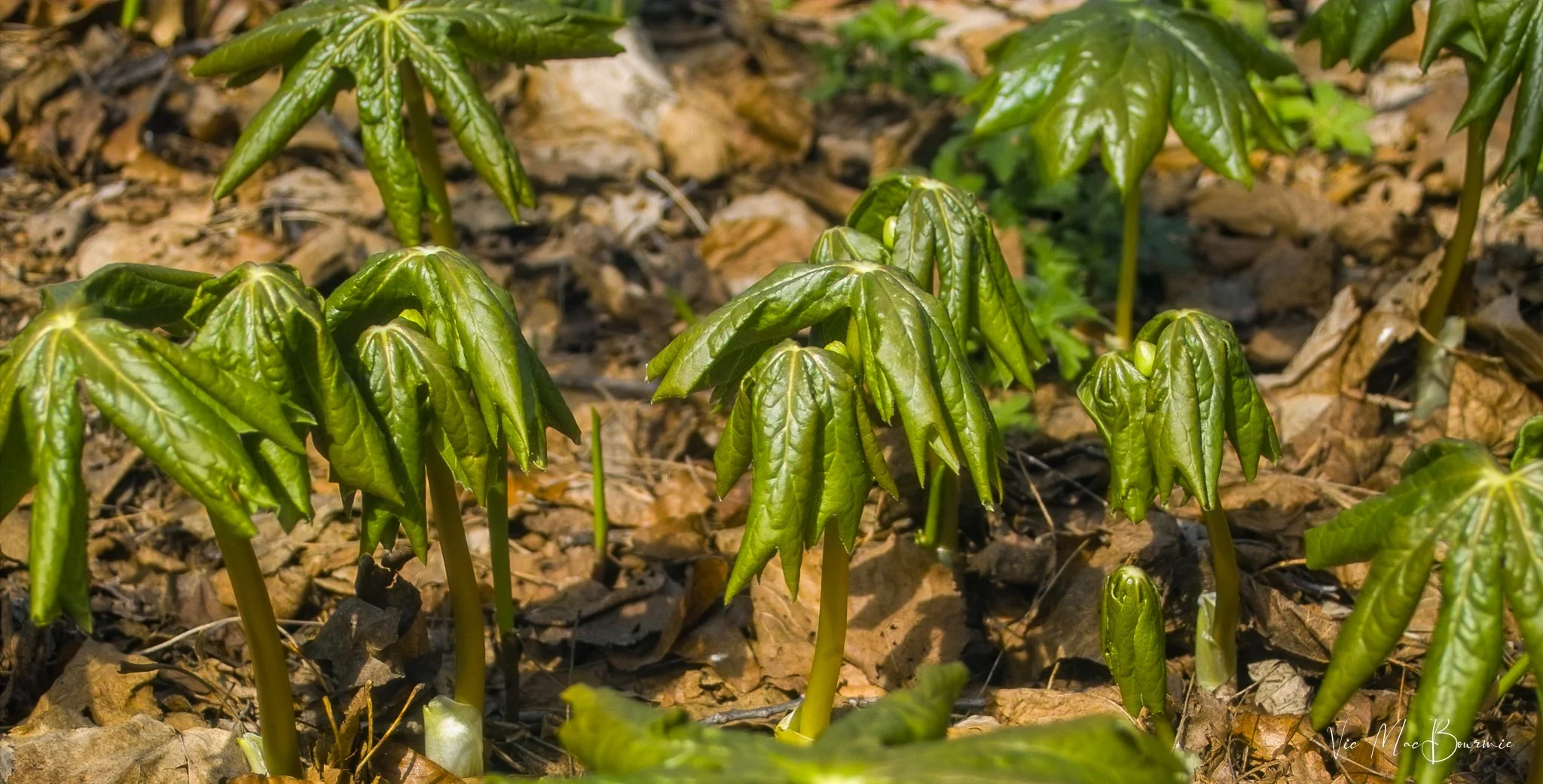
Mayapples just beginning to poke out of last year’s fallen leaves. This native ground cover is among the first to emerge and begin shading the forest floor. Eventually they form a large umbrella hiding a small green “apple” that eventually becomes the seeds for future plants. This is a wonderful ground cover that, when happy, will spread prolifically.
Learn to see the small treasures our gardens provide
Part one of a series
In our woodland garden, early spring is certainly not the most picturesque time.
Without the foliage from the ground on up to the heavens, it’s not much more than a vast space of brown leaves and unappealing bare stems. And to make matters worse, it’s open for all to see more or less in it entirety.
It’s a good time to look around and recognize the areas that could use a little help. Maybe an evergreen in that corner to block an ugly view or a small privacy fence to break up the view of your neighbour’s BBQ. Other than that, it’s easy to look aside and yearn for the summer when everything is dense, green and in full bloom.
Anyway, at this time of year, most of us are too busy bringing out chair cushions, garden statues and other garden accoutrements from the shed to really look at the early spring garden.
But, it’s worth a look –and a close one at that.
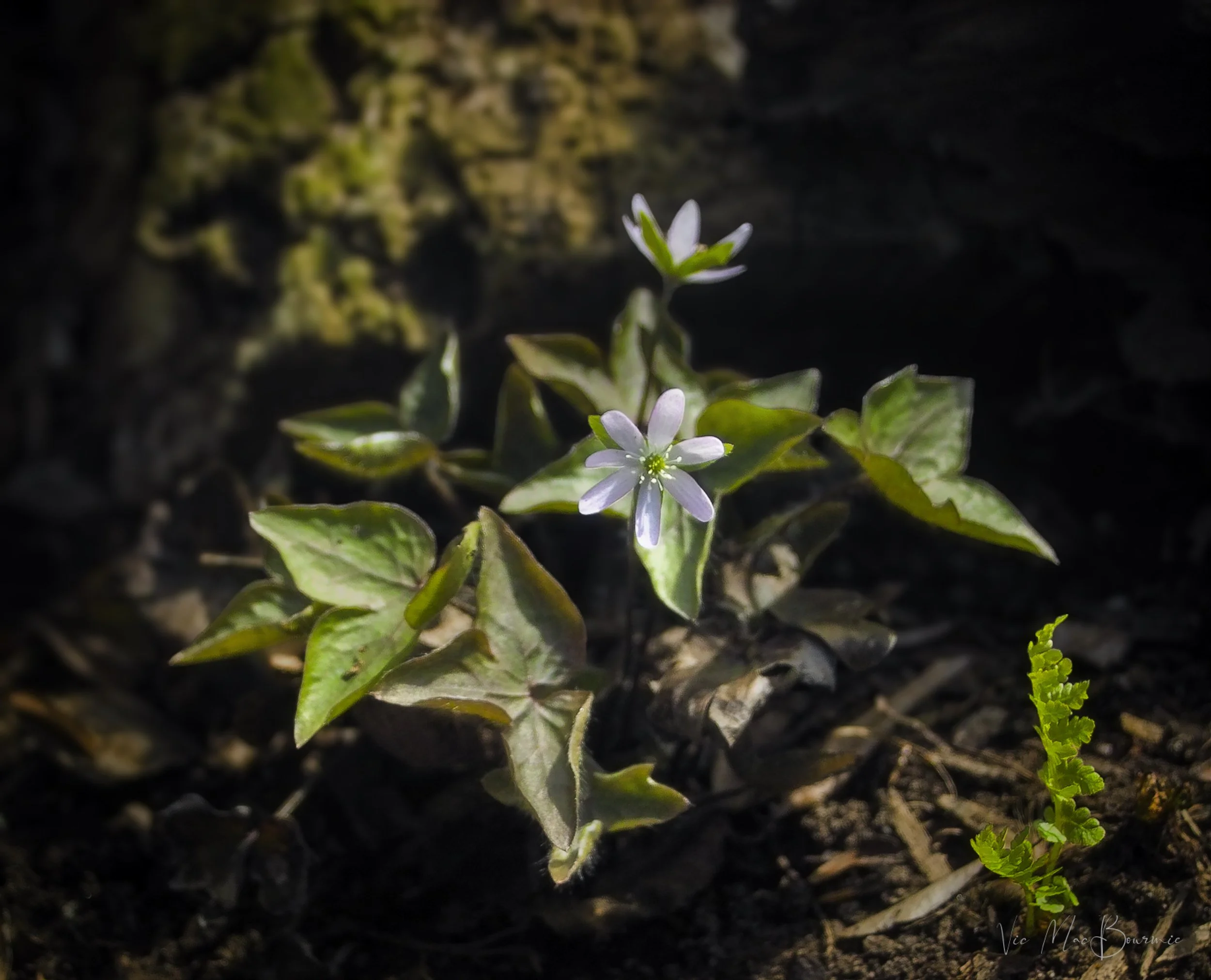
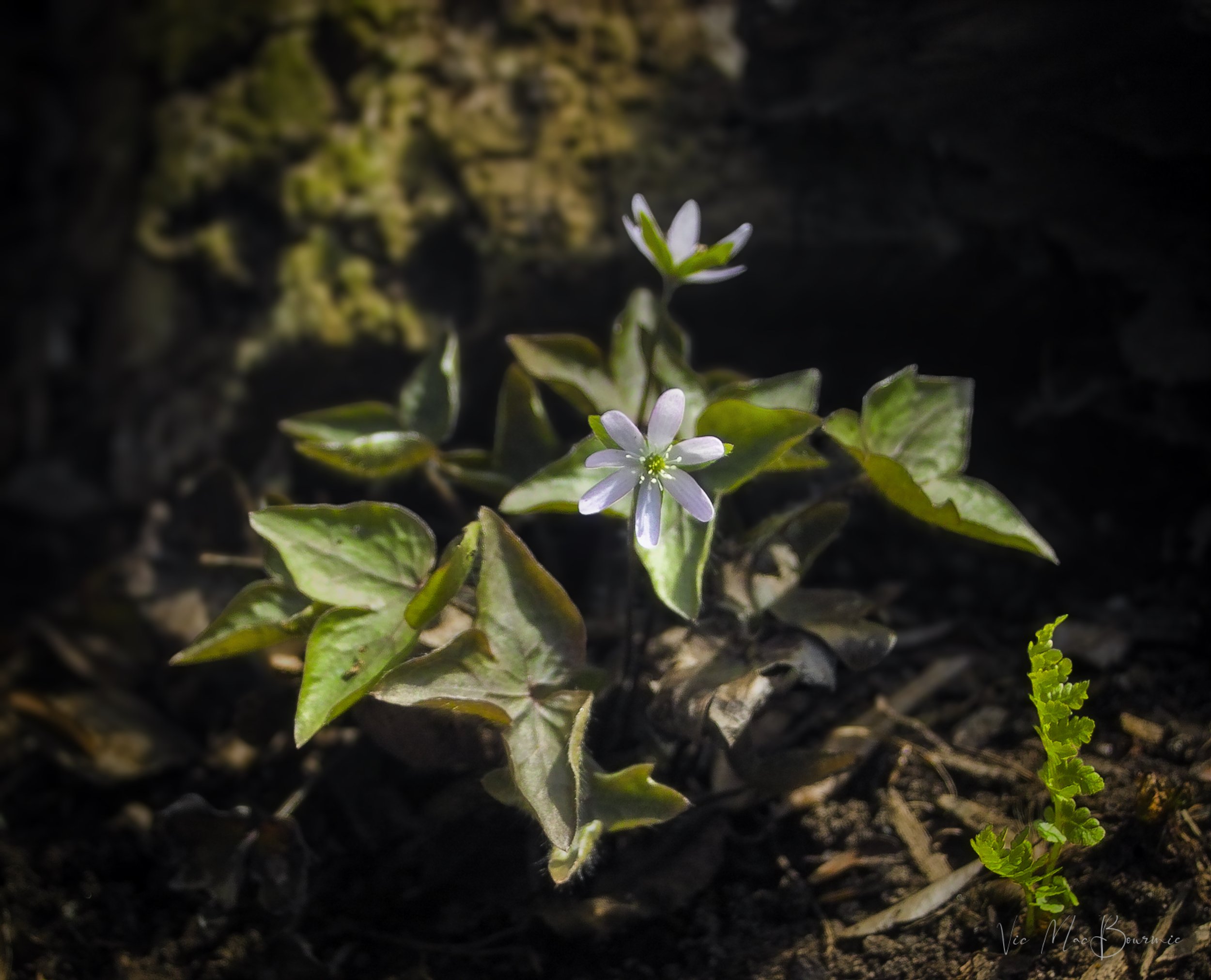
The very early emergence of our native Hepatica offer a wonderful little surprise when you think nothing is blooming. I planted these last year as part of several small woodland garden vignettes inspired by my woodland walks. The hepatica are tucked in beside a sort of mini-stump garden were I recycled a large downed tree branches as a focal point for native plants.
Listening and observing the music of the garden
I often ask my friends if they still listen to music. When I ask that question, I don’t mean have the music on in the background while they are surfing the net or getting household chores done. I mean really listen like we did as kids when we got home with a new piece of vinyl or the latest CD. Remember when we would darken the room, close our eyes, drop the needle, clear our minds and really listen to the music.
Those days are slowly disappearing. Most of us are too busy to devote that kind of time to a single album let alone a song or two.
Seeing – and I mean really seeing – is also slowly disappearing from our daily routines.
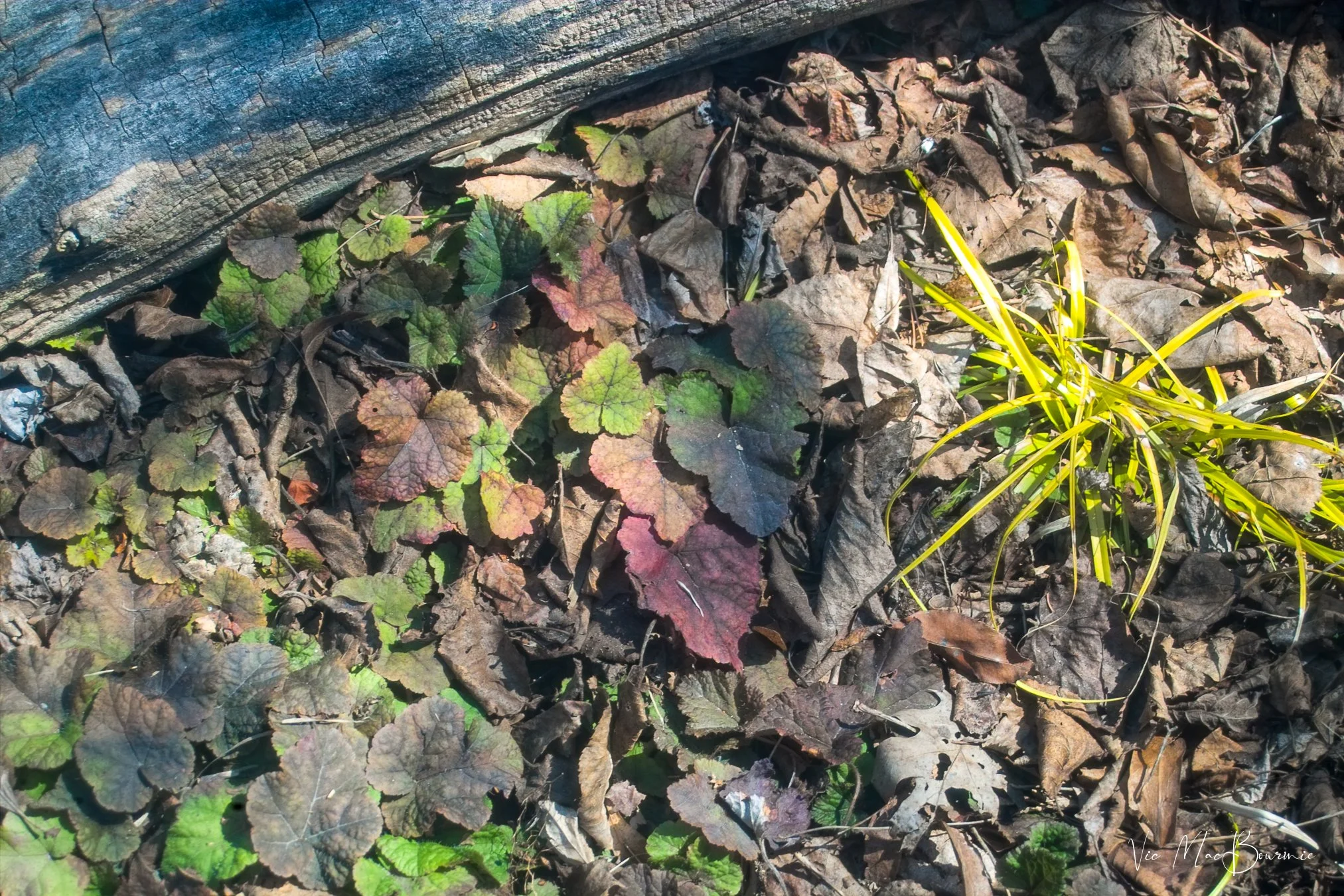
It would be easy to walk by this little vignette and see it primarily as old dead leaves, but the subtle colour of the emerging native foam flower together with the yellow sedge is a reminder of what awaits us later in spring.
So many of us are too busy cleaning up the garden to actually take the time to actually see it. The result is often not only a missed opportunity, but a growing inability to appreciate the smaller things in the garden – the emerging rosettes of our favourite native plants, the tiny leaves of the columbines before they get large enough to flower, the slow unfurling of our ferns.
I am as much at fault as anyone. Like you, I’m always anxiously awaiting the flower to emerge, while overlooking the beauty of the foliage. (For a greater understanding of the role foliage plays in our gardens, check out my posts here and here.)
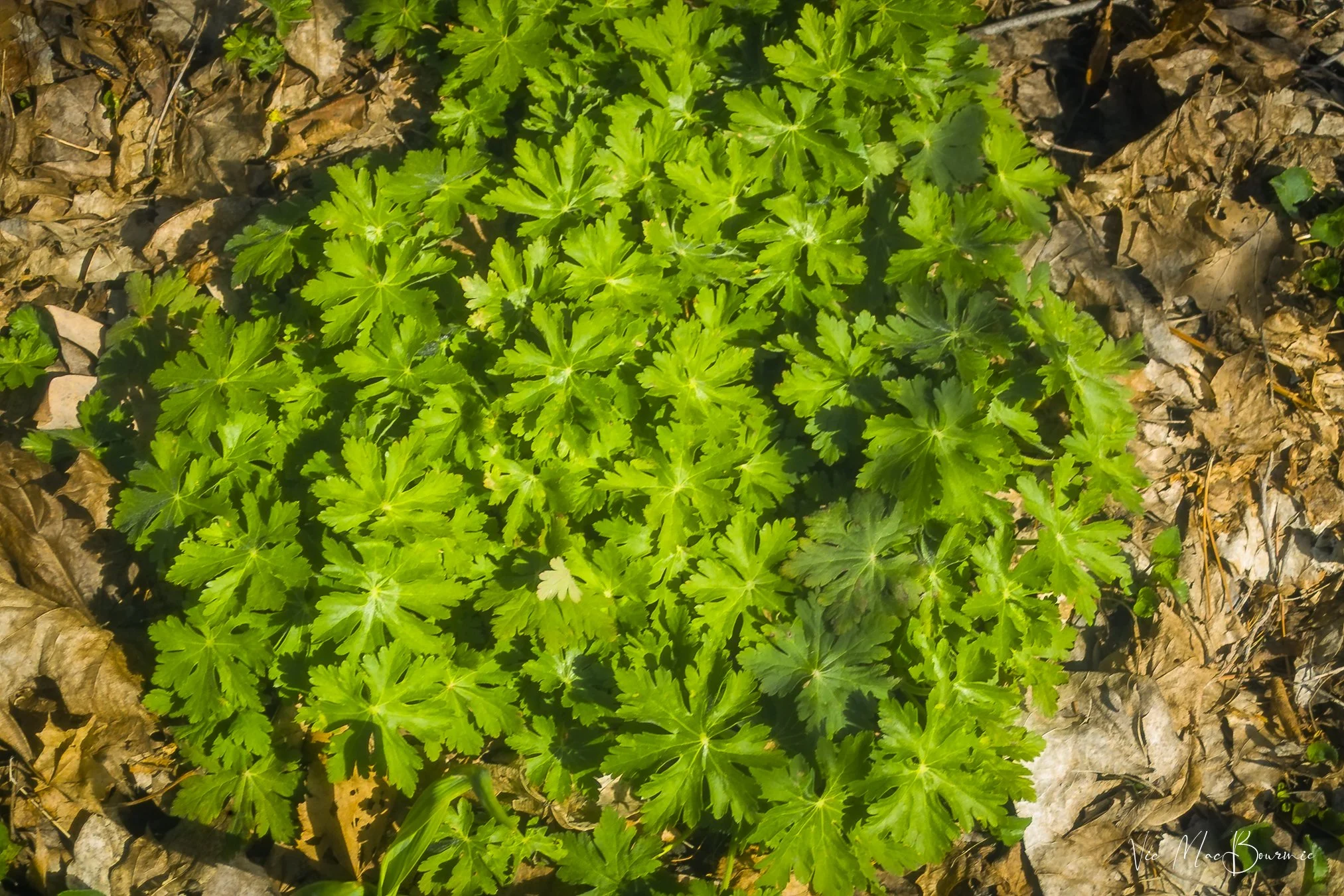
The serated leaves of a clump of wild geranium or cranesbill greets early spring visitors. soon the lovely mauve flowers will emerge providing early nectar to native bees. This relatively low-grown ground cover spreads nicely in the garden and is well behaved. Lifting clumps and spreading them in other parts of the garden is a worthwhile spring chore.
Canadian photographer Freeman Patterson, as well as many others, have devoted entire books on learning to see. Seeing requires us to do more than simply opening our eyes to what our gardens offer. I think it requires a more active role on our part. Getting down on our knees, not just to clean an area around our plants, but to appreciate the tiny little worlds and truly experience the garden.
Get up close and personal, take in the earthy smell, listen to the natural sounds – the wind blowing through the trees, the birds, the spring peepers, the bees even those pesky mosquitos.
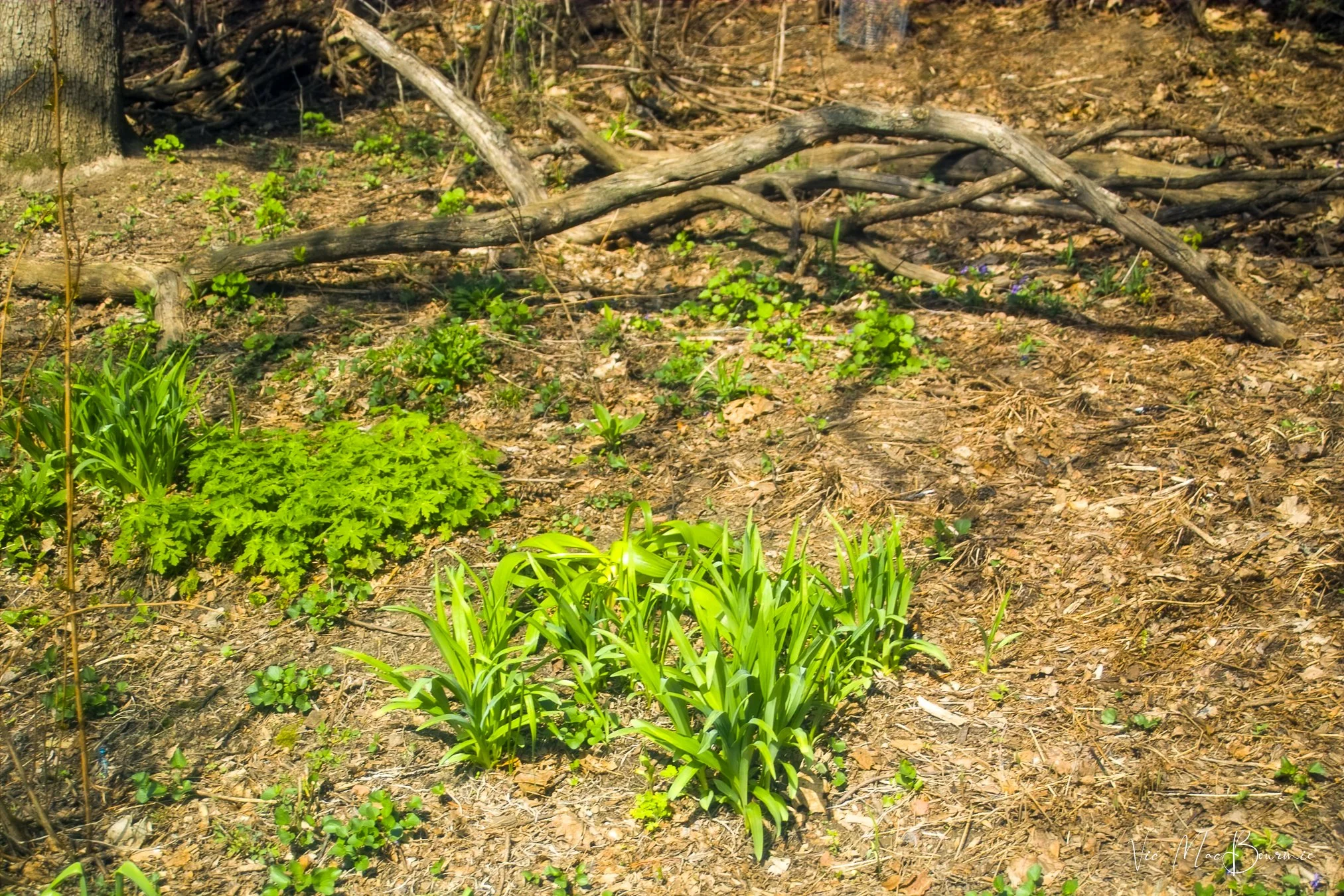
Exposed brown earth, dried up leaves with pockets of emerging greenery are what most of us see at this time of year. But on closer inspection, and a little imagination you might be inspired by the careful placement of the arched branch that serves as a mini highway for chipmunks and red squirrels. Or, the arch of the branch might bring back memories of wild turkeys rooting around the garden like in the picture below. The emerging alliums don’t look very appealing now, but imagine them in full bloom with birds (big and small) flitting about them. Maybe you remember the wild geranium in bloom and covered with native bees.
Seeing – I mean really seeing – can involve all our senses.
Last year, I decided to fully explore the spring woodlands (see: A walk in the woods) around our home. It was an incredibly enjoyable and educational experience wandering through the spring woodlands and watching it emerge over the course of weeks… months. I learned to see the natural woodland in a new way and was inspired to take what I learned and bring vignettes back into our woodland garden.

That same arched branch in the previous image, becomes an interesting piece of woodland garden art as spring rolls into summer. So many times I’ve looked out to the garden and seen birds or chipmunks perched on the curved arch taking in the surroundings. Here, a wild turkey roots around in the back garden.
This year, I plan to experience spring in our own woodland where I’ll explore the art of seeing in the comfort of my own backyard woodland.
If your garden is more traditional, it doesn’t mean you can’t experience many of the same enjoyments and be inspired by the emergence of your garden plants, trees and shrubs.
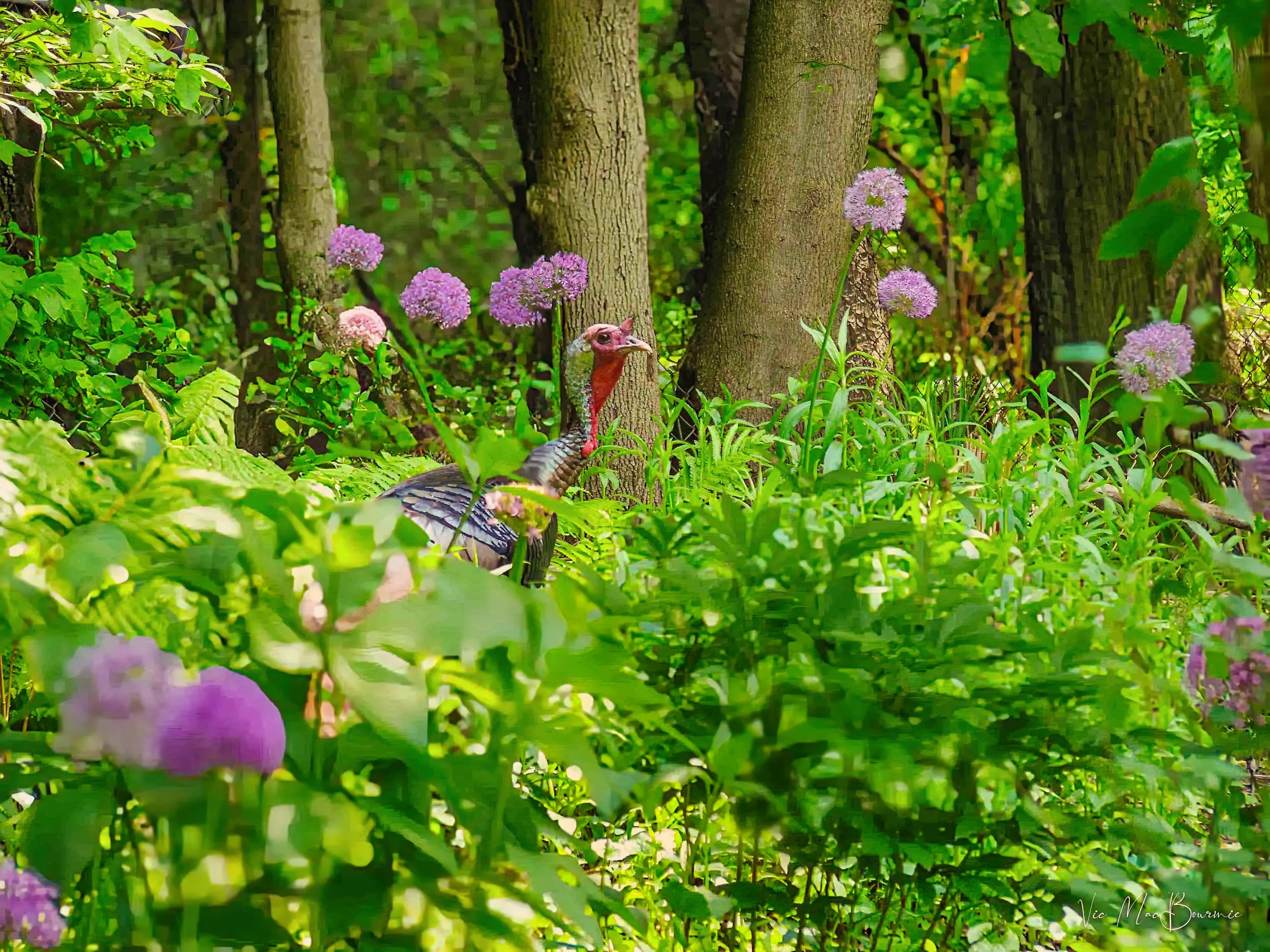
That ugly piece of back garden (see image above) is transformed later in spring and summer with purple alliums as well as some large backyard birds.
Just make the commitment that this is the year you are going to really begin trying to “see” and fully experience the garden, starting from the ugly brown phase through to summer with its explosion of colour, wildlife and visual fireworks.
Come and join me on this journey in the spring woodland where each week I’ll unveil new surprises both visually and through my, hopefully, inspiring and descriptive accounts of my experiences.
Our backyard birds are getting busy
We start this exploration in late April just as many of the plants emerge. At this time neither the hummingbirds, nor the orioles or warblers have invaded the area but they are very close. Our hummingbird and oriole feeders are out and ready for visitors.
Although many of the migrants are still on their way, our backyard feeders are bursting with birds from goldfinches to blue jays, cardinals, house finches, juncos, chickadees, a host of woodpeckers, sparrows and even a colony of crows that visit the backyard on a regular basis.
The following are just a few images of the birds that are hanging out in the yard at this time of the year.
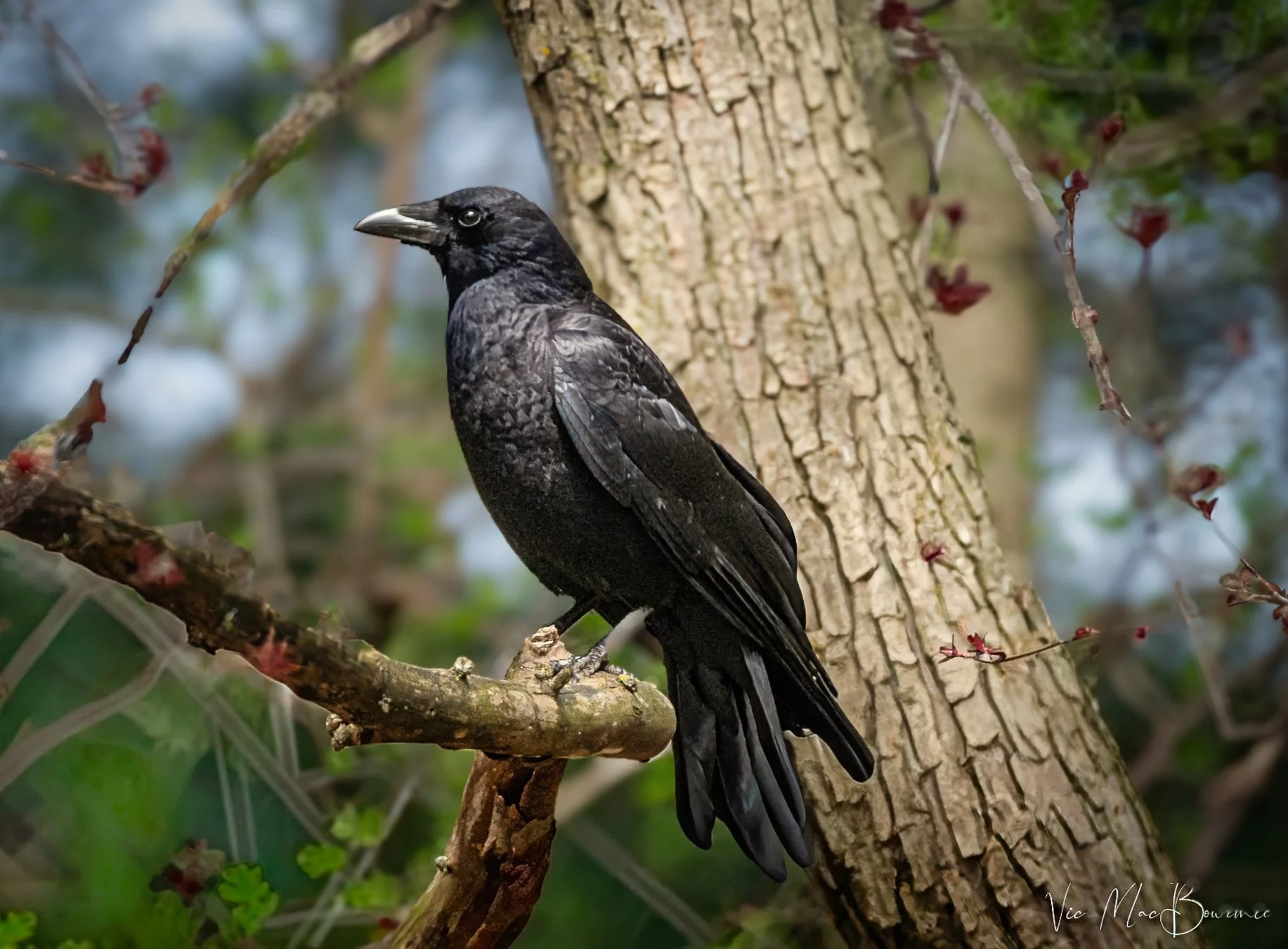
I say it every year that this is the year I am going to befriend our family of crows. This big guy seems like a good place to start.
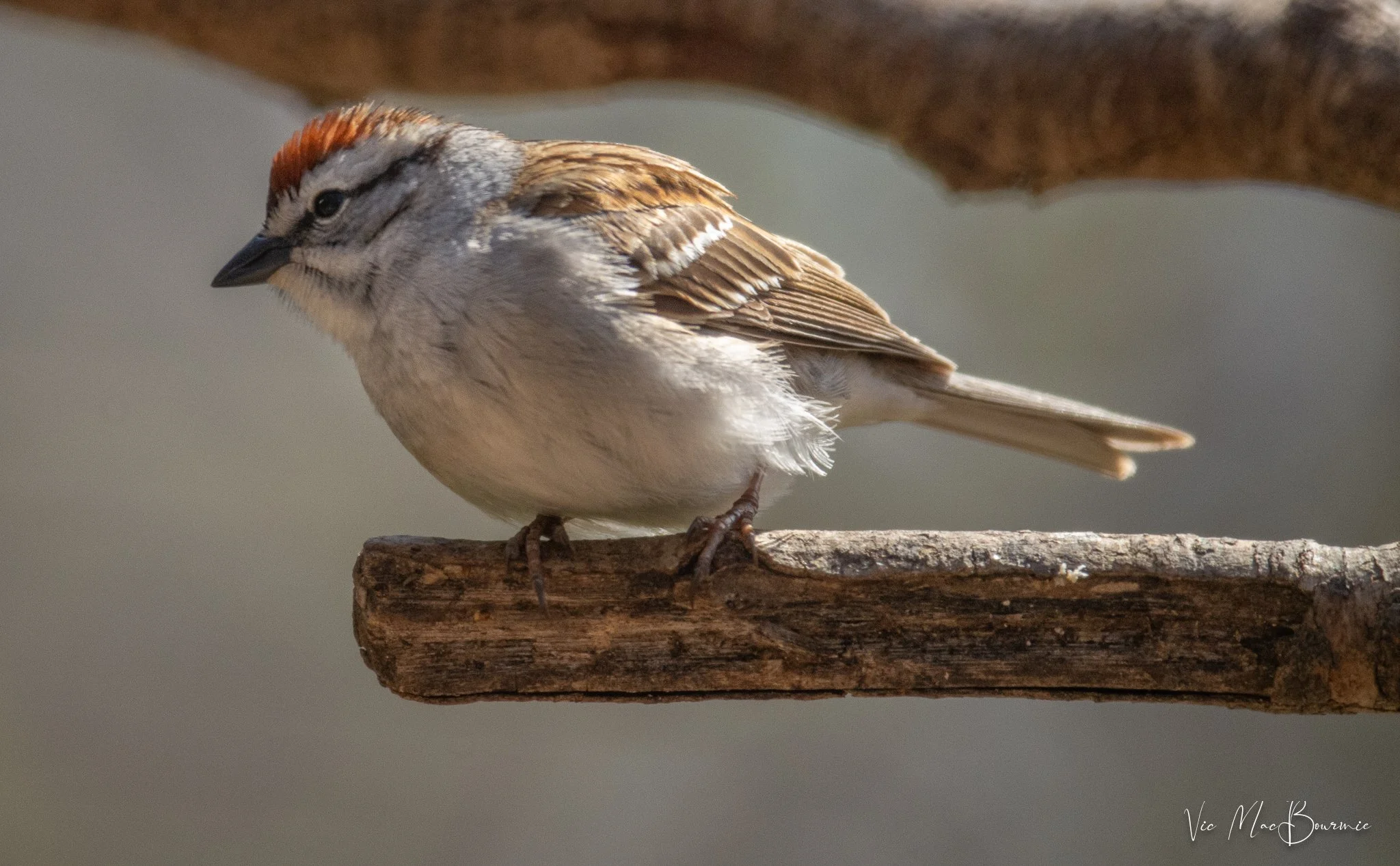
A chipping sparrow hanging out near the bird feeder is always a welcoming site.
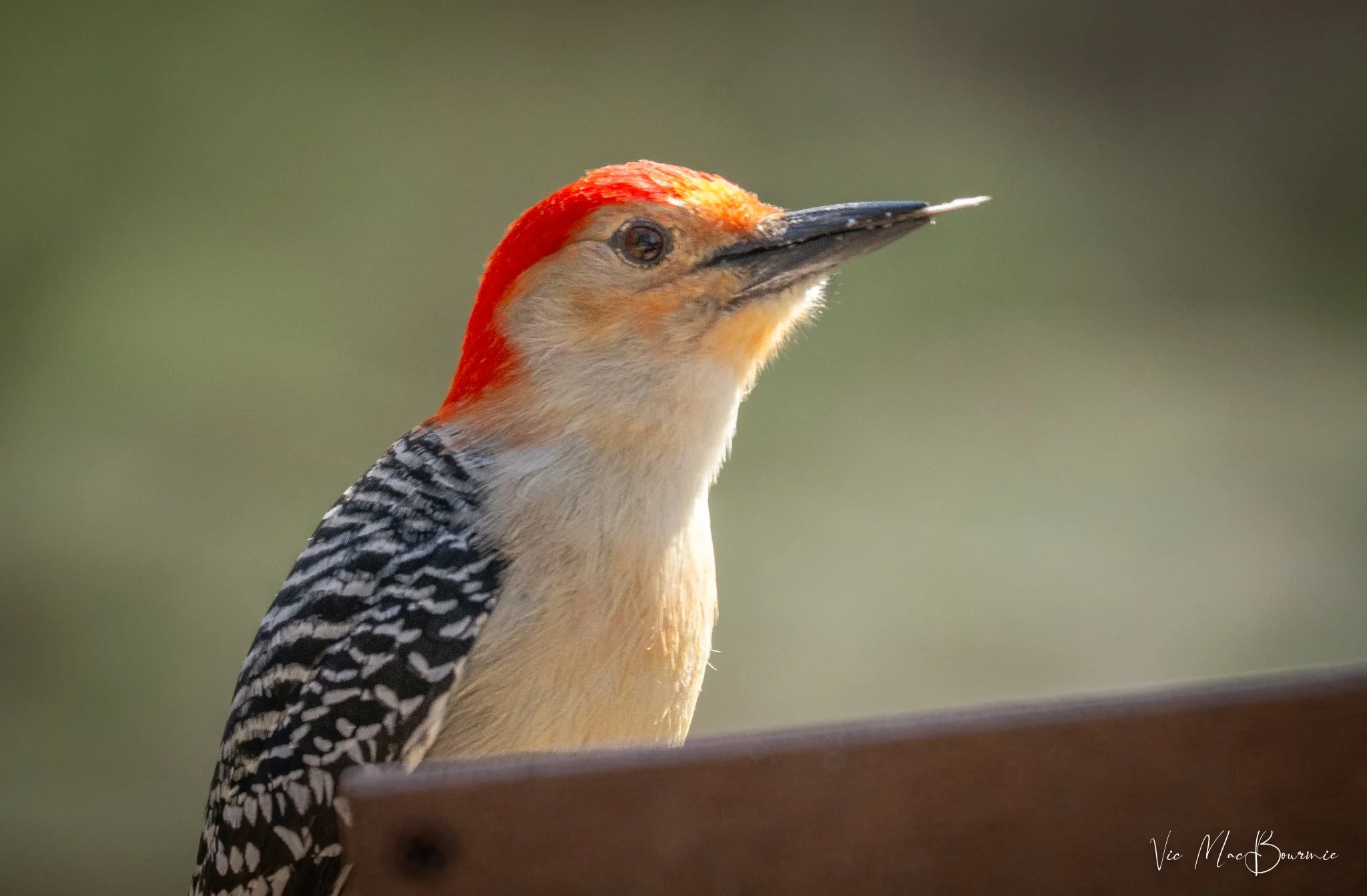
Woodpeckers stick around all winter but are particularly active in spring.
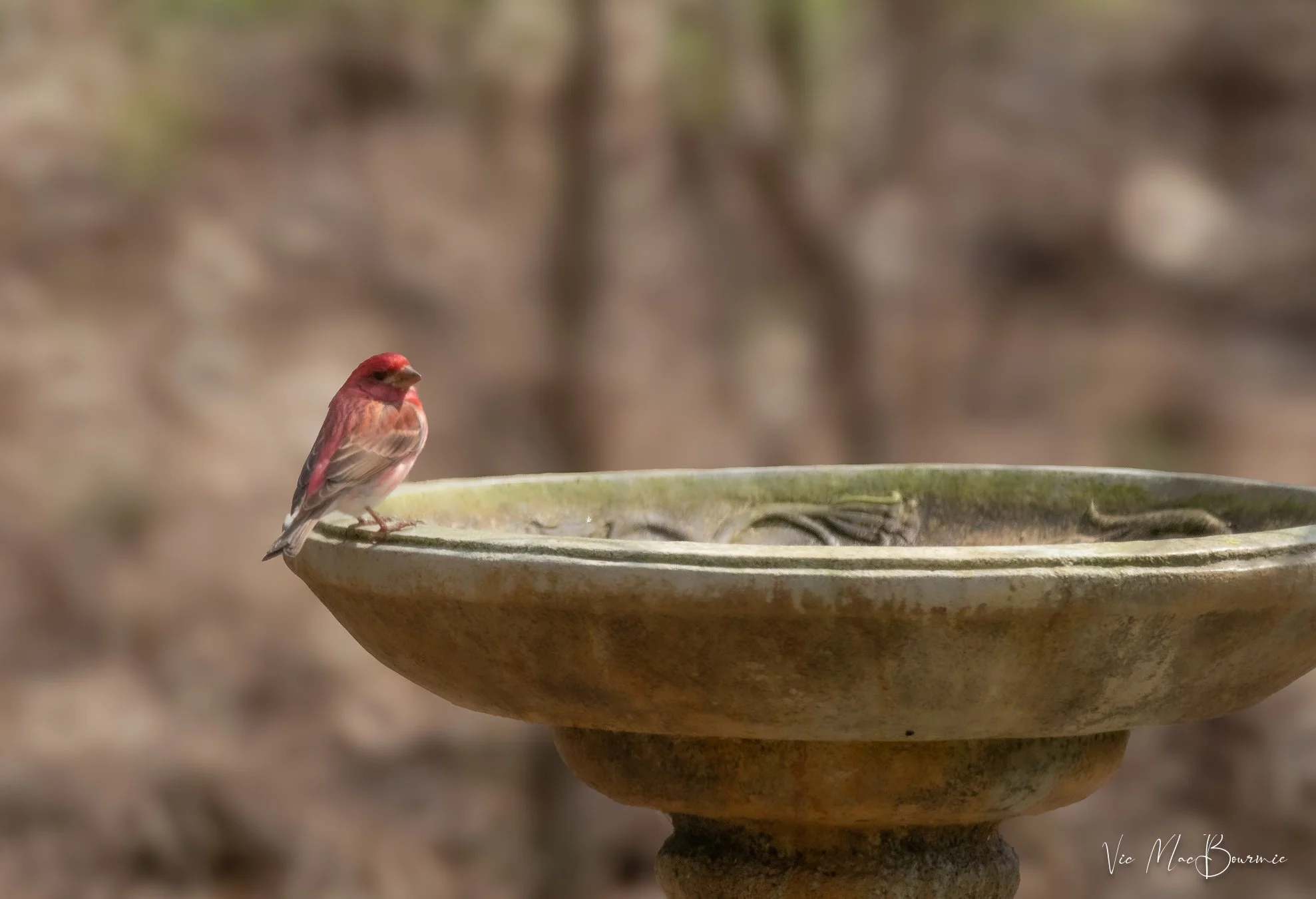
The bird bath is a favourite place for backyard birds in early spring including this lovely purple finch.
Seeing the garden – I mean really seeing the spring garden – can often be expressed not literally but in abstract form. In this ICM (intentional camera movement) photograph, I was able to focus on the white birch trunks without the distractions of green leaves. Later in spring, this image would not be possible because of the foliage that would block the lovely white trunks.
Learning to see different areas of the garden in a more abstract form can be a rewarding artistic experience that forces you to try new ways to use your camera.
If spring in the garden means nothing more to you than the time you have to spend hours in the garden working to get it ready for the “big show,” take a moment to relax, and really see it, experience its hidden beauty, and consider capturing that beauty in a photograph.
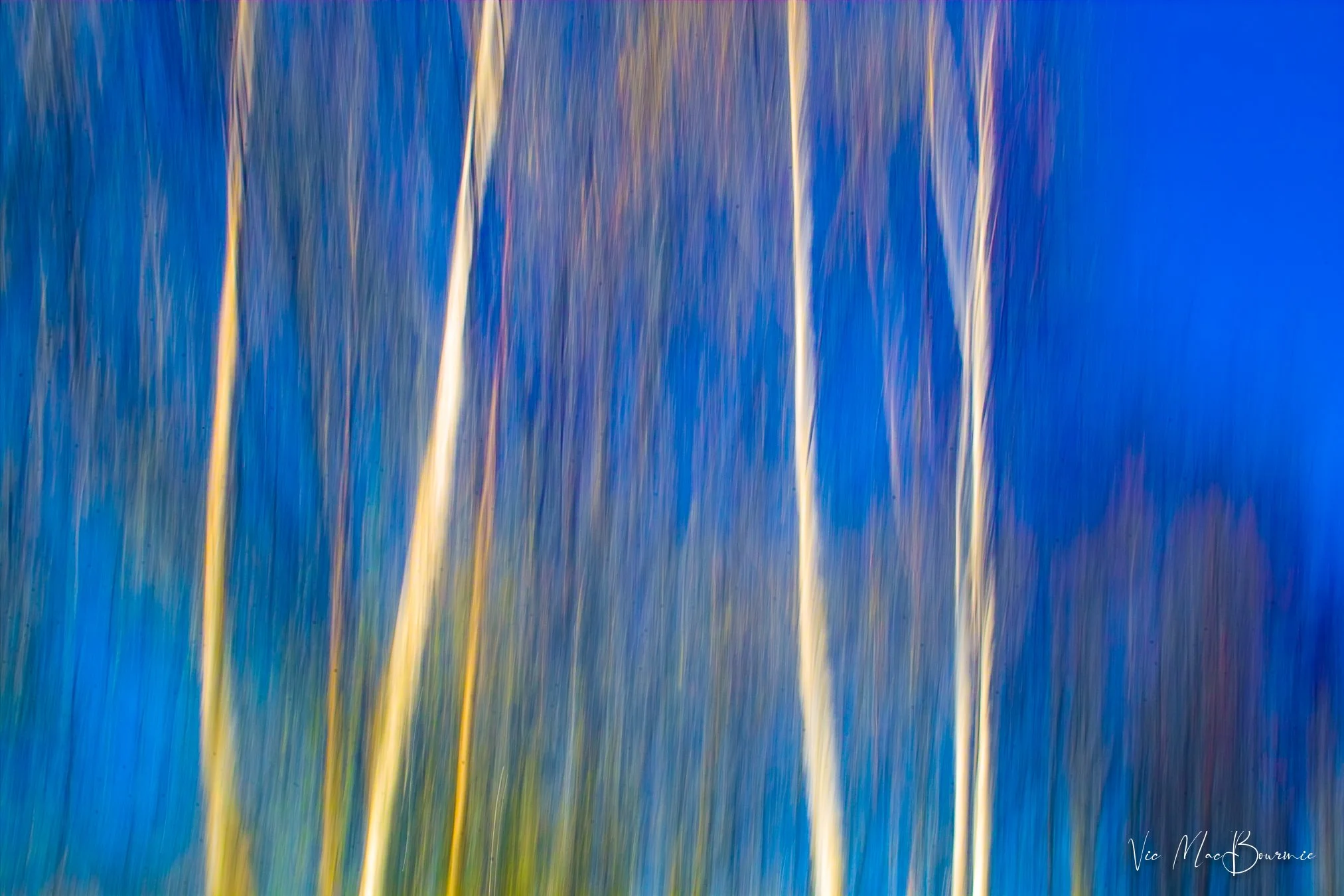
Finally, learning to see in the emerging spring garden can be a visually creative experience. Before the trees green out with leaves, opportunities exist to throw out your preconceived ideas of the garden and truly experience it. This ICM (intentional creative movement) image of our birch tree clumps is an example of what can happen when you let go of traditional ways of seeing.


Simplicity in the garden adds a sense of calm and serenity to the landscape.