Exploring the woodland garden: The week of epimediums
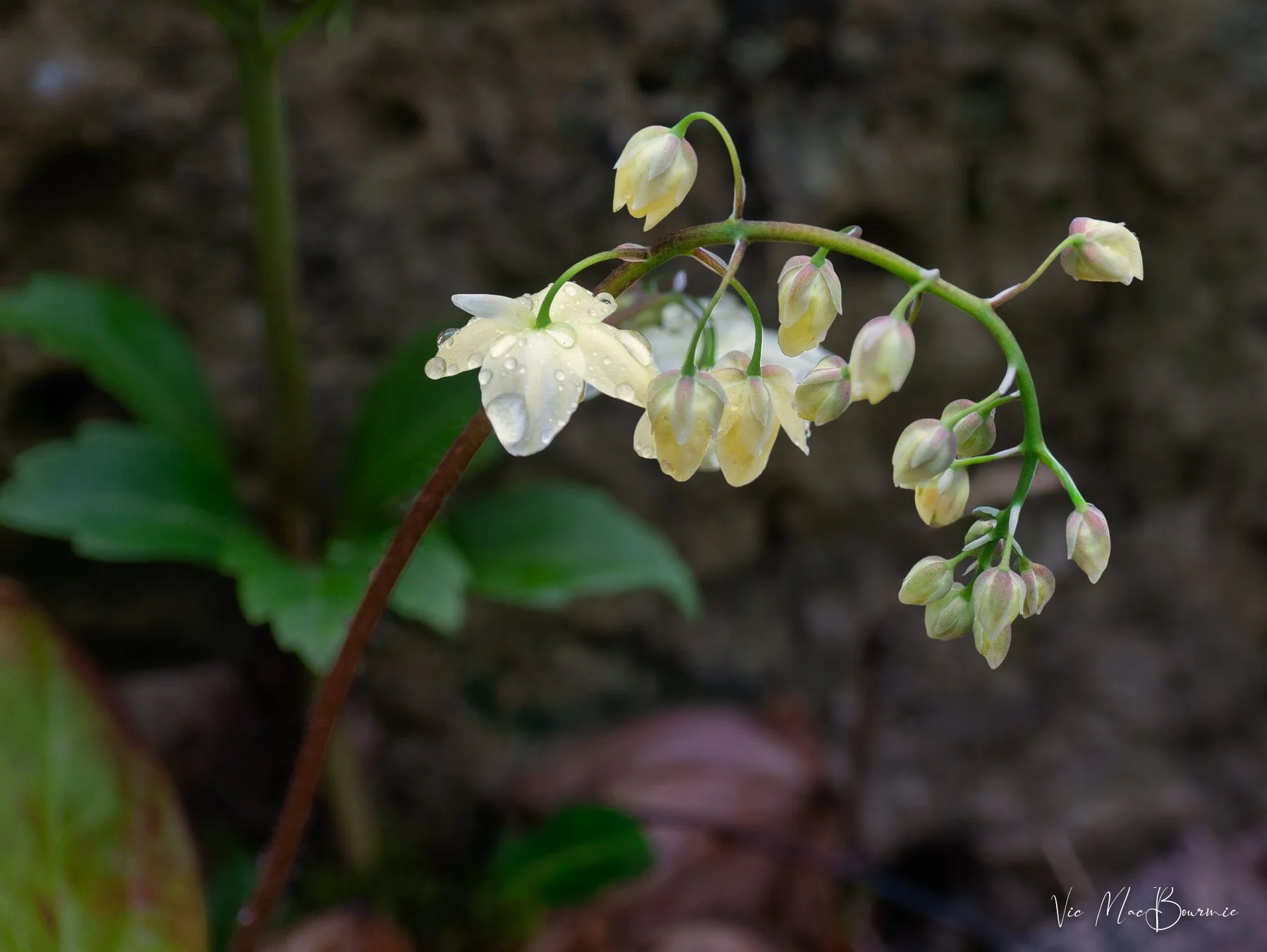
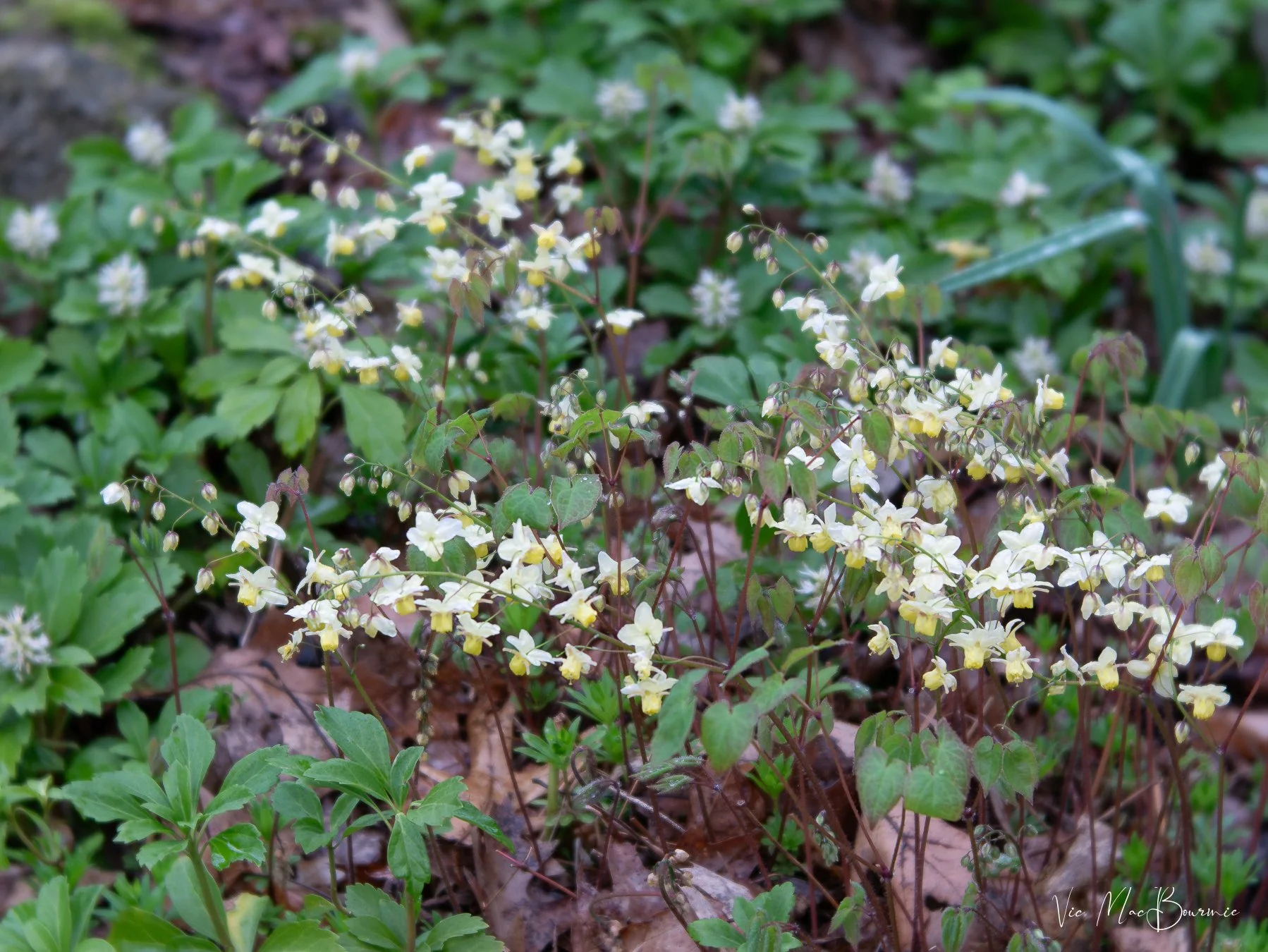
A delicate grouping of yellow epimedium growing in our front garden against a large boulder.
Week Two
Barrenwort/Epimedium takes centre stage
It’s the end of April and Epimediums are stealing the spotlight in the woodland garden.
I know – not native – but they are a great source of nectar for wildlife, and boy are they a lovely addition to the early spring woodland garden. I have two varieties (there are hundreds). Their lovely yellow and rose blooms standing on thin stems and dancing in the wind give the early spring woodland garden an ethereal feel.
We have clumps planted both in the back and front gardens where they are spreading nicely.
For my complete post on Epimediums click here.
These early spring bloomers are great for dry-shade and splitting the clumps is the perfect way to spread their joy around the garden. Although the flowers are a welcome addition in spring, it’s their foliage that makes these plants so desirable. Not unlike hostas, the lovely foliage provides the real interest throughout the gardening season. Spring, however, is the time to enjoy the flowers.
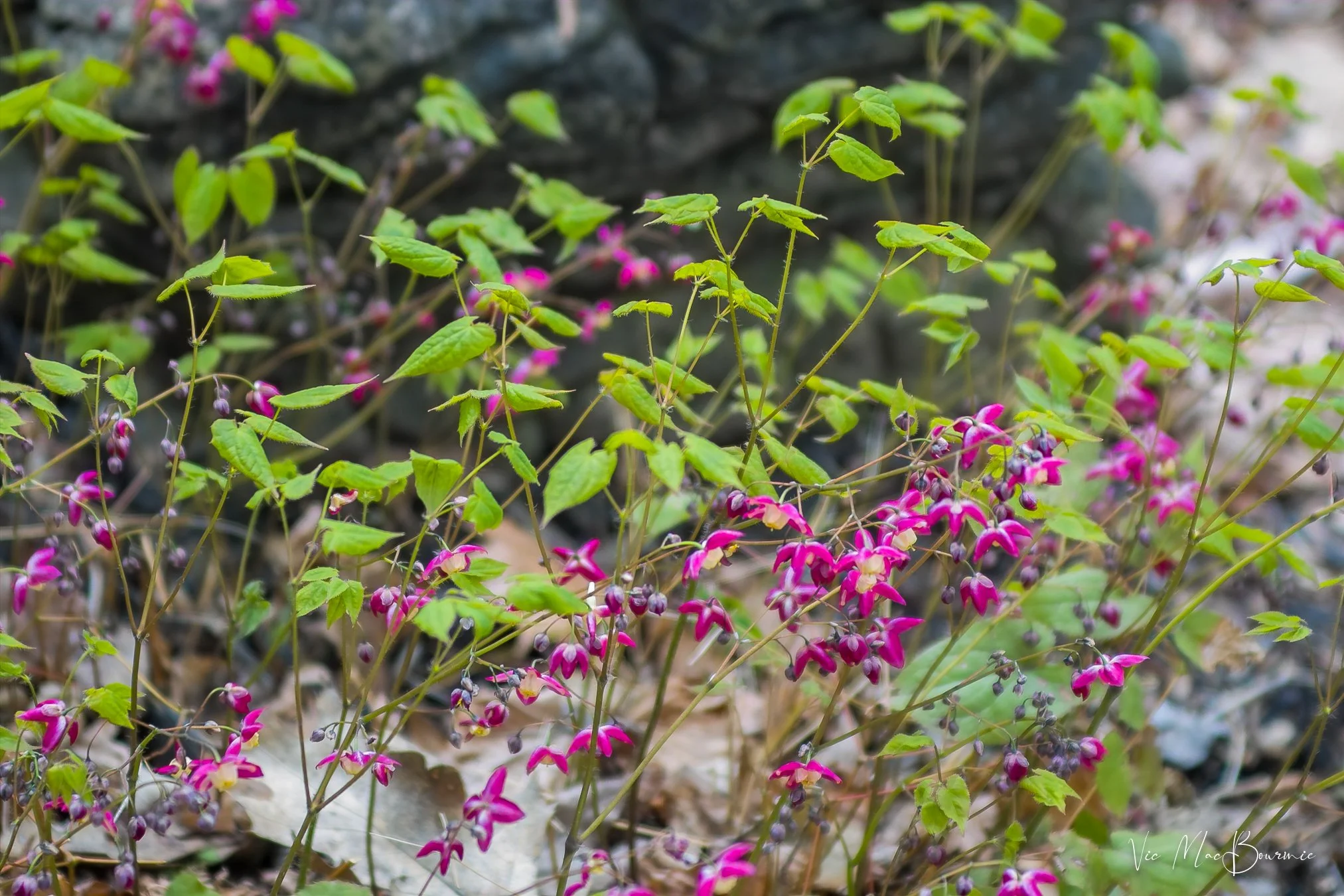
The delicate blossoms of epimedium rubrum (barrenwort) along with the spring green foliage is a welcoming sight after a long winter.
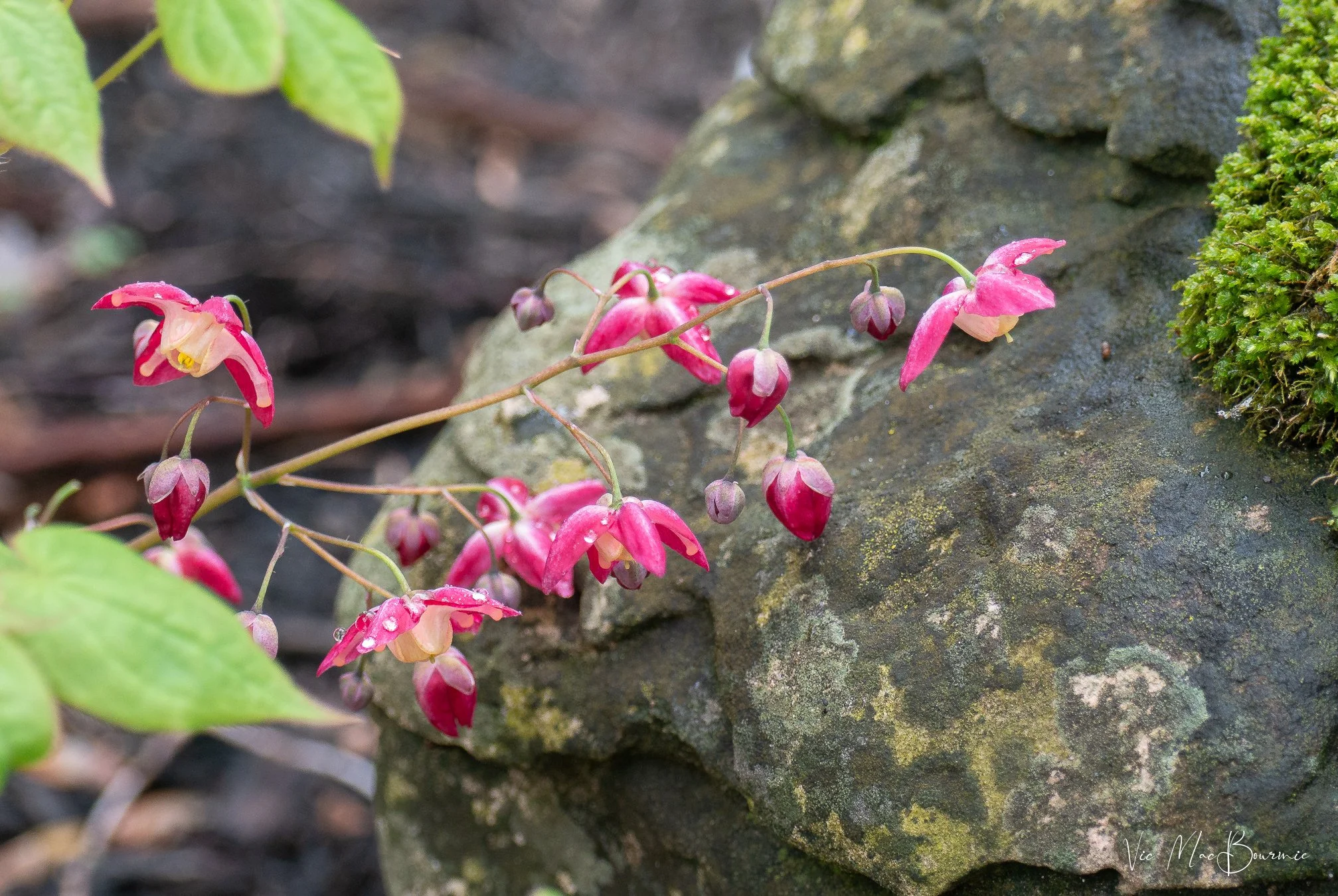
This clump of rubrum epimedium stand out against this mossy rock in the front Japanese-style garden. Notice the lovely moss and lichen growing on the rock. Moss is an important part of our woodland garden and grows happily on rocks, paving stones, on the soil and anywhere else it can get a grip.
Joining the Epimediums at this time in the woodland garden are native trilliums that bloomed this week, and the sudden emergence of Solomon’s Seal stems just waiting to unfurl.
Moss and moss-like ground covers should be an important part of any woodland garden. For more on growing moss and moss-like ground covers, check out my earlier post here.
In other parts of the garden, ostrich ferns have begun to unfurl their soon-to-be massive fronds, while the more delicate maidenhairs reveal themselves in much more subtle ways. violets are everywhere and forget-me-nots are beginning to make their presence known not by their flowers but certainly by their foliage.
Everywhere, the spring greens are lighting up the woodland and nothing is a more welcome sight than our trio of clump birch trees that I like to refer to as my mini-birch grove. They bring a lovely view outside our main window in the kitchen and allow me to look out into a sea of green interrupted only by the birds that flitter about in search of insects. Click here for my earlier post on the mini birch grove.
The full impact of spring is yet to be felt here, but just a few more warm and sunny days and it will burst in all its glory.
Even the birds are brimming with excitement. The Merlin app is telling me there are a huge variety of birds in the yard, including warblers which I have yet to spot while out with the camera. Hopefully, they’s get lower in the trees and allow me to capture their elusive beauty.
Interested in exploring epimediums further, be sure to check out my post here.
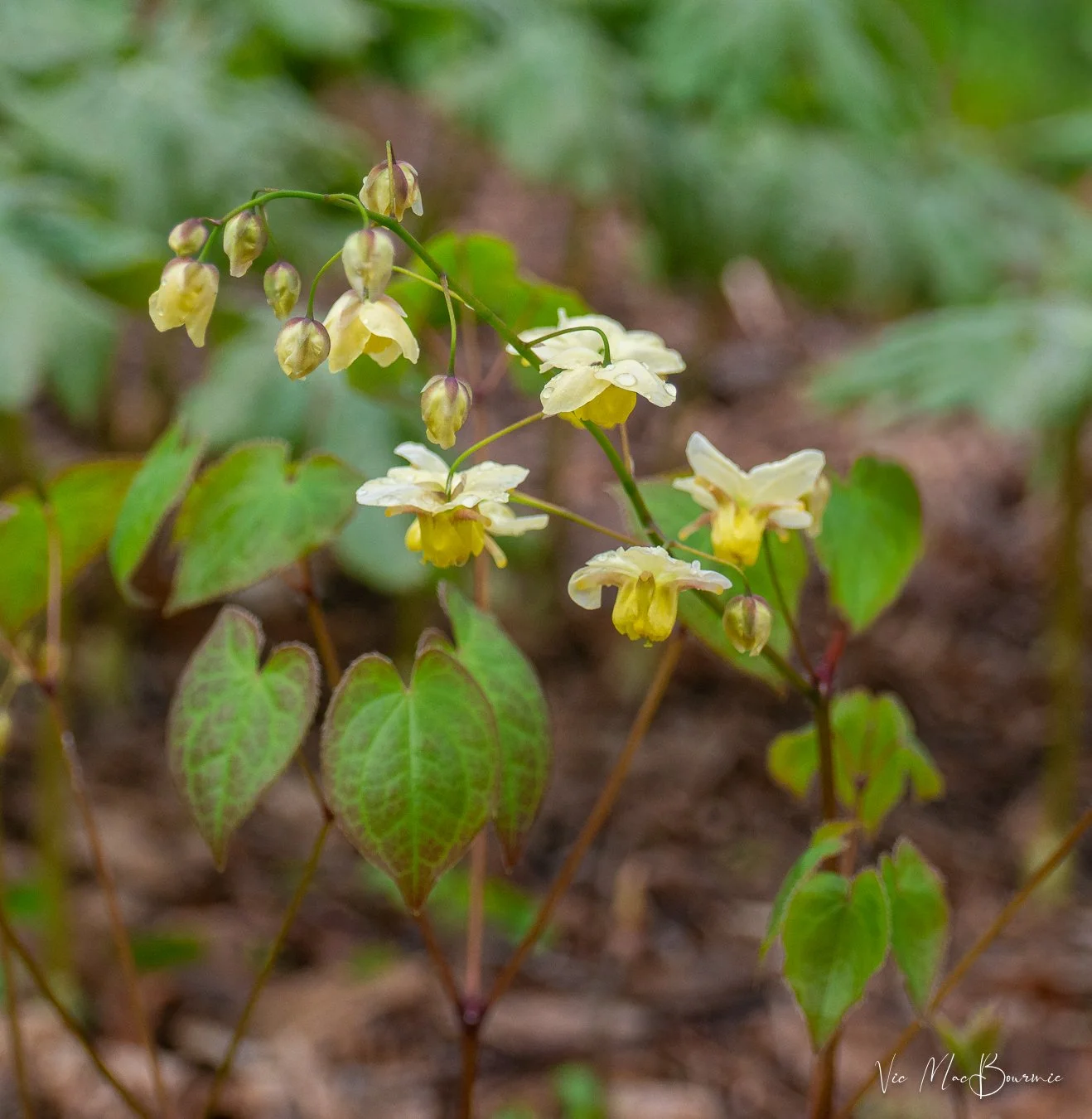
The foliage of epimedium, as seen in this image, is what makes the plant desirable throughout the growing season. The veined green leaves rimmed in a delicate red adds year-round interest to the plant replacing the ubiquitous host in many cases.
Still waiting for the hummingbirds and orioles but I am seeing reports of them all around us and our feeders are out a ready to welcome them.
Speaking of birds, I have decided to finally give up our main central bird feeding station in the yard. Actually, our friendly and overweight racoon made the decision easy for me by literally breaking our main pole that holds a variety of feeders.

Colby after running into a concrete planter in pursuit of a chipmunk. We are working hard to teach him not to chase any of the wildlife but there are times where he just can’t help himself. No chipmunks were injured, just Colby.
The pole was probably pushing 25 years old, so the decision to let it go wasn’t difficult. Instead of the single pole, I’ll be moving to individual feeders around the yard. I’m hoping if I use tough feeders, I’ll be able to keep the critters off them for the most part.
Time will tell.
In other excitement in the garden this week, Colby, our very large flat-footed retriever, almost lost his eye after deciding to ignore my strict warnings not to chase the chipmunks. I guess he figured that it was worth the risk to go on the chase of the little chipmunk hanging out at the downed feeding pole. Colby not only missed the chipmunk, but ran into a concrete planter, knocked it over and taking out a chunk of skin and fur under his eye.
Turns out, he is perfectly fine, but it’ll take a couple of weeks to get the fur back. In the meantime he looks like he lost a round with one tough boxer.
Colby is a real handful in the garden and I think the whole wildlife thing is very new to the big guy. For the most part, he Is being very good around the squirrels and chipmunks, just watching them from afar. However, If they get too close to him, I’m thinking he might be a real handful.
It’s important for him to get used to having lots of wildlife around, from rabbits, to deer and everything in between. His prey drive is high, so I’m fearing he will have to stay on a leash with us anytime we are in the back yard.
Here are a few more images of the garden at the end of April.
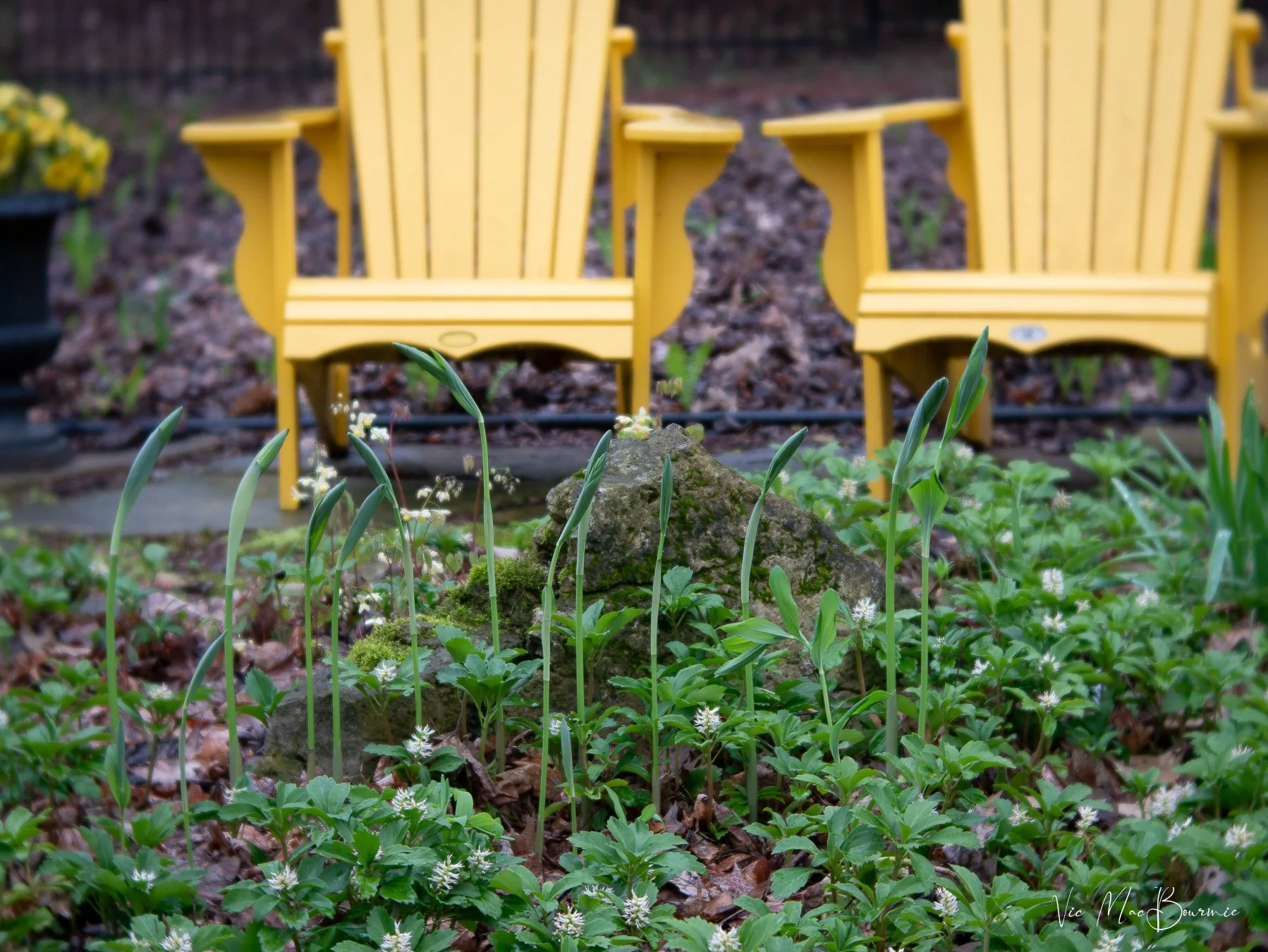
Native solomon’s seal sprouts prepare to unfurl in the front garden alongside the epimedium and pachysandra groundcovers.
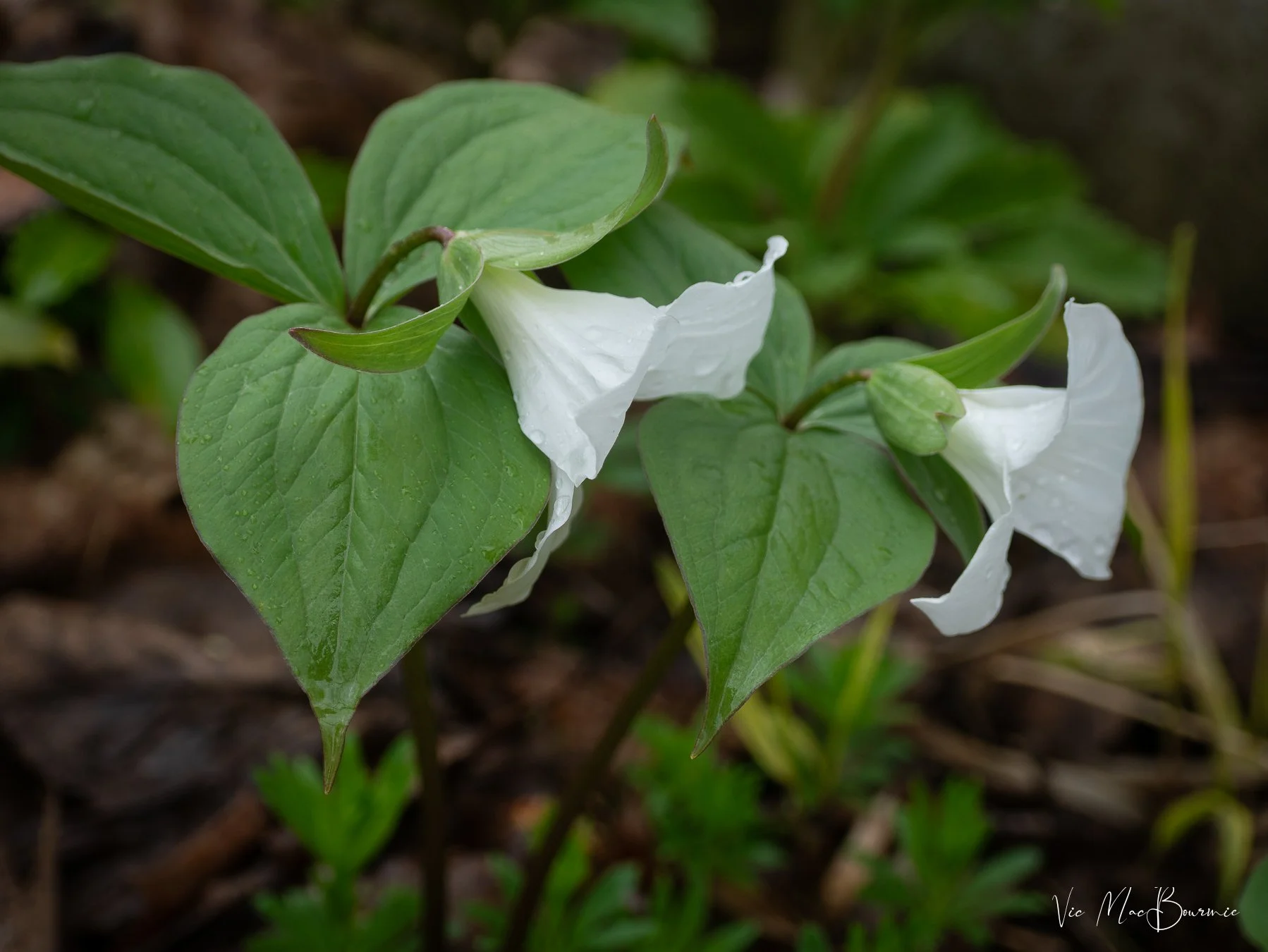
A pair of native white trilliums in bloom in the front garden. Hoping the wildlife give these a chance to bloom before nipping off the flowers.
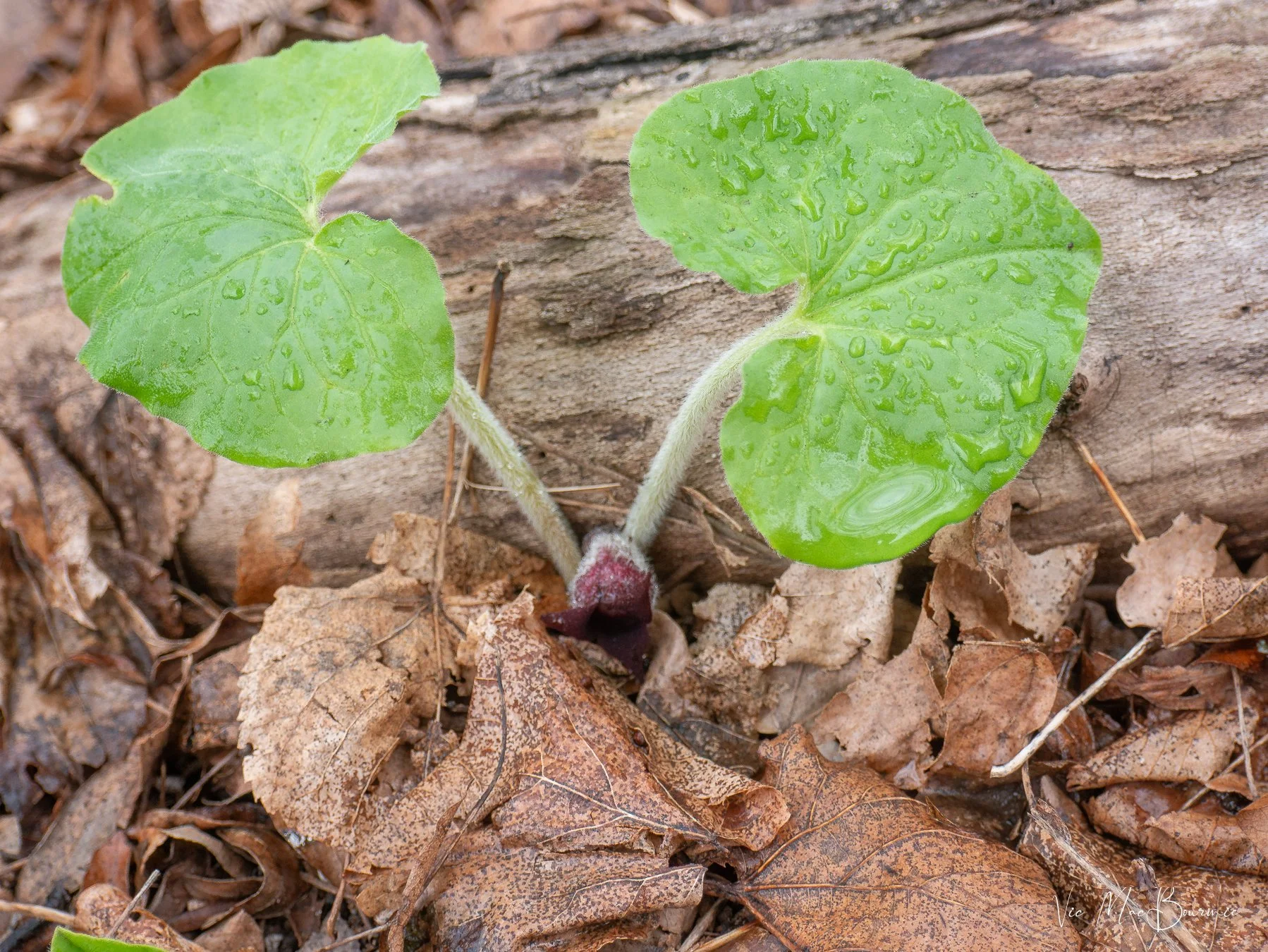
A native wild ginger plant prepares to bloom in the back woodland garden. I planted this last year as part of a woodland vignette, inspired by last year’s “A walk in the woods” series of articles. with any luck, this plant will spring into a lovely clump.
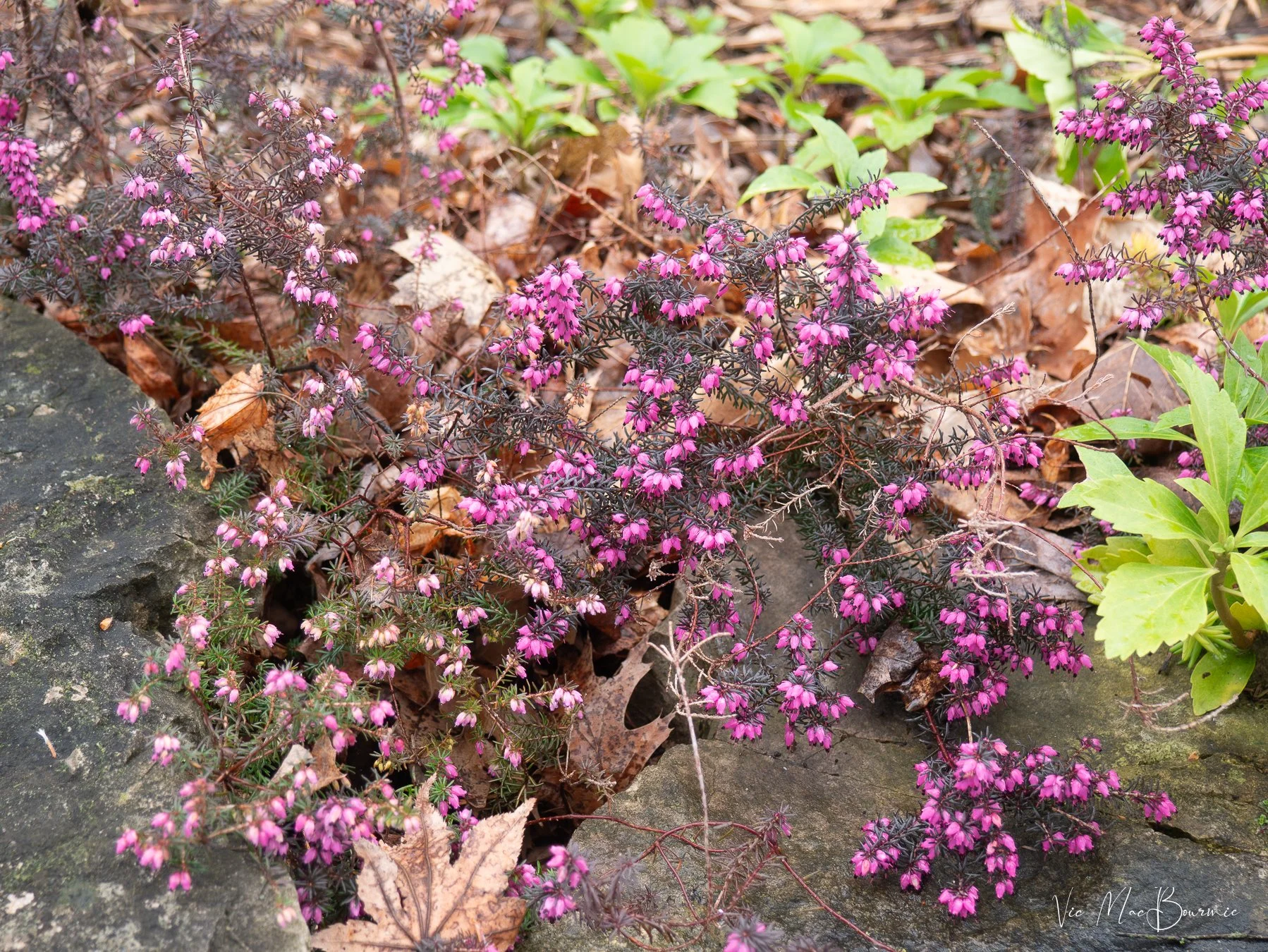
Heather grows along a rock wall of boulders providing an early-spring nectar source to a host of insects. Notice the leaves th at have been left on the garden. It’s important not to clean up you leaves to make the garden look pristine. In a short time, all the leaves with be buried by plants and literally disappear over the summer. Any leaves that we do clean up are moved to the backyard.



Woodland gardens are dependent on foliage texture for much of their subtle beauty. Three native plants, ….. Jack in the Pulpit, Solomon’s Seal and Mayapple are three plants that are standouts in the woodland garden for their foliage rather than their subtle flowers.