
Fujifilm’s powerful, fun travel cameras pass the test
Fujifilm’s travel cameras are capable of impressive results whether you are travelling the world or just wandering into your garden for a day of flower or wildlife photography.
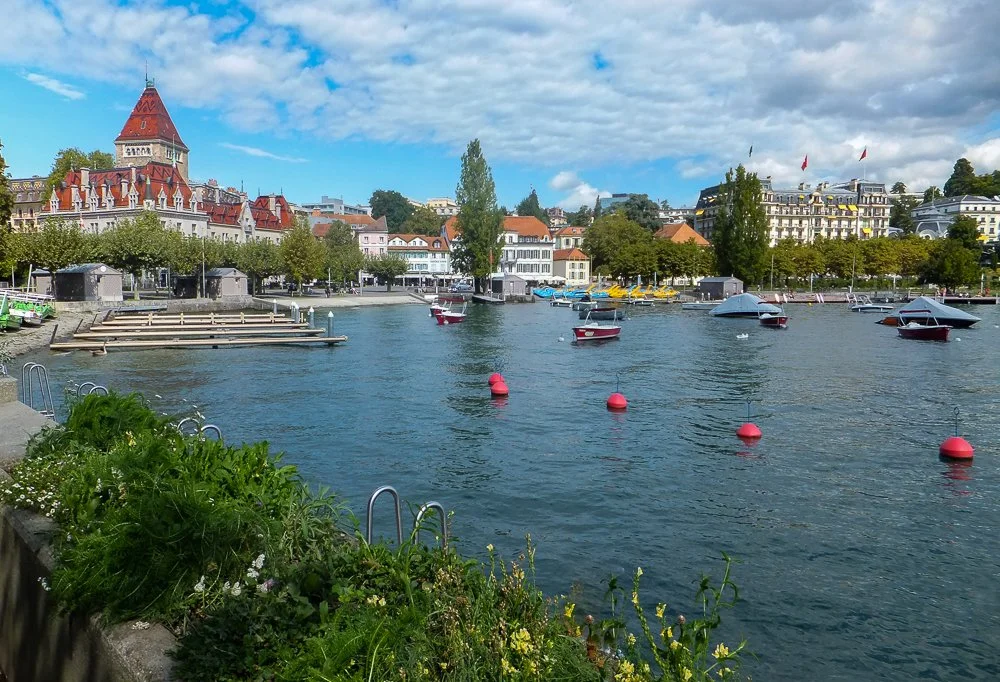
The harbour in Lausanne's Ouchy/Olympic district in Switzerland.
Fujifilm F660EXR: From thrift-store find to priceless European vacation images
It takes a special camera to find a spot in your travel pack just weeks after picking it up at a local thrift shop for less than a couple of fancy Swiss espressos.
That’s exactly what happened recently when my wife and I flew to Switzerland to board a once-in-a-lifetime Rhine River cruise. I had been trying to decide what cameras would be small enough to take everywhere I went in Europe, but also could provide the quality I wanted to ensure I would not regret the choice when I returned home with hundreds maybe even thousands of images.
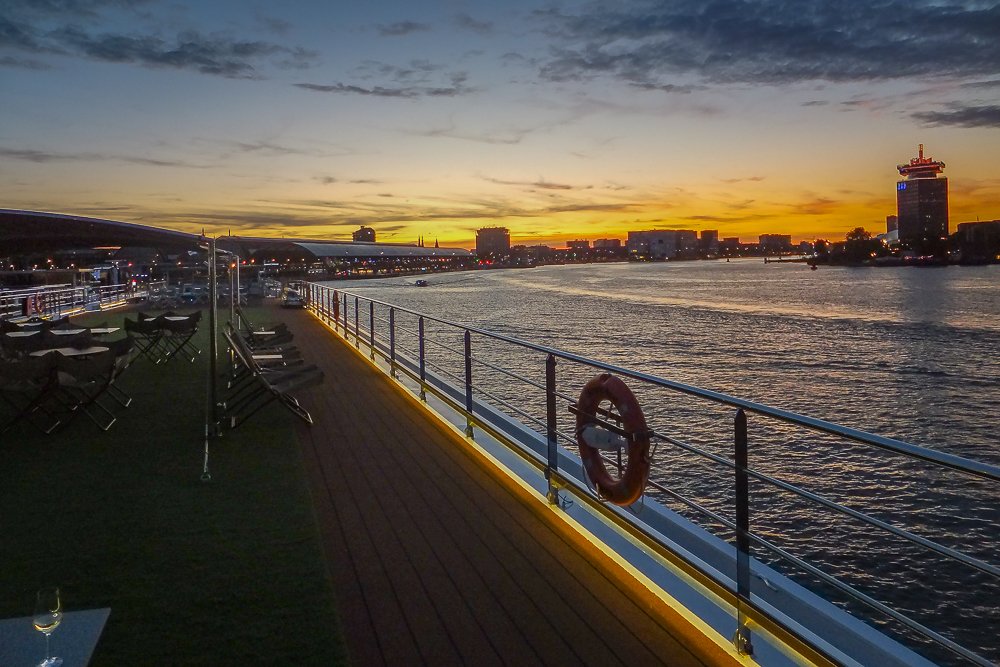
Sunset over Amsterdam from the deck of our ship taken with Fujifilm F660EXR travel camera.
The choice was the Fujifilm F660EXR travel camera from 2012 that boasts a 15X compact superzoom with a 35mm equivalent lens ranging from a very wide 24mm to a more than adequate 360mm.
This combination meant there was nothing standing in the way of capturing the incredible vistas of the Rhine River valley complete with its magnificent castles, or the details of same castles from the comfort of our deck chairs. All this capability packaged with Fuji’s EXR technology and a 1/2"-inch, 16MP CMOS sensor with a generous 3.0-inch 460,000 dot LCD viewing panel.

The Fujifilm F660EXR quick startup helped to catch this image of a woman in red walking beneath an impressive Swiss flag in the city of Lausanne.
For the beginner photographer who cares little about such details, these specs simply translate into a very capable camera.
But the impressive stats were not the only reason I chose to pack this camera rather than a host of other more capable possibilities filing my camera case.
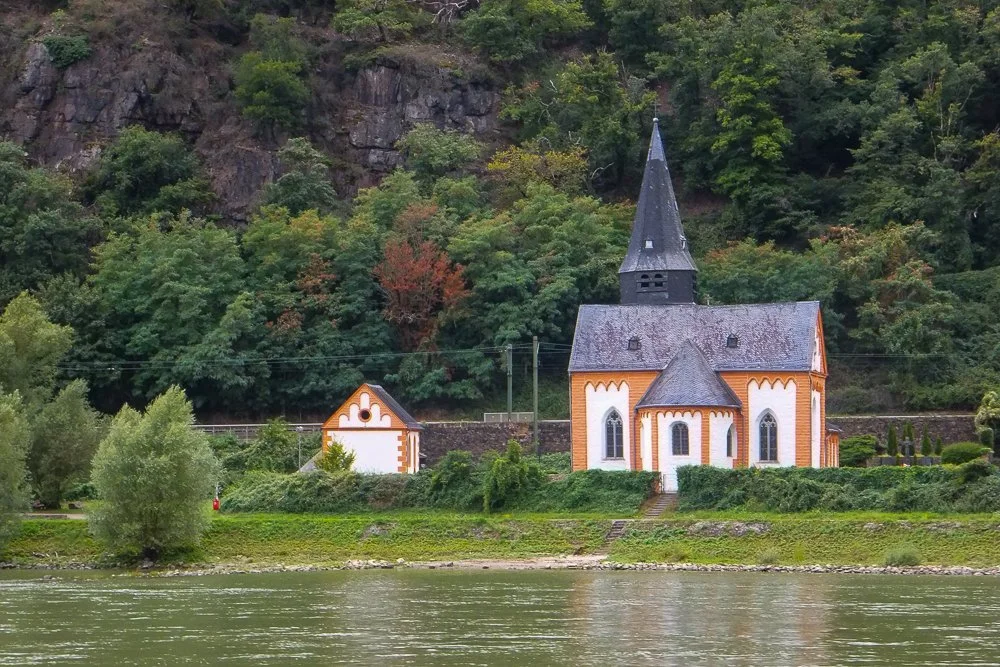
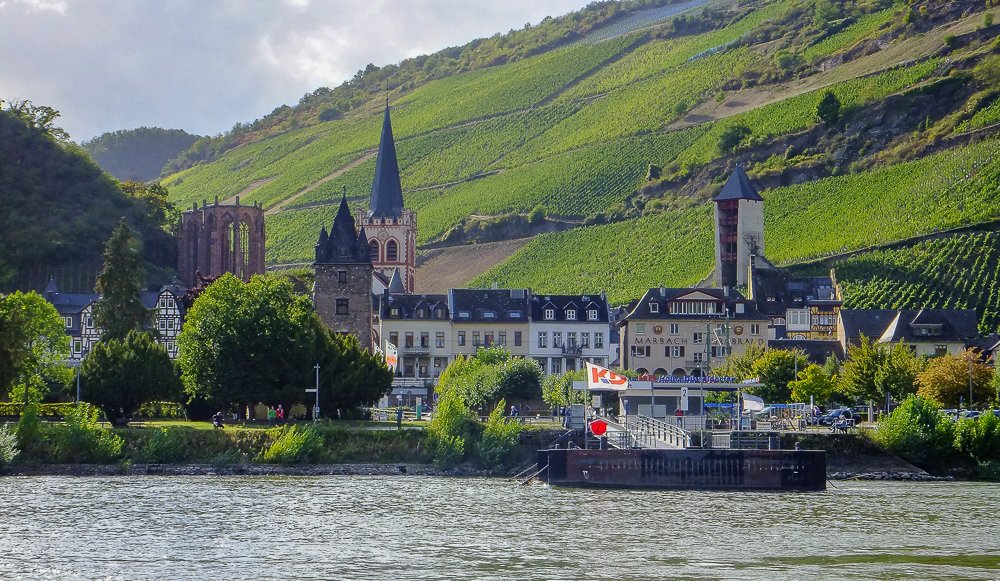
The Fujifilm F660EXR’s zoom range was able to frame this image of a church while cruising the Rhine River.
What really convinced me was the camera’s superb performance discovered in the few weeks prior to the cruise. After running the camera through its paces, I gained complete confidence that it would deliver. That, and the fun factor of using this little gem to capture the spring woodlands around our home made the decision easy.
Now, to be fair, a big part of the decision revolved around the camera’s pocketability and, once again, the Fujifilm F660EXR proved too good to be true. Fuji made this thing so streamlined that there wasn’t a pocket it didn’t like.
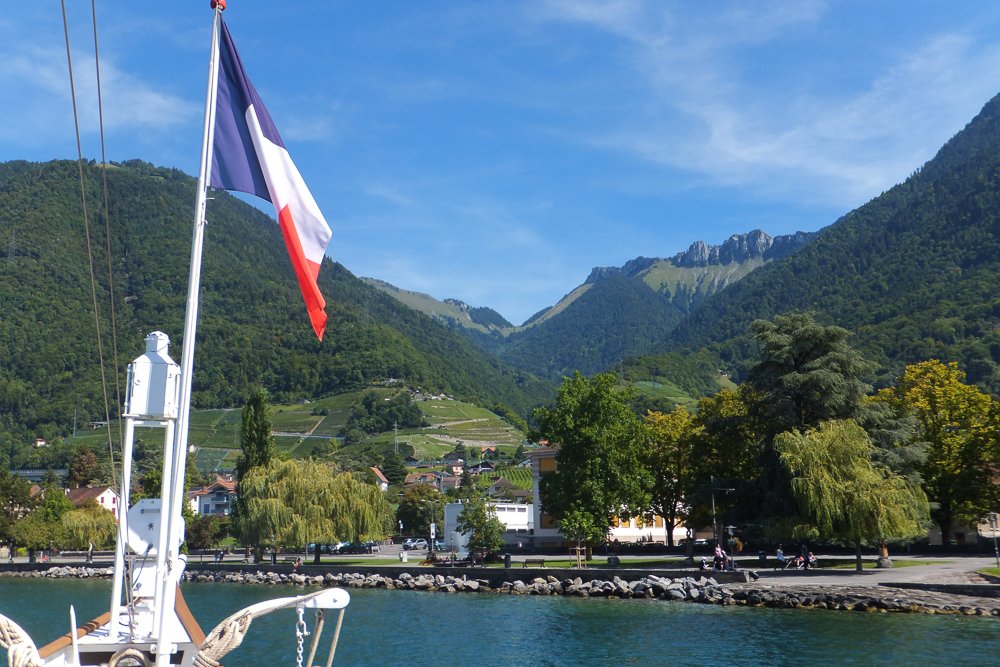
A day cruise of the beautiful Lake Geneva in Switzerland taken with the Fujifilm F660EXR.
I confess that Fuji’s magnificent little travel camera was not the only camera in my pack. The other travel companion was the miniaturized Pentax Q complete with a couple of its tiny lenses. Both cameras gave me everything I needed to capture the beauty of Switzerland and the Rhine River.
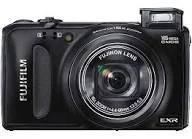
Fujifilm F660EXR
In this post, however, I am going to focus on the Fujifilm. For my separate post on the Pentax Q, click here. For my post on shooting street photography while on vacation, click here. And, for my post on capturing window box images in Europe click here.
As travel cameras go, the Fujifilm EXR F-series pack a real punch including their almost cult-like film-simulation settings including Velvia for vivid colours, Provia for a more natural look, Astia for a softer effect (excellent for portraits and people pictures) and, of couse, B&W and sepia settings.
Add to the film simulations a huge selection of picture modes for special effects or difficult exposure situations. A particularly useful addition is Fujifilm’s impressive pro-focus selection that creates an image with a soft background that can be varied depending on your preference.
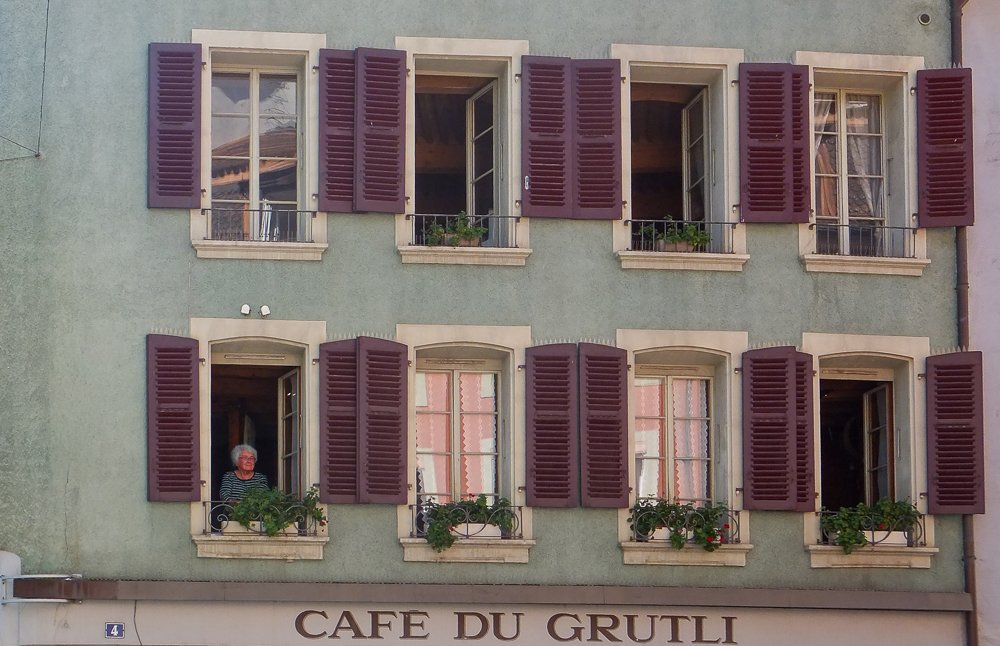
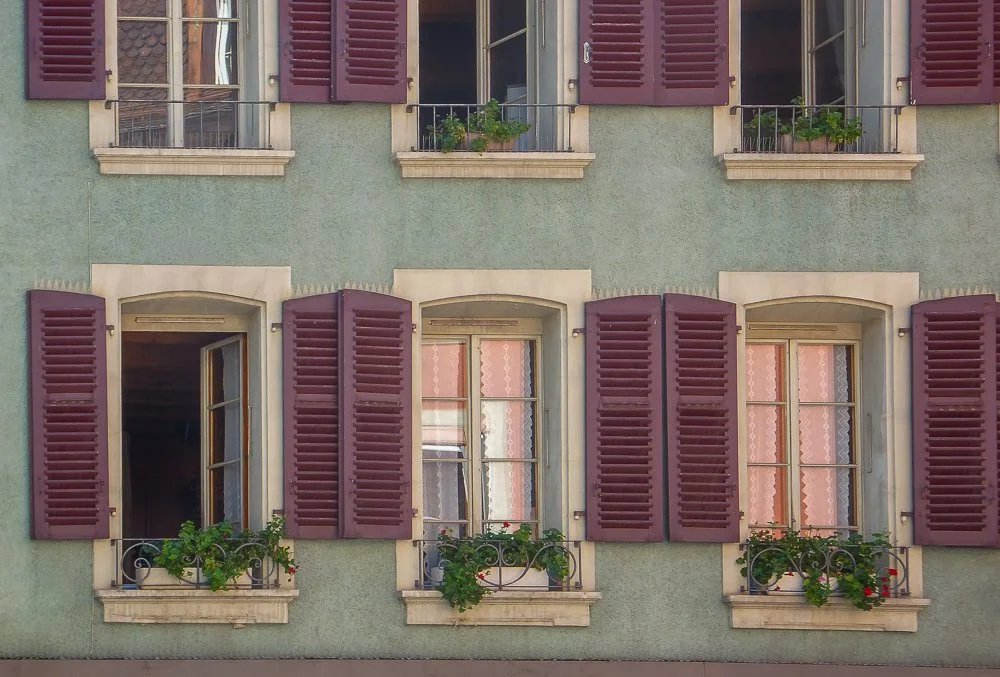
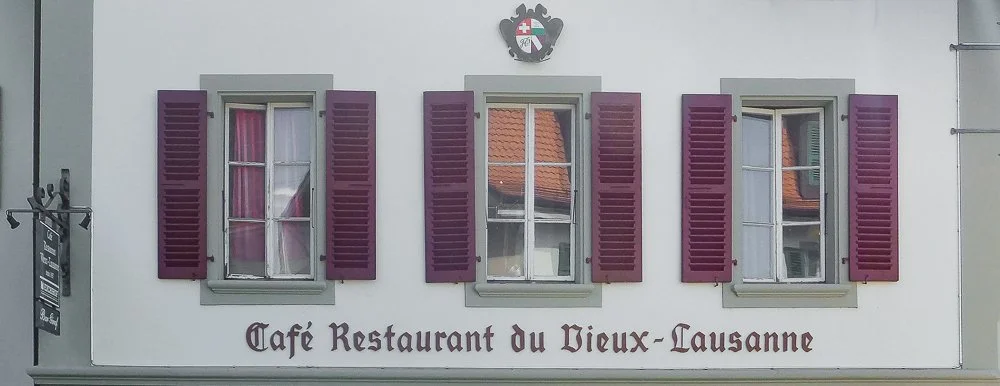
Windows onto the world captured by the Fujifilm F660EXR.
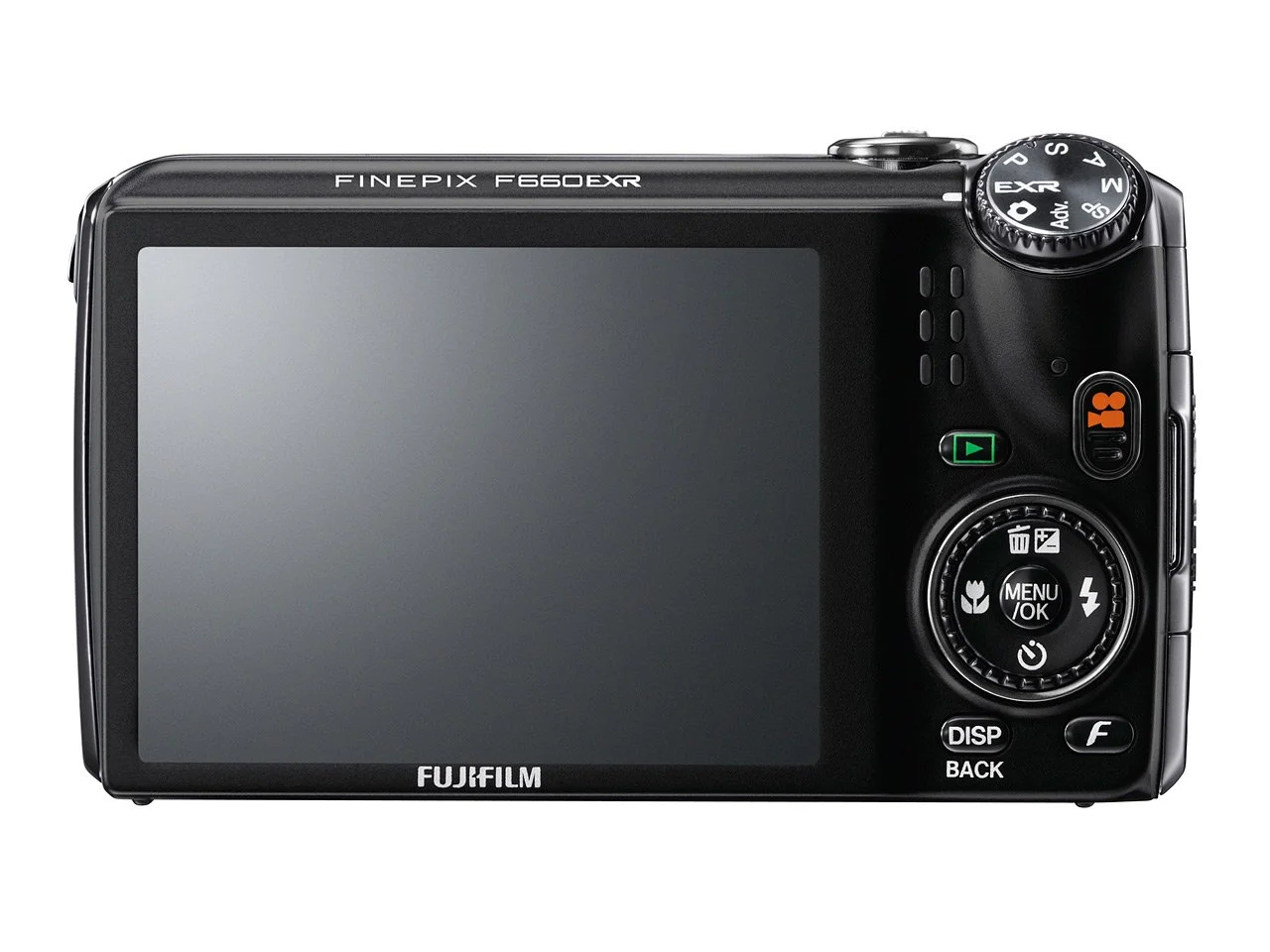
Back of the Fujifilm F660EXR
The list of features the camera includes are too numerous to list here but of note is the ability shoot in every mode imaginable from manual to aperature and shutter priority for those who want to take full control of the camera, to the EXR mode that looks at the scene and selects the best option for the finest results. Unlike a typical “program” mode – the Fujifilm has this mode as well – the EXR uses the camera’s most advanced abilities to ensure high-quality images even in the worst or most difficult lighting conditions often involving taking a series of images and then incorporating them into a single, high-resolution image.
The above images and the following ones are just a few of the images taken on the European vacation. For more images taken on with the Fujifilm F660EXR film camera – including some of my favourite images not taken on the vactation, watch for my photo gallery which will be appearing here at a later date.
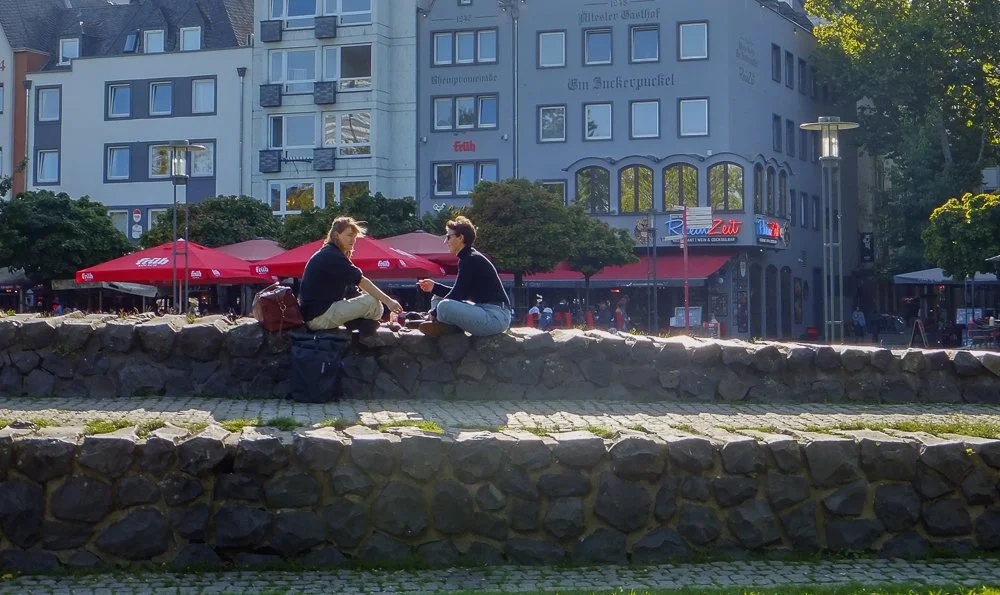
The long focal length of the Fujifilm allowed me to capture these two talking from a comfortable distance.
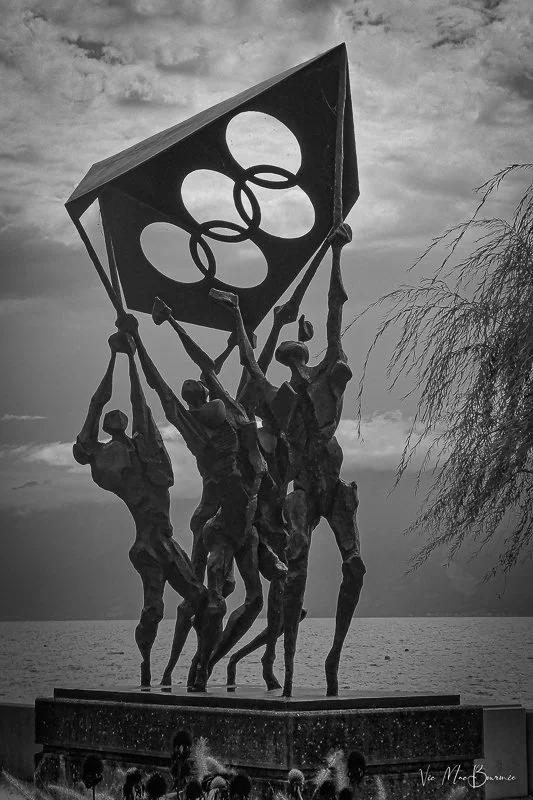
Olympic statue
Lausanne, Switzerland is home to the International Olympic Committee. This beautiful statue sits outside the Olympic museum. Originally photographed in colour and converted to B&W.
Fujifilm F660EXR Specs
Body type: Compact
Max resolution: 4608 x 3456
Effective pixels: 16 megapixels
Sensor size: 1/2" (6.4 x 4.8 mm)
Sensor type: EXR CMOS
ISO: Auto, 100, 200, 400, 800, 1600, 3200 (6400 and 12800 with boost)
Focal length: (equiv.)24–360 mm
Max aperture: F3.5–5.3
Screen size: 3″
Screen dots: 460,000
Max shutter speed: 1/2000 sec
Storage types: SD/SDHC/SDXCUSBUSB 2.0 (480 Mbit/sec)
Weight (inc. battery): 217 g (0.48 lb / 7.65 oz)
Autofocus
Contrast Detect (sensor)
Multi-area
Center
Tracking
Single
Continuous
Face Detection
Digital zoom Yes (2x)
Macro focus range: 5 cm (1.97″)

A street performer performs under a bridge in the city of Cologne, Germany.
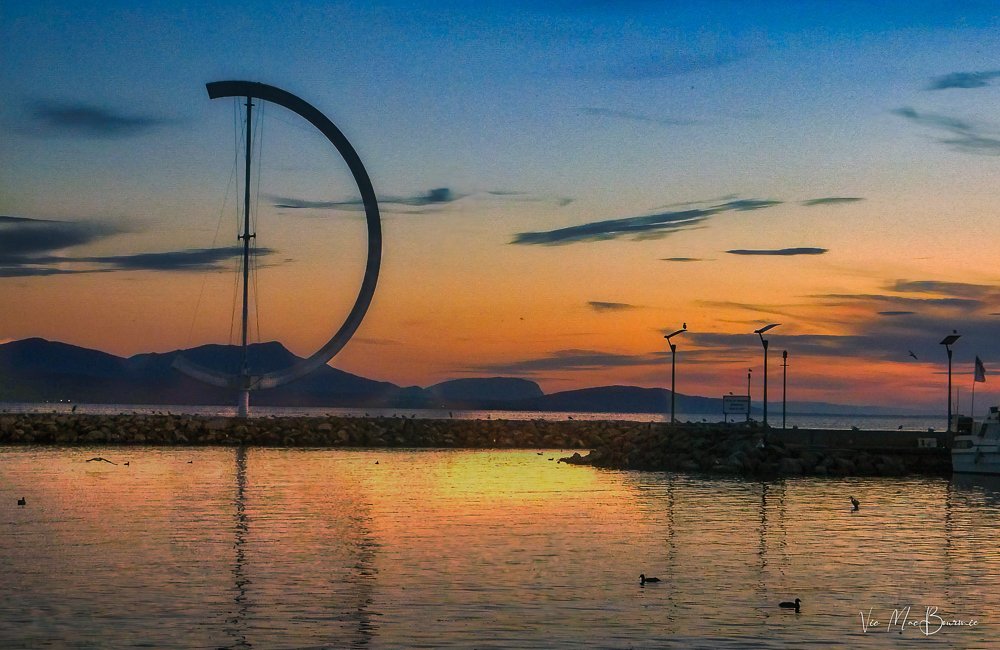
A harbour in Lausanne, Switzerland.
Based on the Fujifilm FinePix F-series history, there were at least 10 distinct EXR-model travel cameras released between 2009 and 2013.
10 distinct EXR-model travel cameras released between 2009 and 2013
These cameras were characterized by the EXR CMOS sensor technology, designed for high-resolution, low light, or high-dynamic-range shooting in a compact, portable body ideal for travel photography or as an everyday carry camera.
Key models in the Fujifilm EXR F travel zoom lineup included:
F200EXR in 2009 – the first to feature the EXR sensor
F80EXR/F85EXR (2010)
F300EXR/F305EXR (2010) introduced Phase Detection AF
F500EXR/F505EXR/F555 (introduced in 2011 adding GPS and RAW capabilities
F600EXR/F605EXR/ (introduced in 2011)
F660EXR/F665EXR Introduced in 2012
F770EXR/F775EXR introduced in 2012 along with the 20X zoom
F800EXR/F820EXR introduced 2012-2013
F800EXR/F820EXR introduced in 2012-2013
F900EXR introduced in 2013
The Fujifilm FinePix F660EXR is a 15x compact superzoom built around the company's EXR technology. It features the same 1/2" type 16MP CMOS sensor as the co-announced F770EXR, along with the same 3.0" 460,000 dot LCD but loses the more expensive camera's zoom range, GPS and Raw-shooting capability. It still offers an impressive 24-360mm equivalent stabilized zoom and 1080p movie shooting.





The Foveon sensors in Sigma cameras may be difficult to work with but the results can be stunning.