
In spring, the bird feeding station that has stood in the backyard for more than 20 years, finally gave out and crashed to the ground. The result, a spring and summer with no feeders. The experiment resulted in fewer backyard birds, but a quieter summer in the yard.
Years of year-round feeding ends and the garden changes almost overnight
I remember the first task in our new home almost 30 years ago.
It was simple: Get a bird feeder up as soon as possible to see what we could attract in our new yard surrounded by large trees and forests. At that time, with the exception of five or six trees, the entire backyard was one big swath of turf grass.
Today, of course, ninety per cent of the grass has been removed and replaced with a woodland-style garden with probably close to 100 trees and shrubs, countless native plants, ponds, bird baths, bird houses and wood piles to attract critters of all kinds.
But back to that first bird feeder.
It wasn’t long before the birds arrived, and they’ve been our constant companions ever since that first feeder went up.

A seed cylinder atop our feeding pole has always been a favourite of both mine and the birds, especially woodpeckers. Removing them as a source of food has reduced the number of woodpeckers but not eliminated them.
Blue Jays, Cardinals, Mourning Doves, Juncos, Chickadees, Nuthatches, goldfinches, purple finches and a host of woodpeckers – including several Pileated Woodpeckers – came by to visit and call our backyard home. Even three large male Wild Turkeys spent a fall and winter with us before wandering back into the woodland.
Most recently in spring and fall, warblers made the backyard a regular stop for a few days before completing their migration.
Of course hummingbirds are regular visitors in spring and throughout the summer and we kept those feeders up all summer.
Looking out the many windows overlooking the back yard or sitting in my favourite chair on the back patio always meant counting the many birds flitting about the large, well stocked bird feeding station.
But that all changed this spring when our bird feeding pole finally gave way to the weight of the many feeders and the many giant racoons that somehow managed to climb up the pole most nights and clear out any remaining scraps left by the birds.
For my earlier post on methods to keep critters away from your feeders, check out this post (here).

The bird feeding station was an active spot in summer and winter. Although an effective way to feed and attract a variety of birds, it was also a focus of predators from fox looking for critters feeding on the fallen food, to Coopers hawks looking to take an unsuspecting bird at the feeder.
I had been thinking about putting an end to feeding the birds after reading about the many health problems that concentrating birds at a feeder can create. Attracting so many squirrels, chipmunks and no doubt mice didn’t help either.
The morning I walked out to find the pole literally bent in half was the moment I made the decision that feeding our feathered friends would be put on hold for the entire summer.
It was as much an experiment as it was not wanting to buy a new pole and rebuild the feeding station. In addition, our newly-acquired and very large dog was especially attracted to the feeding station and every evening I took him out for a late-night pee was an exercise in surveillance to ensure there were no animals around for him to rip my arm off in his attempt to chase down the culprits.
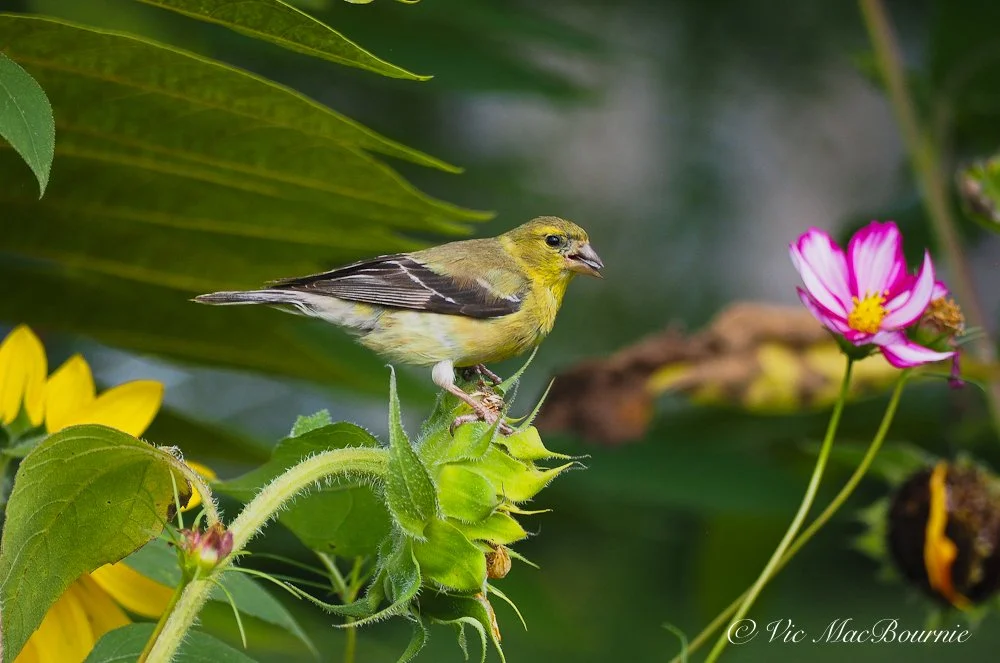
Replacing feeders with more natural food sources such as this sunflower is a much more inexpensive and photographically pleasant way to feed.
A summer of peace and a little regret
So what was the result of a spring and summer without bird feeders?
I’d like to say that it made little difference in the number of birds, but that would be a lie. I’d love to say that when I went out in the morning the bird song greeted me much in the same way that it did when the feeders were filled.
But that too would be a lie.
Instead, I had to listen closely and look carefully to see any real bird activity in the yard. It’s not like the bird songs were silenced, it’s just that you had to pay much more attention to experience them.
In spring, when the birds were nesting, there was still plenty of activity, but even the bird baths seemed empty for longer periods of time.
As spring turned to summer, the fledglings dispersed and the backyard grew even more quiet.
The chipmunks, red squirrels and regular grey and black squirrels that were traditionally all over the yard, became more infrequent. Even the foxes that we would see a fairly regularly became less frequent visitors.
Racoons and skunks were nowhere to be seen and the eerie silence became quite noticeable.
Now that’s not to say these critters were not around. Under close inspection, there was evidence of the little critters routing around the garden, it’s just seeing them on a regular basis became fewer and fewer.
Even the local deer seemed to be keeping their distance, for the most part.

Backyard visitors like warblers do not come to bird feeders and rely on insects as a food source. So, planting native trees, shrubs and flowers are important additions to any backyard wildlife garden.
Pros and cons to taking down the feeders
Taking down the feeders for the summer wasn’t all bad. Indeed, there were a host of benefits resulting from a feeder-less spring and summer garden.
For starters, I can’t imagine the amount of money saved from not having to keep the feeders fully stocked. High quality bird food costs are becoming outrageous, especially when much of it goes to the local squirrel, chipmunk and deer populations.
Feeding our very large, hungry dog with the finest cuts of RAW meat eats into our pensions enough without adding hundreds of dollars a month for bird food.
But more importantly was the balance that removing the artificial supplemental feeding program seemed to create in the yard. Yes there were fewer birds and certainly fewer critters, but it’s not like they disappeared altogether. Many simply expanded their feeding and foraging range to other parts of the garden and beyond.
The Coopers hawks that used to hang out in the trees around the garden were no-where to be seen either.
Although our yard is not conducive to attracting bluebirds, I had hoped that reducing the activity in the yard might attract a pair. But no luck there.

Keeping squirrels off the feeders is a never ending battle for most gardeners.
Conclusions
So what are my conclusions about taking down the feeders for the spring and summer?
Generally, it was a positive experience, if you don’t mind the reduction in bird activity.
If backyard birdwatching gives you incredible pleasure, Leave at least a few of your feeders to keep the birds coming to your yard.
The reduction of birds tells me I need to focus more on providing more sources of natural food in the garden – everything from berries to seed heads.
Moving forward with feeding the birds
I have decided to put up a few of my feeders for fall and winter. Rather than focus the feeding in a single area, I am spreading out the feeders around the front- and back-yards.
Two feeders have been hung from trees in the backyard, but I am already fighting squirrels that somehow are managing to get to the feeders. Action is needed to better squirrel proof the feeders.
I am also hoping to experiment with a Squirrel Buster feeder that closes with the weight of anything heavier than a bird.
Again, planting native plants is probably the best way to feed birds, it’s certainly the most inexpensive in the long run. To that affect, I just added three sumac shrubs/trees to the landscape. Sumacs are not only a beautiful addition to the landscape, they provide an excellent source of food in late winter and early spring for our feathered friends.
More on the sumacs, in a future post, but for now check out my earlier post on sumacs (here).
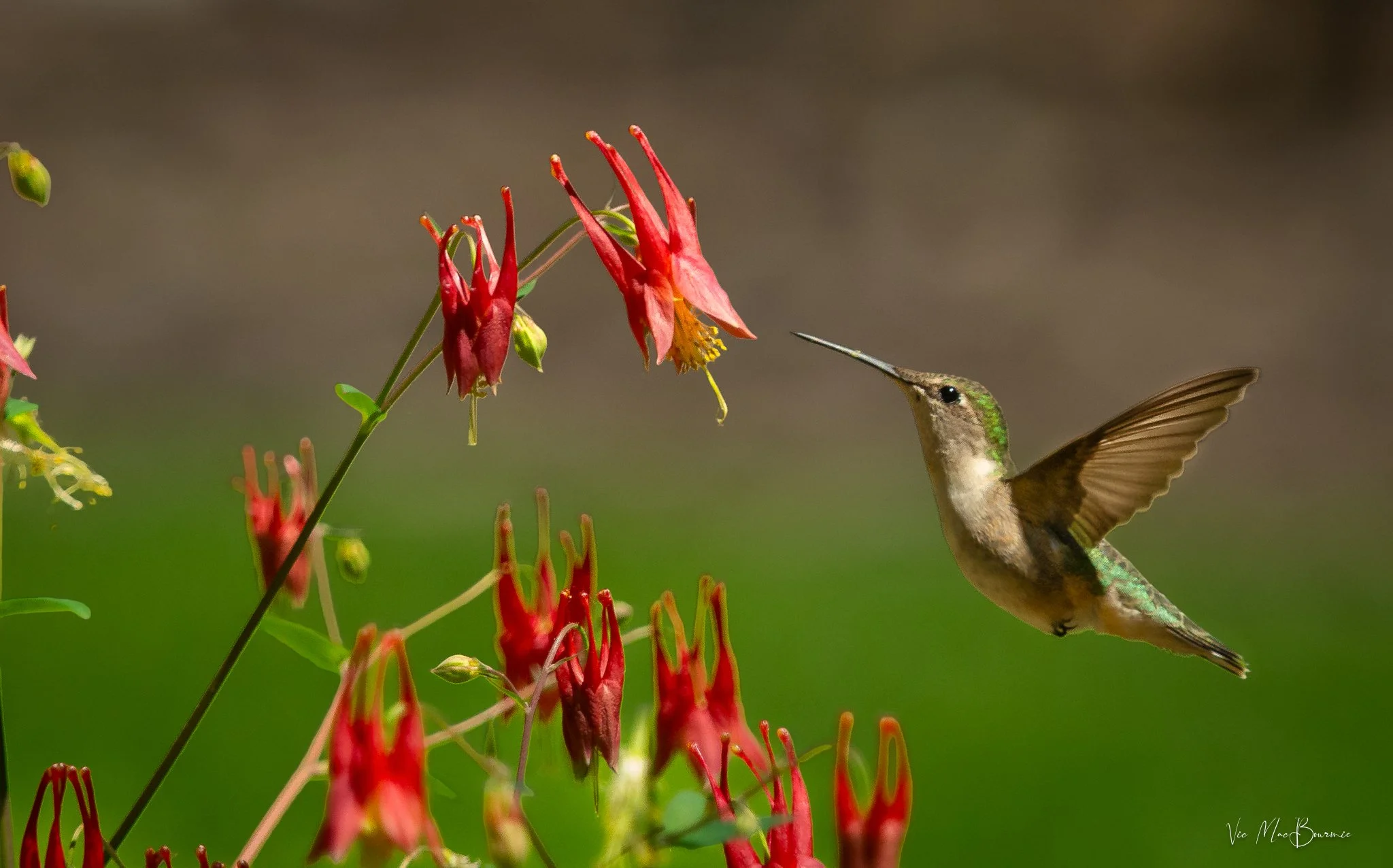
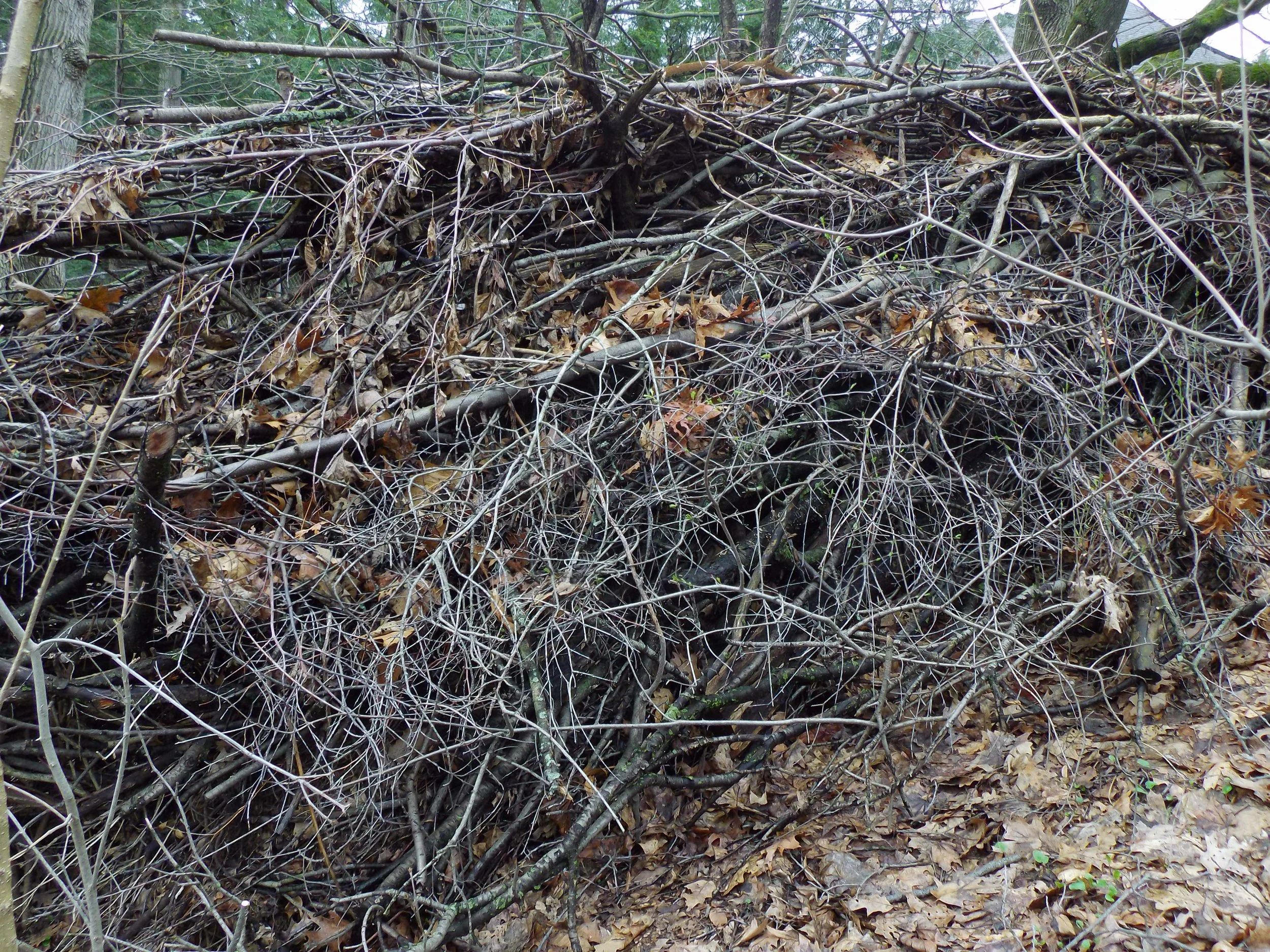
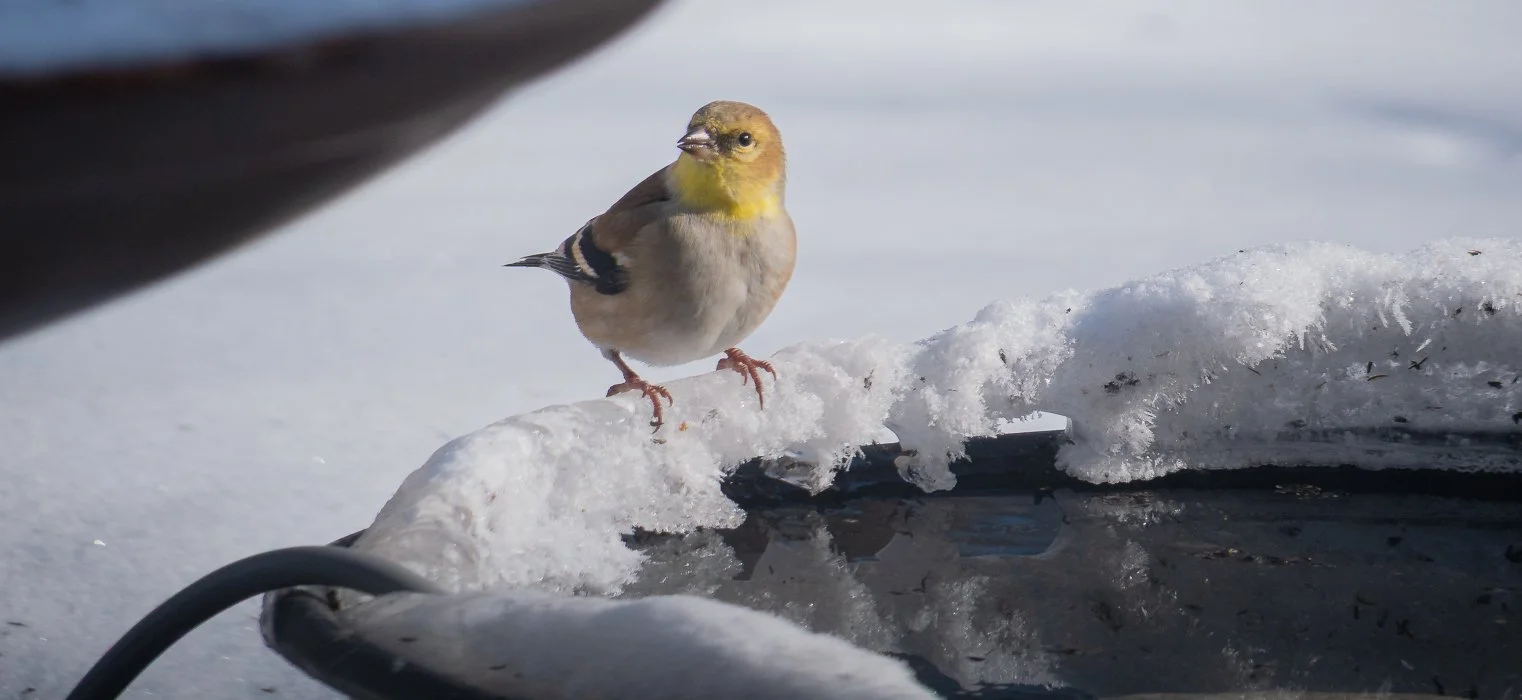

Natural bird feeders are nn excellent alternative to expensive store-bought feeders.