August in the woodland/wildlife garden
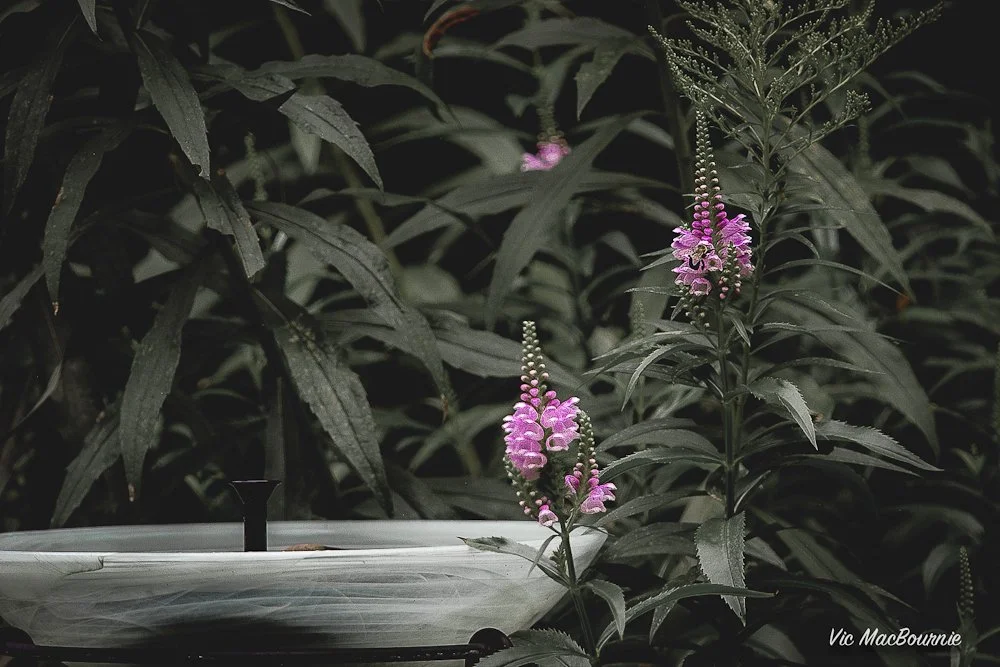
Obedient Plant can be a beautiful native plant to add to your late summer garden landscape.
August has not always been kind to our woodland/wildlife garden.
In past years, extremely dry summers have resulted in a major dieback of our large fern beds and put a strain on many other plants in our primarily sandy-soil landscape.
But not this year. Sufficient rainfall has meant our ferns have faired well and remain green and standing tall. I recognize that this will likely not last much longer as either dry conditions or colder weather will begin to take a toll on our impressive fern beds.
Instead, I’m counting on the many fall flowering shrubs and perennials to take up any slack that autumn may bring to the woodland/wildlife garden.
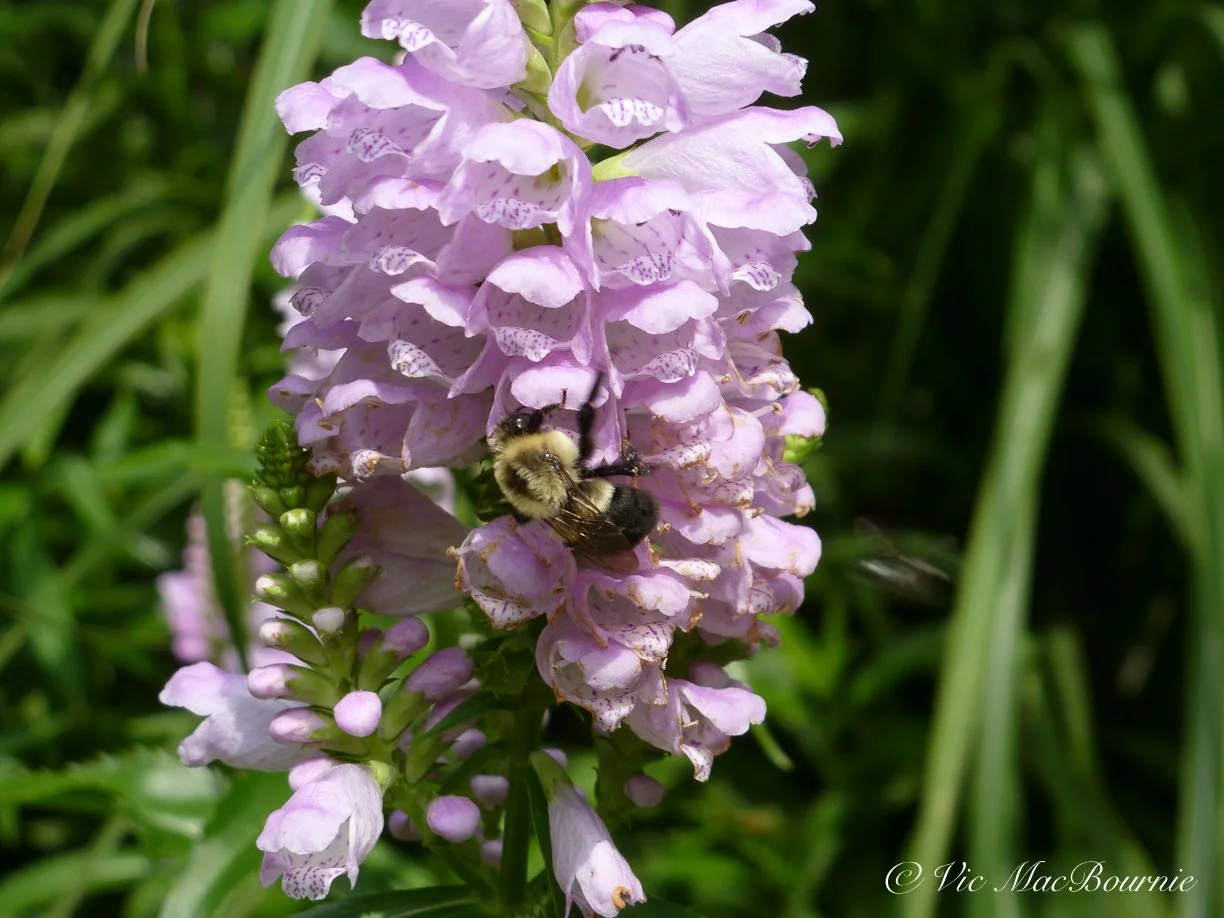
Native bumble bees and other pollinators as well as hummingbirds appreciate the benefit of obedient pant’s late blooming period.
The late summer season begins with drifts of mauve obedient plant blooming across the small hill in the back of our property.
This is the first year the obedient plant should dominate parts of the hill in the back garden, and I’m looking forward to watching and photographing the wildlife that is attracted to this (some would say aggressive) native plant.
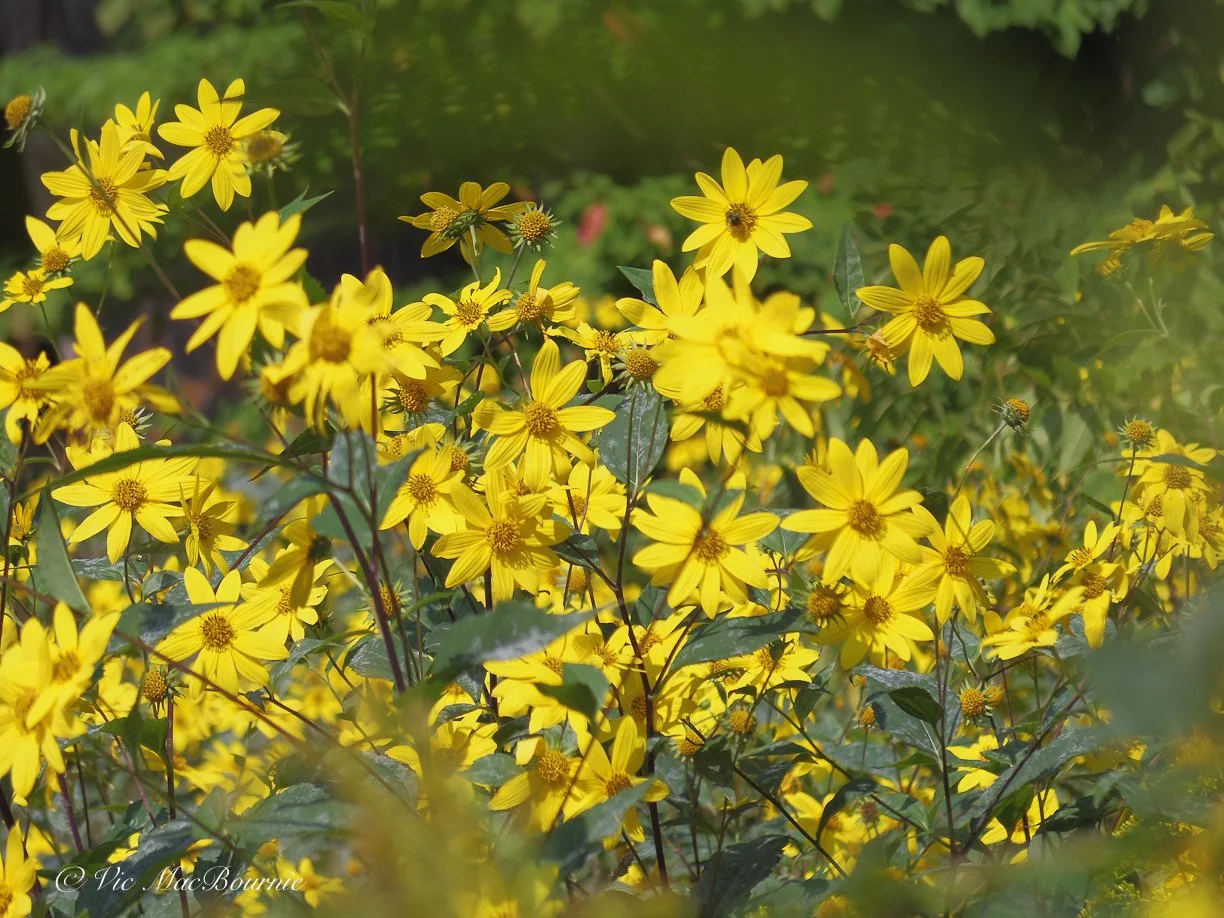
Woodland sunflowers adds a nice hit of cheery yellow to the late summer landscape.
Also beginning to bloom in our back garden on the hill is our rather tall woodland sunflowers.
Their cheerful little yellow blooms are beginning to multiply from the few small plants that originally went into the ground two or three years ago and I could not be happier. They are also aggressive spreaders when they are happy and they seem to be doing well in the back garden.
The woodland sunflowers (click here for more information) will battle it out with the obedient plants and some rather large Sweet Joe Pye Weed for dominance on the hill. With a little help from the gardener, I think we can keep them all in check, at least for a couple of years.
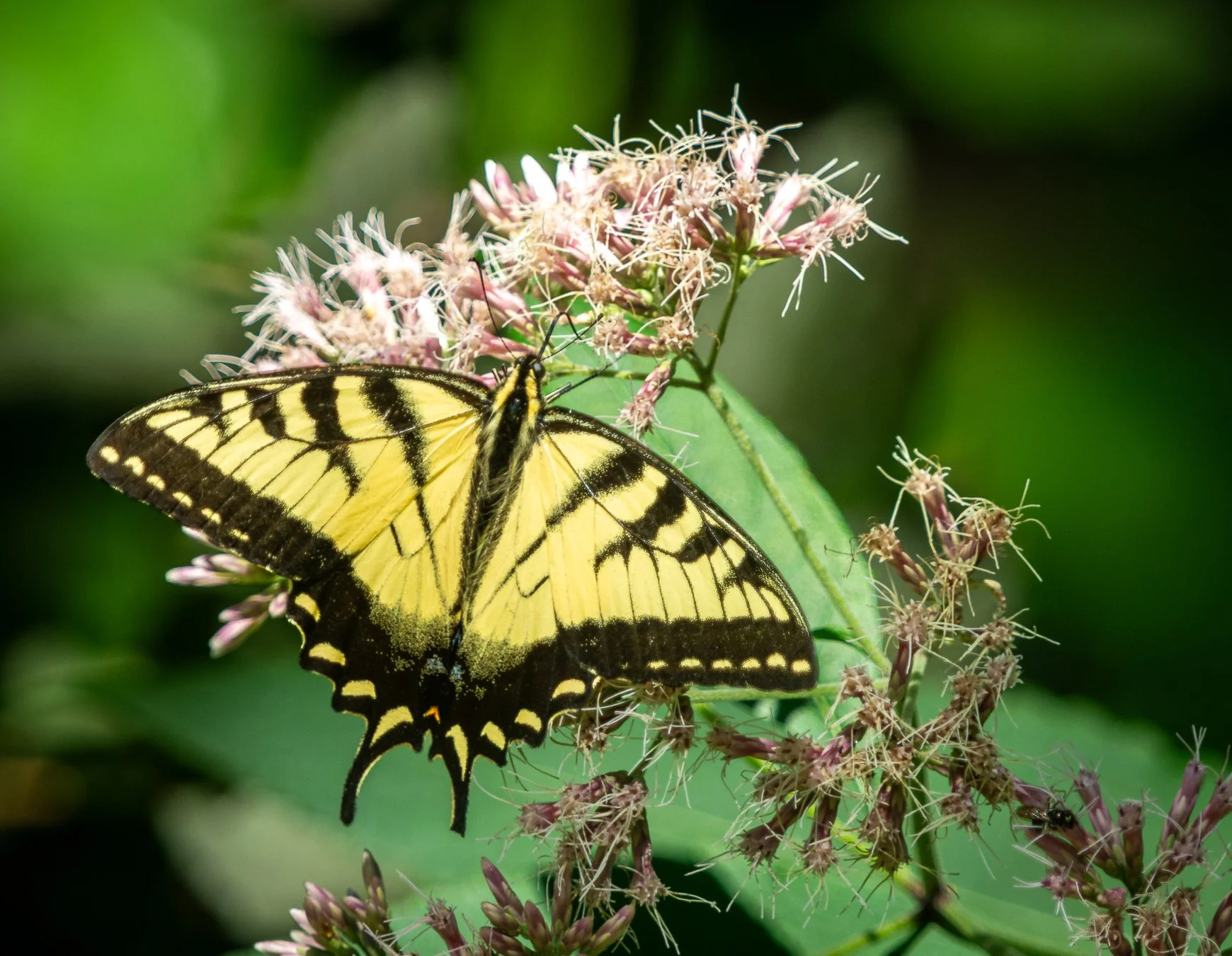
Sweet Joe Pye is a magnet for swallowtails in our garden. Native bees are also attracted to its delicate pink flowering stalks.
All three plants are an important late-summer, early-fall addition to the wildlife garden and important sources of food for butterflies, bees, hummingbirds and eventually migratory birds.
The hill is also home to many milkweed and goldenrod plants that should add to the late summer/fall wildlife numbers.
In other parts of the garden, butterfly weed, monarda, blue lobelia, native grasses, purple coneflower and, of course, large drifts of black-eyed Susan are all adding their own fall feeling to the woodland/wildlife garden. They combine with the annuals to add colour and interest to the fading late summer and fall garden.
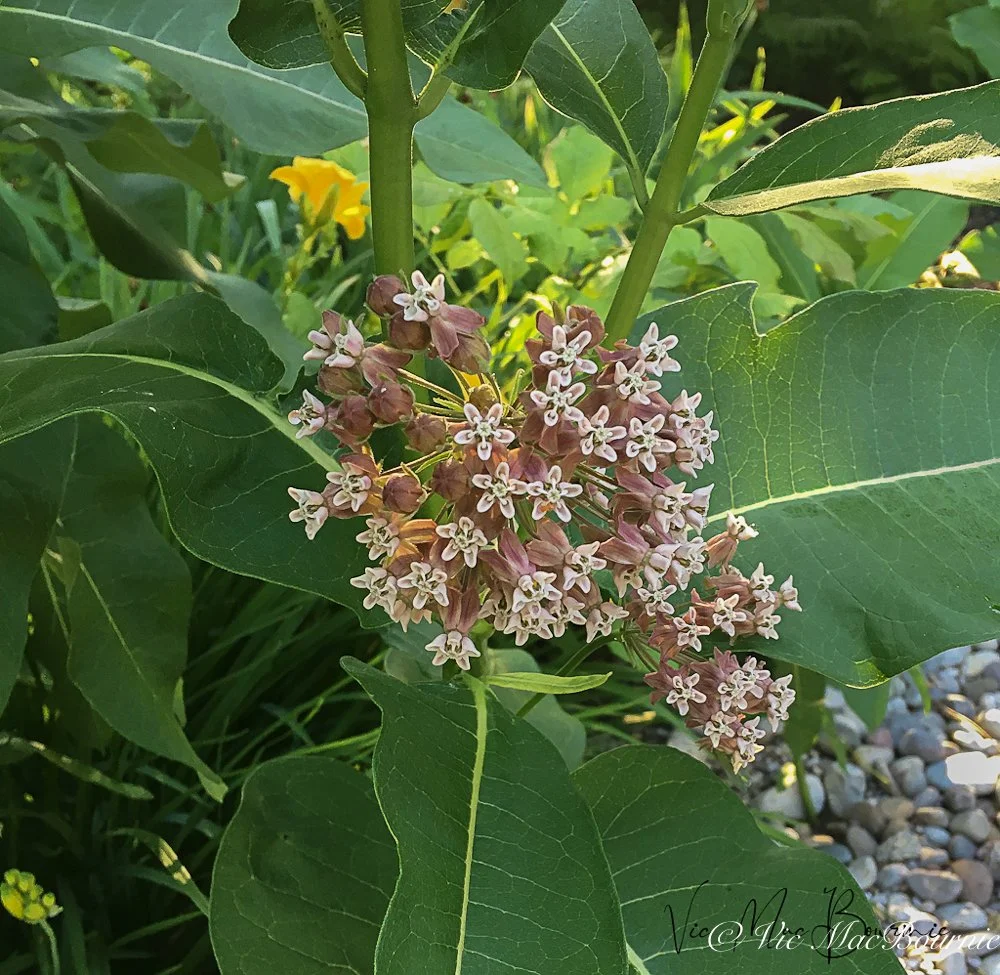
It’s hard to beat the common milkweed for its benefits to monarchs and beauty in bloom.
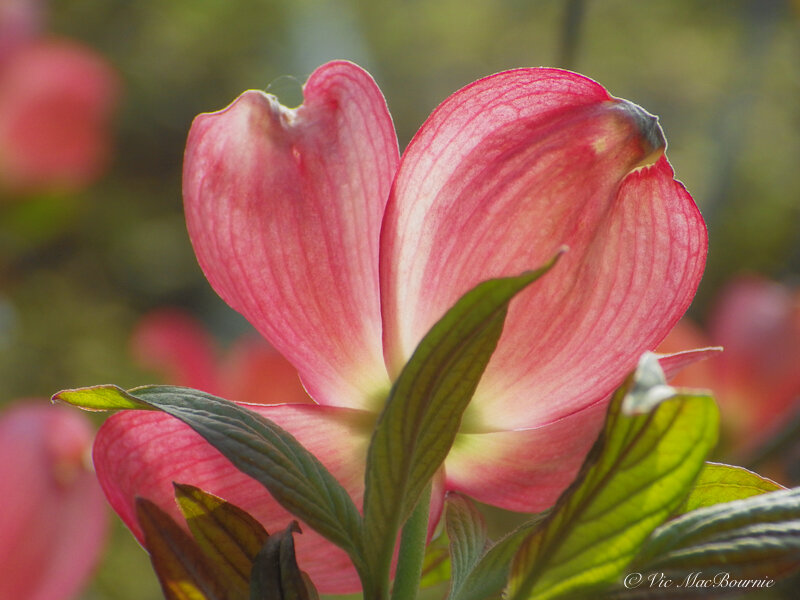
Berries on the various dogwoods (especially the Pagoda dogwoods), High bush cranberry and eventually beauty bush add to the whole fall feel.
Over the next couple of weeks I’ll be updating this post to show more of the plants and wildlife that call our late summer/fall garden home.
Leave a note at the end of the post to let me know some of your favourite late summer and fall plants, so that all the readers can celebrate our fall season.
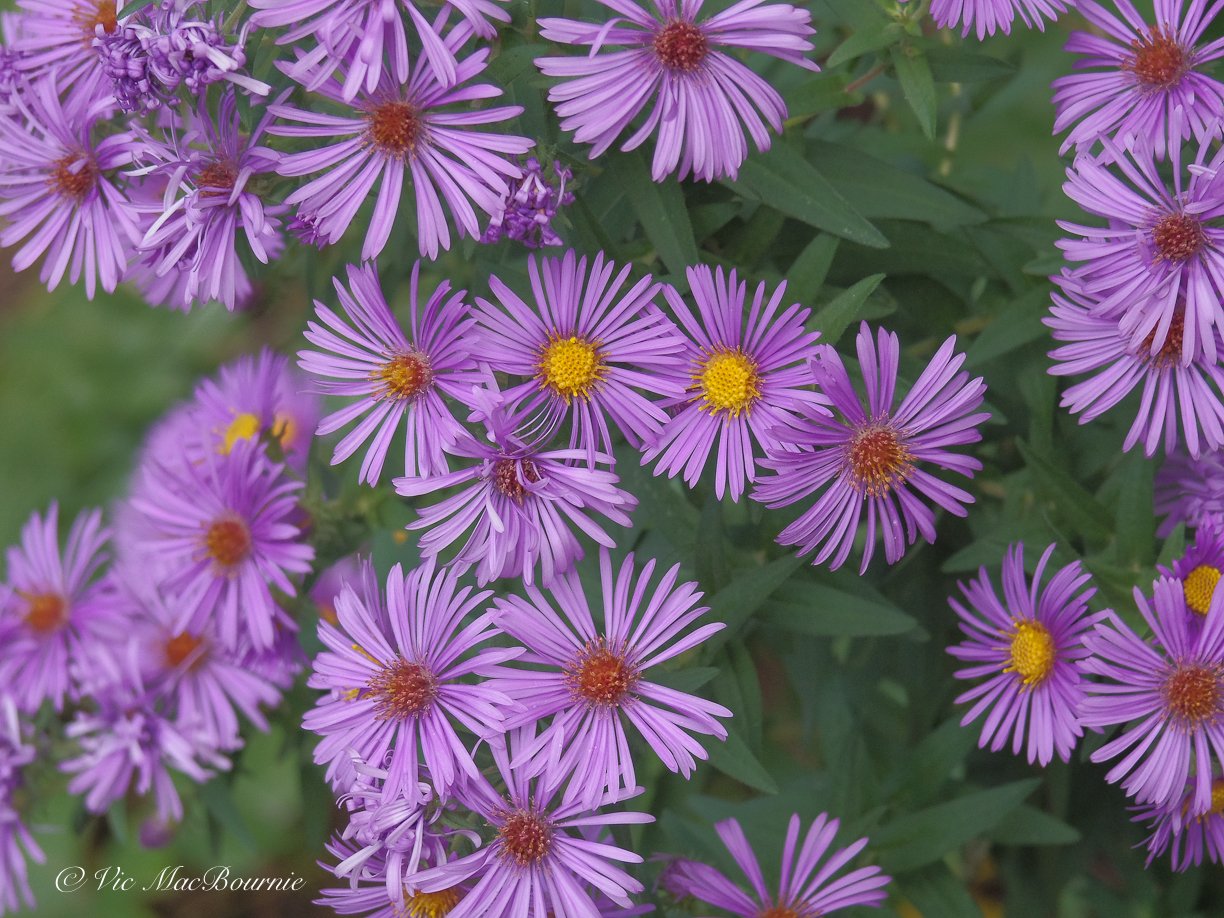
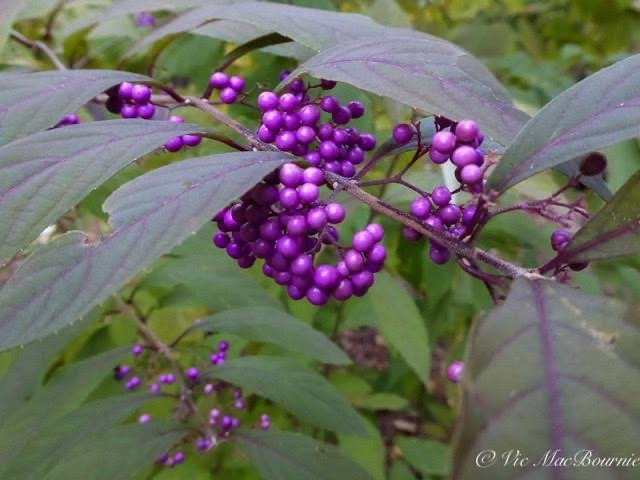



Staghorn Sumac is an excellent addition to the garden both to add architectural interest and provide a food source for birds and animals.