The joys of sharing your garden
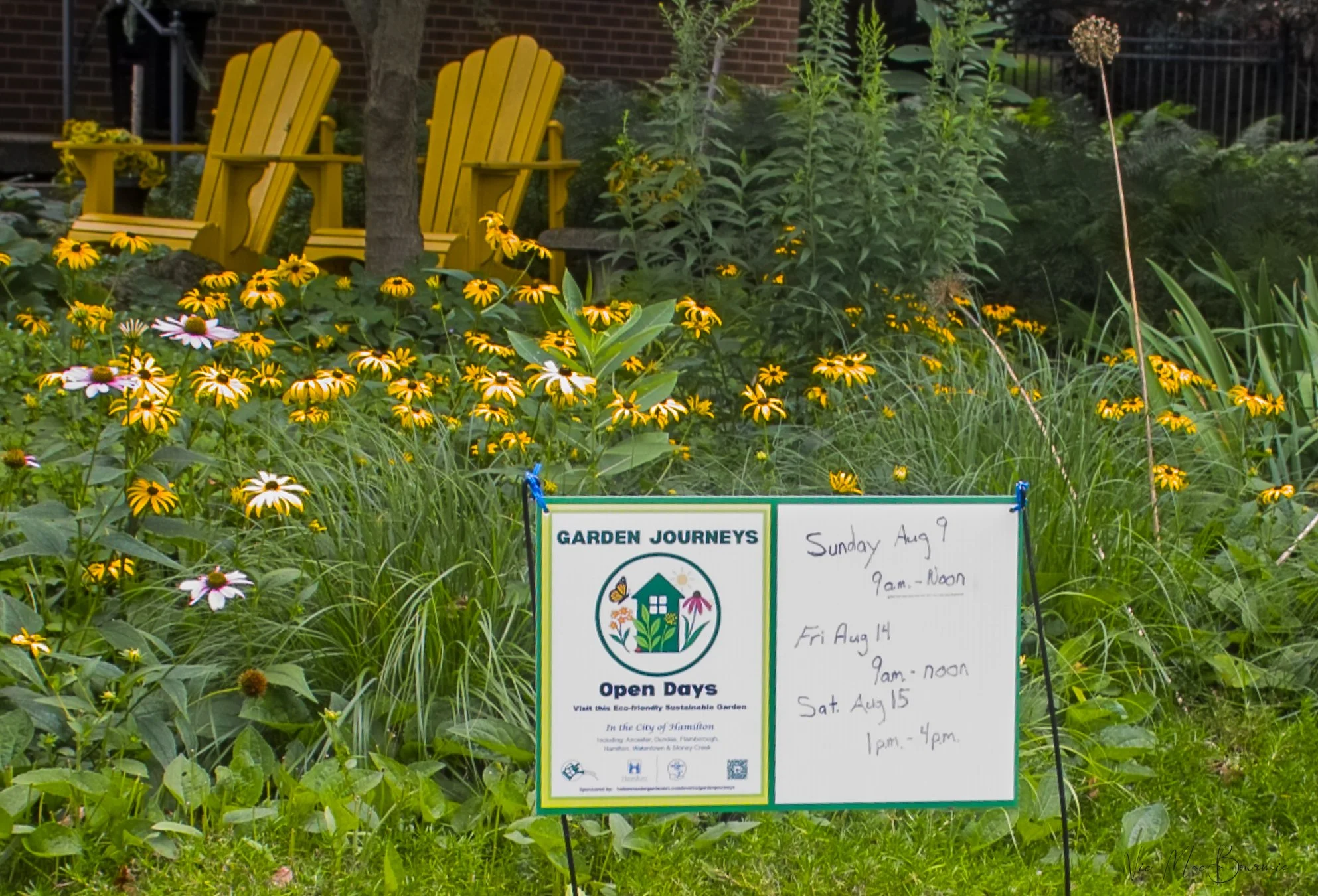
Garden Journeys Open Days was two weekends of Eco garden tours that helped to expose new and old gardeners to a different way of gardening.
Open Garden proves that Eco Garden movement is gaining strength
I finally found my people during these past two weekends.
I guess that needs a little exlanation.
In my world there are basically two types of gardeners: those trying to create a “pretty” garden to impress neighbours, friends and family; and those who put “pretty” way down near the bottom of their list of priorities.
In case you are wondering, I’m definitely in the latter group.
That’s not to say I don’t enjoy looking at a beautiful garden with lots of “pretty” flowers and non-native flowering shrubs and trees.
These “pretty” gardens are just not something I want to spend my time and effort cultivating, weeding and obsessing over everything to do whatever it takes to keep it looking “pretty.”
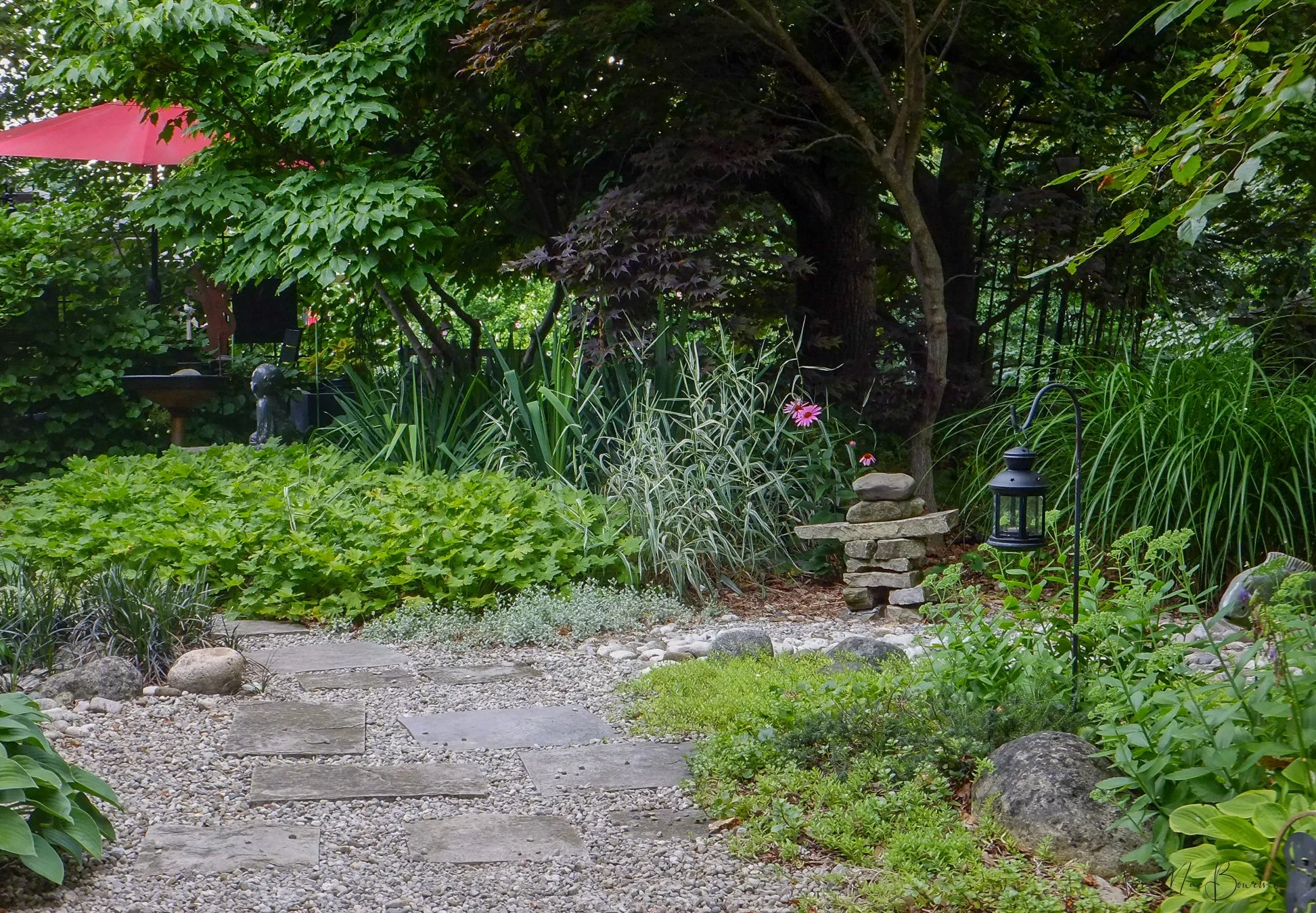
A glimpse into the back woodland-style garden where a mix of native and non-native plants, shrubs and trees creates ideal habitat for local wildlife, from birds to mammals and everything in between.
There are too many more important things to do than obsess over every leaf that falls to the ground, every insect that lands on your plants and every rabbit that dares to munch on your favourite plants.
I heard a quote once that I wholeheartedly agree with; “a garden without wildlife is nothing more than a stage set.” I wish I could have come up with that line, but nevertheless, it speaks to me and it should speak to most gardeners looking to create a “pretty” garden.
Give me a tattered, browning drift of Mayapple leaves over a “pretty” non-native flowering shrub any day of the week. Give me a family of cottontails thriving in the garden over the perfect non-native..
“Gardens have to change and they have to change fast or we are never going to begin reversing the situation we now find ourselves in regarding climate change and the resulting loss of wildlife and other devastating issues from out-of-control wildfires to massive flooding..”
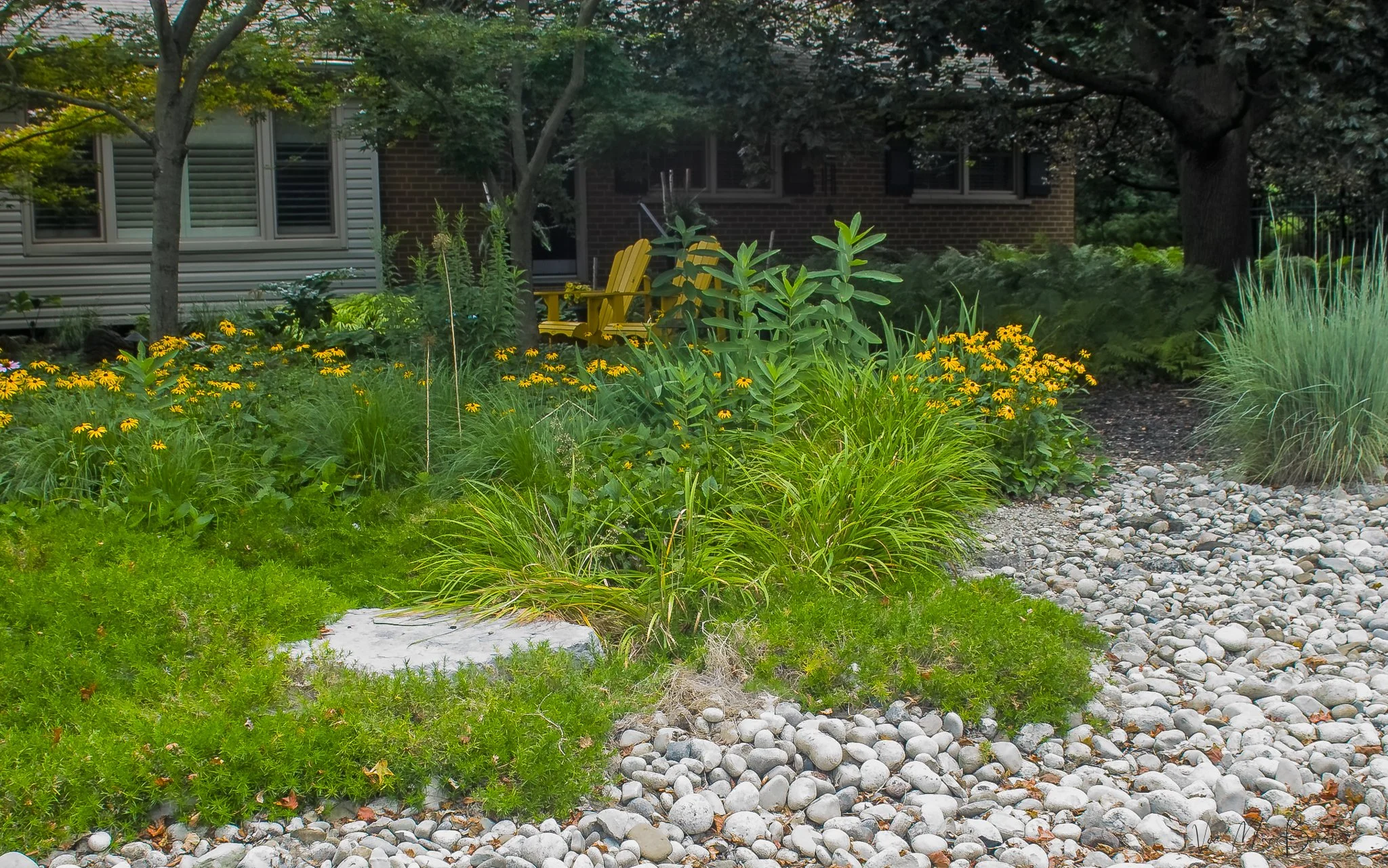
A dry river bed shows off the combination of native and non-native plants that form the front garden design.
Open gardens, open minds
That’s why this week’s openGarden Journeys Eco Garden experience proved to be such a wonderful and eye-opening experience.
I discovered that, even if the numbers are not huge, (maybe 30 visitors), it’s satisfying to know that there are like-minded gardeners out there who appreciate a rustic, naturalized garden that puts nature over “pretty.”
To be honest, I’ve never opened my garden to the public before these past two weekends.
The reason: I’ve learned, after going on more than my fair share of garden tours, that my vision of a garden is not anywhere near what many would call acceptable and certainly not desirable.
But all that changed.
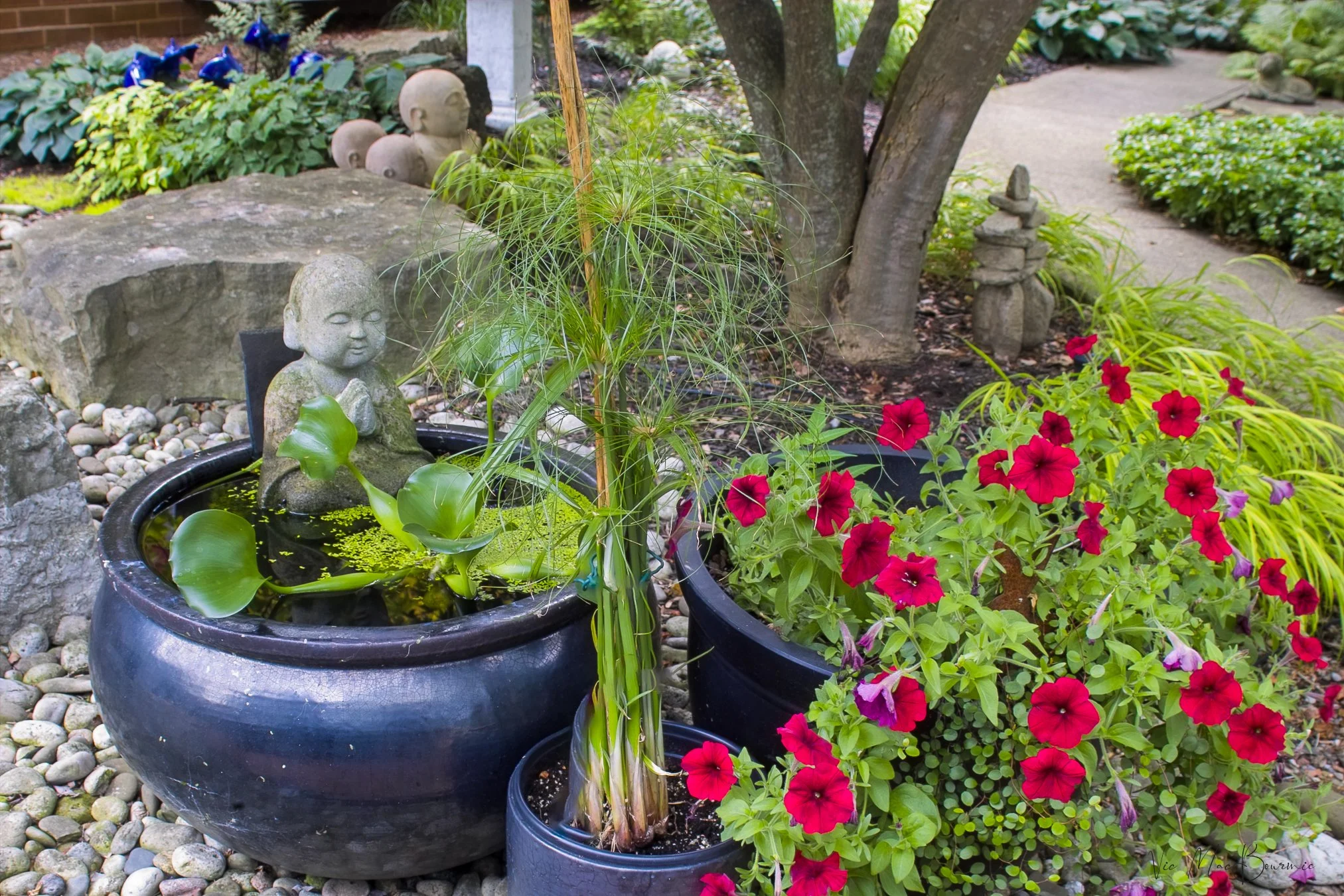
A small Japanese-style garden leads visitors into the backyard woodland garden.
The past few weekends have taught me that there are more and more gardeners who recognize that we can’t keep going in the same catastrophic direction and expect to survive. Gardens have to change and they have to change fast or we are never going to begin reversing the situation we now find ourselves in regarding climate change and the resulting loss of wildlife and other devastating issues from out-of-control wildfires to massive flooding..
Visitors to the Eco Garden tours around our city proved to me that maybe, we are finally turning the corner.
In the past, homeowners in our area strived for the highly coveted “Trillium award” for gardens featuring perfect grass, lots of pretty (read non-native) flowers and heavily trimmed trees and shrubs aimed at making entire neighbourhoods look perfectly manicured and, quite frankly, fit into a very unnatural landscape. Insecticides, pesticides and the full spectrum of herbicides, if not encouraged, are certainly necessary to obtain the coveted trillium award.
Those days might be changing with the advent of Eco Garden tours.
In other words, it took an Eco Gardening tour for me to finally find my people. My people turned out to be about 85 per cent women with only a handful of men – many of them tagging along with their wives. I’m guessing most men were at home obsessing over their grass which seems to be a very manly thing these days.
I admit, I wasn’t too sure what to expect. Our front, grassless garden is a combination of native and non-native plants that is kept relatively low-growing with only a few milkweeds popping up above the black-eyed susans, native coneflowers, little bluestem grasses and bloodroot.
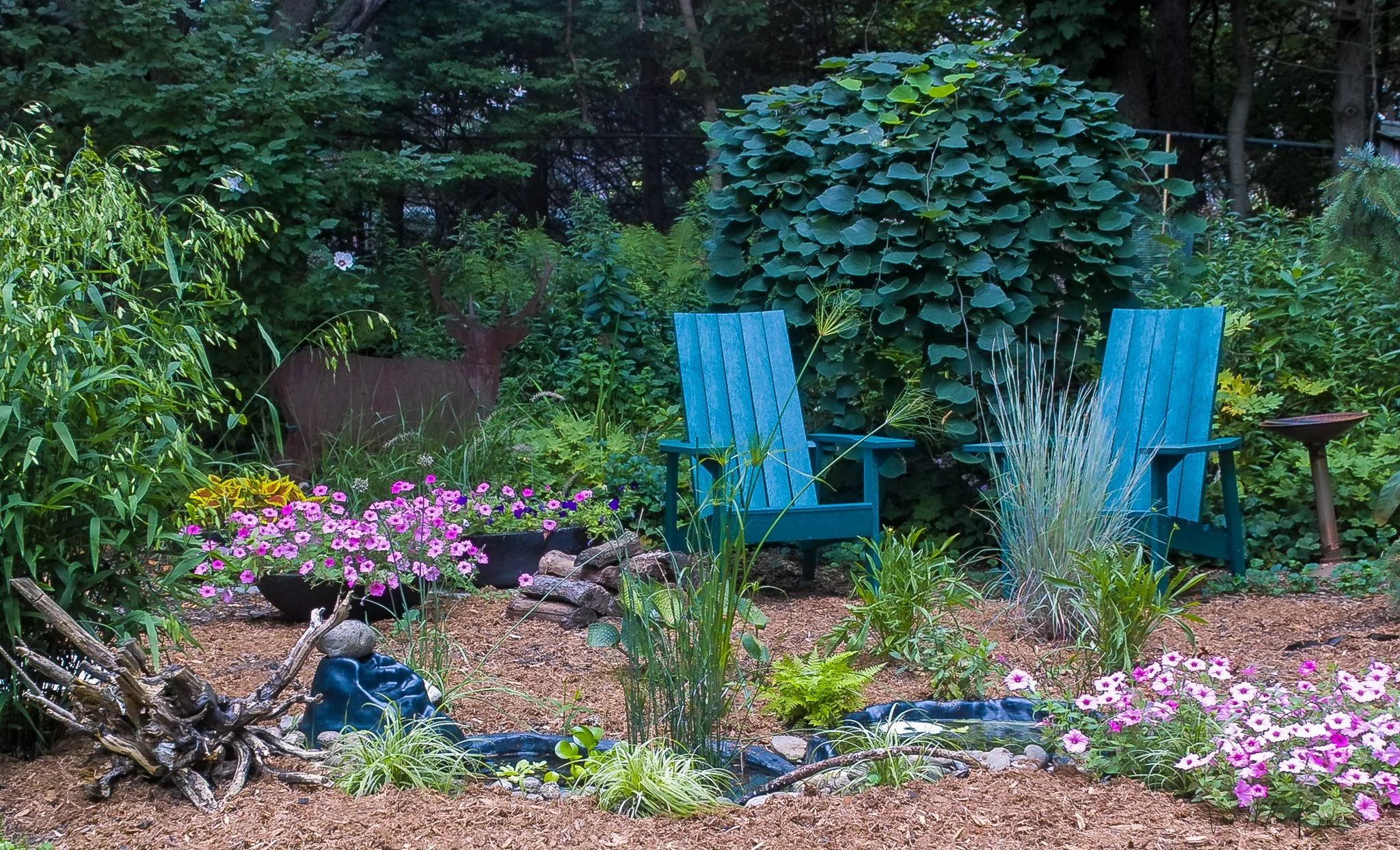
Small, shallow wildlife ponds are tucked away in a corner of the back woodland garden aimed at encouraging more frogs, toads, salamanders, dragon and damsel flies.
Our back, mostly woodland-style garden, is much wilder, and I really did not expect the enthusiastic response I received from the garden visitors.
It was wonderful to see their eyes light up as they rounded the corner of our home into the backyard. One visitor said she was a little shocked, after seeing the more manicured front garden, to experience a natural woodland setting.
One important aspect I noticed was the lack of young people touring the garden, We need younger people to begin taking up the cause of eco gardening and recognizing that it is their future at stake.
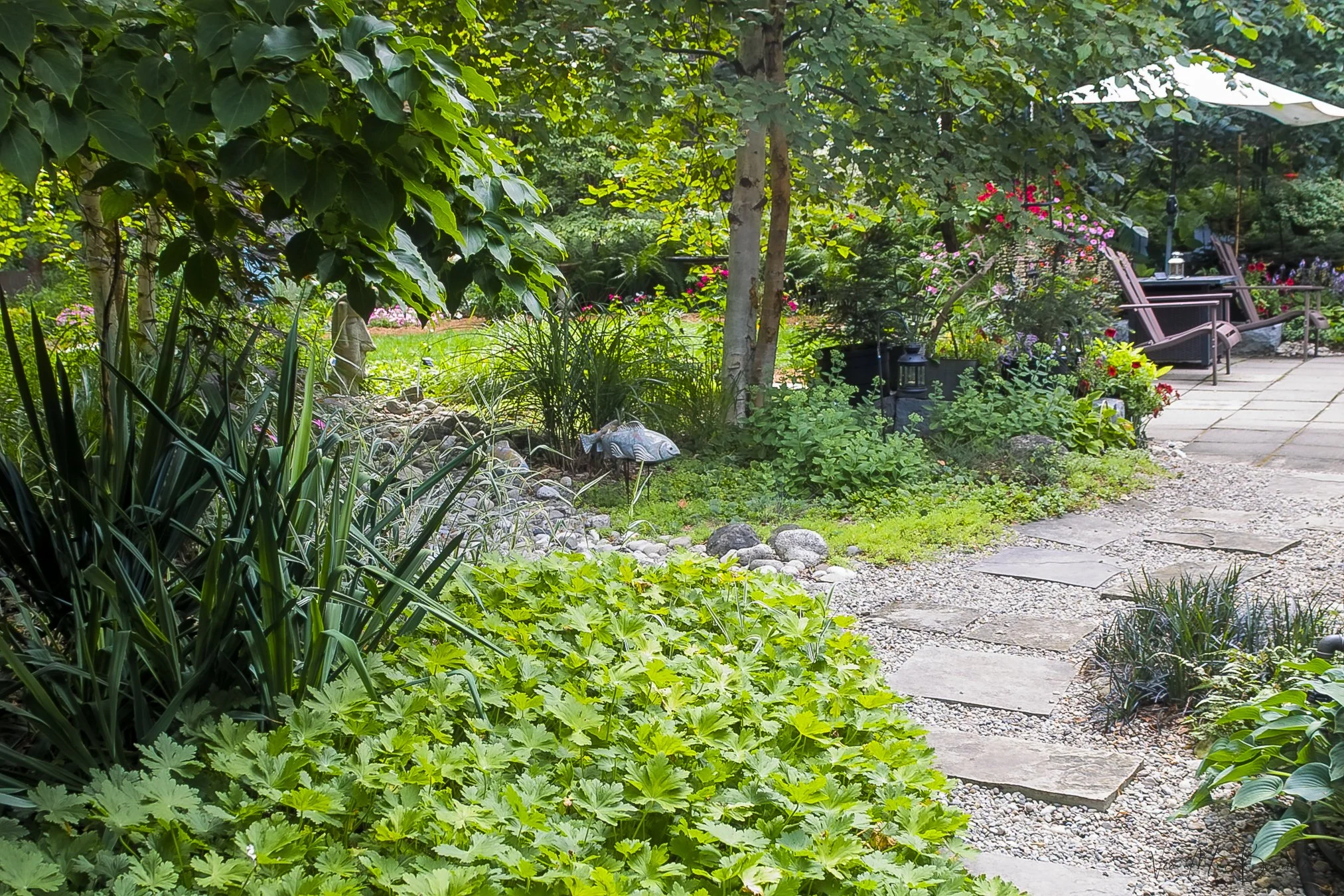
The back woodland-style garden includes paths, dry-river beds and small wildlife ponds.
I fear that although a small number of the older generation are trying to take a pro-active approach to Eco gardening, the younger generations are not recognizing the problem and seem to be following in the footsteps of their parents’ old ways of gardening, where grass is king and a landscape design involves one tree, a boxwood hedge and a couple of “pretty” flowers.
That’s not going to cut it in the future, if we want to save our environment for our childrens’ children.
For more on Open Garden Days, please check out the link here.


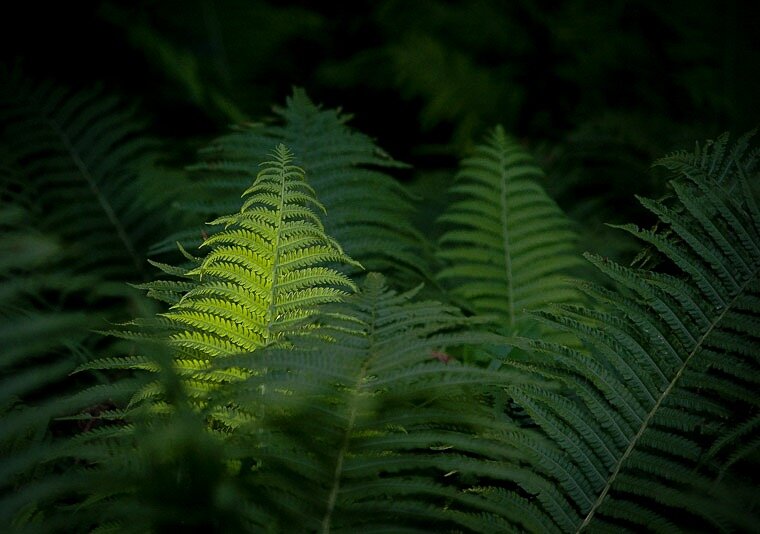


Creating a woodland/wildlife garden using native plants has many benefits including being able to photograph the wildlife that lives in and visits your backyard.