
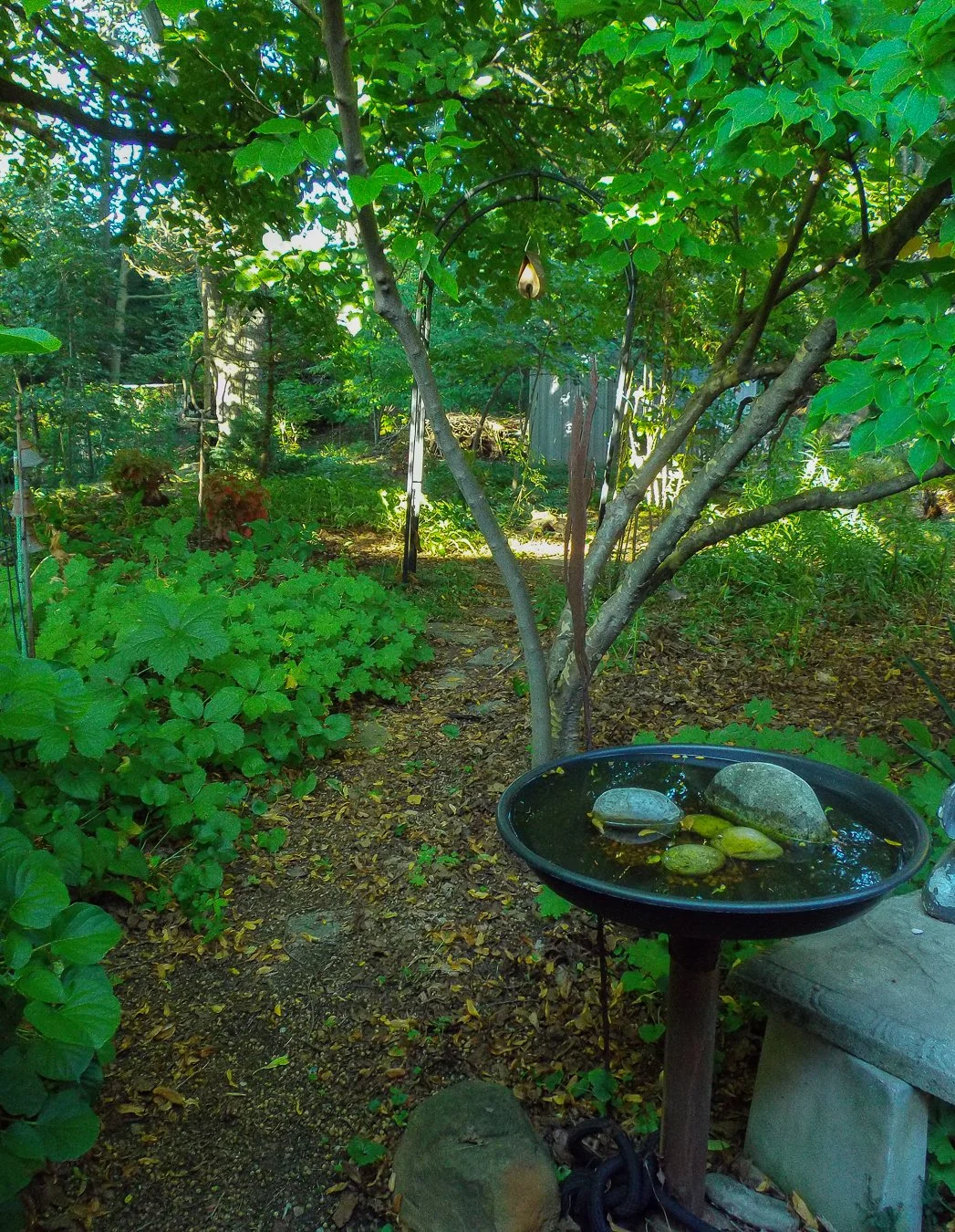
Beginning stages of the garden path through the woodland prior to adding many of the more structural plants.
Tips to bring your vision to life
“Do what I say, not what I do.”
Every professional garden planner/landscaper will tell you to put your plan on paper before getting started with the planting stage, but who has time for that?
Almost all my garden planning starts and ends in my head, and this one is no exception.
Don’t get me wrong, I know this is no way to plan a proper garden. Taking time to at least get your basic design on paper is always the preferred choice. Instead, I like to take the more haphazard, creative approach despite the obvious setbacks that approach brings.
It’s not like this woodland path garden came out of nowhere. A plan of some sort has been in the bouncing around in my brain for probably the past ten years.
That doesn’t mean I’m not going to make mistakes. In my unprofessional approach to gardening, moving plants and trees around – even managing to kill a few in the process – is all part of the creative planning and learning process.
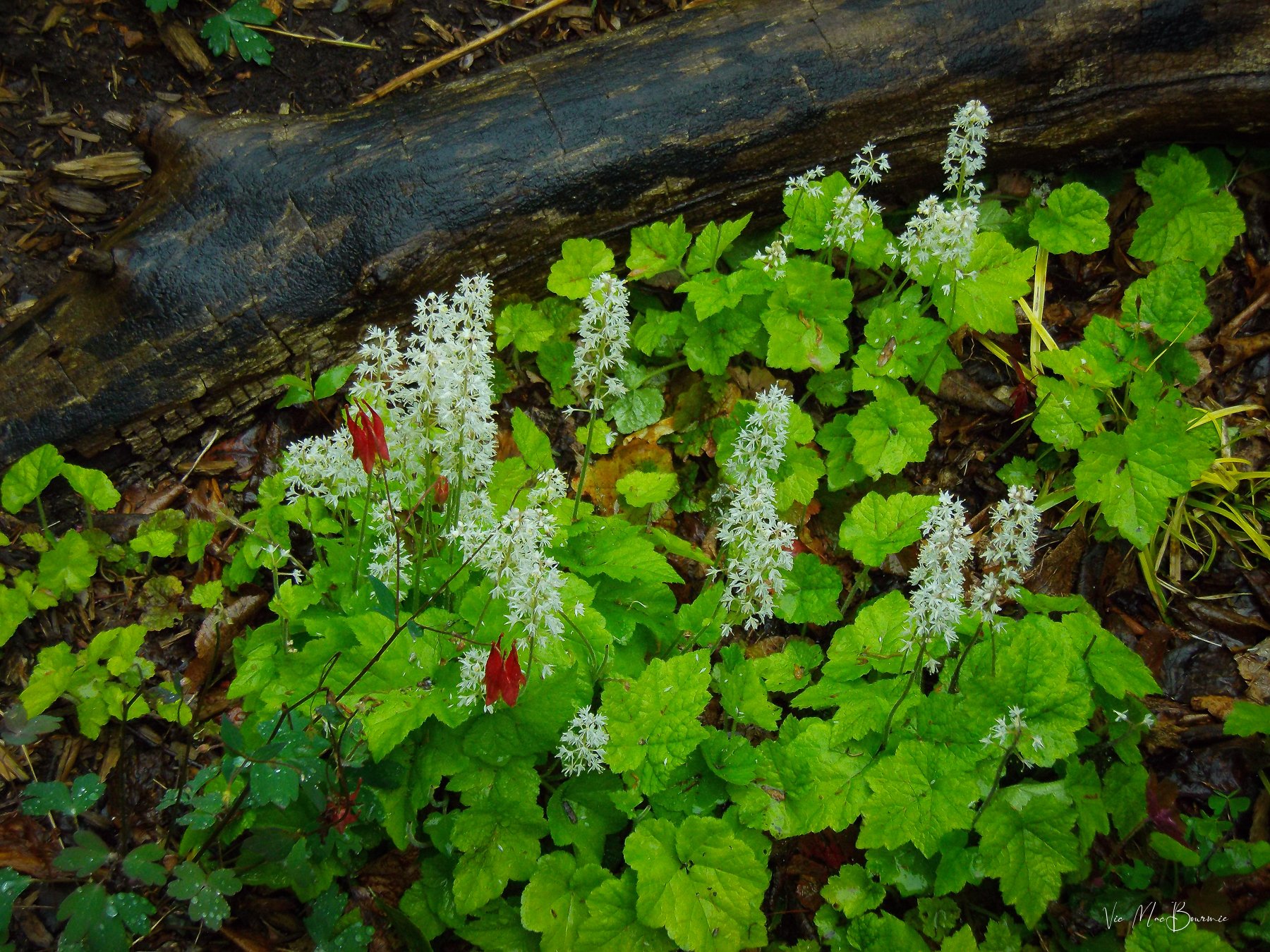
Foam flower (Tiarella) and Columbine will be among the plants added along the path to add early spring interest as viewers make their way along the pathway into the larger woodland garden.
The woodland path garden
Our latest garden – based around creating a woodland path leading into the main garden – is slowly taking shape.
It’s quite large – huge by today’s new-home standards – covering almost a third of the oversized, pie-shaped back garden. It’s probably fair to say that it will be the best representation of a woodland garden than any other part of the existing garden. I say this because most other areas in the garden get a fair bit more sun than this part of the garden.
It’s also probably fair to say that many other areas of the garden represent more of a woodland edge than a true woodland or shade garden.
This new garden, however, remains in deep shade for most of the day.
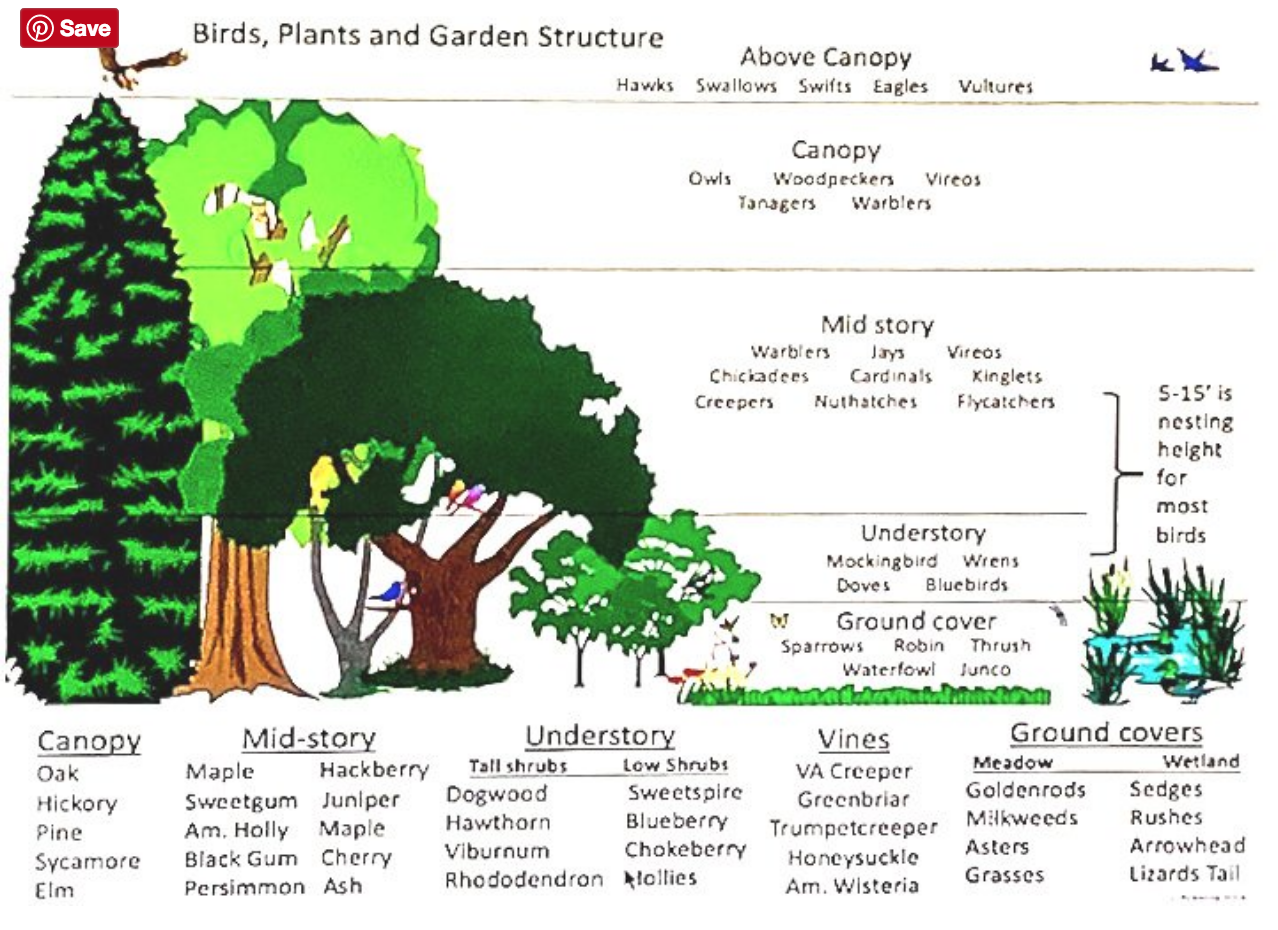
Thankfully, it already boasts good bones in the form of a mature upper canopy, a growing middle canopy and a developing groundcover. The key to a successful woodland garden very much depends on creating layers within the structure of the garden.
Unfortunately, if you are just starting out, creating this layered canopy can take years, especially the establishment of the upper, more mature canopy.
What is sorely missing in our garden is the lower shrubby and perennial layer that floats above the ground covers.
This lower shrubby and perennial layer will be the primary focus of building out the woodland path garden.
Let’s take a look in more detail at what we have so far.
The Upper canopy: Great beginnings
The garden is blessed with a number of mature trees already in place for probably fifty or more years.
A massive Little Leaf Linden forms the backbone of the shade garden along with our neighbour’s equally large Crimson maple. Together, these trees throw a huge amount of deep shade in the later afternoon when the sun is at its strongest. Add to these two large, mature shade trees, a massive locust at the back of the garden and you’ve got the basic structure of a shady woodland garden.
The problem is, the garden where the woodland path will travel through is just too shady. I have been hesitant to limb up the Little Leaf Linden until now because I have always liked the feeling of privacy it provided.
But the time has come.

The Little Leaf Linden forms the backbone of the woodland path garden. It’s dense foliage will need to be trimmed up to allow more light onto the woodland floor.
Later this fall/early winter, the long-overdue task of limbing up the tree will begin. The result of limbing up the tree will open up the shady garden path to more light and create better growing conditions for a myriad of plants and shrubs. (More on that later).
While I like a shade garden, too much shade really limits what you are able to grow. A light, open shade should allow me to grow a greater variety as well as more vigorous plants.
Maybe, even more importantly, it’ll help lighten the mood for backyard visitors whose first impression will be the woodland path garden that forms the viewers first entry into the entire garden.
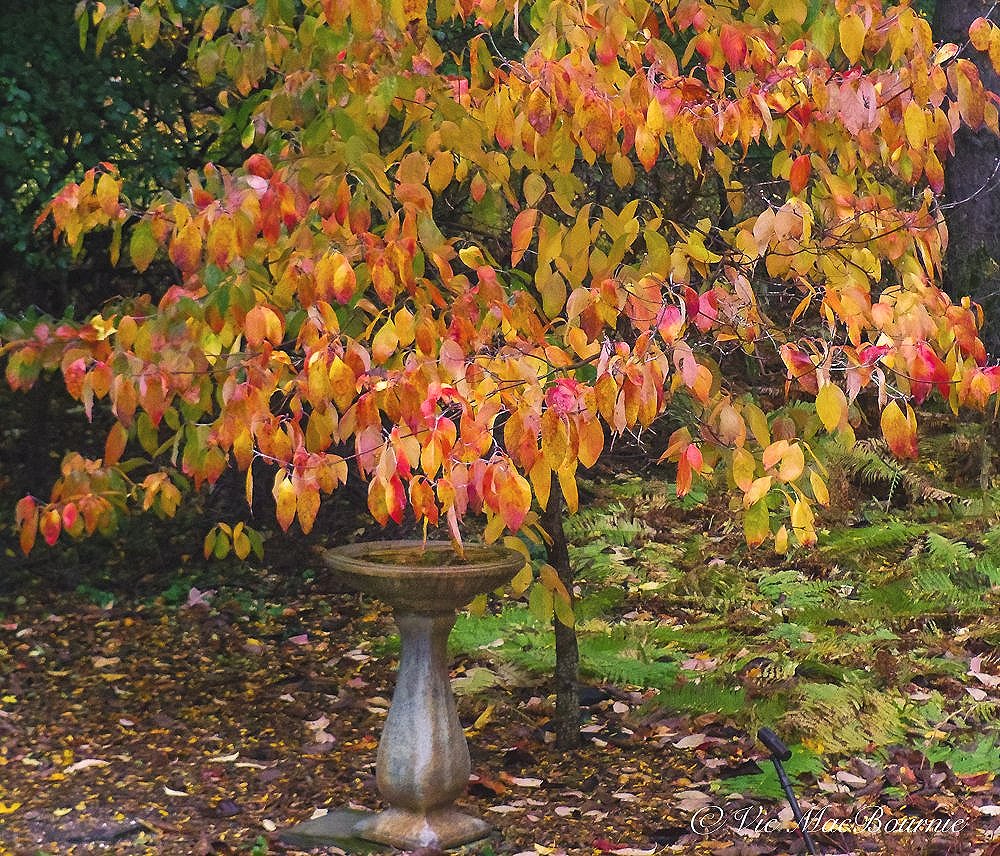
Dogwoods make the perfect understory trees for the woodland garden adding colour and interest is every season.
The Middle canopy: A home for Dogwoods
I am a sucker for dogwoods. In fact, any dogwood will do when it comes to this part of the garden.
That passion is evident here in the form of good-sized, middle-canopy dogwood trees.
More posts on Dogwoods
Flowering Dogwood: Queen of the Woodland garden
Cornus Kousa: Impressive non-native for the woodland garden
Bunchberry: The ideal native ground cover
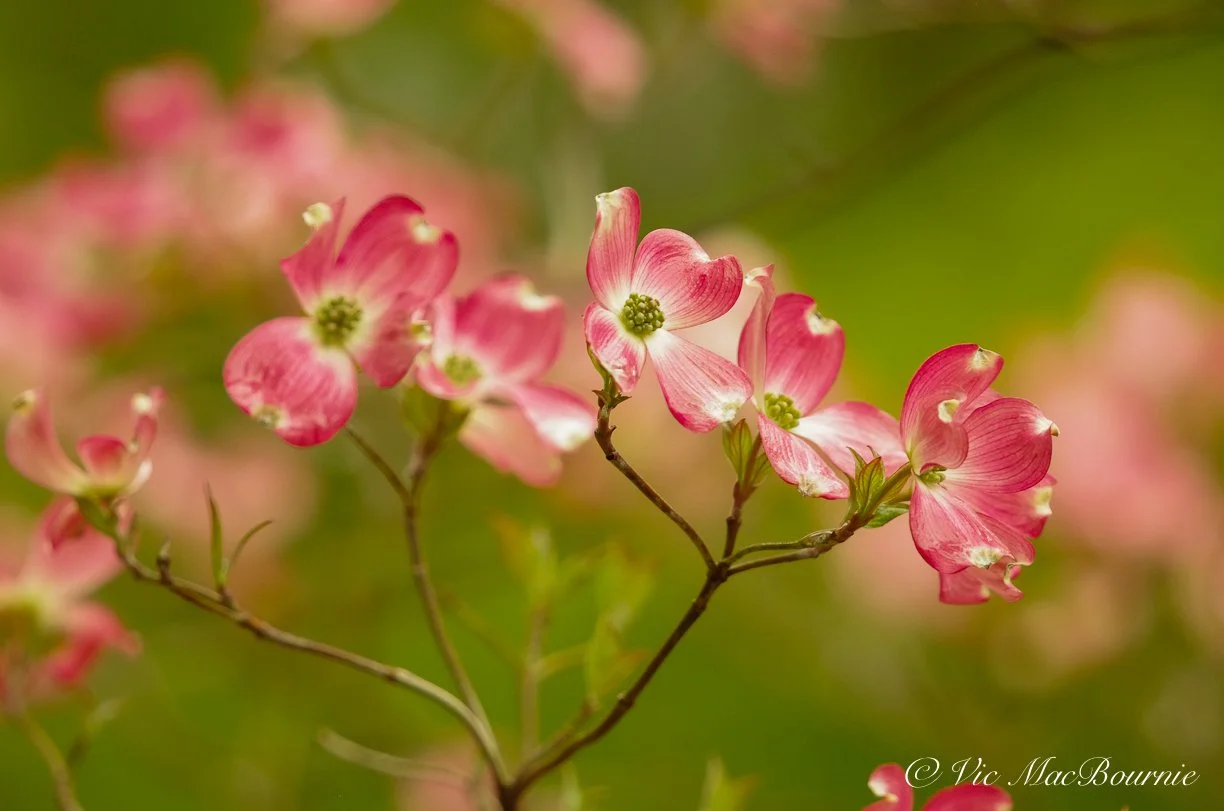
The bracts of the Flowering dogwoods are stunning in spring, emerging before the leaves appear on the tree.
There are several native Pagoda dogwoods (Cornus Alternafolia) , as well as flowering dogwoods – both (Cornus Florida) and (Cornus Kousa.)
Add to these a few Japanese Maples along the path and a Forest Pansy Redbud bringing up the rear of the path alongside one of the Pagoda Dogwoods.
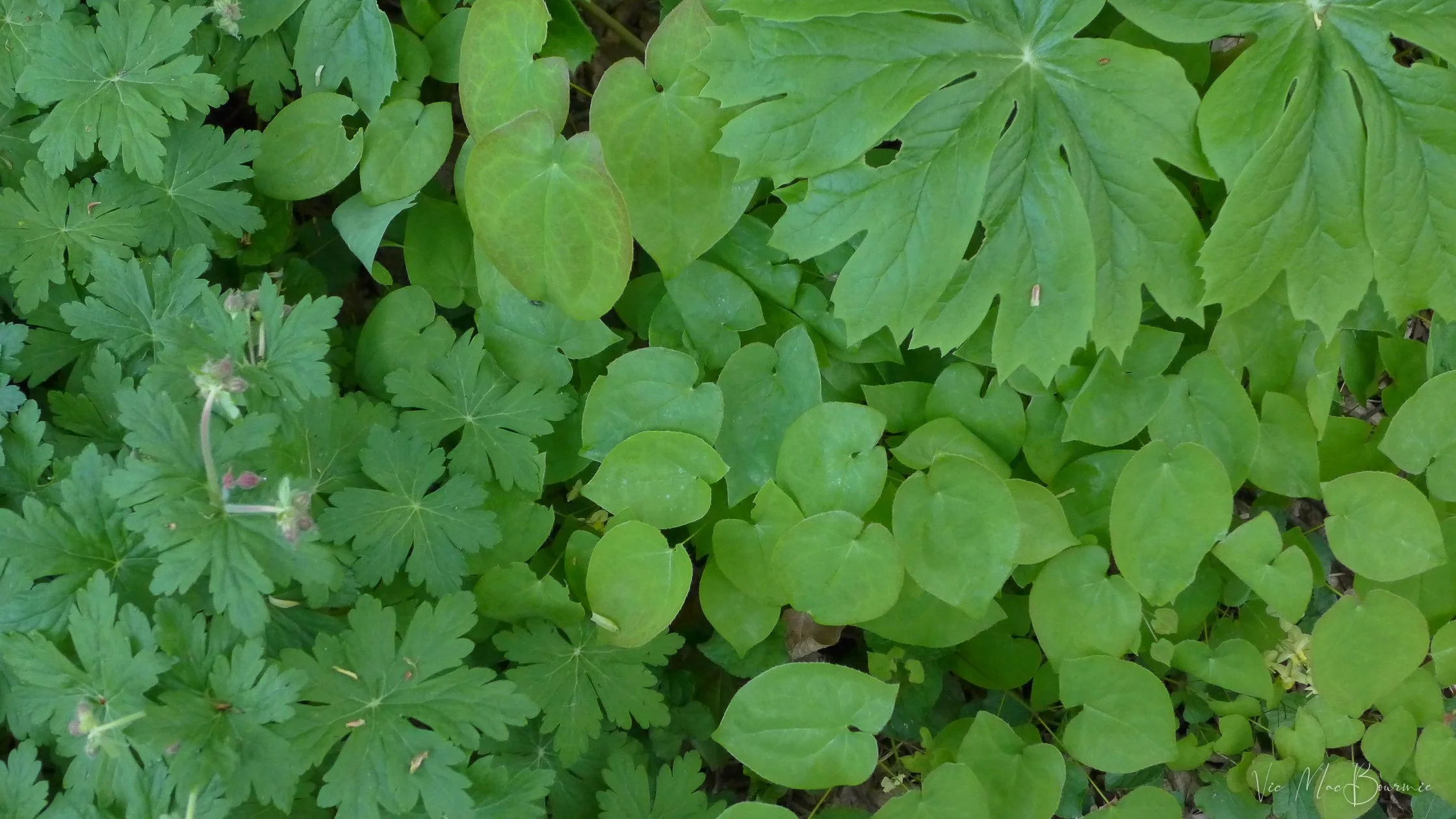
A combination of Mayapple, Wild geranium and Epimedium form part of the ground cover in the new woodland path garden.
The ground layer: Focus on wildlife
Our ground layer is still a work in progress, but, as I wrote about in this post (a tapestry of groundcovers), it is a combination of native and non-native plants dominated in spring by Forget-Me-Nots, a few trilliums, Mayapples, hepatica, bloodroot, epimediums and Soloman’s Seal.
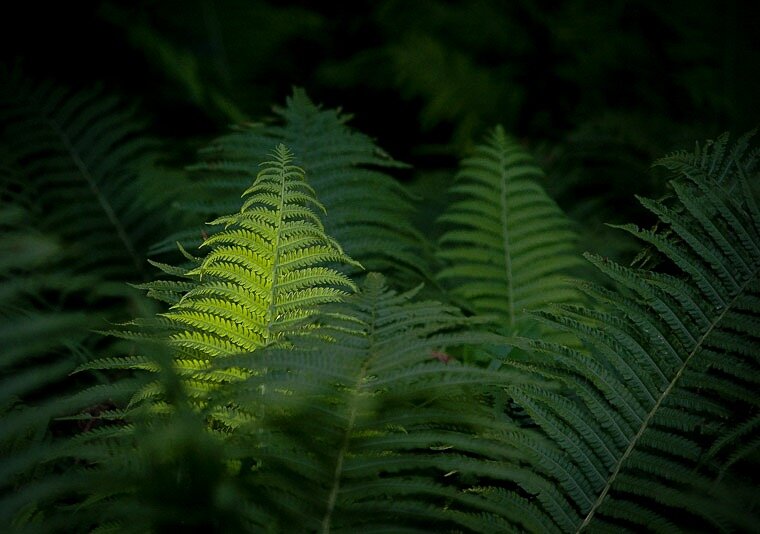
In summer, the Virginia Creeper begins to make an appearance, alongside ferns and hosta.
In fall, the Virginia Creeper takes on its coat of multi-colours to form a colourful and cheerful backdrop for the autumn colours provides by the foliage of the dogwood and Japanese Maples combined with the Little Leaf Linden and Locust trees.
There’s certainly room for more ground covers over time, but a lot of the existing ground covers should continue to spread over time to create a lovely tapestry throughout the seasons.
Recent additions are sure to bring this garden to life
As I said, the roots of the woodland path garden are solid.
What was really needed to add both structure and a little of a “wow factor” is the jewelry. And, in the latest – but not final chapter – of the planning process we’ve been planting up the new woodland garden with Oak Leaf Hydrangeas, cold-hardy azaleas, Golden aralia, large-leaved hosta plants, Japanese Forest grasses and a host of smaller woodland plants from bloodroot, to Soloman’s Seal and wild ginger.
In spring we will add foamflower, Columbine and, over time, more native wildflowers including a myriad of spring ephemerals.
Anticipation builds for spring and summer’s big reveal
One of the greatest joys of gardening is the anticipation of what is to come next spring and summer.
I can honestly say that I don’t think I have ever been as excited as I am now for next spring and summer. To turn an under-utilized area of the garden into what I hope will be a welcoming woodland pathway into the main garden is certainly something worth looking forward to in my mind.
And finally, getting to see the beginnings of a garden that has been trapped in my mind for so long, will keep me in anticipation all winter until the sun and warmth reveal the dream.
After all, isn’t that what gardening is all about.
Be sure to stay tuned for more on the construction and planting of the Woodland Path. I’ll be writing posts updating the progess of the project over the next few seasons.
Over time I will be featuring sitting areas, garden art and a host of other features that will call this part of the garden home.



Tips to create a pathway through the woodland garden.