Natural bird feeders: Good alternative to expensive store-bought feeders
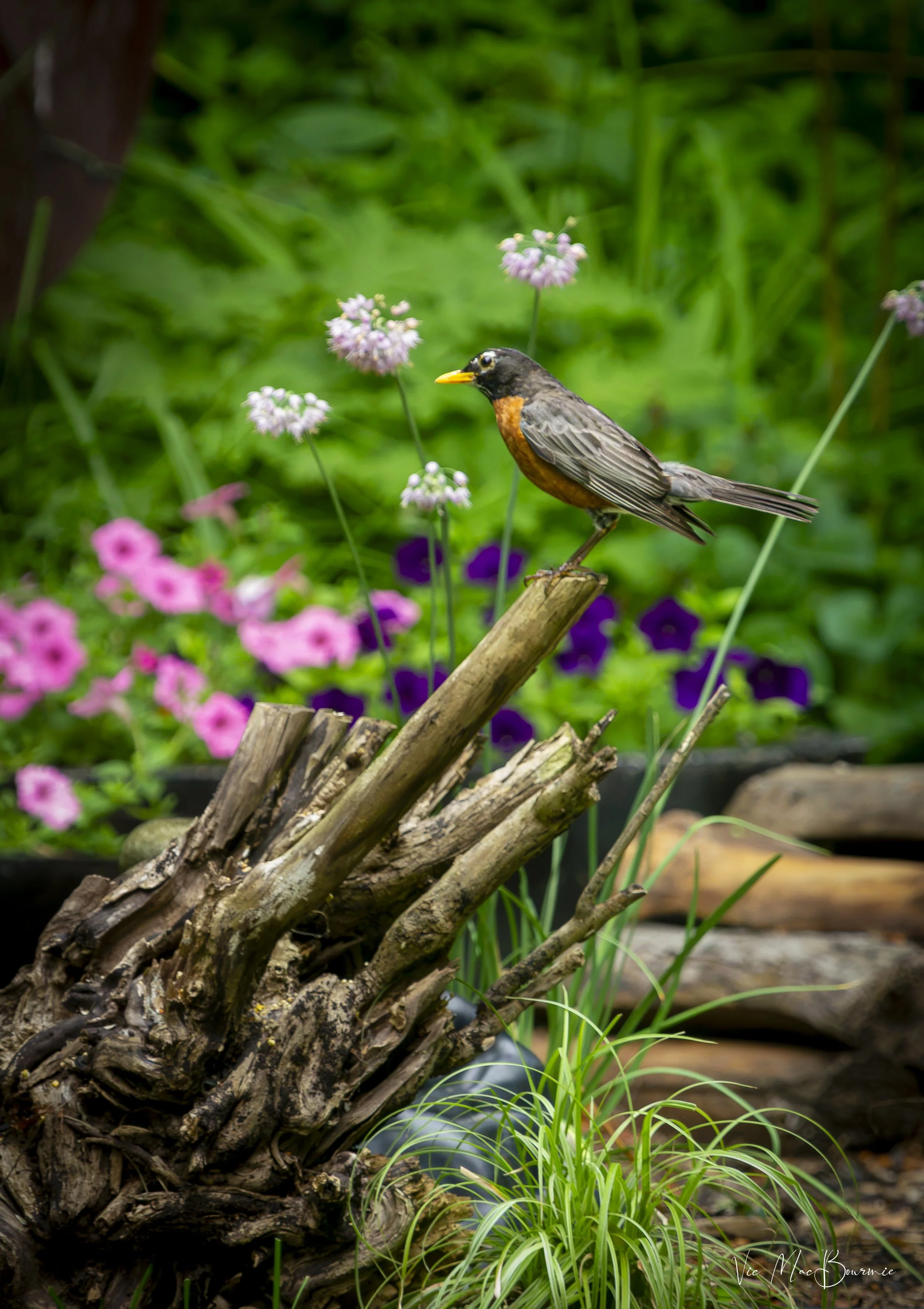
A robin was quick to check out the old stump filled with bird seed, but quickly realized there was nothing there for her before flying off in search of insects.
Old stump is ideal spot to hide seed
It took me about 25 years, but this summer I decided to go bird-feeder free.
That doesn’t include hummingbird feeders that I can’t resist despite lots of natural food sources in the yard for them.
My feeder-free summer started when my bird-feeding station main pole finally snapped under the weight of bird feeders and plump raccoons that eventually toppled it for good.
I will probably set up some smaller version come fall but, in the meantime, I must say I am enjoying a bird-feeder free yard.
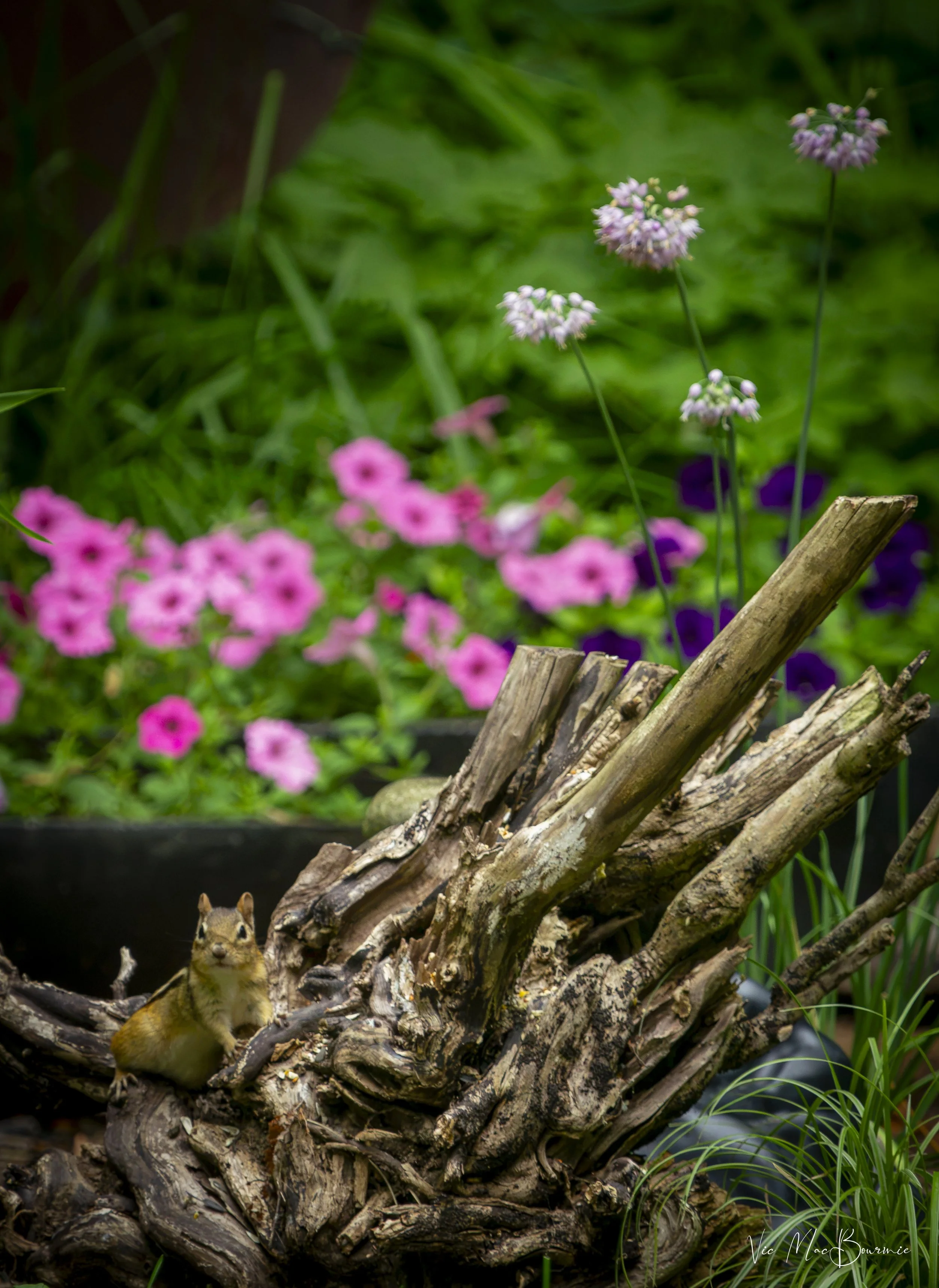
Chipmunks were first on the scene filling their jowls with food and scampering off to hide the rewards before returning for more.
That’s not to say I’m not feeding the birds. Once in a while, I’ll throw a handful of mixed seed in a natural bird feeder – an old stump or on a boulder where the birds can see it. Unfortunately, the chipmunks and squirrels are usually the first on the scene and pretty well clear it out before the birds discover what is there.
Before long, a house wren came in to check out what the action was all about and began harassing the chipmunks who were, by the wren’s thinking, a little too close to its nest box. In the end, everything was sorted out and they went back to their normal routines.
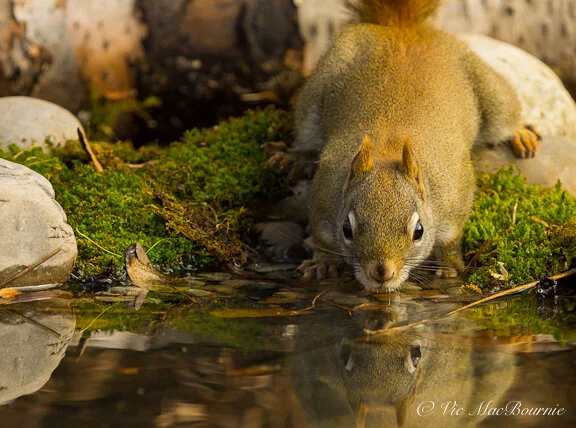
And don’t forget to add natural-looking water sources for your backyard wildlife. This homemade bird bath was fitted with moss and stones to give it a nature look to capture visitors in a natural setting.
Another excellent natural bird feeder is to use a fallen tree branch with holes drilled in it and filled with suet or bark butter. Hang it from another tree branch and you will be amazed how quickly the birds discover the treat inside the branch.
For more on feeding birds natually, check out my earlier post here.
You can expect woodpeckers, chickadees, nuthatches and a host of other birds to be regular visitors. Place the branch in an area close to where you often sit, bring your camera and shoot away. Or, if photographing your backyard birds is not your thing, this method is a great way to bring in shy birds a little closer to you.

An old moss- and lichen-covered branch becomes the perfect natural bird feeder with bark butter forced into some of the nooks and crannies or holes drilled into the branch and filled with suet.
Another excellent natural bird feeder is to use a fallen tree branch with holes drilled in it and filled with suet or bark butter. Hang it from another tree branch and you will be amazed how quickly the birds discover the treat inside the branch.
You can expect woodpeckers, chickadees, nuthatches and a host of other birds to be regular visitors. Place the branch in an area close to where you often sit, bring your camera and shoot away. Or, if photographing your backyard birds is not your thing, this method is a great way to bring in shy birds a little closer to you.
• Looking to attract birds and other wildlife to your backyard without the help of bird seed, check out my earlier post here.
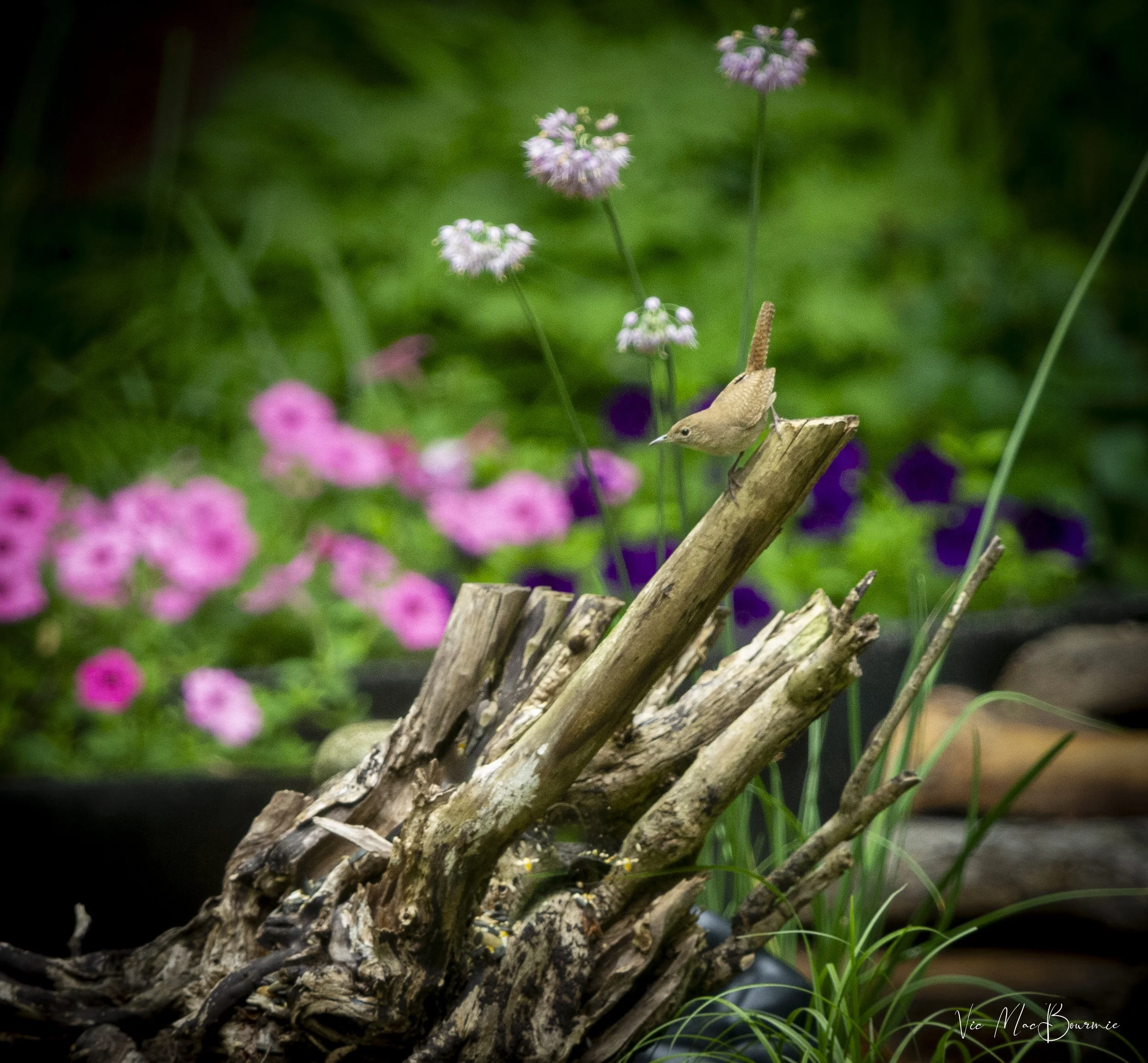
Here, a house wren checks out all the action around the seed-filled bird stump.
Photography at the natural bird feeder
Of course, any natural bird feeding station makes an ideal backdrop for photography. The out-of-focus flowers in the backround, the native nodding onions and foreground sedges add to the natural look of the old tree stump making successful photography easier.
Taking advantage of backgrounds is a great way to add interest to your images, whether the feeders are an old tree stump, a boulder or a hanging tree branch filled with seed-filled suet.
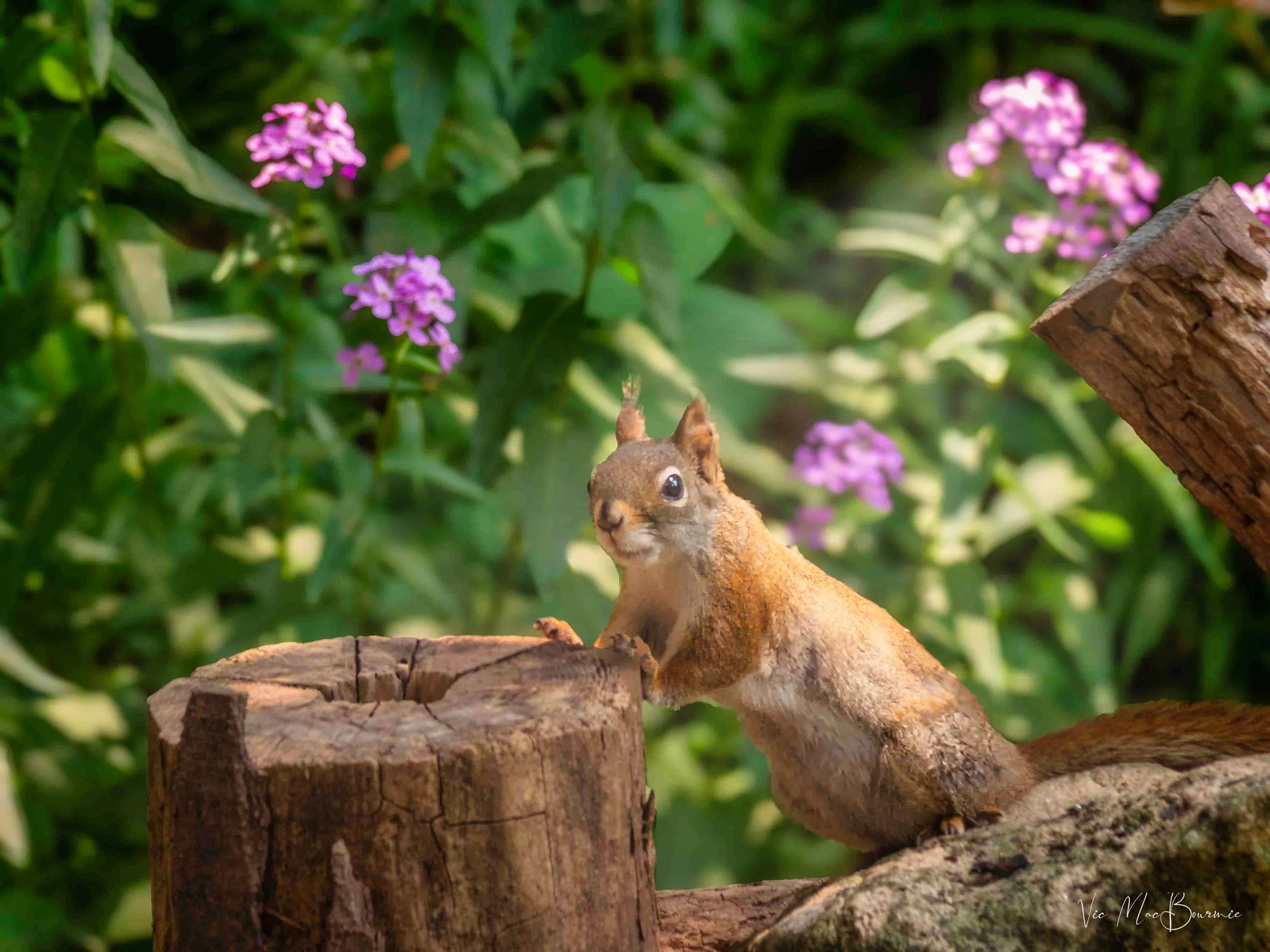
An old stump works perfectly as a natural feeder, especially ones with a hole in the centre where seeds and berries can be hidden away.
For most of the above images, I used a 300mm f4.5 lens with a 1.4 converter giving me close to 700mm lens if you account for the crop factor of the APS sensor.
As the birds and other wildlife get more accustomed to your presence, an 80-200mm lens will be sufficient to get in close to your subjects.
The greater distance between your subject and the camera, however, helps make for a more pleasing blurred background and allows the birds and other wildlife to act more naturally.
Although I used telephoto lenses to capture the above images, a wide angle lens in close would have provided an interesting perspective and showed the animals more in their environment.


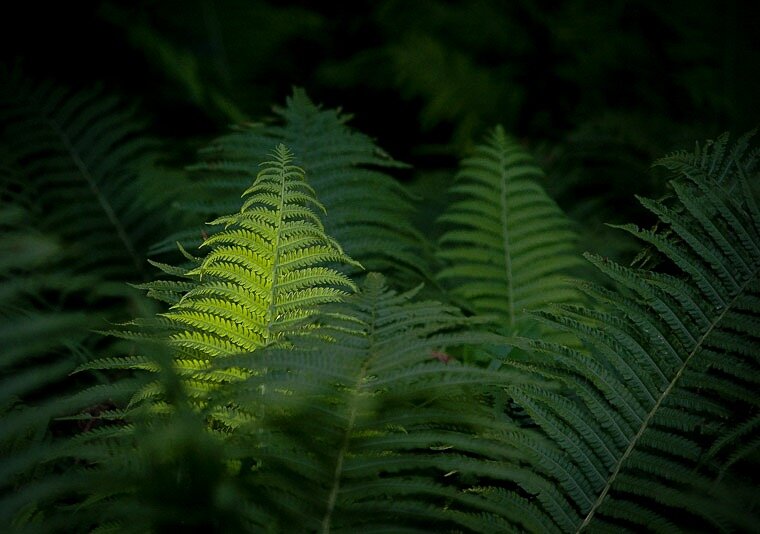


Creating a woodland/wildlife garden using native plants has many benefits including being able to photograph the wildlife that lives in and visits your backyard.