Natural bird feeders: Good alternative to expensive store-bought feeders
Natural bird feeders are nn excellent alternative to expensive store-bought feeders.
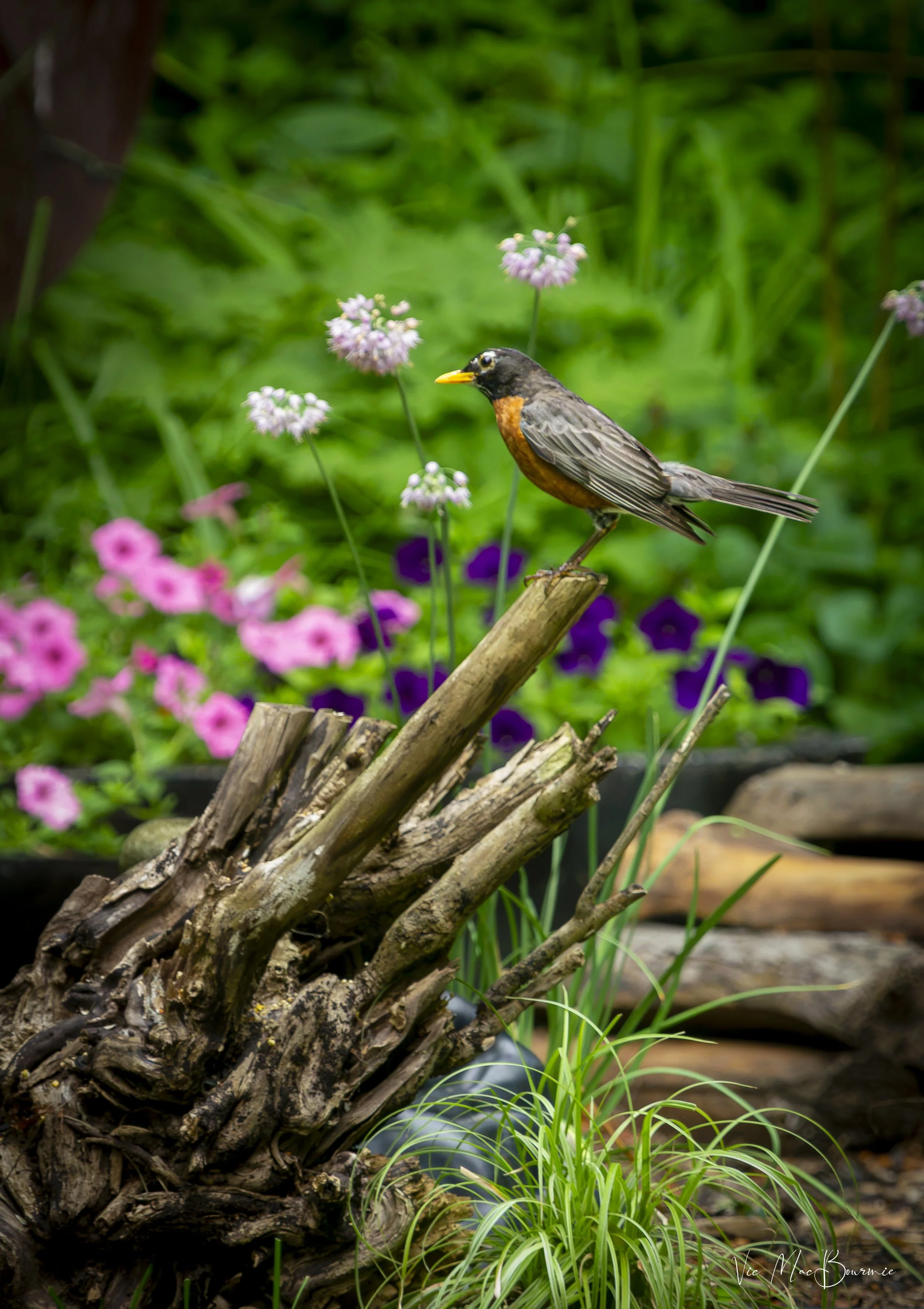
A robin was quick to check out the old stump filled with bird seed, but quickly realized there was nothing there for her before flying off in search of insects.
Old stump is ideal spot to hide seed
It took me about 25 years, but this summer I decided to go bird-feeder free.
That doesn’t include hummingbird feeders that I can’t resist despite lots of natural food sources in the yard for them.
My feeder-free summer started when my bird-feeding station main pole finally snapped under the weight of bird feeders and plump raccoons that eventually toppled it for good.
I will probably set up some smaller version come fall but, in the meantime, I must say I am enjoying a bird-feeder free yard.
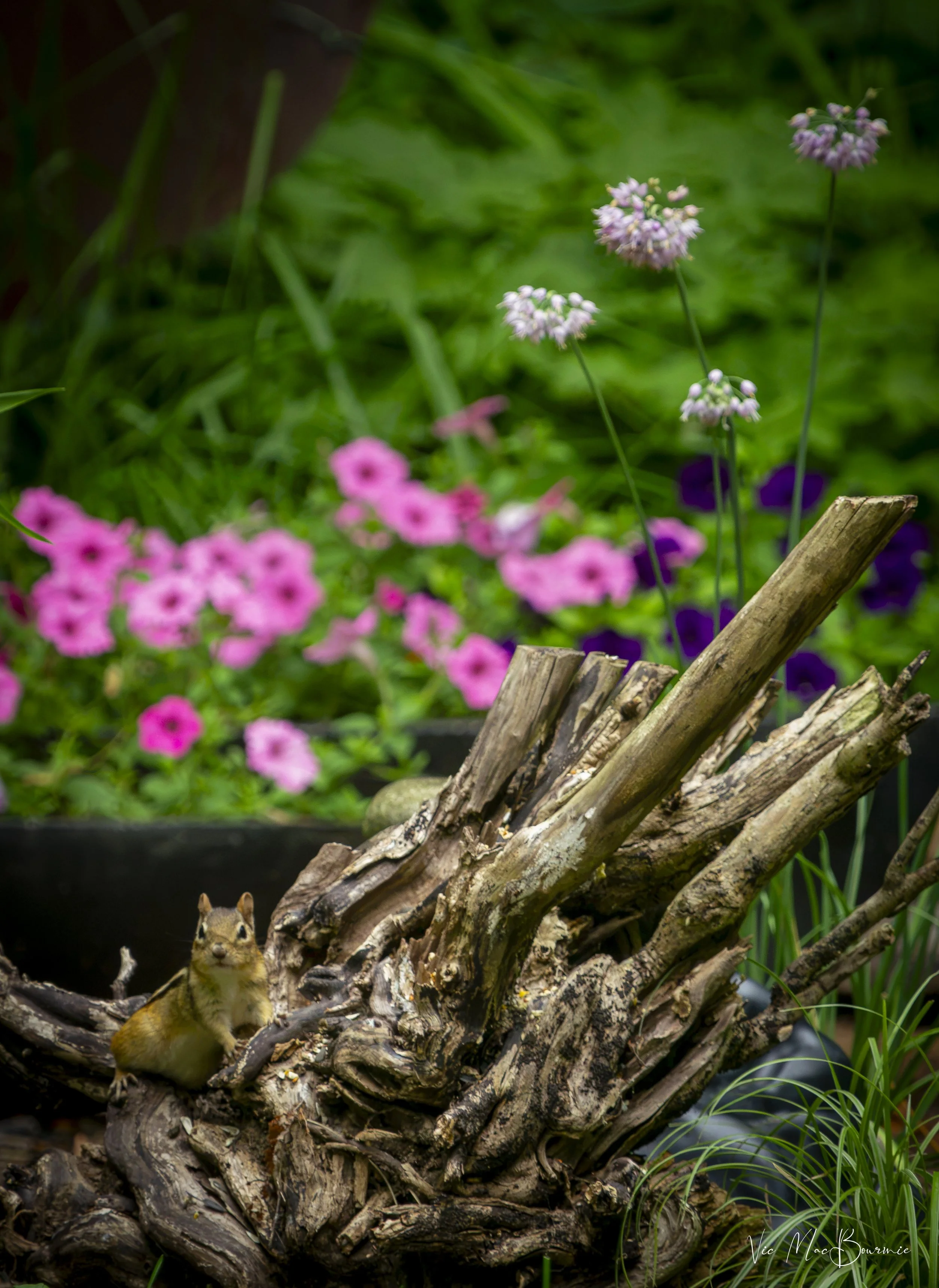
Chipmunks were first on the scene filling their jowls with food and scampering off to hide the rewards before returning for more.
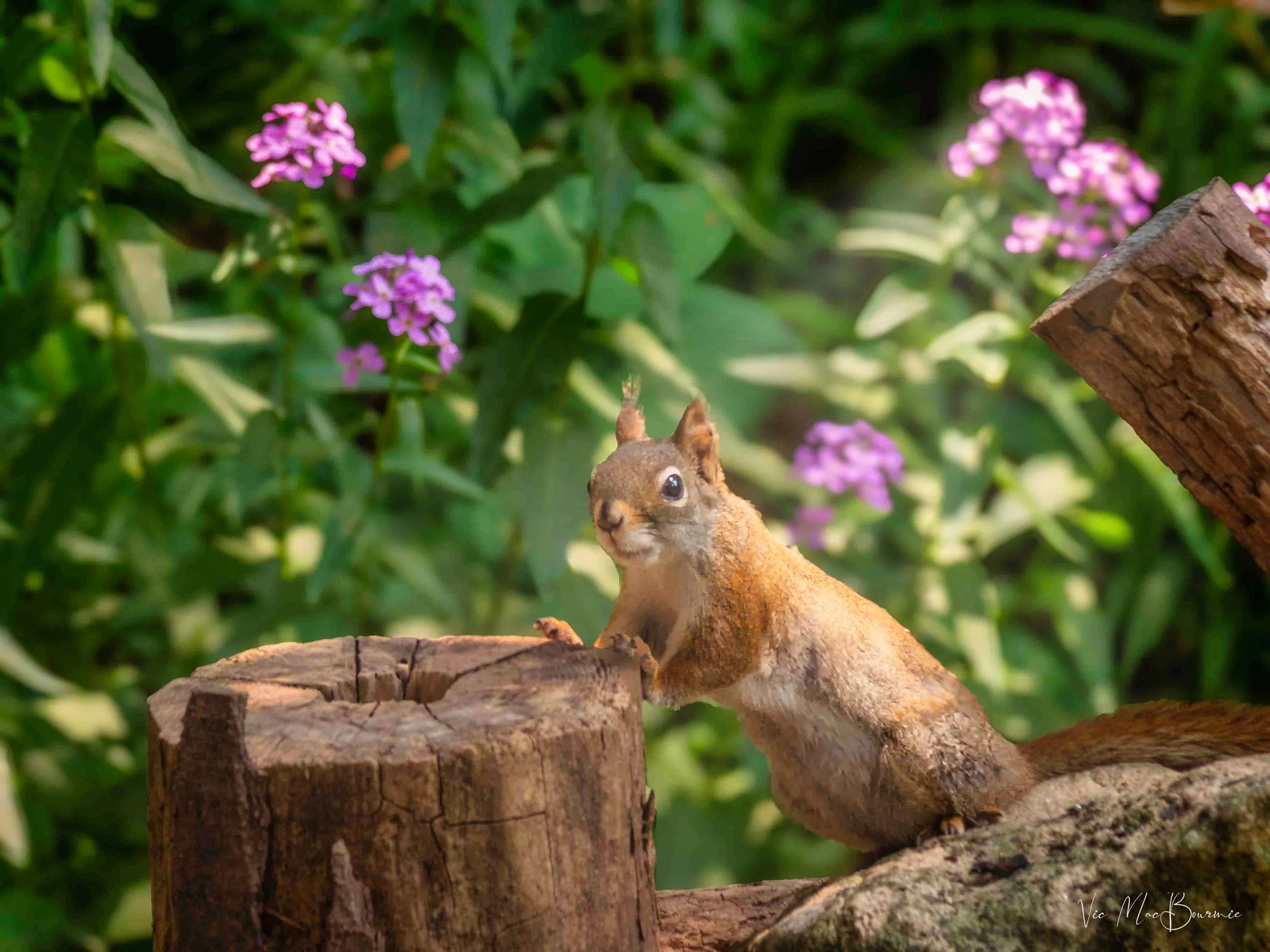
That’s not to say I’m not feeding the birds. Once in a while, I’ll throw a handful of mixed seed in a natural bird feeder – an old stump or on a boulder where the birds can see it. Unfortunately, the chipmunks and squirrels are usually the first on the scene and pretty well clear it out before the birds discover what is there.
Before long, a house wren came in to check out what the action was all about and began harassing the chipmunks who were, by the wren’s thinking, a little too close to its nest box. In the end, everything was sorted out and they went back to their normal routines.
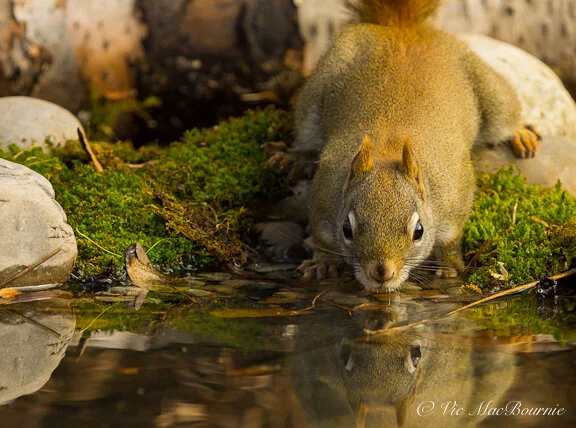
And don’t forget to add natural-looking water sources for your backyard wildlife. This homemade bird bath was fitted with moss and stones to give it a nature look to capture visitors in a natural setting.
Another excellent natural bird feeder is to use a fallen tree branch with holes drilled in it and filled with suet or bark butter. Hang it from another tree branch and you will be amazed how quickly the birds discover the treat inside the branch.
For more on feeding birds natually, check out my earlier post here.
You can expect woodpeckers, chickadees, nuthatches and a host of other birds to be regular visitors. Place the branch in an area close to where you often sit, bring your camera and shoot away. Or, if photographing your backyard birds is not your thing, this method is a great way to bring in shy birds a little closer to you.

An old moss- and lichen-covered branch becomes the perfect natural bird feeder with bark butter forced into some of the nooks and crannies or holes drilled into the branch and filled with suet.
Another excellent natural bird feeder is to use a fallen tree branch with holes drilled in it and filled with suet or bark butter. Hang it from another tree branch and you will be amazed how quickly the birds discover the treat inside the branch.
You can expect woodpeckers, chickadees, nuthatches and a host of other birds to be regular visitors. Place the branch in an area close to where you often sit, bring your camera and shoot away. Or, if photographing your backyard birds is not your thing, this method is a great way to bring in shy birds a little closer to you.
• Looking to attract birds and other wildlife to your backyard without the help of bird seed, check out my earlier post here.
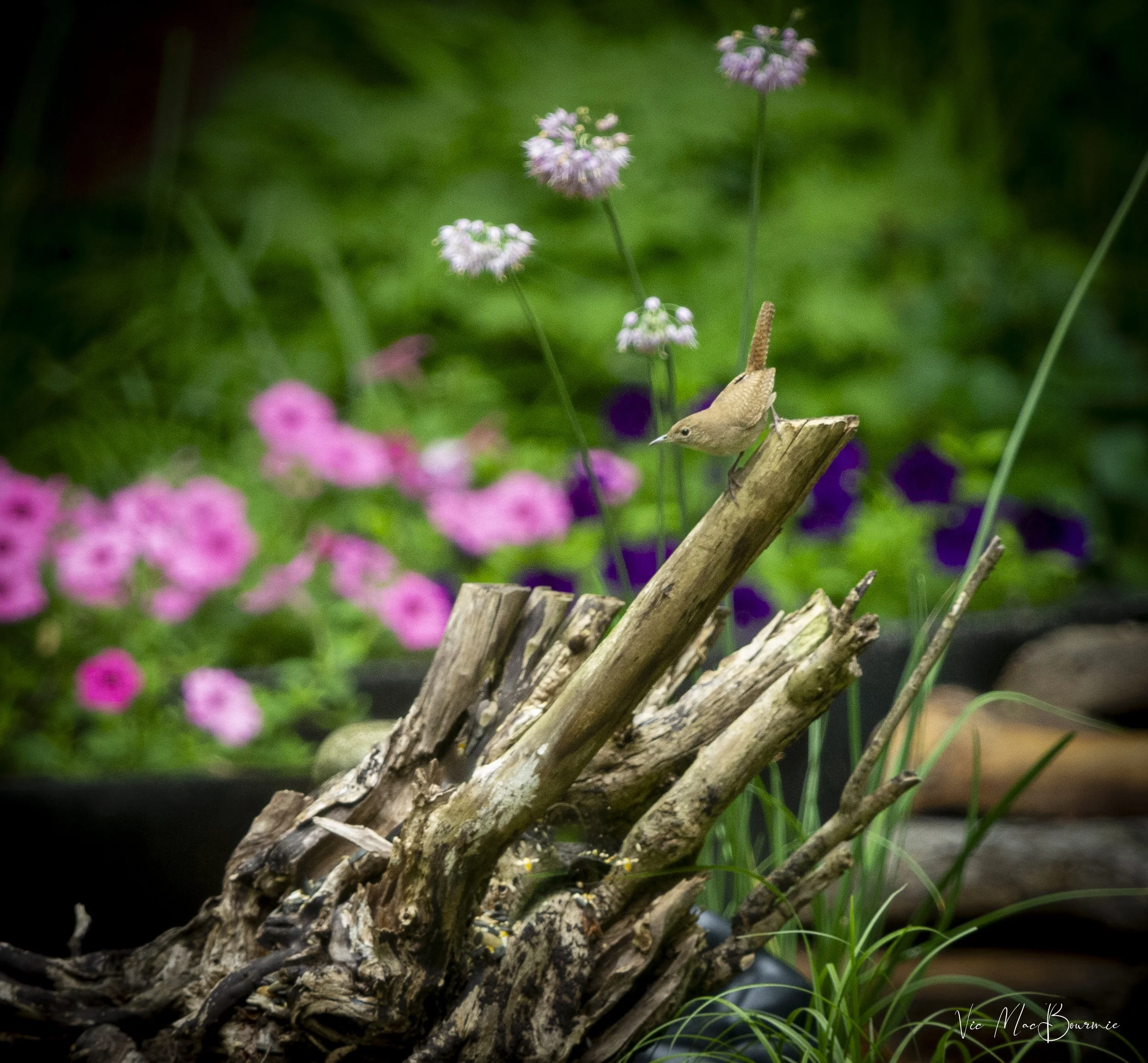
Here, a house wren checks out all the action around the seed-filled bird stump.
Photography at the natural bird feeder
Of course, any natural bird feeding station makes an ideal backdrop for photography. The out-of-focus flowers in the backround, the native nodding onions and foreground sedges add to the natural look of the old tree stump making successful photography easier.
Taking advantage of backgrounds is a great way to add interest to your images, whether the feeders are an old tree stump, a boulder or a hanging tree branch filled with seed-filled suet.
An old stump works perfectly as a natural feeder, especially ones with a hole in the centre where seeds and berries can be hidden away.
For most of the above images, I used a 300mm f4.5 lens with a 1.4 converter giving me close to 700mm lens if you account for the crop factor of the APS sensor.
As the birds and other wildlife get more accustomed to your presence, an 80-200mm lens will be sufficient to get in close to your subjects.
The greater distance between your subject and the camera, however, helps make for a more pleasing blurred background and allows the birds and other wildlife to act more naturally.
Although I used telephoto lenses to capture the above images, a wide angle lens in close would have provided an interesting perspective and showed the animals more in their environment.




The Columbine and the hummingbird
Native plants, especially native columbines, are an important early spring food source for migrating hummingbirds.
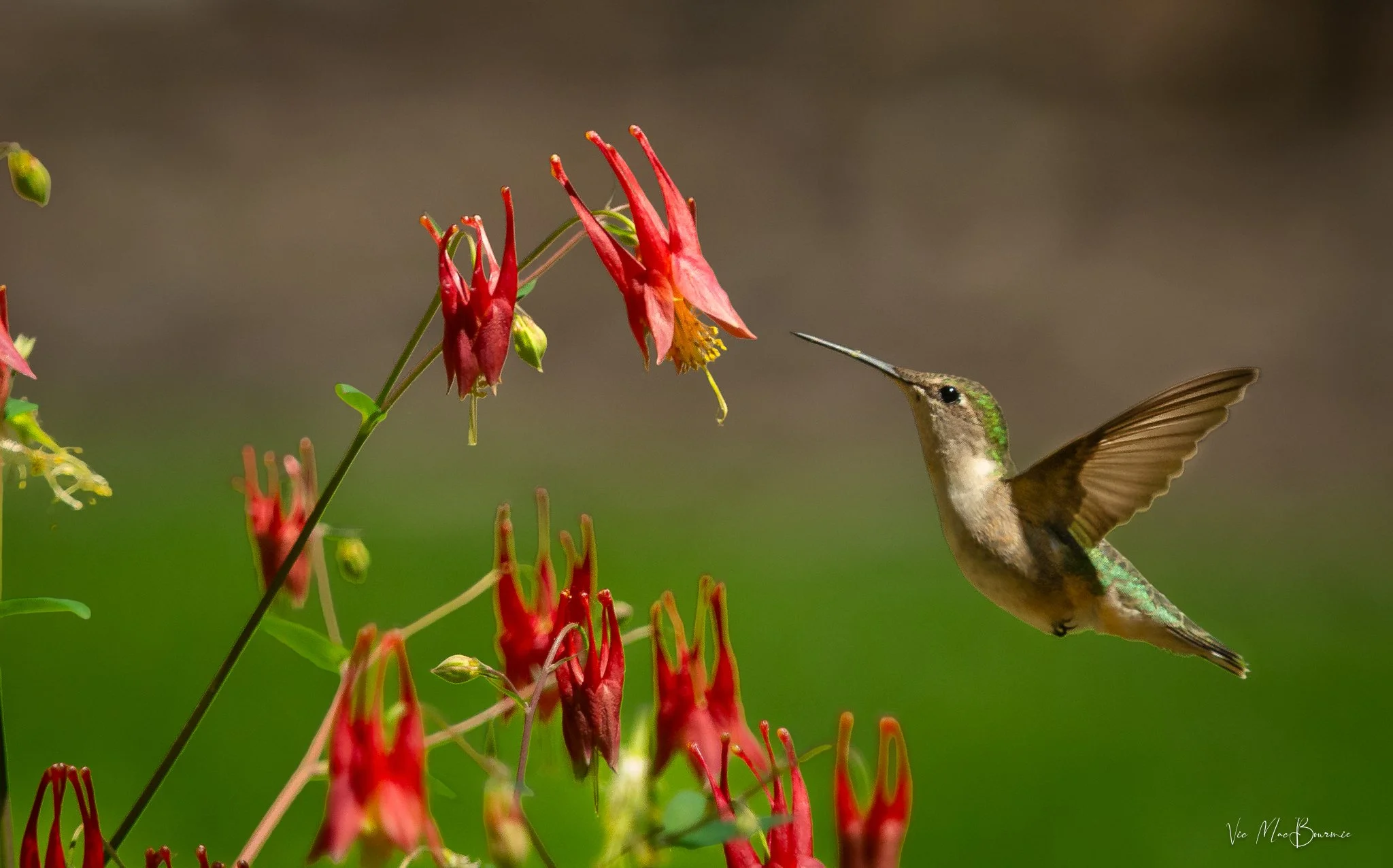
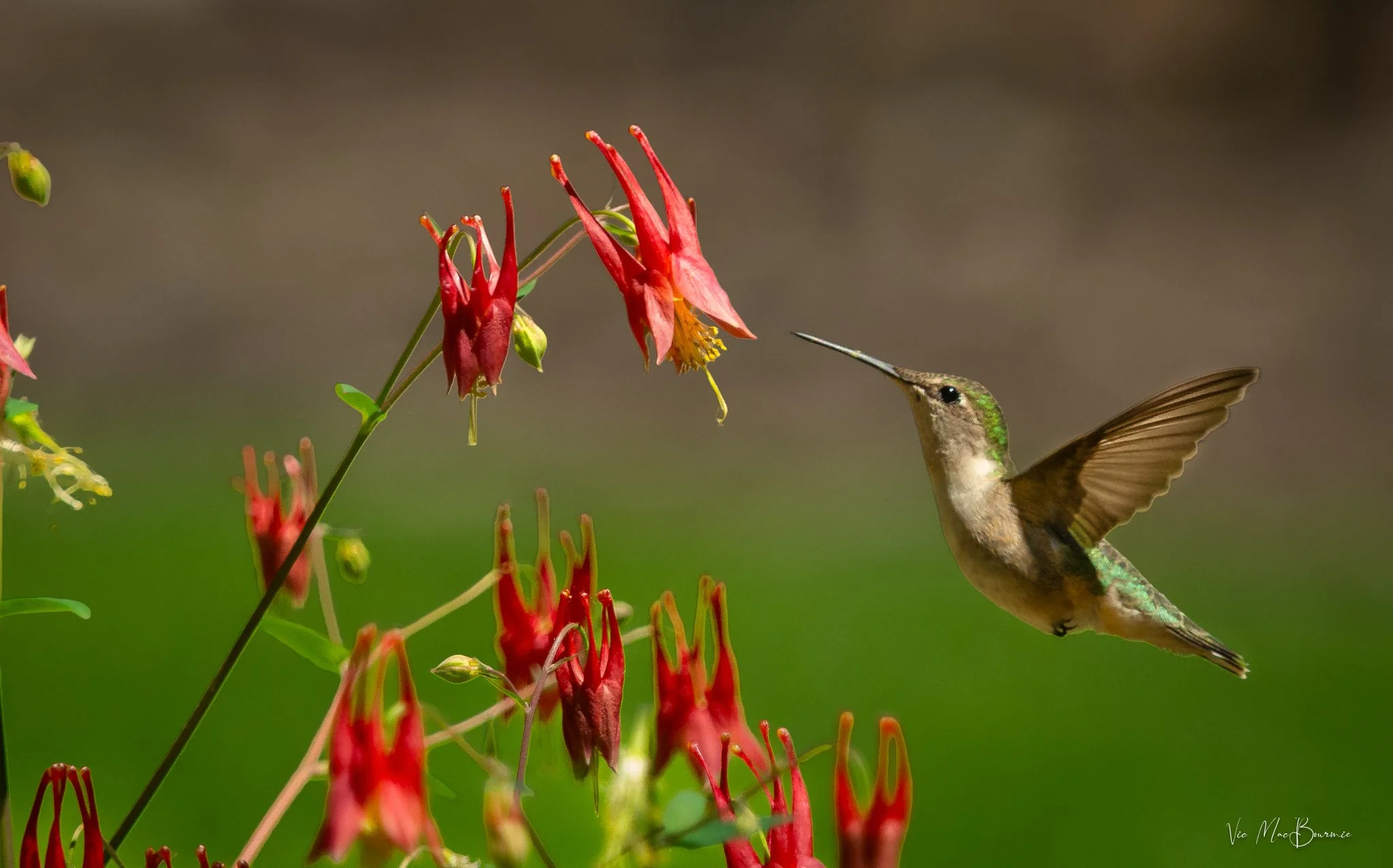
A hummingbird works on native Columbine in the woodland garden in early spring.
Spring in the woodland garden: Importance of native plants
One look at a native columbine and you know they were “made” for hummingbirds.
The colours – a vibrant red and yellow. The shape – long tubular flower petals perfect for our hummingbirds’ long beaks and even longer tongues. The way the entire flower hangs off the stem.
It’s the perfect match for the hummingbird.
This week in the garden watching hummingbirds work the columbines was all I needed to be reminded of the important relationship between our native columbine and hummingbirds. In fact, it proved to be even more verification of how important native plants are to our local wildlife.
I don’t think it’s a coincidence that our ruby-throated hummingbirds arrived to our garden just as the columbines were preparing to open.
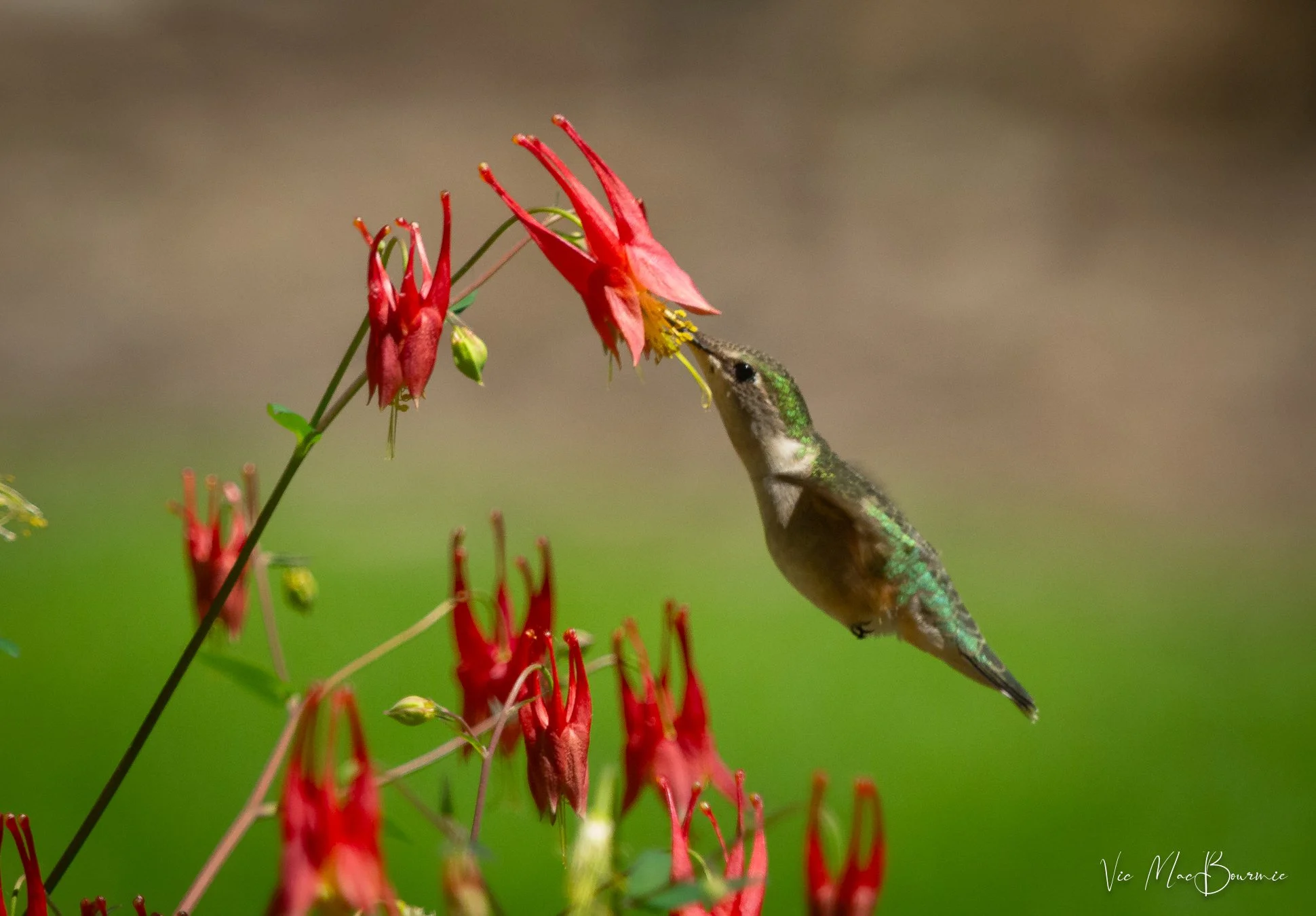
Columbines, along with Solomon’s seal and a handful of other natives and non-native plants, are just a few of the key plants that provide a food source for migrating hummingbirds. Flowering trees such as crabapples, serviceberries and a host of other shrubs also play a major role in helping migrating birds, such as hummingbirds.
For more on columbines, check out my earlier posts here.
For my post on helping migrating birds, see my earlier post here.
Commercial feeders are no replacement for native plants
One look at all the activity around our commercial feeders (Amazon link) and it’s easy to forget that these tiny birds that have just made their way from as far away as Central America to our backyards in the northeastern United States, Ontario and more northerly parts of Canada, are more dependent on native plants than our feeders.
In other parts of the world, including the southwestern U.S., into western Canada, a similar dependency exists with the beautiful Rocky Mountain columbines and other native plants that feed the migrating hummingbirds along their journey.
Hummingbird feeders have certainly become an important, readily available, high-energy food source that is available to migrants as they make their way to their summer breeding ground. But, it is plants like columbines that ensure hummingbirds’ survival over long stretches of uninhabited areas where feeders are not as readily available.
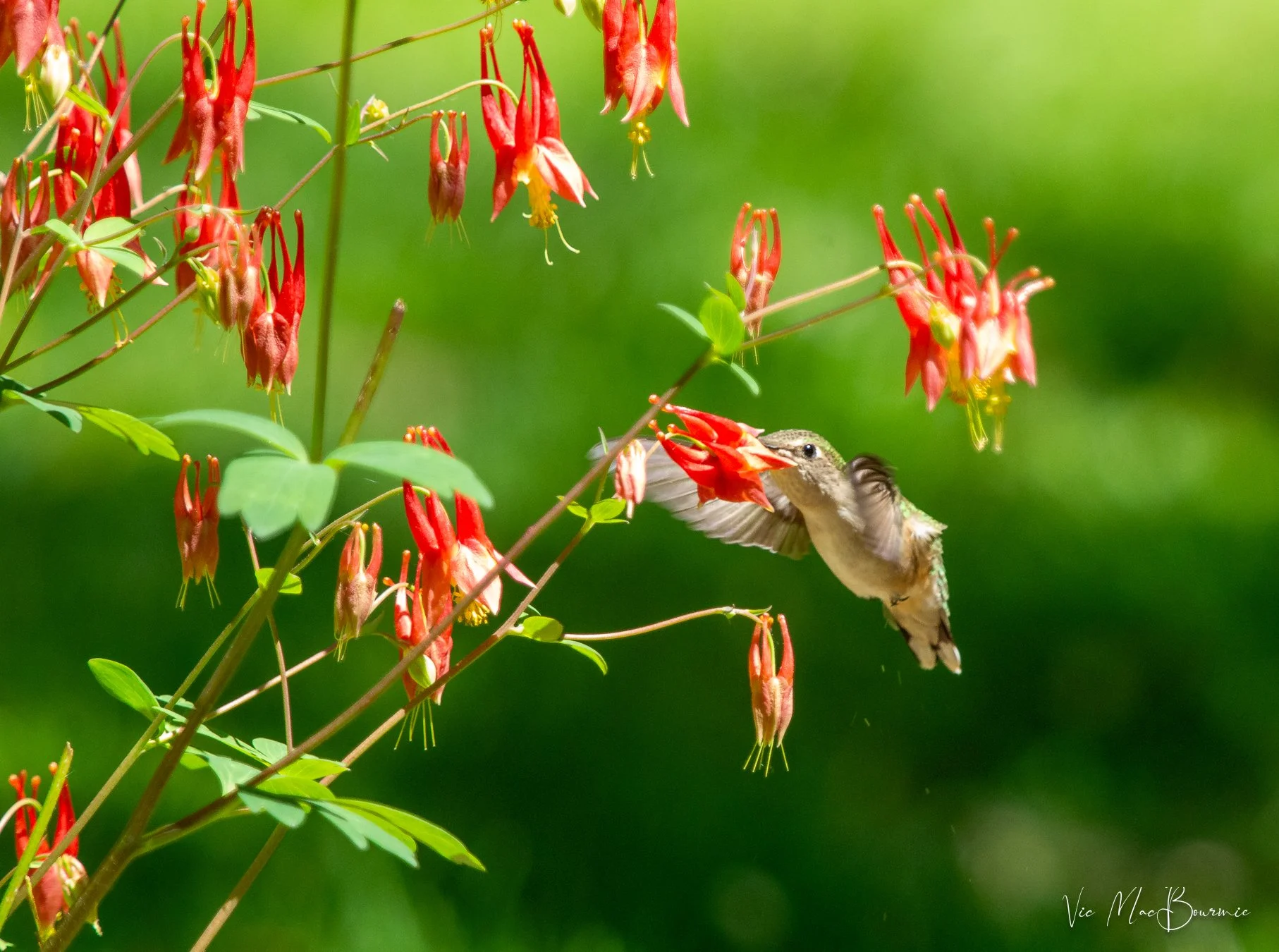
Columbines can be an important food source for migrating hummingbirds in early spring.
Not only are native plants, including columbines, important as an early food source for hummingbirds, they also feed smaller insects which can be a source of protein for hummingbirds.
Many of us might not realize that insects actually make up a huge part of the hummingbirds’ diet. In fact, leaving pieces of fruit out near a feeder to attract fruit flies can also be beneficial for hummingbirds. When it comes to feeding their babies on the nest, it’s small insects and spiders that make up the diet of both the tiny babies and their parents.
The Rocky Mountain columbines – non-native in my location – as well as the more hybridized varieties may not be as beneficial to hummingbirds in our area, but more than likely offer some of the same benefits as our native plants.
It’s always good to include at least some native varieties in your naturalized garden.
If you don’t have native columbines in your garden, be sure to put them on your list for next season. If you can still find plants are your local nursery, pick up a few and get them in the ground for the hummers. If you can’t find any plants, you can probably purchase some seed which you can try to sew directly in the garden or grow in pots.
For more on native plants and their importance in the landscape, check out my earlier posts here.
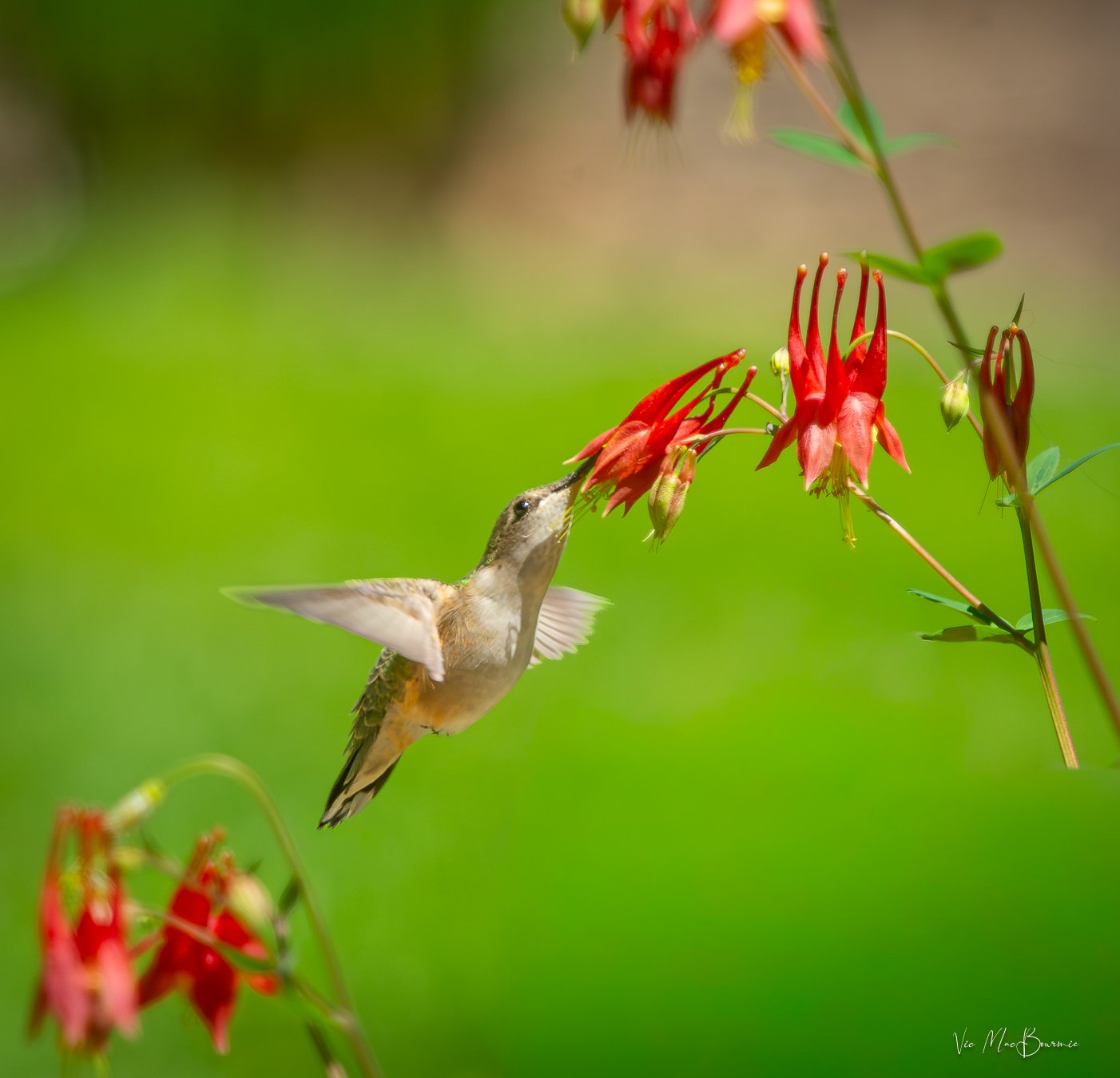
This image shows how the hummingbirds flies low and then up to feed on the low hanging columbines. They are able to lift the flowers as they feed.
How I photographed the hummingbirds
Anyone who has tried to photograph these tiny, extremely fast and skittish little birds knows how difficult it can be.
Using an electronic flash helps to stop movement, throws a catchlight in the eye and adds a fill light to darker areas in the image, but I prefer to keep it simple when it comes to capturing images of hummingbirds.
I used a digital SLR (Pentax K5) combined with a Pentax 300mm f4.5* lens teamed with a 1.4 converter that gave me the equivalent of about a 720mm lens on the cropped sensor. I bumped up the ISO to 1600, which added even more noise to the images.
I’m lucky that I planted the Columbines right near where I like to sit with my coffee and look out over the garden. So, I grabbed my monopod and waited… and waited.
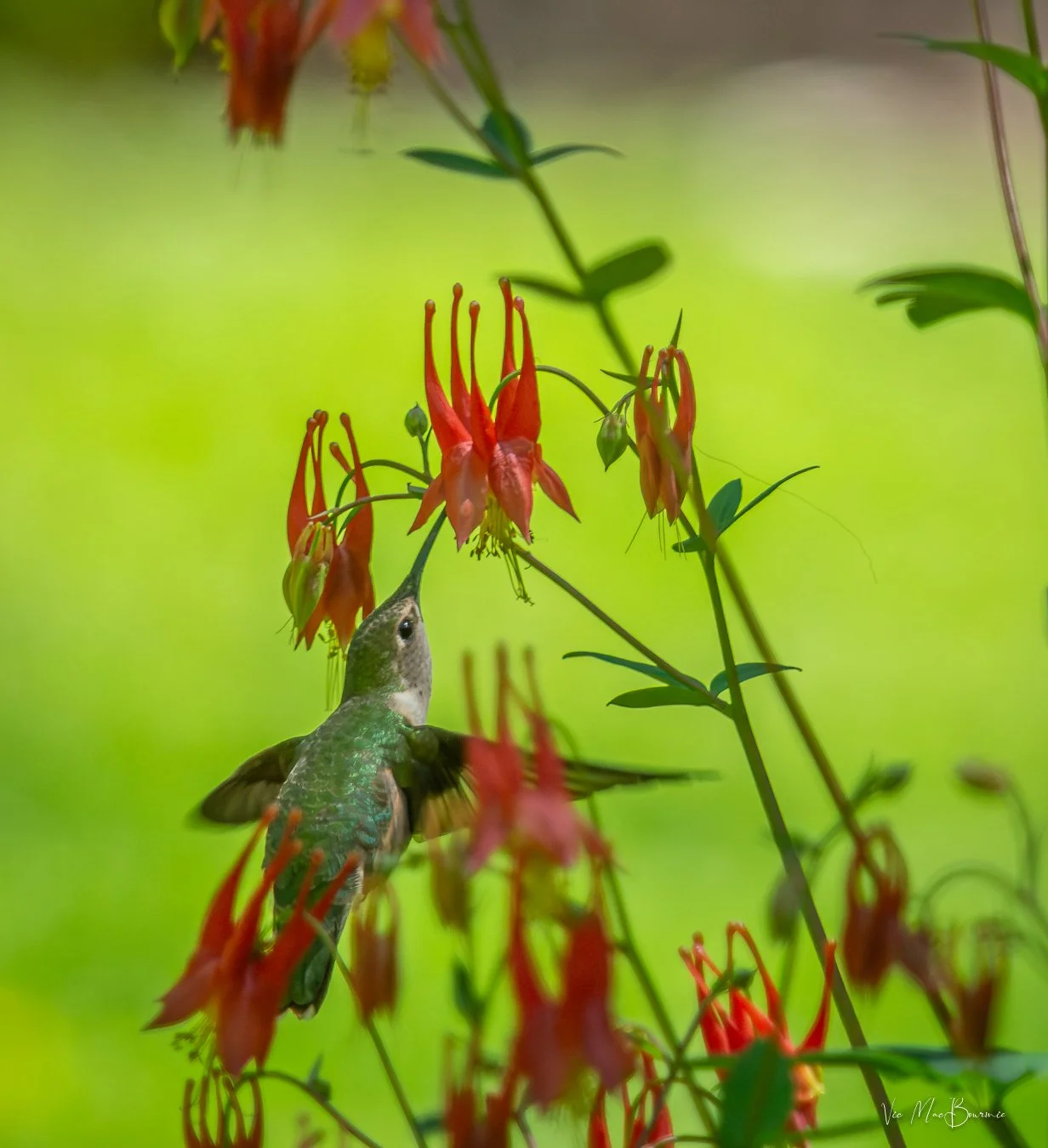
A hummingbird flying almost vertically to feed on the columbines.
The hummingbirds visited the many feeders I had put up around the patio but took their time to check out the columbines.
It was late morning and the flowers were in the shade while the background was well lit, so I knew it wasn’t ideal lighting. I knew I could save the RAW images in post processing with a combination of Lightroom and Luminar Neo, but wasn’t under any great expectations that the results would be anything more than acceptable.
As a result of the bright background, most of the images of the birds were underexposed. Bringing the exposure up only added to the noise in the high-ISO images.
The birds visited a few times giving me lots of opportunities to get a variety of images. I shot in continuous mode but the K5 and lens combination wasn’t ideal to capture these fast-moving subjects.
Several hours later and I could see the shade moving away and the flowers beginning to get lit up. All I could do was hope the hummingbirds would return with the better lighting. And they did.
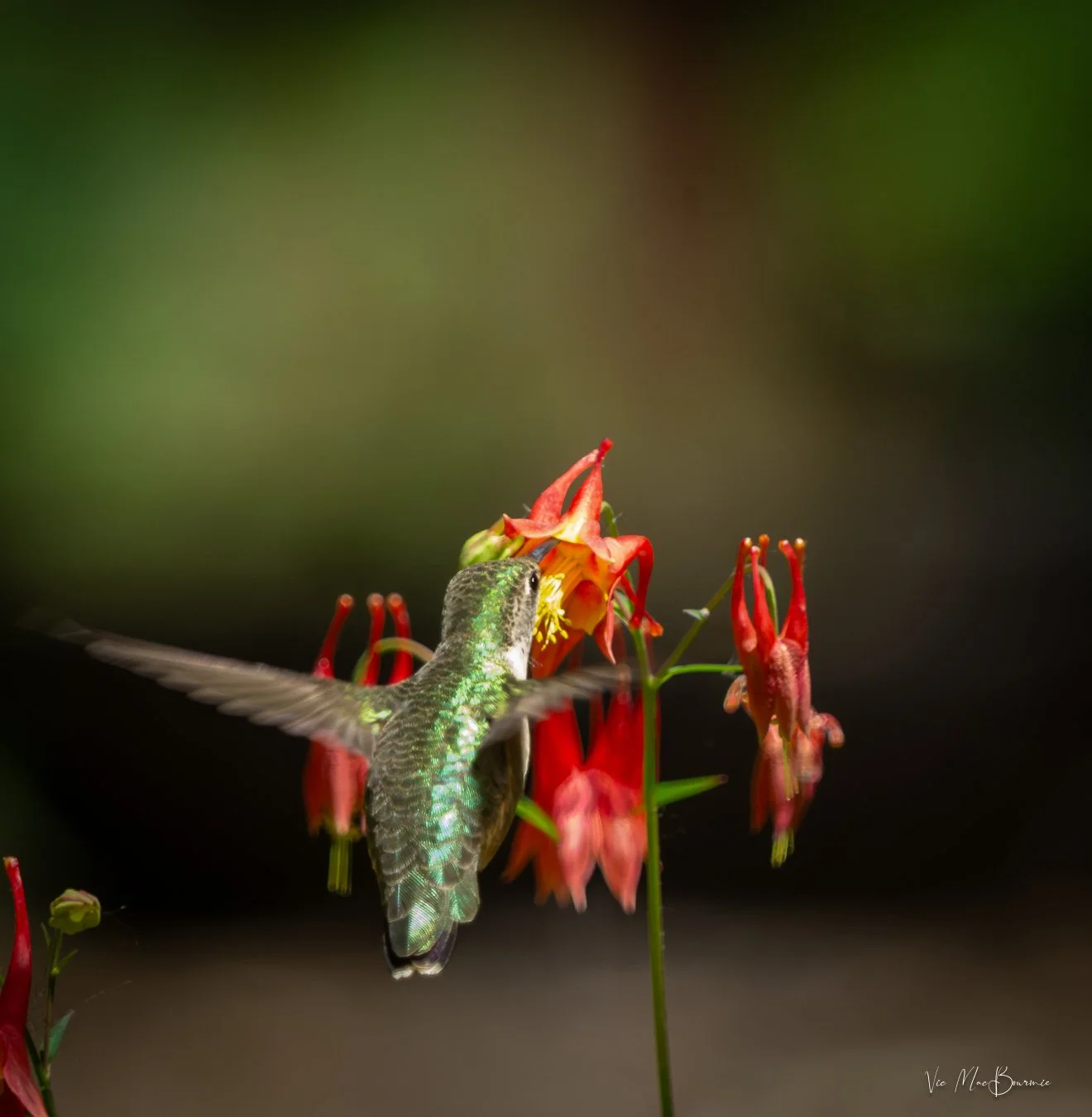
This image shows the hummingbird’s beak moving into the long Columbine flower petals to feed.
The results with the sun on the plants and the birds proved to be much better with a natural catchlight in the eye and a faster shutter speed to better freeze the motion of the bird. In addtion, the better lighting allowed me to stop down the lens for a little added depth of field.
The results of the photo shoot was a mixed bag of good and bad. I was happy just to capture the hummingbirds at the columbines, but unhappy about the quality of images and the amount of post processing needed to make them acceptable for publication.
A lot of work was needed to get the most out of the images, including a heavy amount of sharpening in both Lightroom and Luminar Neo.
Speaking of Luminar Neo, I used its “light depth” module on many of the images to create nicer light on the hummingbirds. I also used Luminar Neo’s AI sharpening tool in a few of the images.
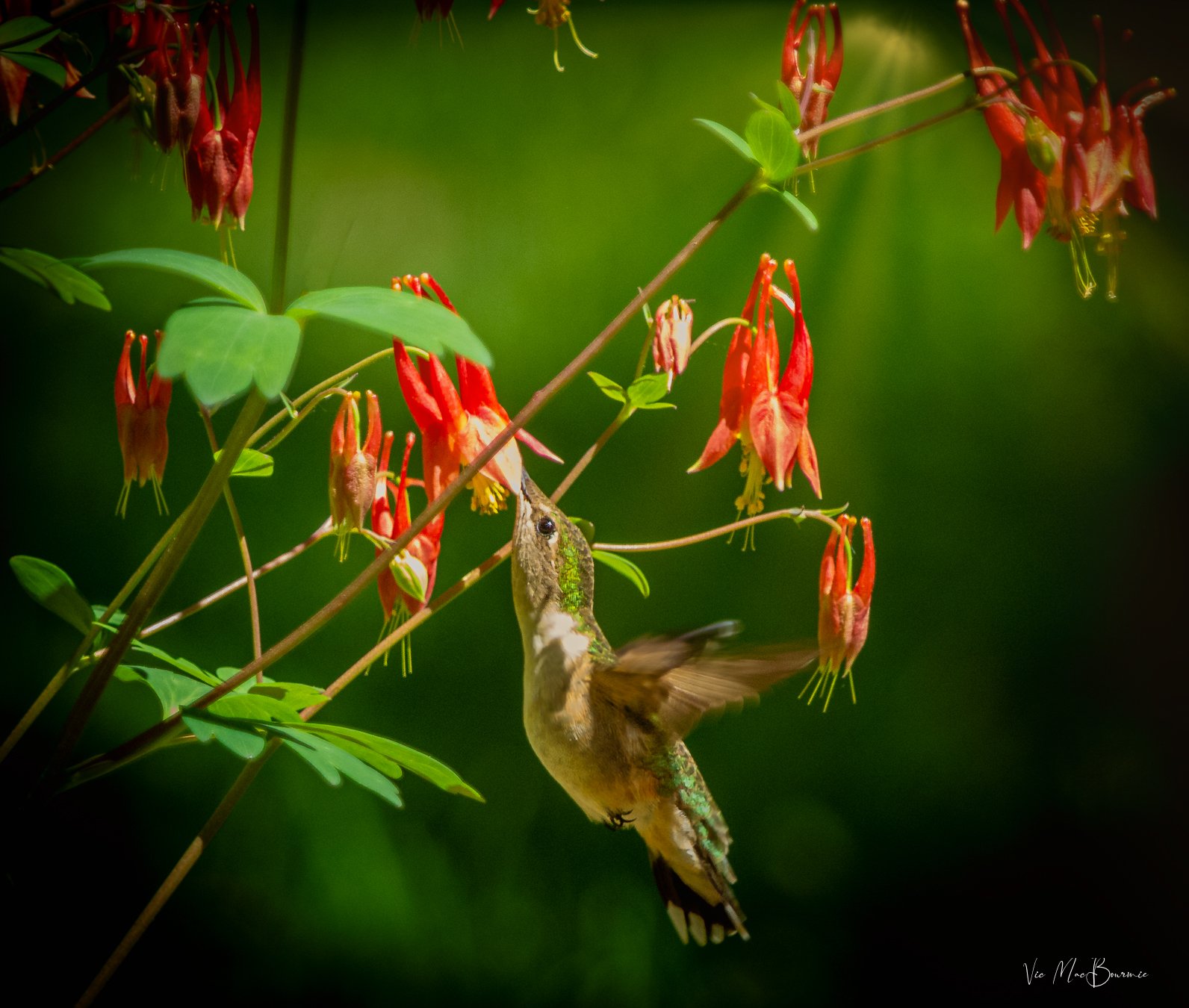
This image shows the hummingbird flying almost vertically to feed on the columbines. During post processing, I darkened the background edges to focus on the hummingbird. Warm sun rays were added and the entire image was warmed up. The result is a more creative approach to a natural image.
Finally, I decided to push Luminar Neo’s creative capabilities to see what was possible. (See image above.)
After using the light depth module to lighten the hummingbird against the surroundings, I tapped into the sunrays module to add warm beams of light on the subject.
And the result: As a creative image I think I really like the results.
Some may argue that it is too contrived, and that’s okay. I see photography as a creative expression and have no problem taking an image to its creative limits.
I enjoy nothing more on a rainy day, than sitting in front of the computer and playing with the creative aspects modern post processing programs provide photographers.
For my post on creative approaches to photography, check out my earlier post here.
What do you think? Is it too much or are you open to creative expression in nature photography?

The “dead hedge” is coming to life
A dead hedge or brush pile just might be the solution to blocking an eyesore and/or creating much needed vertical wildlife habitat in your backyard.
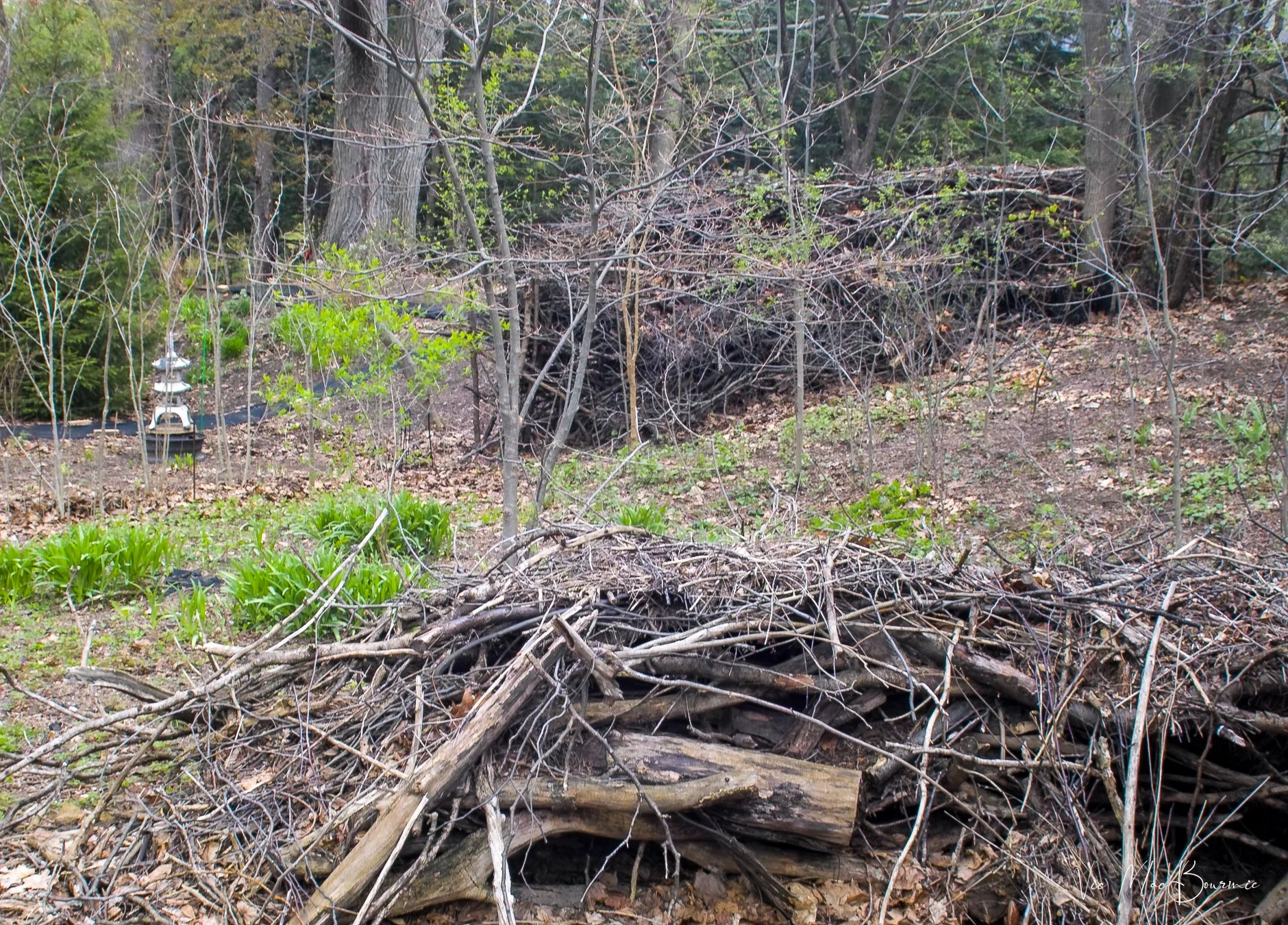
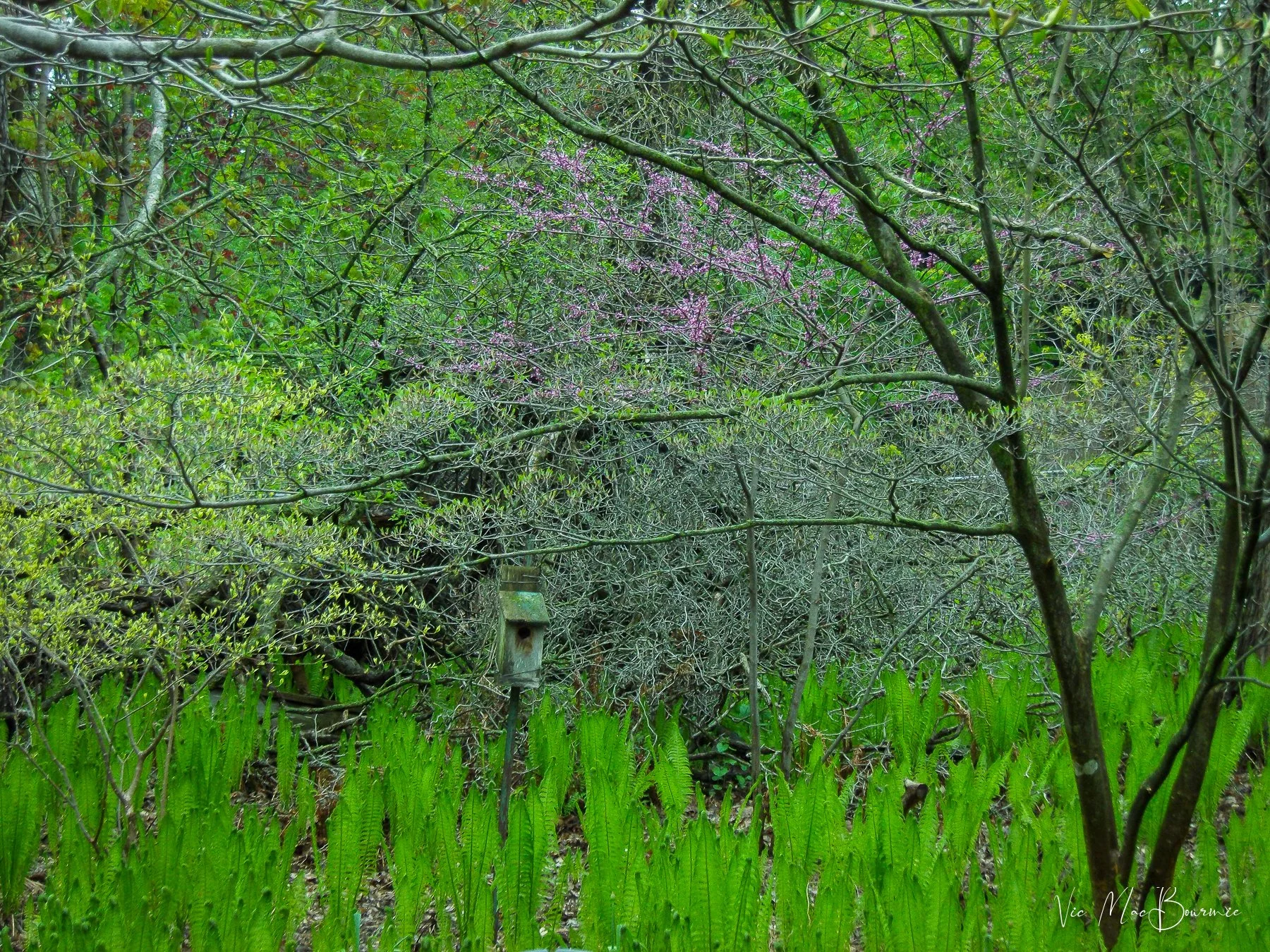
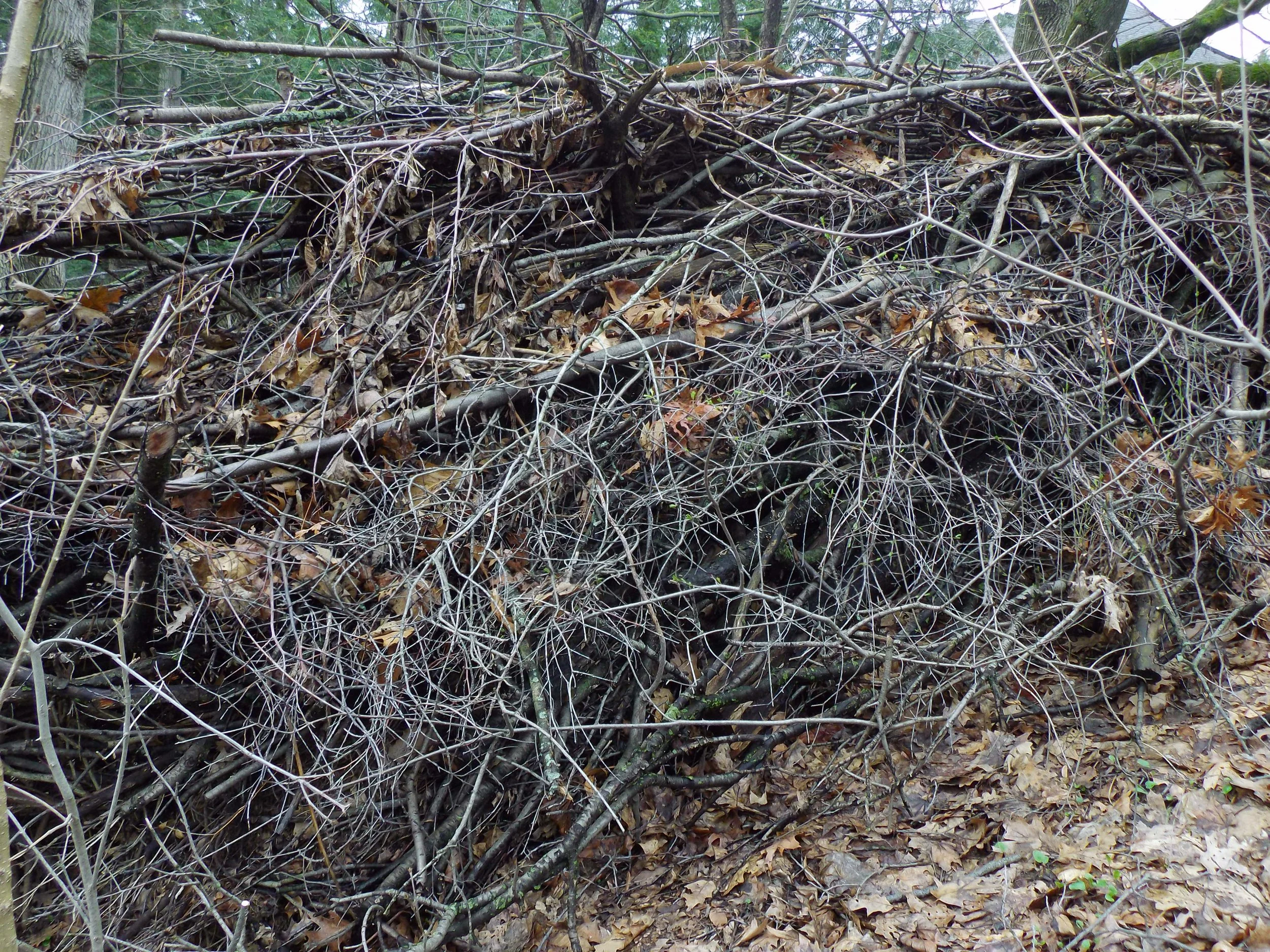
This image shows my brush pile in the foreground with my neighbour’s dead hedge in the background. Although they look similar, the brush pile in the foreground has been built up over years and is much wider covering more ground, while the dead hedge has been built in just the past year and is taller than it is wide.
Dead hedge vs brush pile: Both can create excellent habitat
What do you do with hundreds of non-native trees and shrubs that need to be removed and disposed?
Well, you could do a lot worse than using them as building blocks for what is known as a “dead hedge.”
That’s exactly what my neighbour, Peter, has done with a grove of buckthorn that quickly spread across the back of our properties.
While I yanked mine out and threw them on the top of our massive brush pile, Peter used the larger ones as fenceposts while the smaller trees and branches became the horizontal “filler” for the hedge.
It’s made by stacking branches and garden waste between the posts, which don’t have to be dead trees. You could just as easily use store-bought wooden or even steel posts for the vertical support.
Think of it like a very vertical brush pile, but with a more utilitarian role to play in the landscape.
Using a dead hedge like a fence doesn’t just block views, it creates safe shelter for birds, small mammals, and beneficial insects as well as hangouts for snakes, toads etc.
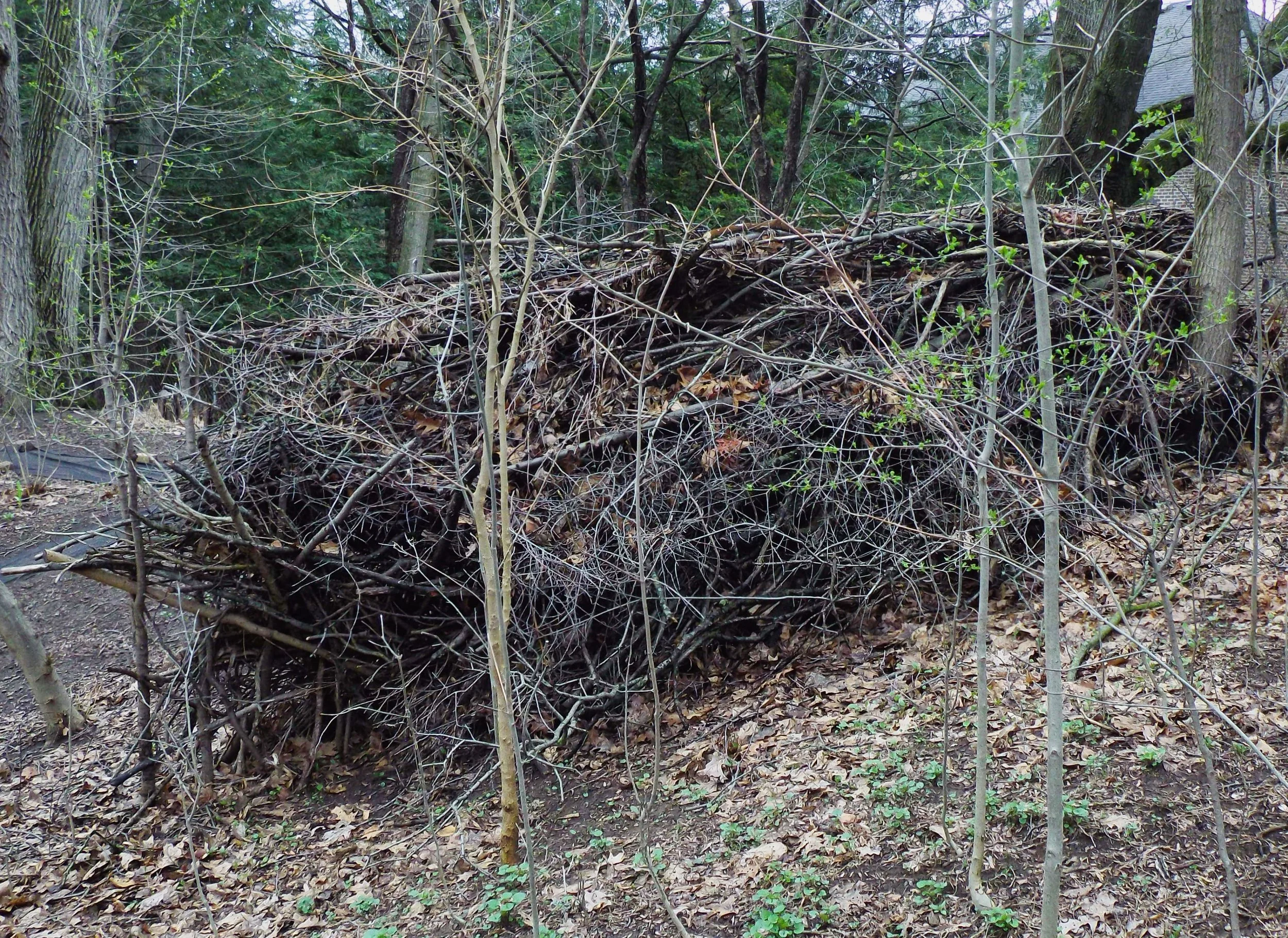
The dead hedge my neighbour built to get rid of piles of non-native buckthorn and other clippings. Rather than put them out in the recycling, he smartly used small trees that were removed as vertical posts and then began piling branches and twigs between them to build a 15-20-foot dead hedge where birds and other small animals and insects can escape to or even build nests in the spring.
The dead hedge fence can turn even the smallest yard into a living habitat and act, not just as a boundary wall like a traditional fence would do, but as n inexpensive way to block a distracting view or eyesore. Now, some would say that the dead hedge in itself an eyesore – and I can understand that argument – but read on for ideas on how we can turn the dead hedge into a living one.
As the dead hedge slowly breaks down – replaced by newer garden material – it feeds the soil and supports fungi and microorganisms in the soil.
The result is another new home and safe place for birds, chipmunks, squirrels and any other living critters that can make use of the structure. Native bees, too, can also take advantage of the dead wood to lay their offspring, especially if you take the time to drill holes in some of the larger branches.
It probably wouldn’t provide the same potential habitat that a large brush pile provides, but its vertical space and dense branch structure provides safety for birds and small mammals looking to escape predators.
Set up a bird bath or bird feeder nearby and you will likely get lots of action.
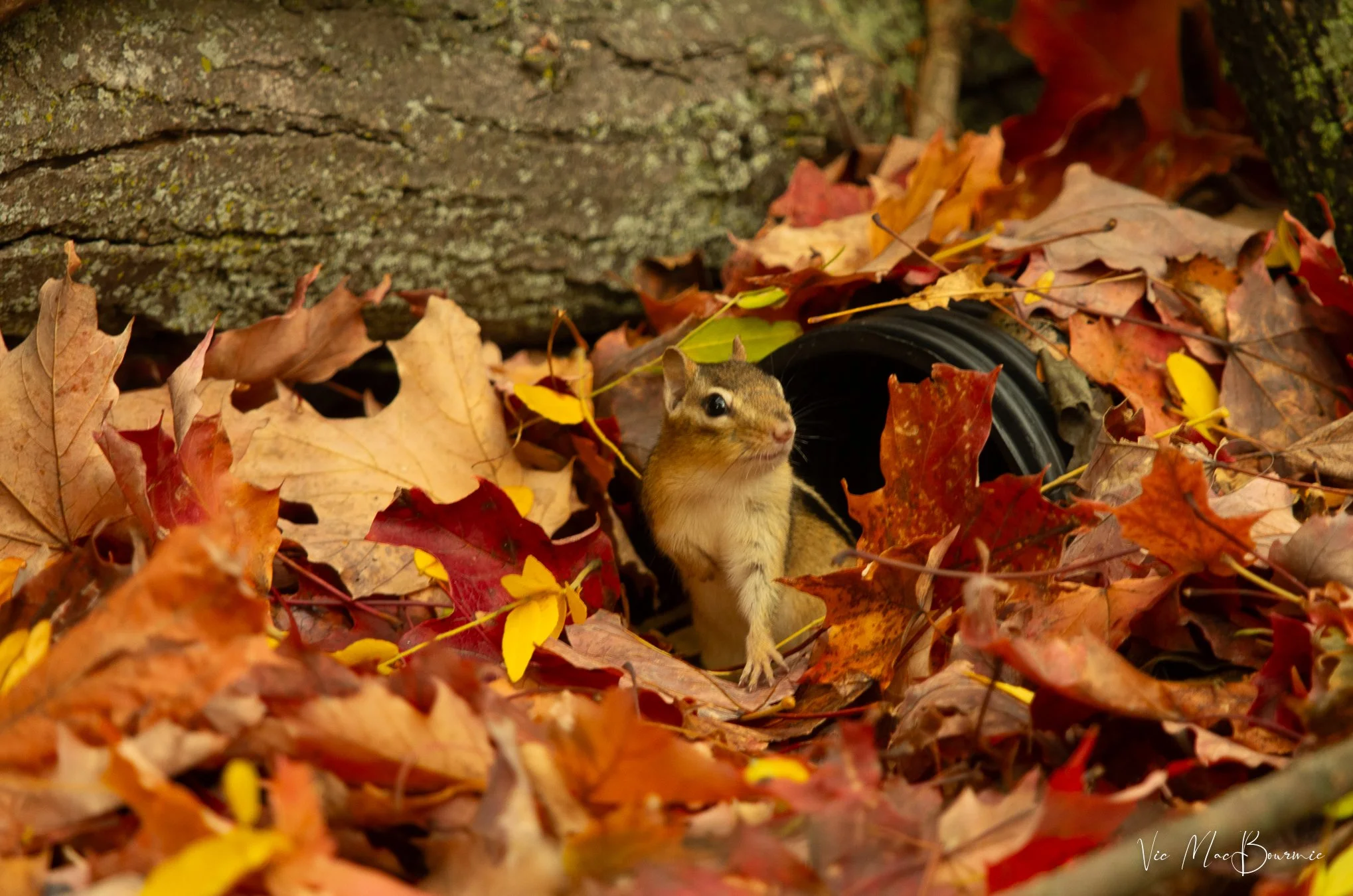
Adding secret passageways in the brush pile in the form of plastic tubing gives smaller animals quick escape passageways for predators such as foxes.
Turn the dead hedge into a living one
I’m thinking the dead hedge would be the perfect place to grow flowering annual and perennial vines to hide the woody brown mass and create a colourful vertical spot for local wildlife to hang out. Vines that attract hummingbirds would be a great choice. In a shady area, consider flowering hydrangea or, even better, Virginia Creeper that offers fruit and lovely fall foliage.
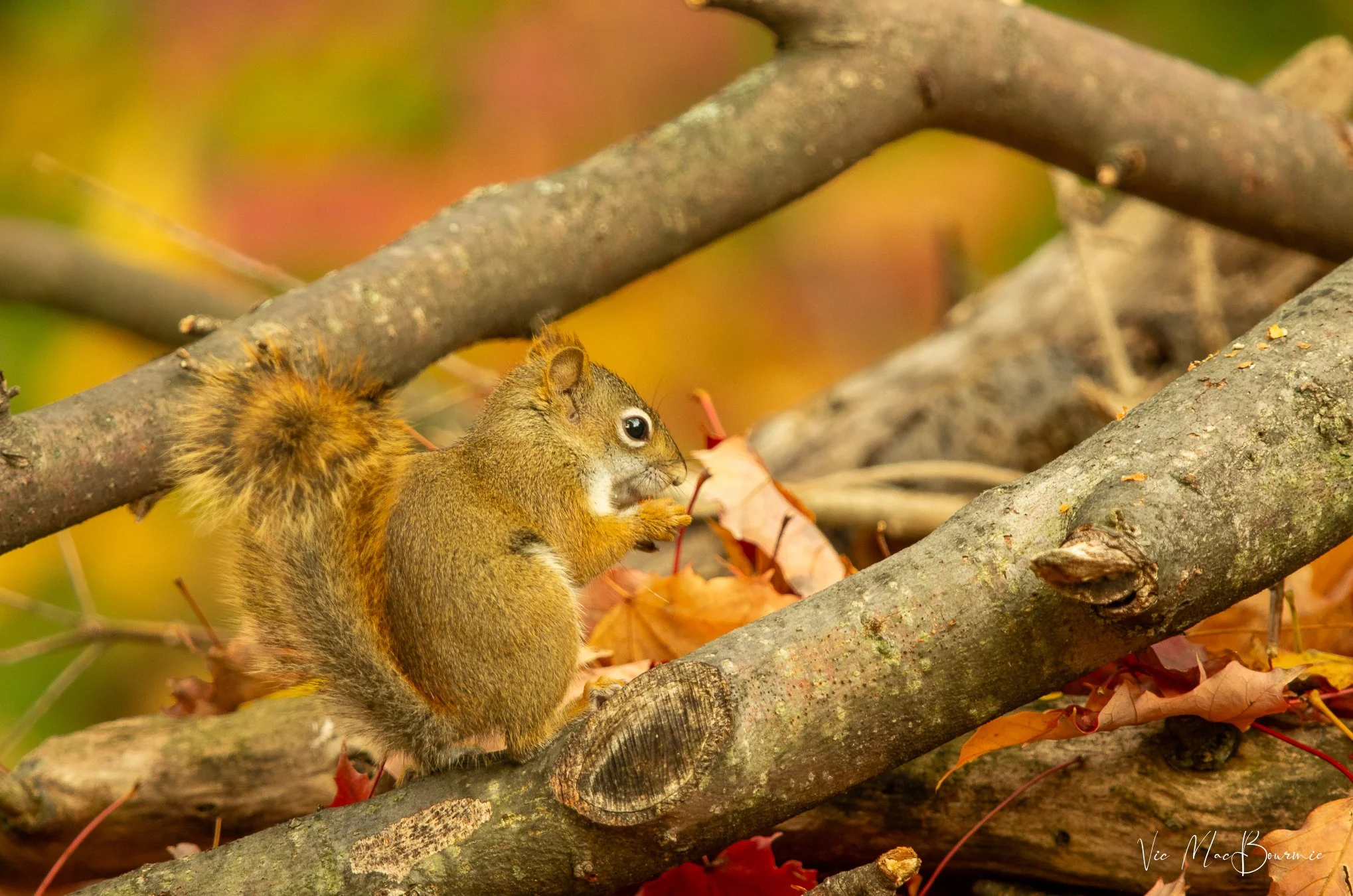
This little red squirrel is comfortable among the many branches of either the woodpile or dead hedge.
Over time, the dead hedge can be built out so that it stretches across a larger area in the yard creating a natural source of privacy, a sound wall that fills with bird song, or a natural wall to create a shady wind break area and the perfect spot to grow woodland flowers.
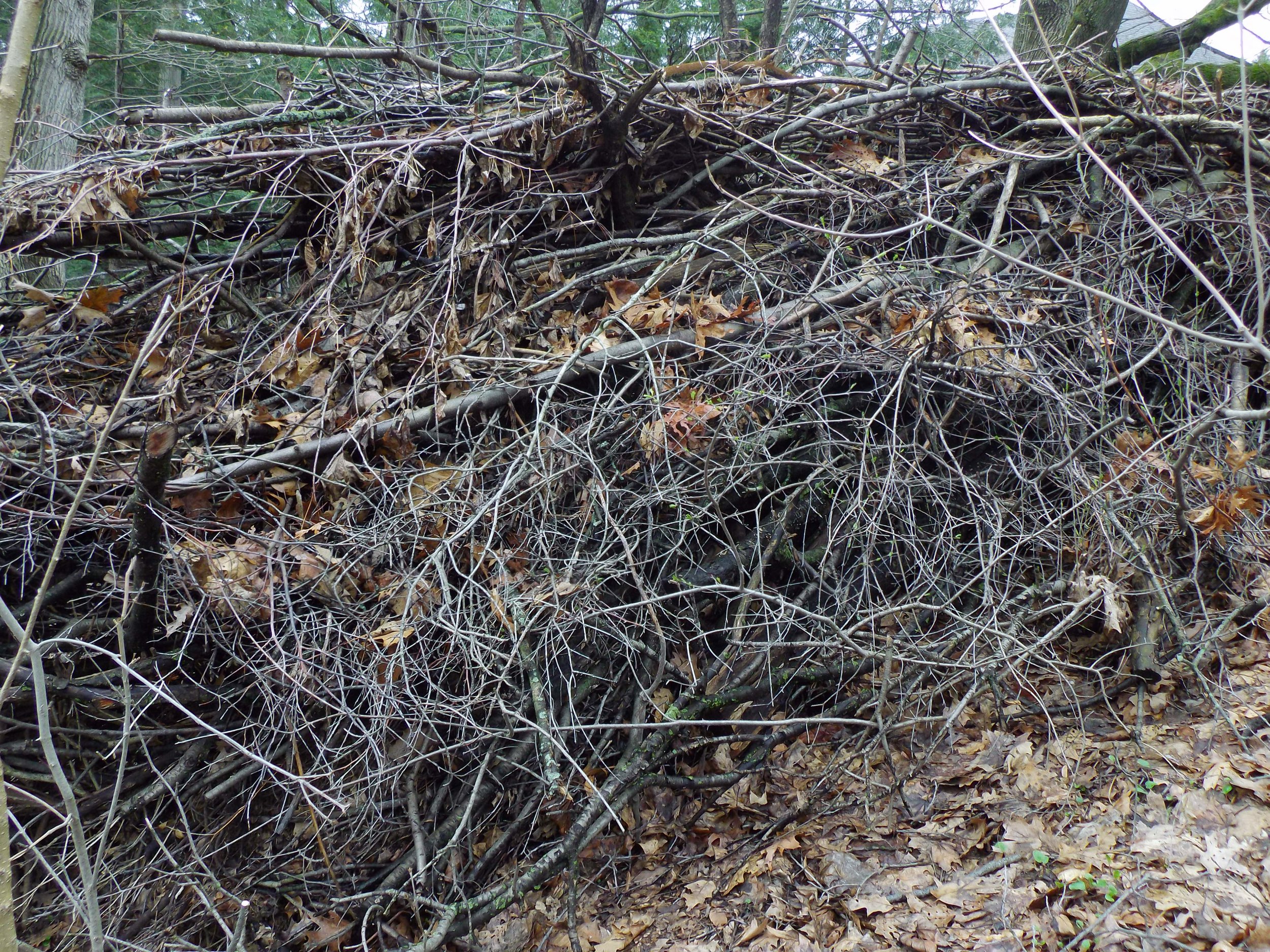
Although the dead hedge looks a little messy in spring, my plan is to allow a number of flowering vines to grow up and over the hedge and create a lovely, living hedge with lots of nooks and crannies for birds and other wildlife.
Safe spot from predators
I’ve added a hanging bird/wildlife water source and a bird feeder nearby to introduce a greater variety of birds and other wildlife to the dead hedge, which gives our feathered friends and other wildlife a quick and safe escape from potential predators.
While the dead hedge may act like a barrier of sorts for larger mammals such as deer, it allows smaller animals to pass through it with relative ease – everything from red and grey squirrels and chipmunks, to possums, weasels and mice.
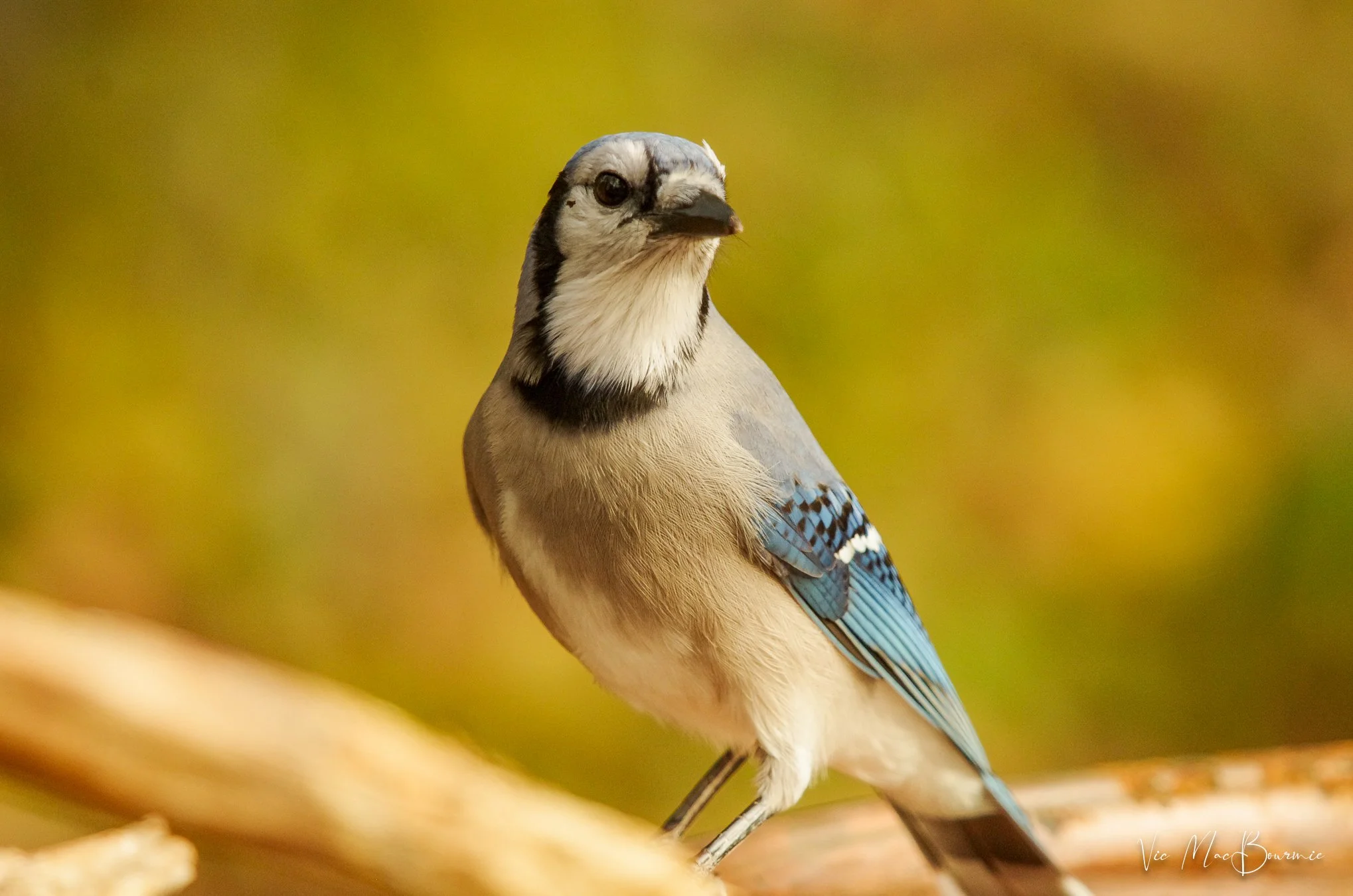
Jays, woodpeckers, warblers and lots of other birds can take advantage of the potential habitat and food source that the dead hedge or brush pile affords them.
Adding to the beauty and usefulness of the dead hedge, is the fact it is free to anyone who wants to take the time to put it together.
Another benefit of the dead hedge/fence is that it does not need to go together in one season –although if you had enough material it certainly could be built in a single season. It’s probably better to think of a dead hedge as a long-term project that can be added to on a yearly basis both vertically and horizontally until you get the hedge to a point where you are satisfied. From that point, simply add to it with your annual pruned branches or garden waste.
Your backyard wildlife will thank you.


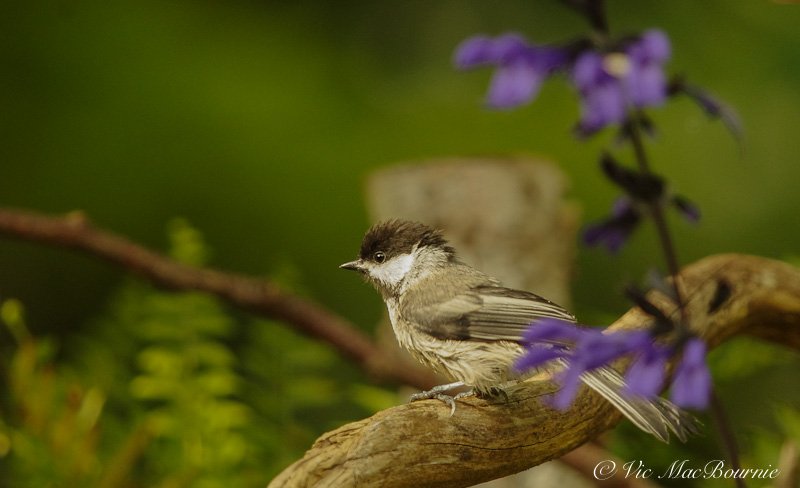

Attract birds all winter with DIY heated birdbath
Providing a reliable winter water source for backyard birds begins with an electric water heater. But it does not have to end there. Check out the DIY outdoor photo studio and reflection pond that birds are flocking to as winter approaches.
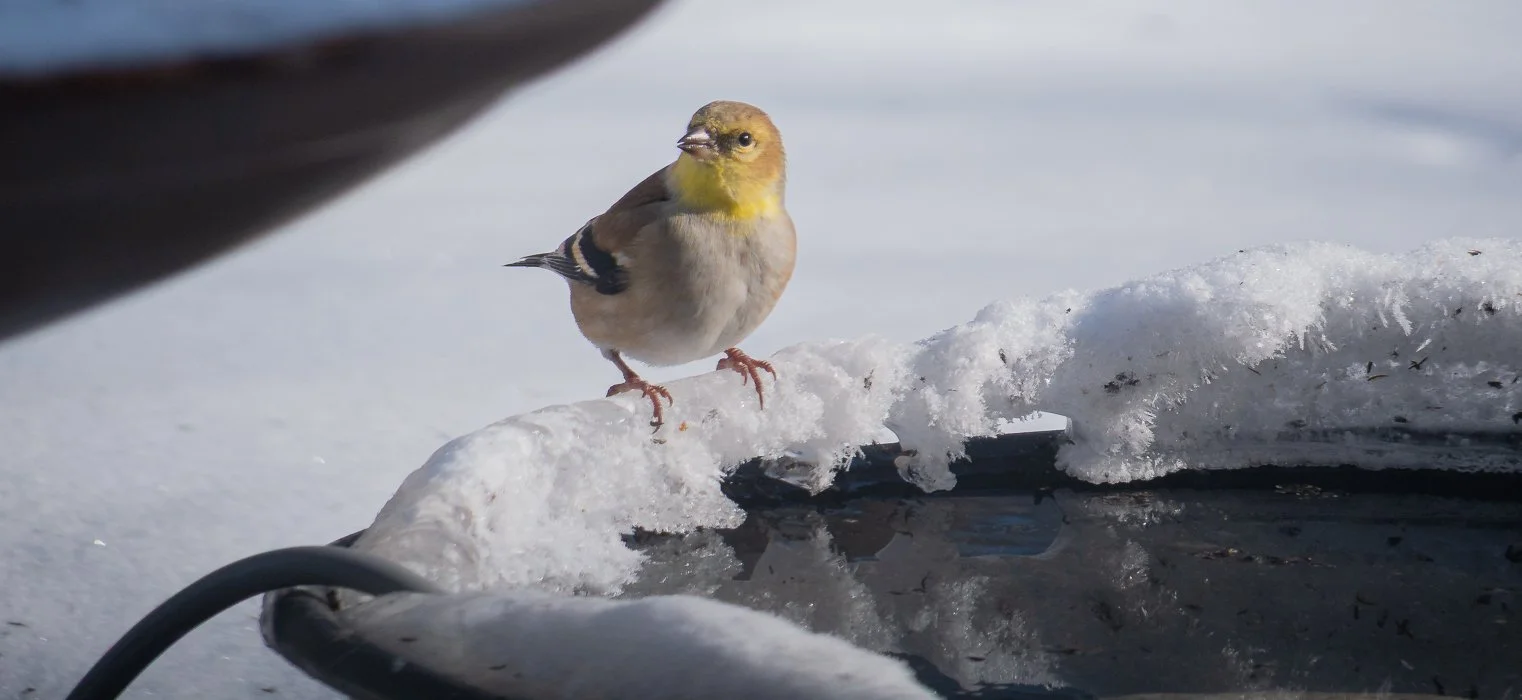
A goldfinch stops for a drink during freezing temperatures at our heated birdbath.
Water is critical for wildlife during extreme cold
A dependable source of water can be a critical factor deciding whether your backyard wildlife make it through extreme cold conditions.
The temperatures, often freezing overnight, make it difficult for our backyard birds – especially when it comes to obtaining water. Even those of us who are vigilant about keeping our feeders full, too often underestimate the importance of a reliable water source.
Ensuring a reliable source of fresh water is probably more important to our backyard birds than a source of food. Birds naturally store seeds leading up to winter and they can forage in our gardens for additional sources of food throughout winter.
But, having access to water becomes much more difficult.

A heated birdbath can be the difference between life and death for our backyard wildlife.
So, when our bird bath heater stopped working during a recent cold spell, I didn’t hesitate to go in search of another one. That led me directly to the Urban Nature Store where I had a choice of a number of heated bird bath alternatives from simple units that drop into existing bird baths to more extravagant bird baths with the heating element is embedded in the bird bath.
The selection was truly impressive. It’s important to note that heated birdbaths do not remain on at all times. Most have a thermal regulator on them that turns the unit off and on to maintain a water temperature just above freezing. This means the heater is not using electricity 24-hours a day.
I chose the K&H heater at $69 Canadian, but any of their offerings would have likely got the job done.
I must say, however, that this unit has performed exceptionally well, even in the record-cold temperatures we have experienced over the past couple of weeks.
We are lucky enough to live near a small, fast-flowing stream that provides emergency water sources to all our neighbourhood birds and wildlife that can easily access it.
However, I like to help out by ensuring a reliable water source in the garden. Not only does it make their lives a little easier, it attracts a wide variety of birds including many that may not regularly visit the feeders.
Squirrels are also regular visitors to the DIY birdbath.
For my other posts on bird baths, check out adding water to your garden and a DIY solar drip conversion.
Why water is critical for birds especially in winter
Water is critical to birds in the heat of the summer and even more important in the winter when traditional water sources are frozen over, including ponds and puddles. Bathing is an important part of a bird’s feather maintenance.
Wetting the feathers in a bird bath helps to loosen dirt and makes feathers easier to preen.
When preening, birds carefully rearrange the feathers and spread oil from the preen gland so they remain waterproof and trap an insulating layer of air underneath to keep them warm. That’s vital during cold winters where I live, especially when temperatures and wind chills can reach a bone chilling -30C and beyond and stay that way for days.
In fact, this has been a particularly bad winter in our area with prolonged periods of well-below freezing temperatures even during daylight hours. As I write this at around 11 am on January 31st, the outside temperature stands at minus 15 Celsius with a windchill of minus 23C. For those still using farenheit, that’s 5F and minus 10F with the windchill.
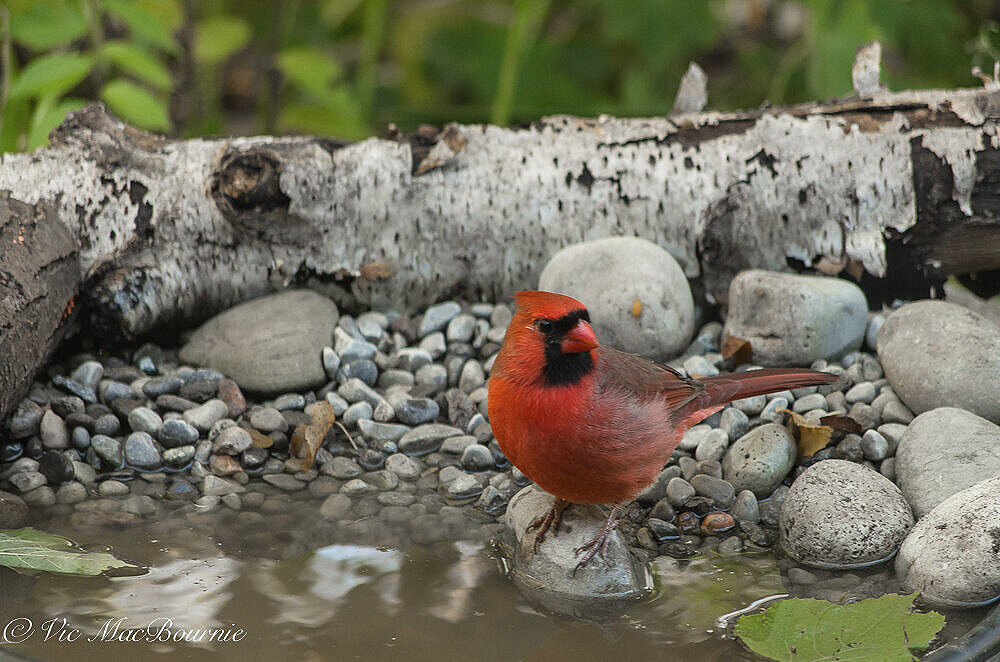
A cardinal stops for a drink among the stones in the heated bird bath and outdoor photo studio refection pond.
Birds lack sweat glands, so they traditionally need less water than mammals. They do, however, lose water both through respiration and in their droppings. Many insectivorous birds get most of their water from their food, but seed-eating birds, which are our most popular visitors in winter, have a dry diet and need to drink several times a day.
The appeal of a reliable water source may even be a stronger draw to birds than a well-stocked feeder, especially if there is no other reliable water source in the area.
Attract birds to your heated bird bath
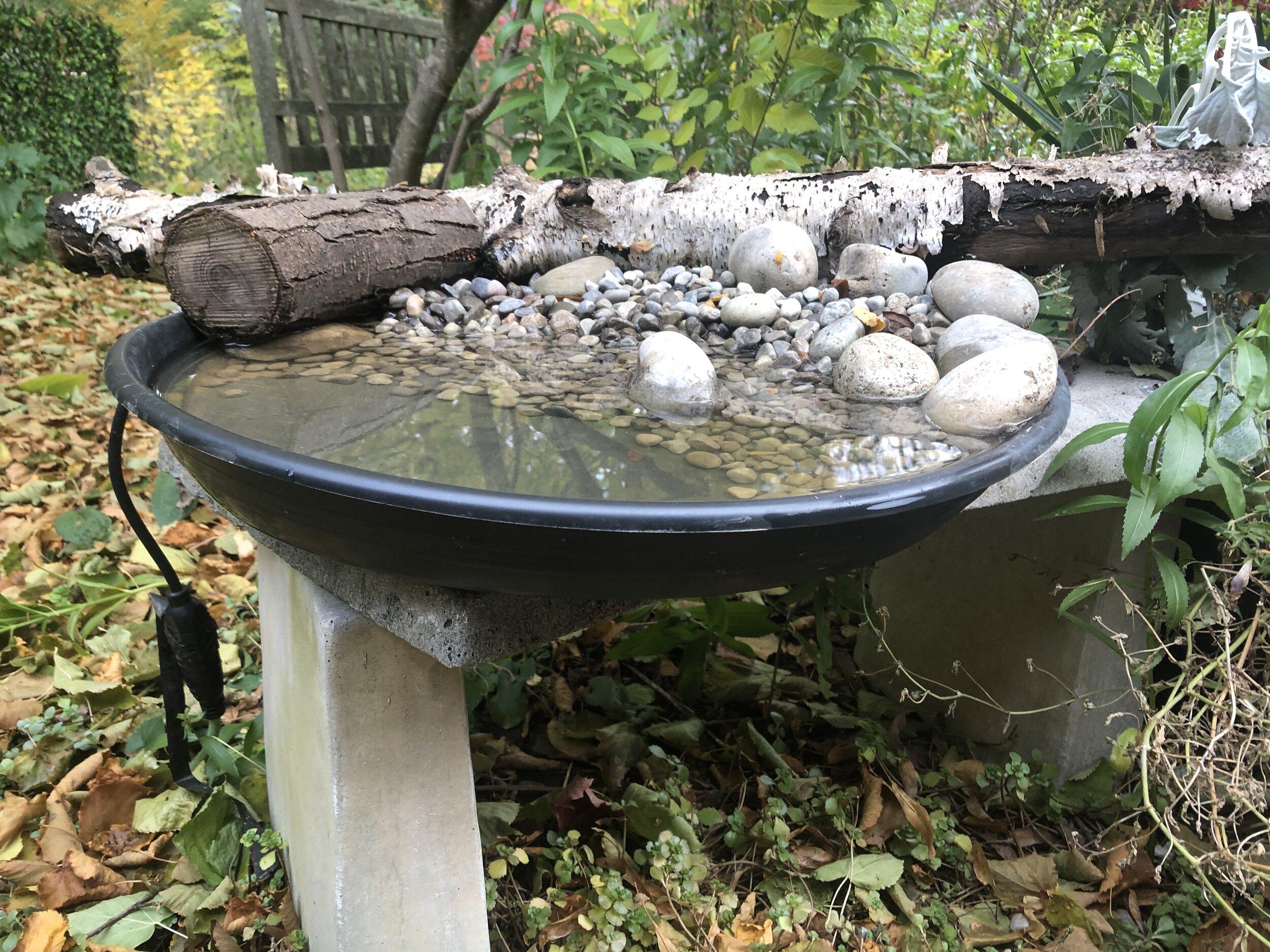
The heated bird bath ready for winter.
If you set up your heated bird bath in a separate area to where you normally have your bird bath, or your heated bird bath is entirely new to your garden, don’t be surprised if it takes a while for the birds to discover and be comfortable using it.
I have a couple of small feeders in the dogwood just above the heated bird bath, so there are always lots of birds around. Be sure to locate the feeder far enough away from the bird bath to ensure that the seed does not fall into the water.
My feeder is located just outside of our French door allowing me to photograph the birds from the comfort of our home. Consider locating yours near a window where you can both appreciate and/or photograph them.
To encourage birds to use your heated birdbath, be sure to set it up in a safe area of the garden. In winter, birds need even more cover in case of attack. We have a Coopers Hawk that visits regularly looking to make our birds into a meal.
Include perches above the bird bath to allow the birds to come down and check out the bird bath from a short distance. Include stones or landing spots inside the bird bath where smaller birds can either drink from or wade into the water slowly.
The stones also help hold the heat in the birdbath and offer birds more of an ice-free area to drink from the birdbath.
Build your own photo studio for the birds
With this in mind, I set about creating both a reliable water source and a backyard photo studio and reflection pond. In fact, I have two: one large reflecting pool and a smaller heated pool that will be the main source of water in the yard when the temperatures turn to freezing.
Our DIY project started with a round, medium-size black plastic basin that I picked up from a local nursery for just over $10.00. It’s a couple inches deep, so it’s perfect for small- and medium-sized birds to use safely. Larger birds, like jays and robins, will not hesitate to create havoc in the bath as they splash about, but we’re all good with their daily antics.
This bird bath is quickly becoming the gathering place for our backyard birds.
It sits on a concrete bench just outside our family room French door where I can easily monitor the water levels. At the same time, it’s close enough that I can use it to capture photographs of our feathered friends enjoying a bath. And, I can do it from the warmth of our family room.
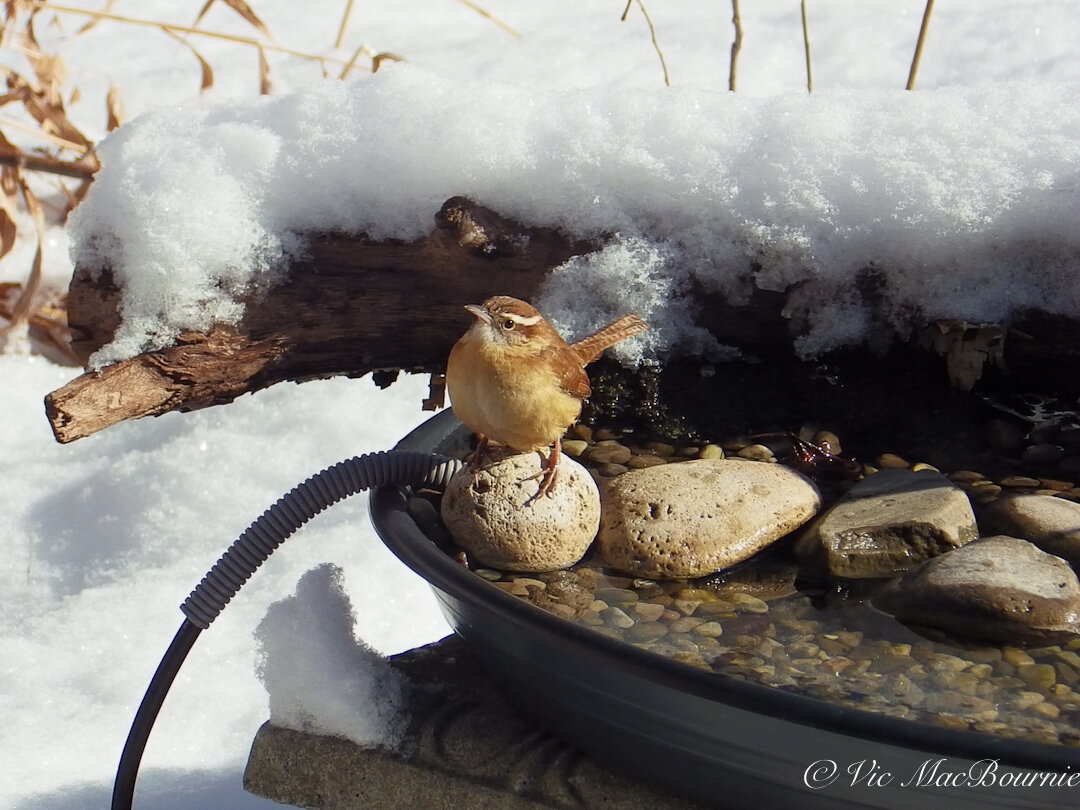
Cute little Carolina Wren taking advantage of the heated bird bath to get water during winter.
An electric heater from was carefully placed in the bird bath and hidden with a thick layer of pea gravel and a few larger river rocks to give the birds a landing spot.
A birch branch across the back will help to stabilize the bird bath in case a large bird or animal decides to use it as their personal bath tub. It also creates a lovely background for the birds using the feeder. A few other branches help to hide the edge of the plastic tray, give it a little more stability and add to its natural appearance.
The heater, buried in pea gravel, keeps the bird bath ice-free in the coldest temperatures but remain hidden under the gravel.
The heated pea gravel also plays a role in helping to keep the water ice-free, but, if necessary, adding a kettle full of hot water on particularly cold mornings will keep the water open.
The pea gravel also provides birds with a gradual slope into the water much like a sandy beach. This allows birds of all sizes to enter the water to a comfortable depth, and put them in a position that creates good photographic opportunities.
Although the goal was to create a reflection pond that doubles as a heated bird bath, the round plastic dish comes up a bit short to capture perfect reflections of the birds on a regular basis. It will work nicely for a small bird on the pea gravel, but the reflection will likely fall just short for a larger bird like a blue jay or cardinal.
Creating a woodland/wildlife garden using native plants has many benefits including being able to photograph the wildlife that lives in and visits your backyard.