
Shinryoku: Capturing the subtle, fleeting beauty of spring

Early spring greens emerge in the delicate flowers of Solomon’s Seal dripping off of an arching stem.
Celebrating spring greens Japanese style
Learning has always been a passion of mine. Unfortunately, this thirst for knowledge rarely involves text books. These days, it takes the form of the hundreds of YouTubers that I follow, from gardeners to photographers and everything in between.
One that combines both gardening and photography is a channel based out of Japan called “Shizan style” that focuses on learning to see and experience nature through the eyes and soul of the Japanese culture.
Fine art photographer Joshua 'Gensetsu' Smith, PhD, describes his channel in the following way: “it focuses on Japanese aesthetics, photography, creativity, Japanese gardens and culture. A Shizen Style is about designing a Japan-inspired creative lifestyle infused with nature.
You can check out the channel here if this approach to gardening, living and photography interests you.
I have found many of his videos inspirational in so many ways. They inspire viewers to slow down and experience the finer elements of the garden that are often easily overlooked in the hustle and bustle of everyday life. Whether you choose to capture your experience photographically is really a less significant focus of the channel, but I fully appreciate his approach to documenting the journey.
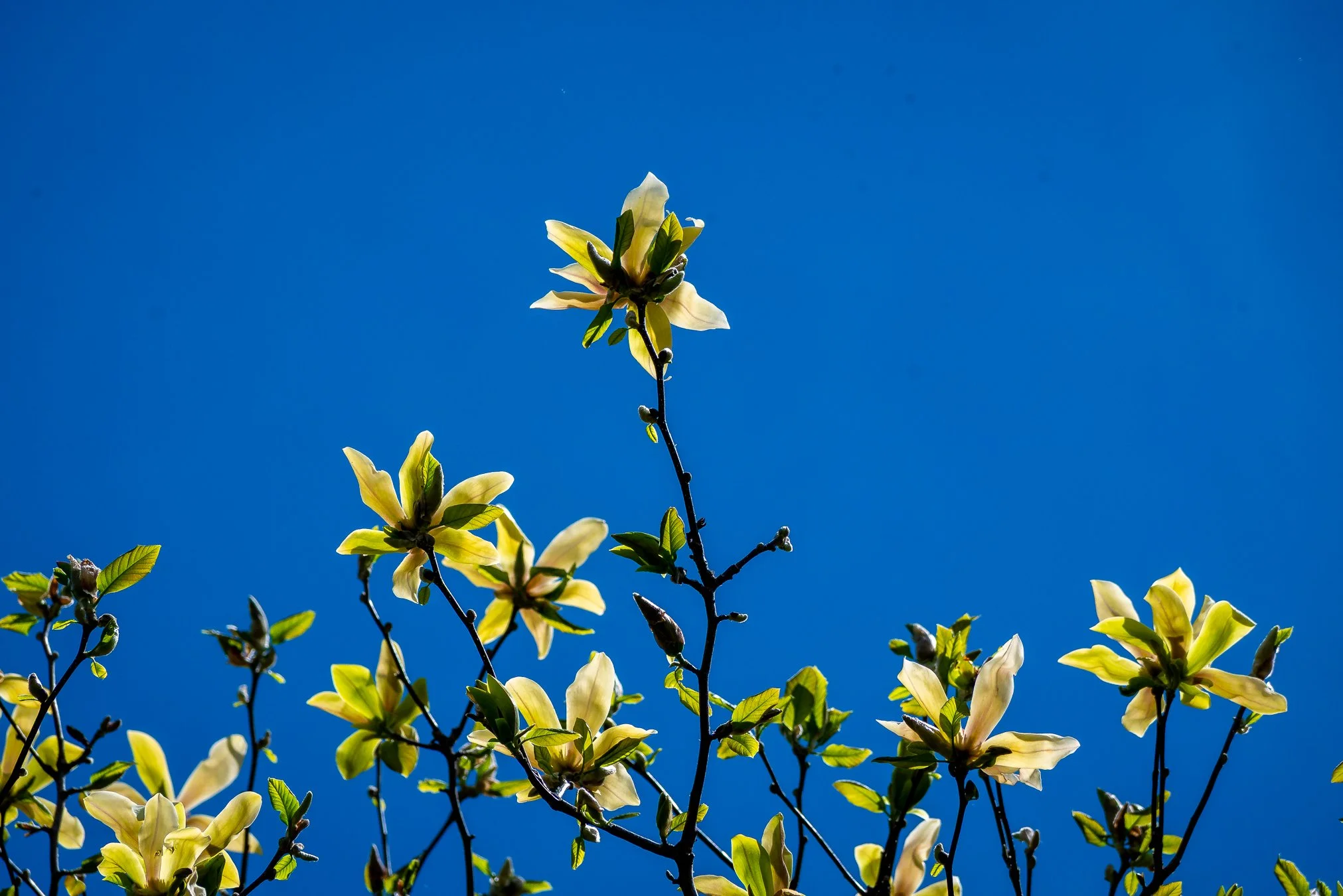
Looking up to experience the translucent flowers of the yellow magnolia against the brilliant blue sky. The experience is as much about seeing the translucent flowers as it is about the space between the flowers.
Spring greens in the woodland garden
His recent video exploring how the Japanese experience “spring greens” fascinated and inspired me enough to share some of the concepts with readers so we can all, hopefully, experience spring in a deeper, more meaningful way.
At the root of the video is how the Japanese describe the term “spring greens.”
While the rest of the world either uses those simple two words, or don’t even acknowledge the incredible new greens of spring, the Japanese have many ways and words to describe the emerging greens.
Discovering the intricacies of Shinryoku: A moment in time
Josh explains in the video that the greens of mid may are described as Shinryoku. The word describes that brilliant new green emerging in the woodland and gardens. It describes the leaves that have just opened and represent not just a colour but, even more importantly, a “moment in time.”
Shinryoku describes the particular green of leaves that have just opened –”tender, bright, almost shy.”
In Japan, it represents that time at the end of the cherry blossom season, but before summer heat sets in and turns the focus on the beginnings of new life emerging.
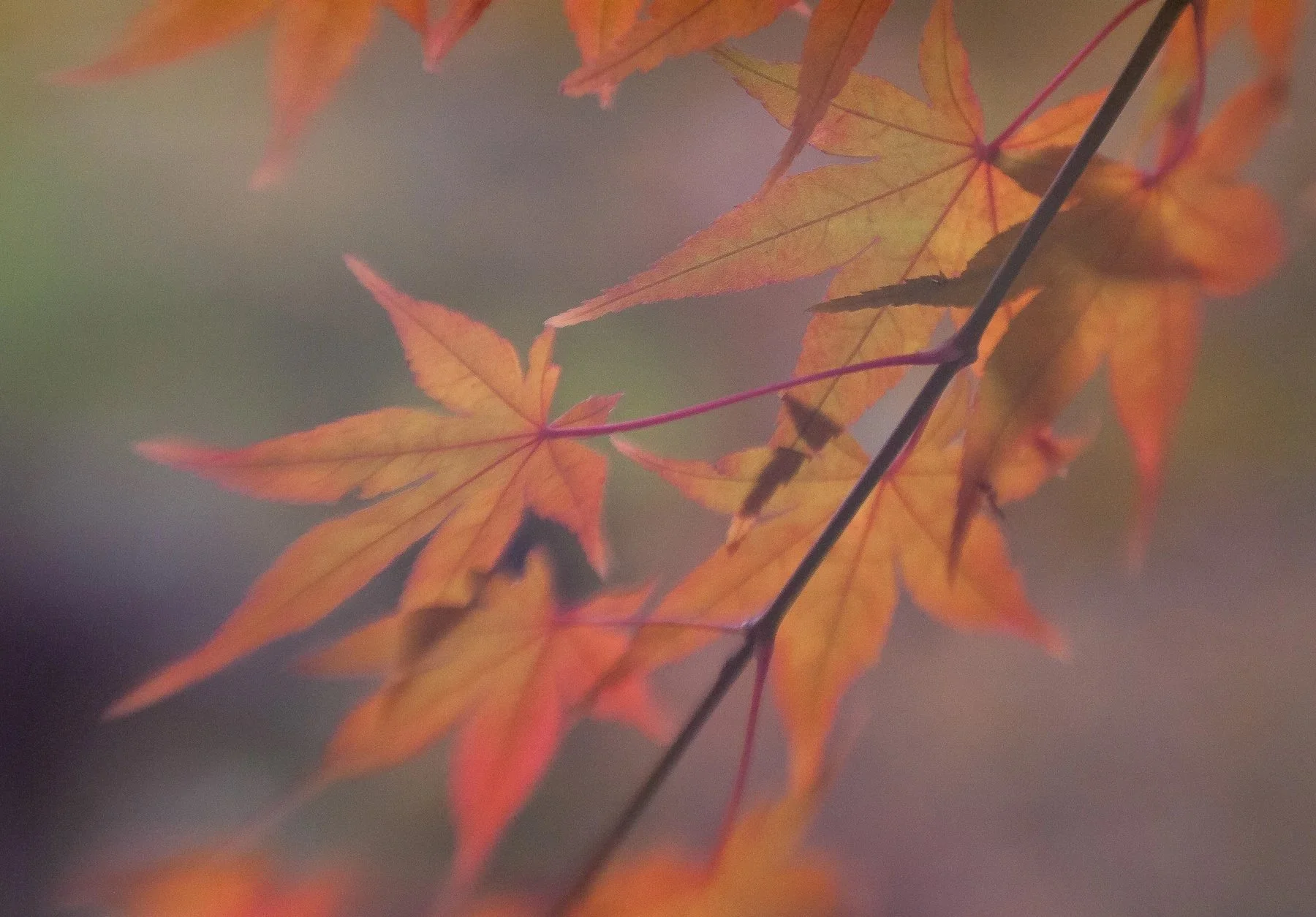
Try moving in close on back lit leaves to show the veining structure of the emerging leaves.
It’s a time many of us are experiencing at this very moment in our spring gardens.
However, so many of us are so overwhelmed with trying to get our gardens into shape, that we fail to appreciate the emergence that is ocurring before our eyes.
Shinryoku, or the feeling it brings, is important to experience and capture, whether it is just a memory and feeling we store in our minds or an image we capture with our cameras.
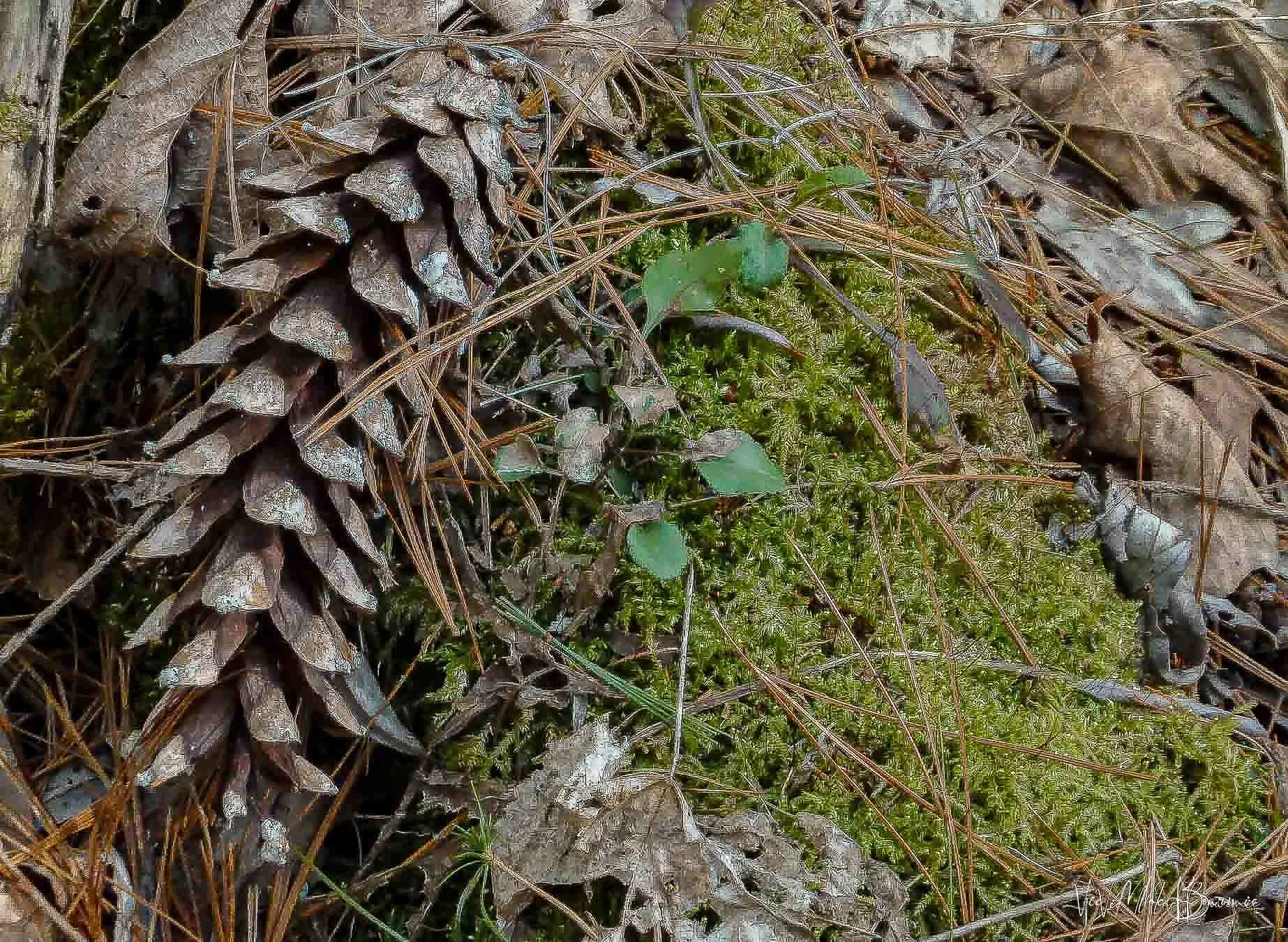
Finding beauty in the simplest things requires you to really look at your surroundings. Here, spring unveils a new beginning – the dead leaves and pine cones give way to fresh spring moss and small seedlings that are just beginning their new life on the forest floor.
Capturing early spring in the woodland garden
Josh’s video explores the many approaches to documenting Shinryoku. Here I’ll just touch on a few and if you are interested in exploring further you can watch his video.
The first involves moving in close to exerience the translucency of the emerging leaves. Capturing the small details in the leaves as sunlight that filters through the leaves and flowers brings out the delicate veining.
To quote Josh: It is an important time when we get to capture the “beginning of something that will spend the rest of the year becoming.”
This is the time to either use a macro (close focussing lens) or a telephoto lens to move in close and use backlighting to capture the translucency of the leaves and flowers, like I tried to do in some of the images above.
This is the time, as Josh explains, that we: Capture the “beginning of something that will spend the rest of the year becoming.”
It’s an opportunity to photograph a “thing that is not yet what it will be. “
Shinrin-yoku: Looking up and Forest bathing
The Japanese concept of Shinrin-yoku or forest bathing finds its success because it encourages the eyes to look outward and upward.
The second approach is to simply look up through the leaves and the sunlight filtering through them. It works so well because, in spring, leaves are still transparent.
Josh suggests to: Find a tree. Lie down point your camera straight up. Capture the leaves’ transparency. Contrast and geometry. Dark branches against that luminous green. … the negative space betweeen them when the sky comes through.
“You can’t look up to a canopy like that and hang on to a to do list,” he says in the video.
In our backyard in spring, I often look up through the branches and flowers of our yellow magnolia. The mellow yellow flowers light up against the backlit sky. (See second image in post.)
Later, when the massive bright yellow locust tree leaves begin to emerge, the results can be spectacular.
It’s best to underexpose the scene to capture the bright yellows and greens against a dark blue sky. A polarizing filter will further deepen the sky and help remove the bright highlights off of the waxy leaves.

Although this is not in my garden (thank goodness) I think It represents the perfect combination of old and new and shows how, over time, new growth slowly covers last years newness. I like to compare this to fallen leaves and how so many people are obsessed about clearing out every last leaf on their properties in fall and early spring. If new growth can eventually cover this old car, imagine how quickly it can hide last year’s decaying leaves. Lesson learned: Relax and let nature do its work.
Wabi Sabi: Finding beauty in combining the old and the new
In my mind, the most successful gardens are a blend of old and new. It's one of the reasons I am drawn to the aesthetic of European gardens where plants find a home inside an ancient stone urn or vines climb the walls of historic castles. Documenting this in our own gardens is not always easy, but if we look hard enough we may be able to find a moss-covered urn or rock. An ancient boulder or tree covered in mosses and lichens.
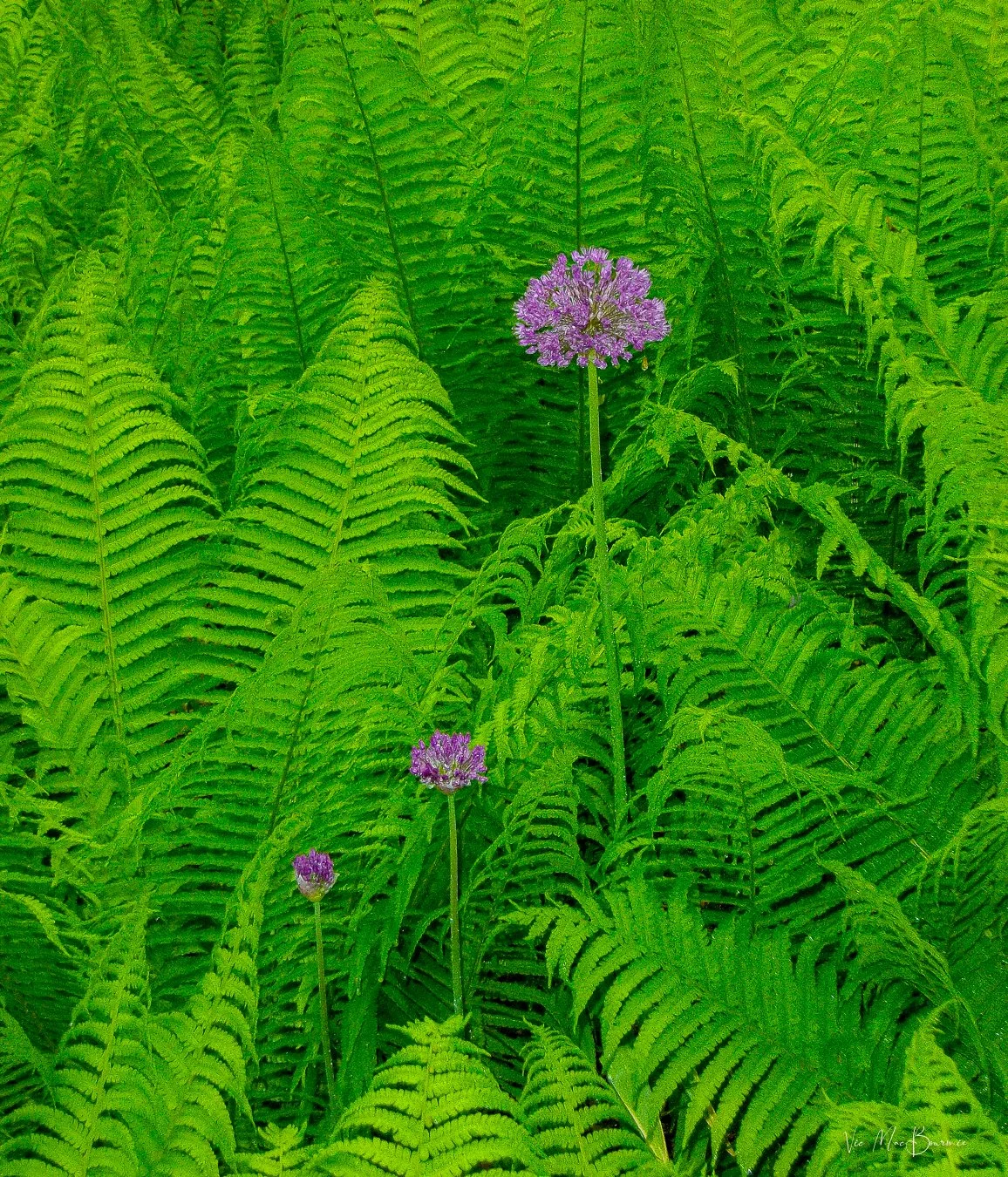
The beautiful early greens of spring are punctuated by the emerging purple alliums.
Now look to capture new growth up against the old tree, branch or moss-covered container. Maybe an old garden gate with a new vine growing on it. …
Josh so eloquently describes the core of Wabi Sabi in his video: “Beauty lives in the relationship between aging and renewal. Not in one or the other. The green is more alive when it is next to something that has been here much longer. The rough stone is more beautiful when something young grows through it
This is actually how Japanese gardens work. Every element is in conversation with every other element. You don’t place a stone alone, you place it in relationship.
Apply that thinking to your photography. You are not dicumenting just the leaf, you are documenting a relationship.
Time and now permanence and impermanence. More interesting than a simple photograph it’s a conversation. It’s an about it’s not a picture of something it’s about something.”
This is the perfect time for us to get out in the garden and experience, maybe even capture photographically, what the Japanese refer to as Shinryoku.