Create swaths of colour to fire up your spring garden
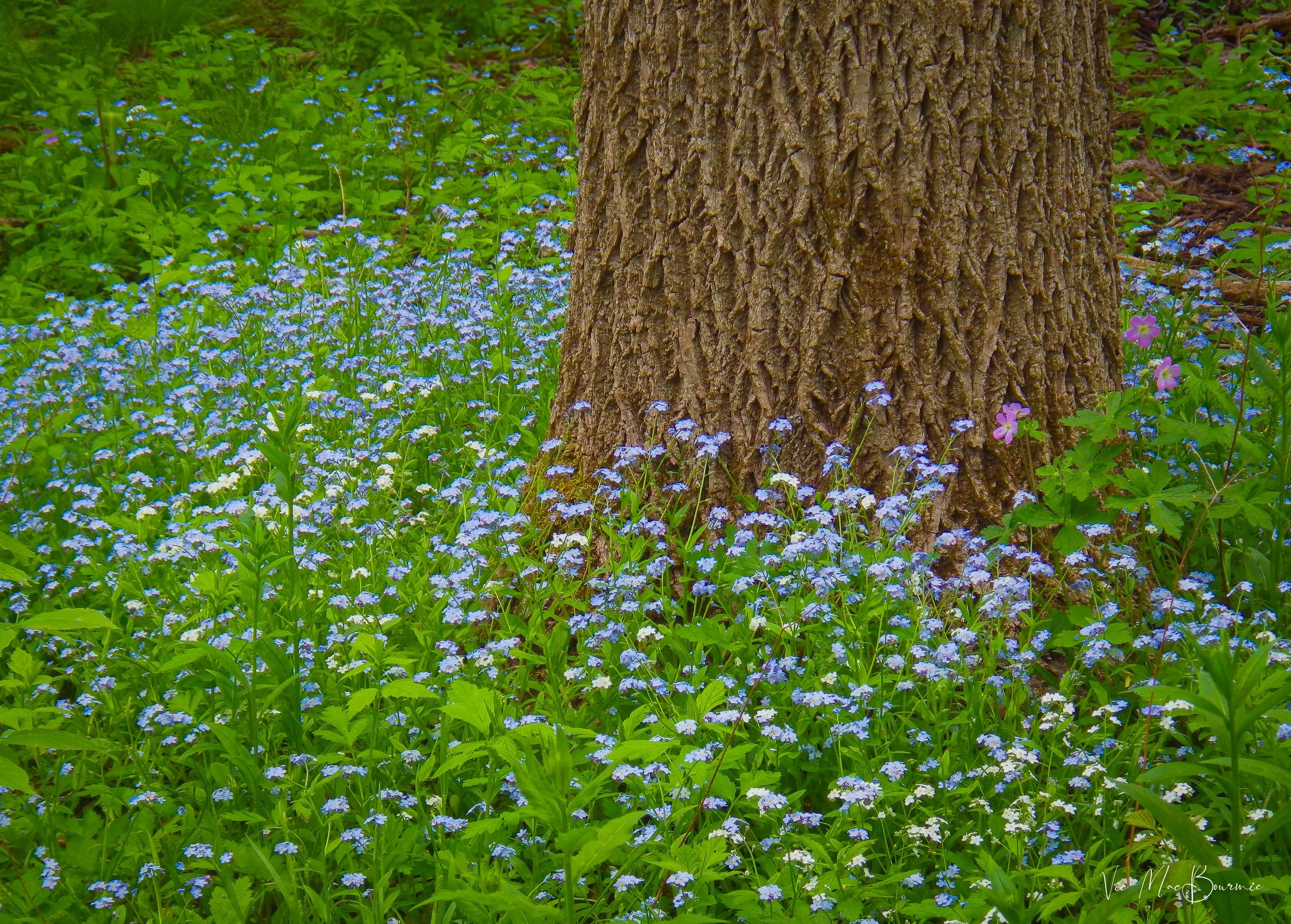
Forget-me-nots combine with other native plants including wild geranium to form a carpet surrounding this highly textured tree trunk in a nearby woodland.
Forget-me-nots and other flowering ground covers for the woodland
Few spring-blooming flowers easier to grow than Forget-me-nots, or Myosotis, if you like to impress your friends with Latin names.
These charming, low-growing spring flowers, that are well known for their tiny, delicate blue blossoms with yellow centres – though they can also be pink or white – want nothing more than cool, moist conditions to spread throughout your garden. And woodland gardens usually have plenty of these conditions to offer.
I think I started with a packet or two thrown in an out-of-the-way spot in the woodland garden several years ago. Today, these usually biennial plants put on a lovely show in the early spring just when the garden is waking up.
Last spring, during my extensive exploration of the woodland around our home, I stumbled up large swaths of these lovely little spring bloomers. If Mother Nature taught me anything, She showed me that growing Forget-me-nots for impact was not for the timid.

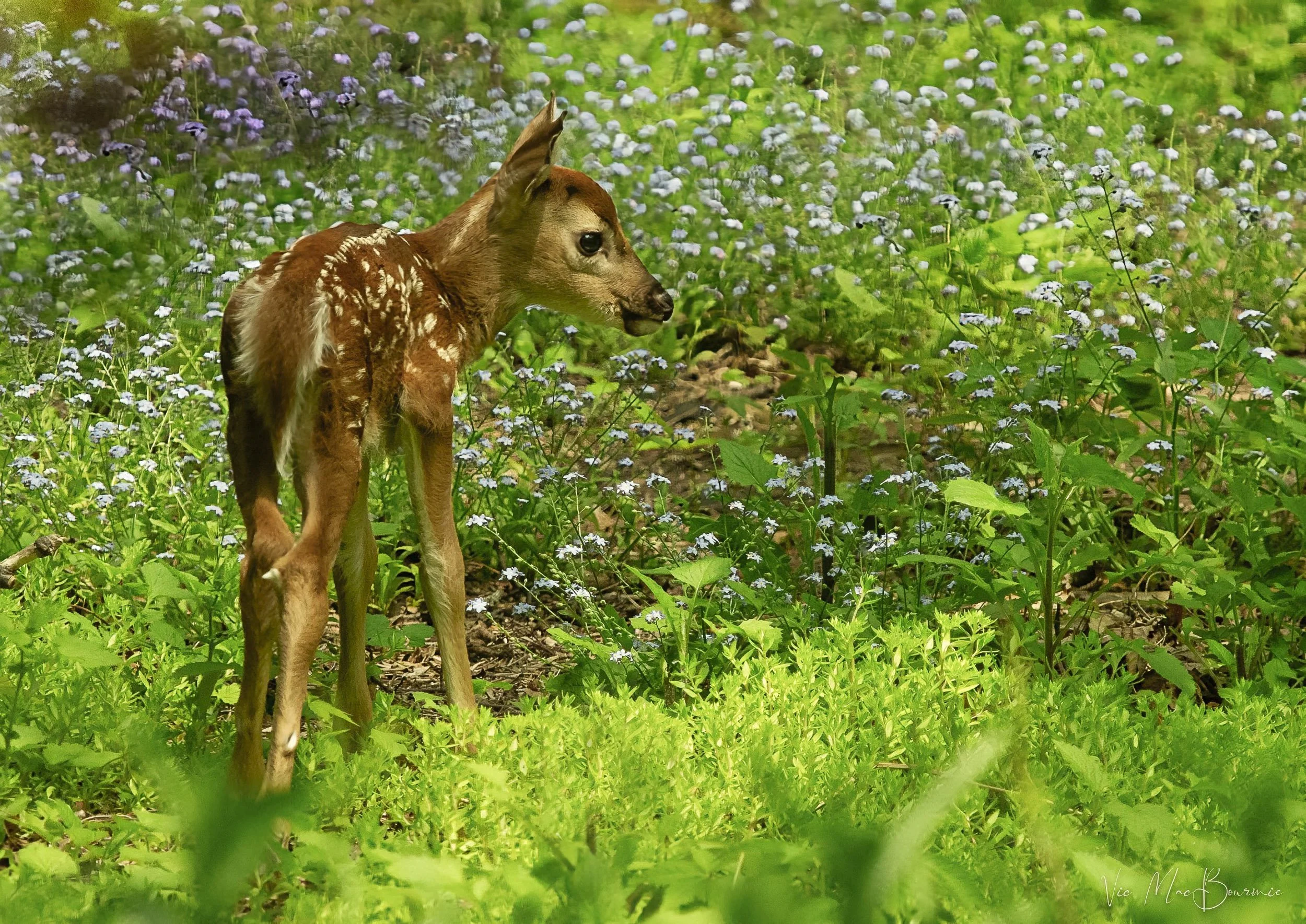
A fawn surrounded by Forget-me-nots and other native plants in our spring woodland garden.
The larger the swaths the better. In fact, I first noticed these flowers on my walks in the woods from a distance. One morning, a blue mist far down the path rose up from the spring greens and caught my eye. (see image below).
Little did I know that it was the beginning of Forget-me-not season in our little woodland. The plants seemed to be everywhere – circling trees, edging forest paths, weaving their way through the forest and around other native plants.
Forget-me-nots are well-suited for woodland gardens due to their ability to naturalize and spread, creating a carpet of color under trees and shrubs. Their early spring blooms attract pollinators, supporting local wildlife and contributing to the garden's ecological balance.
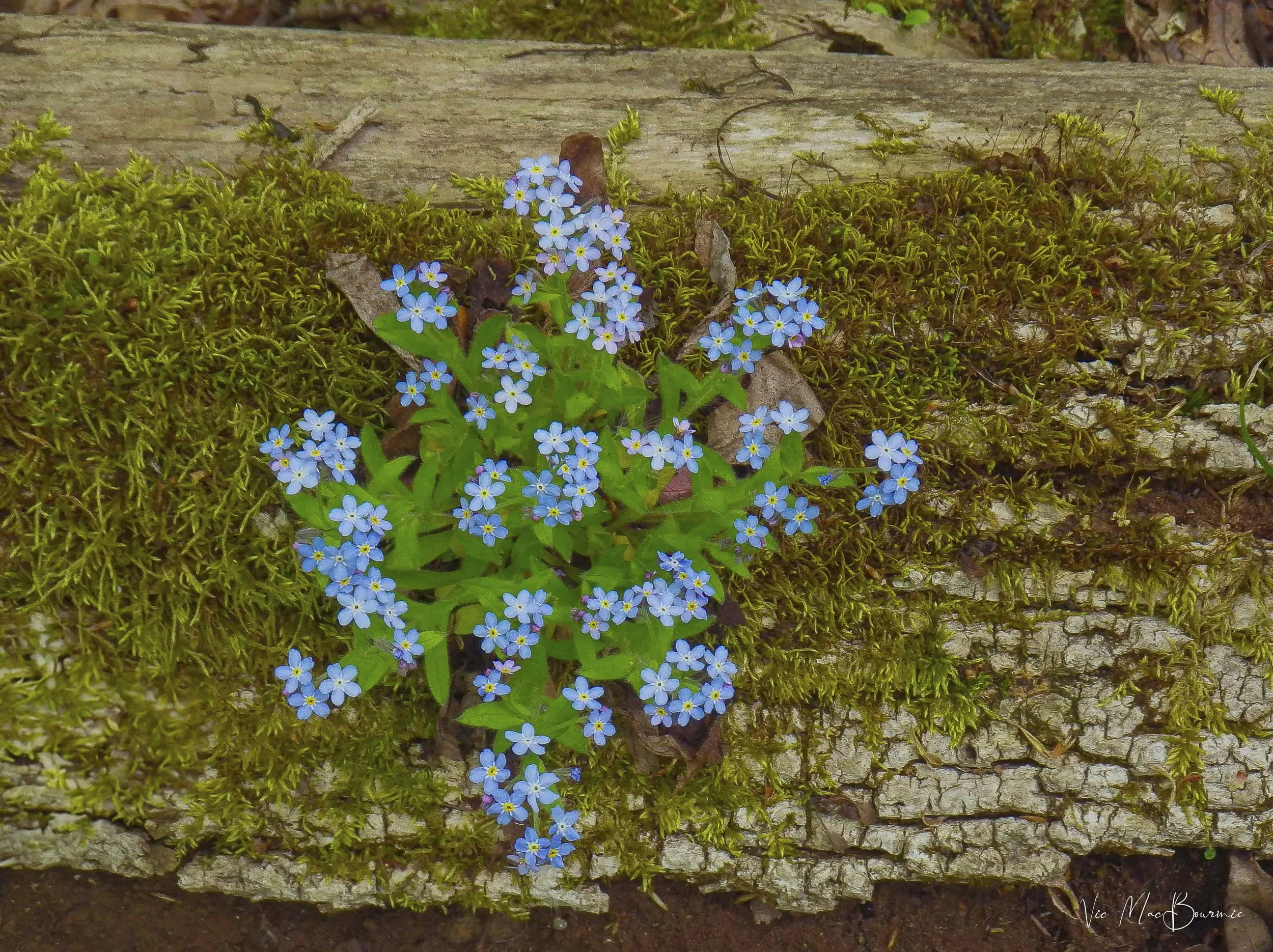
I stumble upon this exquisite clutch of Forget-me-nots growing on a fallen, moss-covered tree stump in a nearby woodland. Duplicating the scene in your own garden should not be difficult with these easy-to-grow plants.
When planting forget-me-nots en masse, you can achieve a stunning visual impact, creating a lush carpet of blooms that enhances the overall aesthetic appeal of the garden. This planting technique not only adds a cohesive look but also mimics the way these plants grow in the wild, forming beautiful clusters that blend seamlessly with the surrounding vegetation.
These plants require minimal care but benefit from occasional watering during dry spells and deadheading to prolong blooming. By incorporating forget-me-nots into your woodland garden, you not only elevate its beauty but also support local wildlife and promote biodiversity, making them a perfect choice for any nature enthusiast.
In my walk through the woods, there were few single plants popping up here and there. These were communities of Forget-me-nots working together, and the effect was truly memorable.
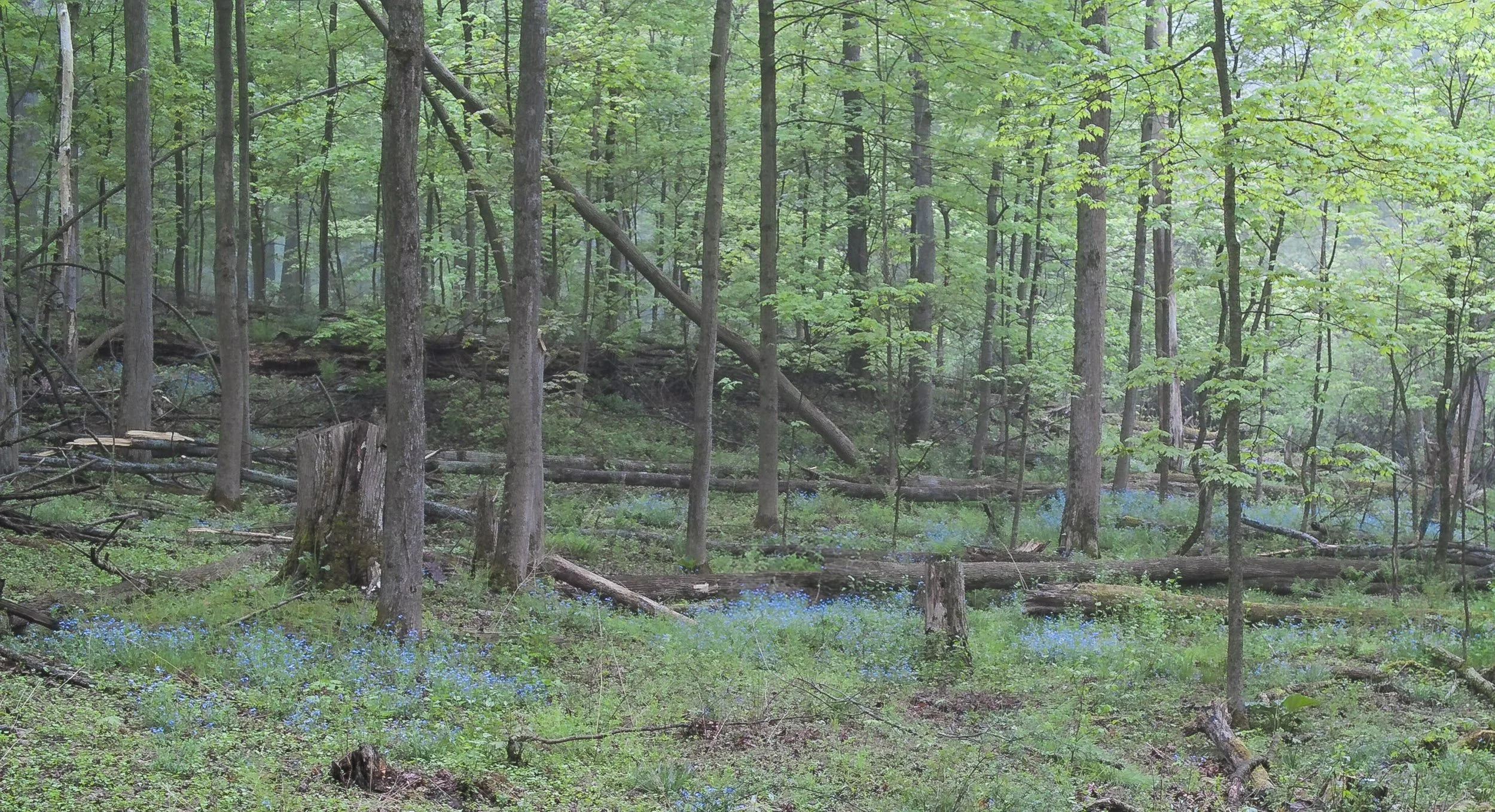
A blue mist rises out of the forest floor in spring reminding us that the Forget-me-nots are in bloom.
We need to bring some of this abundance into our gardens, even if it is just for a brief time in spring.
Grow theses plants around trees to highlight them in spring. Put them in large swaths so that from a distance their tiny flowers form a beautiful blue mist arising from a corner of our garden (see above image), and tuck them along pathways so they guide your way to a favourite destination.
Along the way, you will be joined by early pollinators.
A little background: Forget-me-nots are from the genus of flowering plants in the family Boraginaceae. In the Northern Hemisphere, they are known as forget-me-nots or scorpion grasses and are the official flower of both Alaska and Daisiand, Sweden.
The name comes from Ancient Greek and means "mouse's ear", which the foliage is thought to resemble.
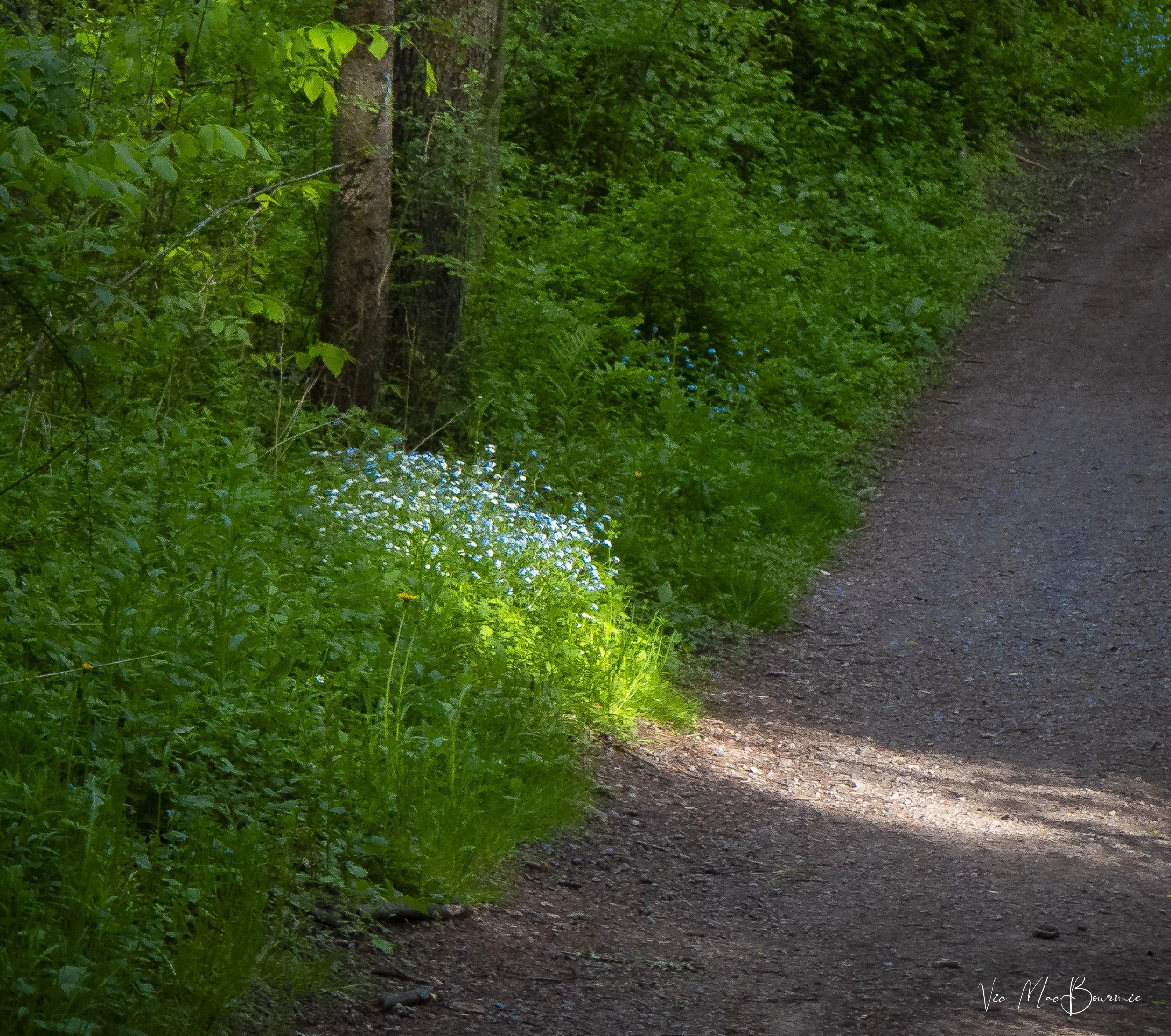
Along a pathway
Spread seeds along a pathway to add interest in quiet areas in the garden and help to lead the way.
Their foliage is alternate, and their roots are generally diffuse. They typically flower in spring or soon after the melting of snow in alpine regions.
If nature teaches us anything, it is to be bold with our plantings. As a spring ground cover, Forget-Me-Nots can really bring a smile to our faces.
The flower is native to Europe, Asia, and North America.
Unfortunately these little flowers are not long-lived and, as they say, death is not their finest hour. That’s when they grow leggy, dry up, and are often beset by powdery mildew in their waning days. To ensure a good crop the following year, however, it’s important to resist the temptation to pull them up, before they finish setting seeds.
If living with their ugly dead stems is too much, intermingle lots of perennials and annuals where they are growing to help cover up their unsightly dead stems.
These hardy, self-seeding plants thrive in cool, moist conditions, often used to edge beds with spring bulbs like tulips, but some varieties can become invasive, so deadheading is key if you don't want them to spread. far and wide.

They're tough, attract pollinators, and offer a lovely texture in woodland, rock, or container gardens
Forget-me-nots prefer cool weather and moist soil. They grow best in lightly shaded areas, but in wet soil they can take full sun. In hot-summer climates, they need shade and extra moisture to survive.
Forget-me-nots are easy to start from seeds. Just scatter seeds in a shady garden area at the end of summer. The seedlings will have plenty of time to settle in before winter. You can also start seeds indoors, but, why bother. Keep it simple and distribute seed generously in areas of the garden. Your efforts will eventually be rewarded.
How they got their name
Legend has it that a French knight walking along a river with his lady and a clutch of flowers fell into the current. Before sinking into the river forever, he threw the flowers to his lady, shouting don't “forget me.” Not sure if it’s true but there is a lesson here. When walking along a river with heavy armour on, leave the flowers be. In fact, we shouldn’t be picking any flowers in nature. Lesson learned the hard way.
Back to the plants: they are really a short-lived perennial best grown as an annual. However, it can also be grown as a biennial by planting seed in the ground in mid-summer for bloom the following year.
Of course, Forget-me-nots are just one of many woodland plants to consider as ground covers in our gardens.

Trilliums are another flowering native that can make an outstanding spring ground cover when planted en masse.
Combine other Native Ground Covers with Forget-me-nots
Native plants play a crucial role in garden ecosystems, promoting biodiversity and supporting local wildlife. When considering native ground covers for your woodland garden, trilliums, wild geranium and Canada anemones are excellent options and can work well growing among the Forget-me-nots.
Trilliums, known for their three-petaled flowers, bring a touch of elegance to woodland settings. These plants not only add beauty but also provide essential habitat and food sources for insects and small mammals. When planting trilliums, ensure they are placed in well-draining soil with dappled sunlight to encourage healthy growth. Regular watering and mulching can help maintain their vibrant blooms throughout the season.
Canada anemones, with their delicate white flowers, offer a graceful alternative for ground cover. These plants thrive in moist, shady areas, making them ideal for woodland gardens. Canada anemones also attract pollinators and contribute to the overall ecosystem balance. To cultivate Canada anemones successfully, provide adequate moisture and space them out to allow for their spreading nature while keeping them in check to prevent overcrowding.

Consider planting Canada Anemone in your garden to create a carpet of white in spring.
By incorporating trilliums and Canada anemones into your woodland garden, you not only enhance its visual appeal but also contribute to the preservation of local flora and fauna, creating a harmonious and thriving natural environment.
Concluding the exploration of native ground covers in woodland gardens, it is evident that incorporating plants like forget-me-nots and other native species offers a multitude of benefits. These ground covers not only enhance the visual appeal of your garden but also provide crucial support for local wildlife, promoting biodiversity and ecosystem balance. By planting these native species en masse, you can create a thriving habitat for insects, birds, and mammals, contributing to the preservation of local flora and fauna.



Some of my favourite August bloomers in the woodland/wildlife garden and the wildlife they attract.