
Is a knee wall in your landscaping plans?
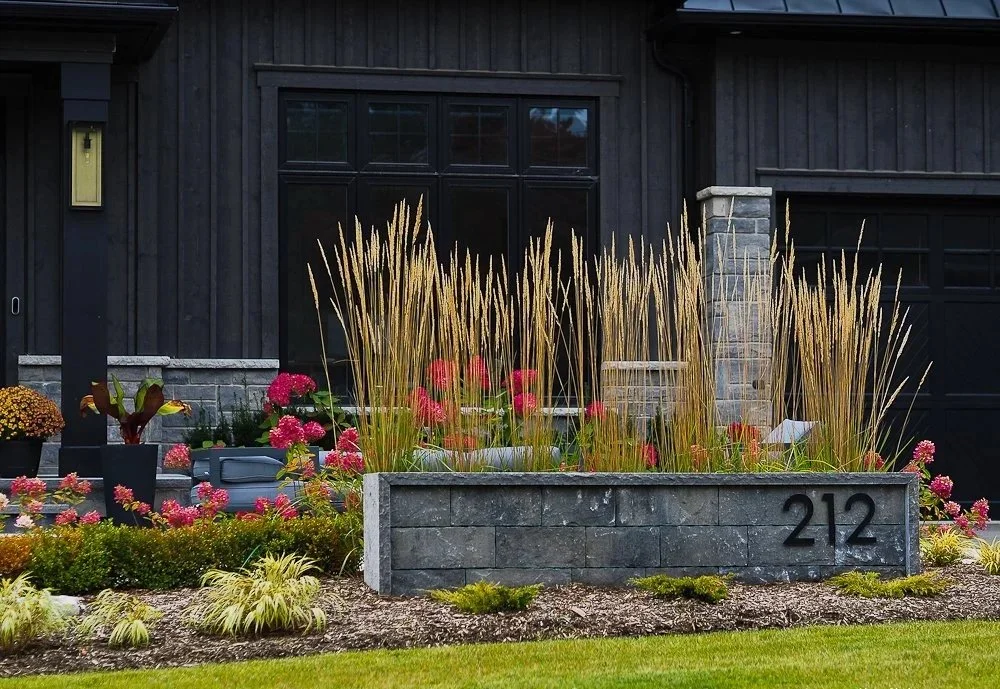
This simple stone knee wall with room for address numbers is highlighted beautifully by these warm Karl Forrester grasses and stunning hydrangeas. Low horizontal evergreens in front of the knee wall and Japanese Forest grasses to the left soften the edge transition from lawn to the garden.
Add visual appeal, utility and interest to your front landscape
If walking the neighbourhood with our dog has taught me anything, it’s that knee walls are quickly becoming a trend in front-yard landscape design.
It’s easy to understand their appeal. Not only do they successfully add an element of interest away from the front of the home closer to the street, they also provide a convenient spot to display address numbers and anything else that might strike your fancy – a favourite garden quote, a lovely hummingbird feeder or sophisticated bird house maybe.
Add an electric or solar spotlight to highlight the house numbers or a favourite plant and the knee wall looks as good in the evening as it does throughout the day.
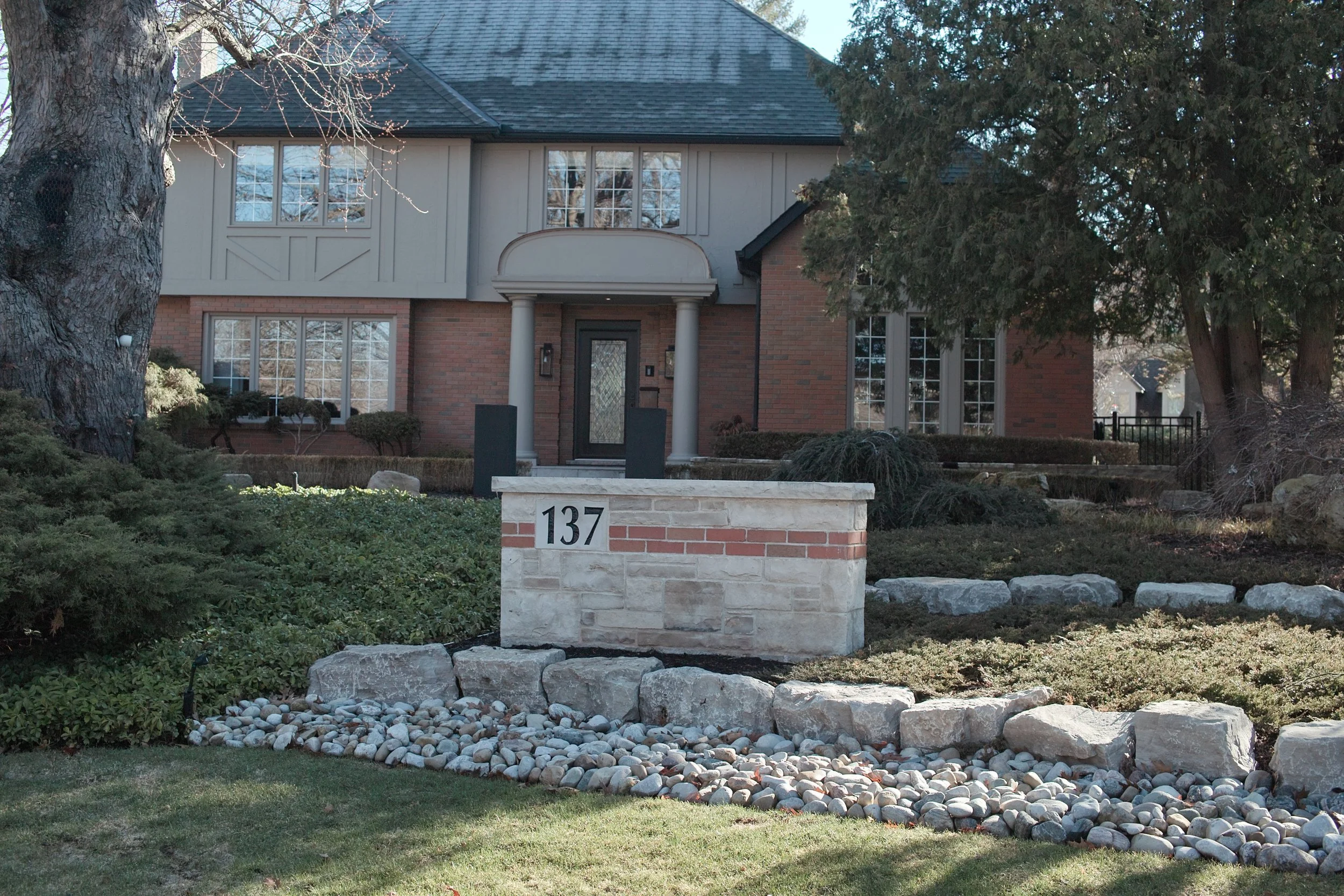
This elegant stone knee wall picks up on the home’s brick colour with two bands of brick highlighting the house numbers. The large boulders, river stone and low-growing evergreen ground cover gives the entire landscape a simple, but natural, feel.
More importantly for gardeners, these knee walls offer the perfect opportunity to create a lovely little garden to give a visual boost for that all-important street appeal we all crave.
In our neighbourhood, the knee walls are primarily made of stone, brick or concrete, but I have seen simpler DIY designs made from wood.
For a more natural approach, a large boulder or rock slab with house numbers attached, can also provide a similar look and feel as the more traditional knee wall.
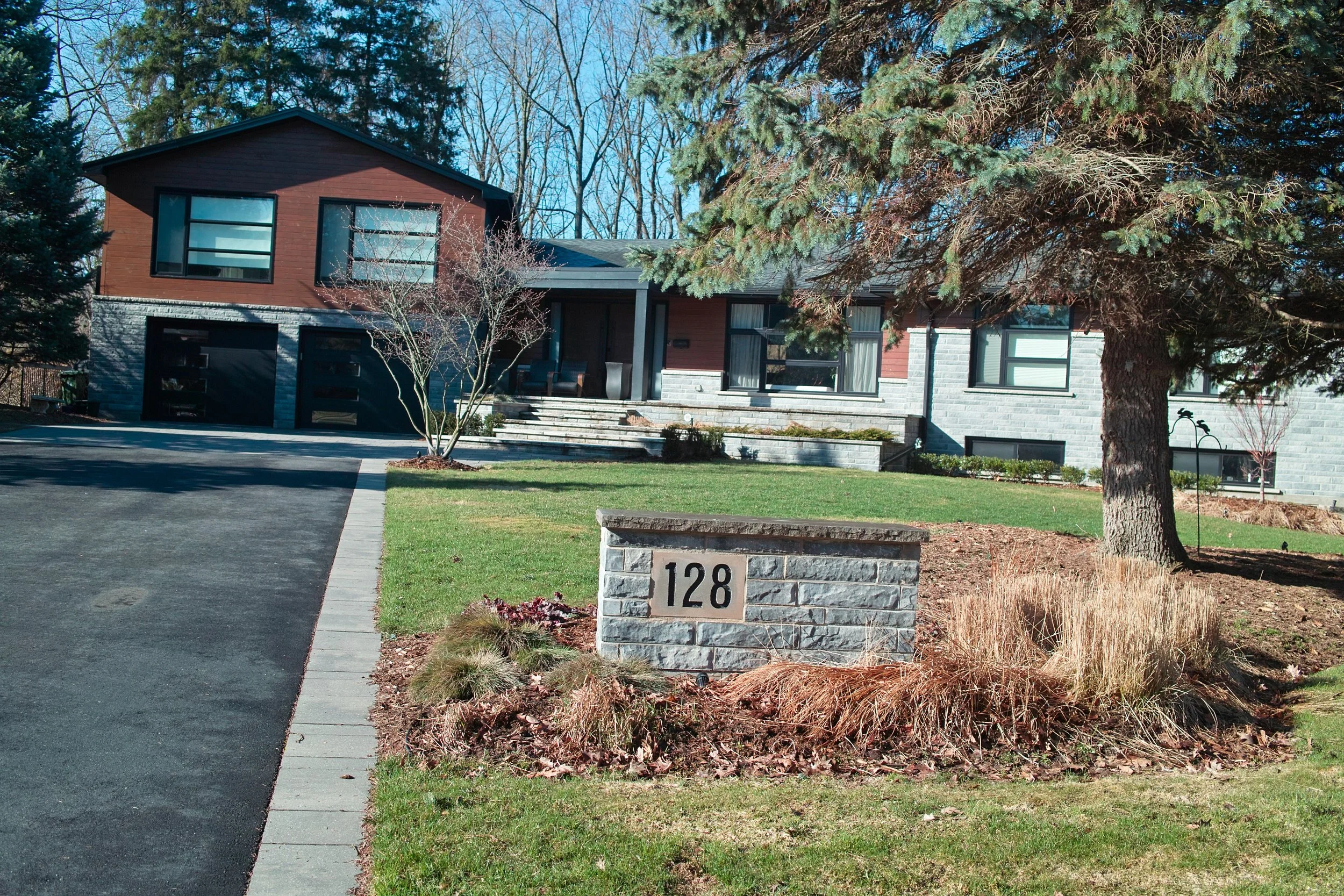
This small garden knee wall sits comfortably in this garden island bed surrounded by grasses. The homeowners wisely created a large island around the mature evergreen and incorporated the knee wall. The entire garden island is in scale with the landscape and breaks up a large expanse of grass creating more visual interest.
If you are considering adding a traditional brick, stone or cement knee wall, be aware that they can be expensive to install.
The larger, heavier units will need a concrete foundation to ensure the wall does not lean and/or eventually fall over. Without the support of other walls giving the knee wall support, a solid foundation is a necessity.
In addition, adding electricity to the knee wall would likely require hiring an electrician and running conduit from the home’s main electrical outlet to the knee wall. Tapping into today’s high-quality solar lighting can save you money and allow you to easily move the light(s) around to highlight various accents such as favourite in-season flowers, shrubs or even garden art.
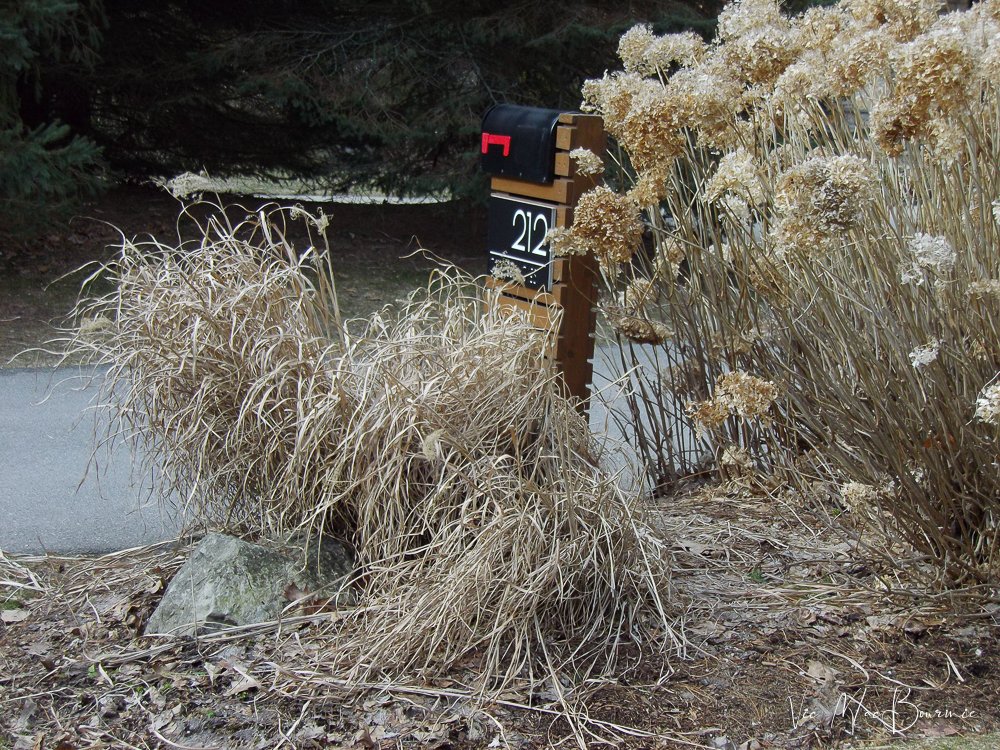
If you are a little handy or know someone who is, a smaller DIY knee wall like this one can solve several problems. In this case it serves both to bring the house numbers down closer to the street as well as provide a place for the rural mailbox. Made simply of two posts placed in the ground (preferably in concrete) with wood slats running horizontally. I have seen similar ones that are painted black rather than stained. Either way, they can be an inexpensive addition to your front landscape. Large grasses and hydrangeas are used beautifully here to soften the landscape around the knee wall.
Building a DIY knee wall out of wood can be a great cost-saving approach, but it needs to be visually appealing and carry the proper weight for the size and style of home and landscape design. Painting the wood slats black creates a contemporary feel and adds a nice dark background to best display your house numbers.

This more contemporary approach to a knee wall is proof that simplicity can be very effective in the right situation. At night, soft uplighting adds an elegant touch and creates a little drama for passersby. The lighted address numbers also helps guests or delivery vehicles find the home rather than have to search the home for the house numbers.
The following are just a sample of knee walls I come across on my daily walks in the neighbourhood. Unfortunately, most of these images have been taken in the early spring before the flowers have bloomed, and the shrubs and the grasses have fully emerged. I’ll be looking for more examples as summer approaches and be sure to add them to this post, so you can see them in their prime.
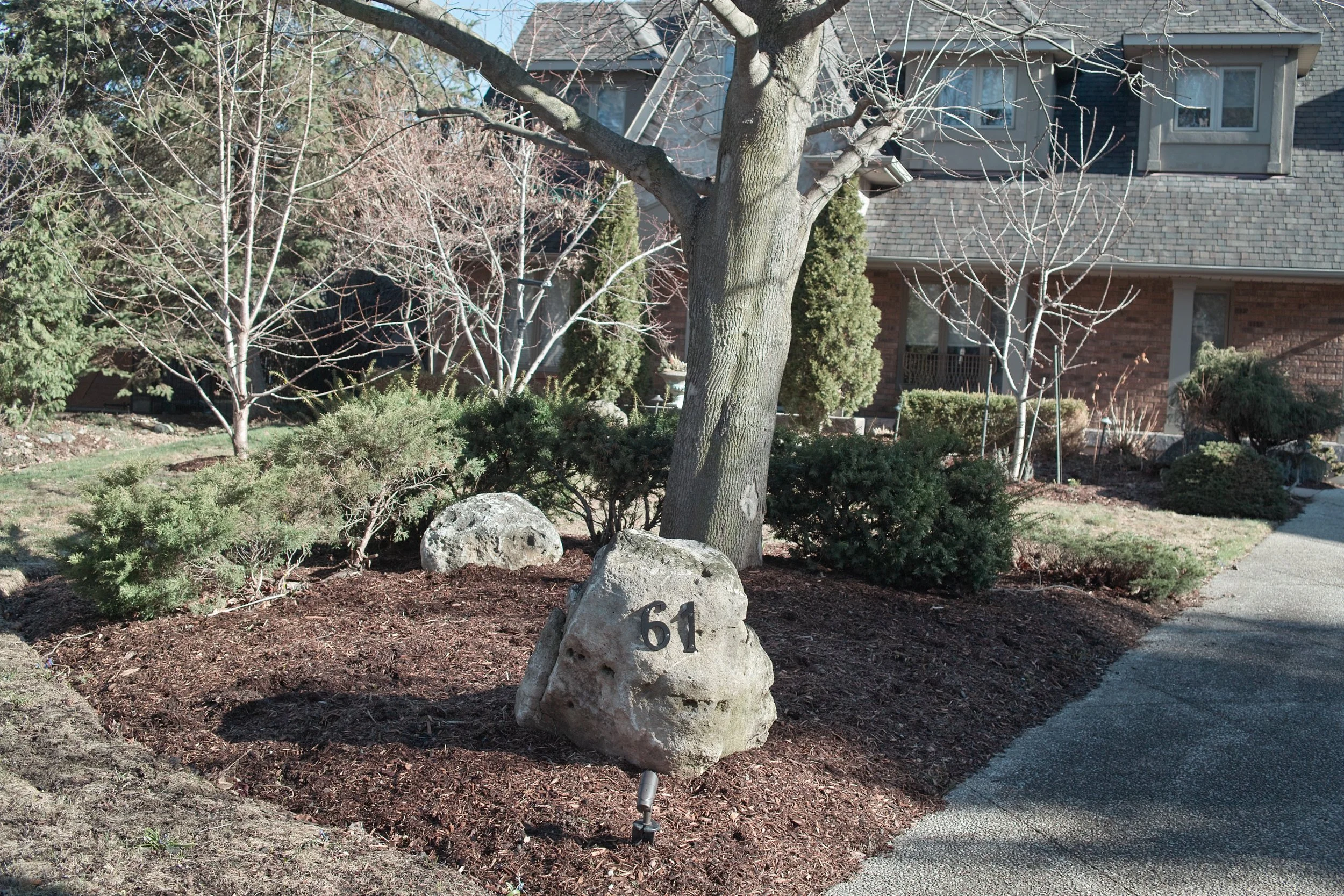
A large boulder with address numbers can take the place of a traditional knee wall in a more natural/rustic landscape. Notice the light in front of the boulder to create a highlight at night. Again, the homeowner wisely chose to include the boulder in a large island garden bed where low-growing plants can provide a natural backdrop for the boulder.
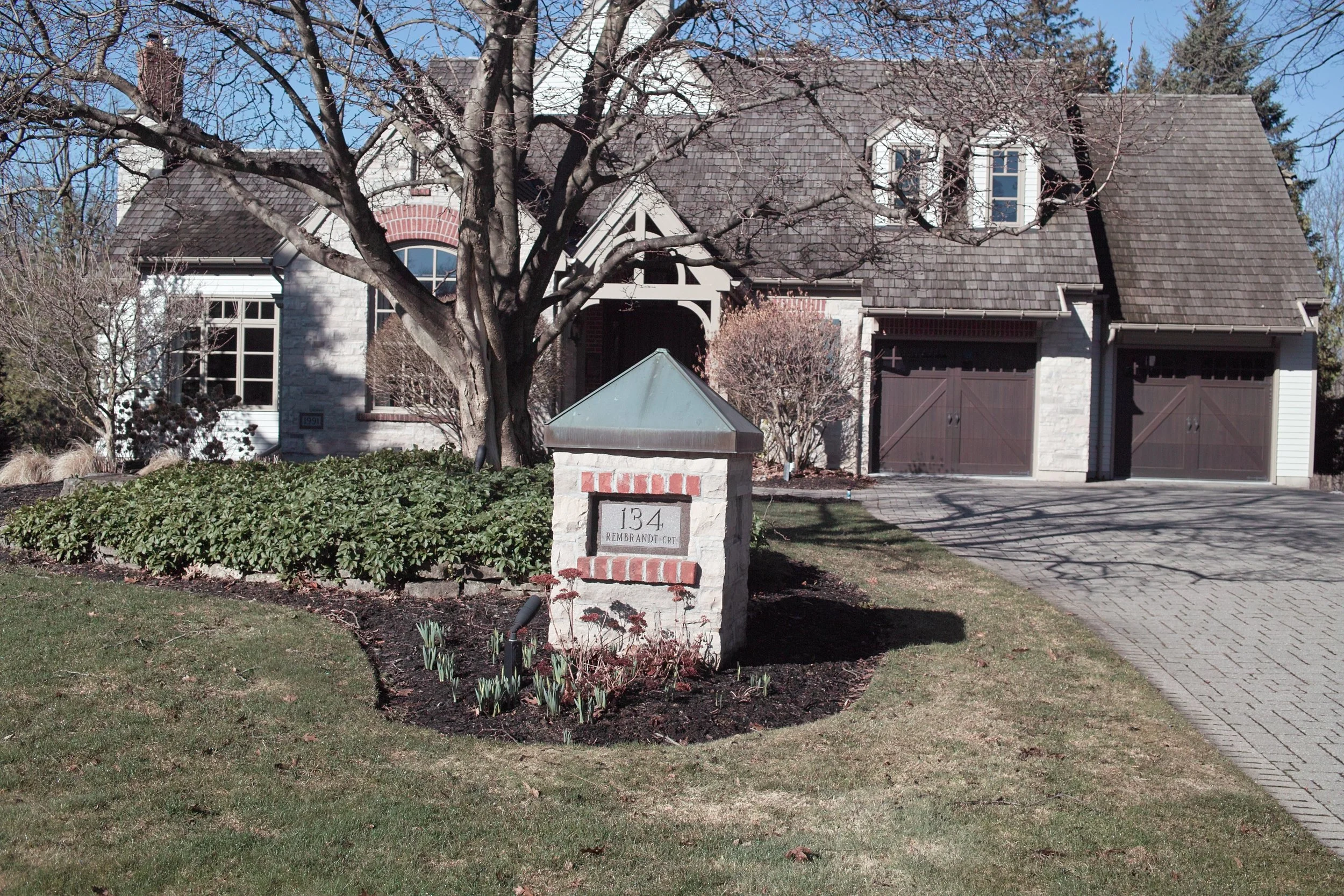
This more architecturally-inspired knee wall is a reflection of the home’s design and picks up on the brick above the window as well as the architecture.
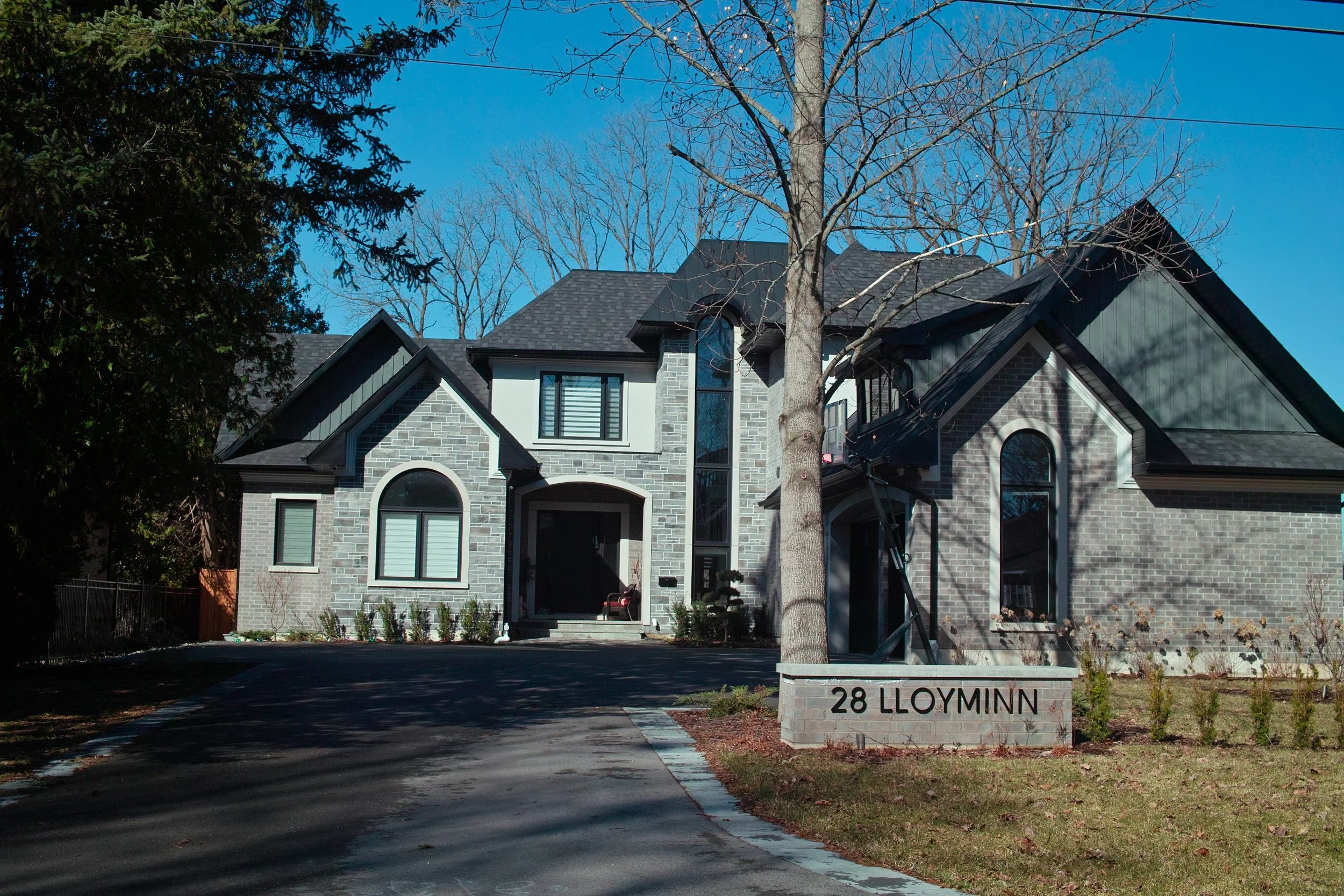
This knee wall uses the street name in a large, but simple contemporary font to create interest.
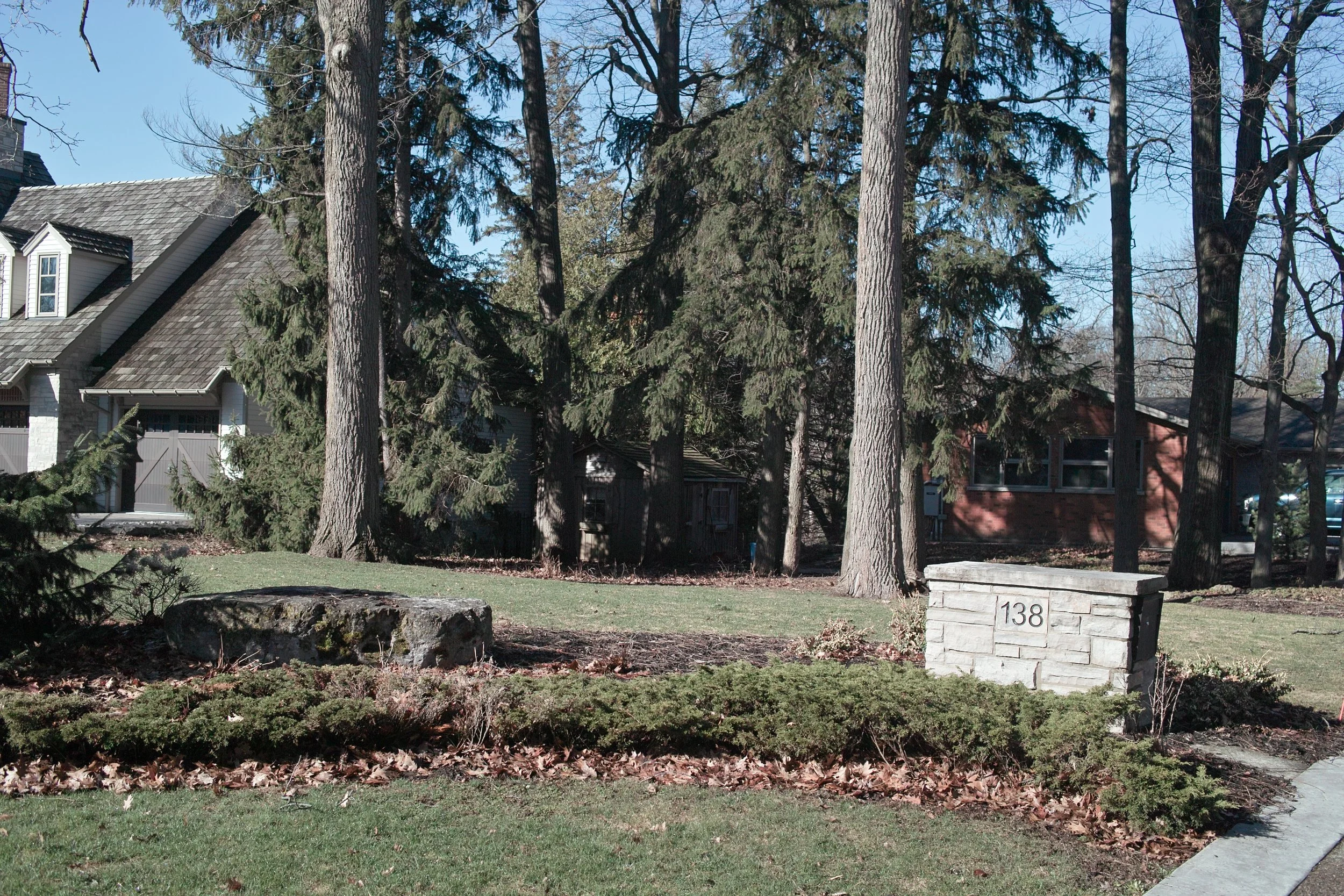
This small stone knee wall sits among a larger garden island with low growing evergreen ground covers surrounded by mature evergreen trees



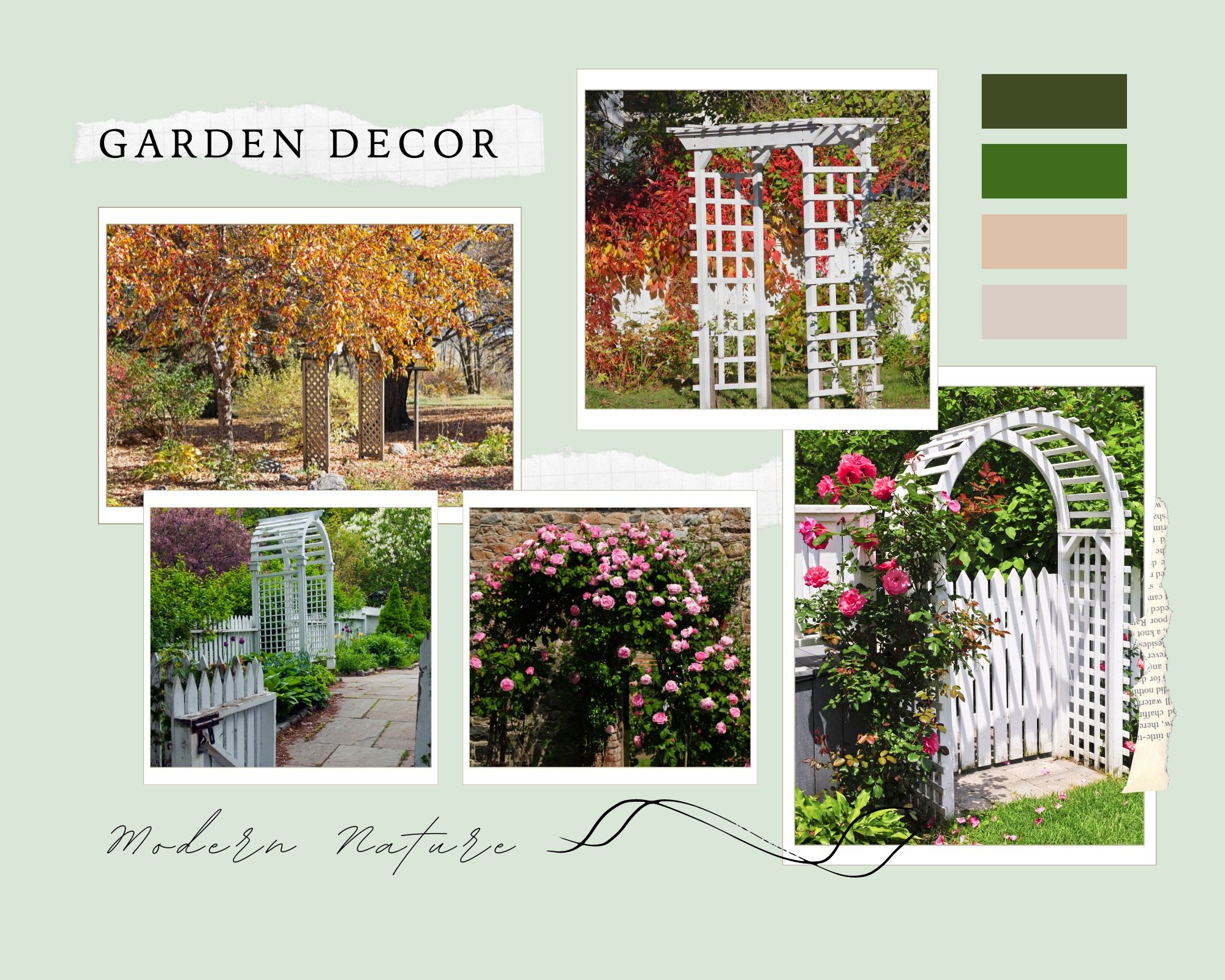


Simplicity in the garden adds a sense of calm and serenity to the landscape.